
Reviewed · CHARLESTON ARCHITECTURE & HOMES
Charleston’s Best Highlights: History, Culture & Architecture
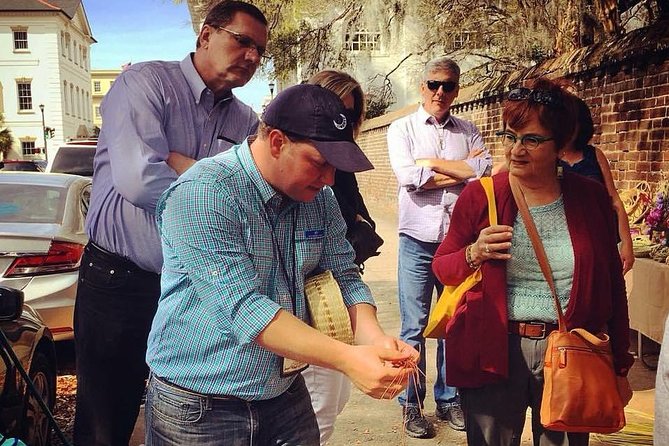
Charleston history is better on foot. In about two hours, you trace a tight downtown route of landmark buildings—government, churches, and old houses—made clear by a licensed guide. Guides like Brian and Finn are known for turning Charleston’s architecture into plain, human stories, and the signature downtown sights give you quick orientation for the rest of your stay.
One catch: not every stop is fully entered, and a few key sites have admission tickets not included or entrance depends on what’s going on that day. So you’ll want comfortable walking shoes, plus a bit of patience at entrances where schedules, crowds, or availability control access.
In This Review
- Key highlights
- How a 2-Hour Highlights Walk Helps You Read Charleston
- Meeting at 122 E Bay St and the Pace You’ll Feel
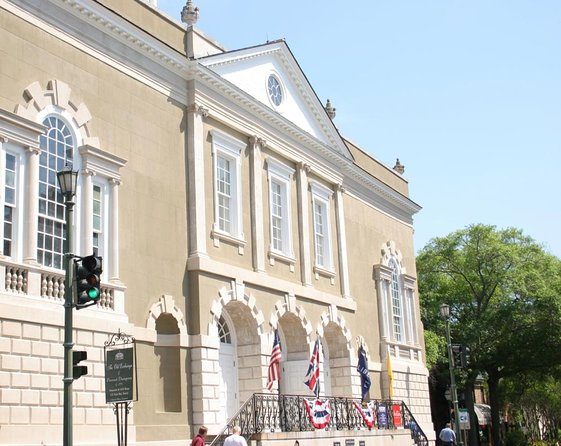
- Old Exchange & Provost Dungeon: Where National Events Were Read
- Rainbow Row: Georgian Row Houses and the 1930s Preservation Story
- Old Slave Mart Museum Stop: Seeing Without Entering
- French Huguenot Church: A Gothic Revival Church With a Living Thread
- Dock Street Theater: From Planter’s Hotel to a Professional Stage
- Charleston City Hall and the Four Corners of Law
- St. Michael’s Church: Tiffany Stained Glass and Constitution Signers in the Churchyard
- Nathaniel Russell House Garden: Federal-Style Merchant Life
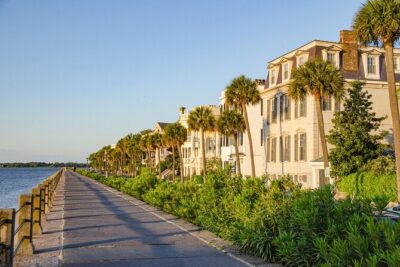
- Edmondston-Alston House and the High Battery View to Fort Sumter
- Pacing, Small Details, and Why Shoes Matter
- What Makes the Best Guides (Brian and Finn) So Effective
- Value Check: Where Your Time and Money Actually Go
- Who This Tour Fits Best
- Should You Book This Charleston Highlights Tour?
- FAQ
- How long is the tour?
- Is the tour offered in English?
- Where does the tour start?
- Are admission tickets included for all stops?
- Do you enter every building on the tour?
- What’s the group size limit?
- What if the weather is poor or I need to cancel?
Key highlights
- Old Exchange & Provost Dungeon: Declaration reading (1776) and later imprisonment connections
- Rainbow Row: Georgian row houses restored in the 1930s with a Caribbean color scheme
- Slave Mart museum stop: important context, with a look at the building and no entry
- St. Michael’s Church: original woodwork and Tiffany stained glass, with Constitution signers in the churchyard
- High Battery views: waterfront mansions and Fort Sumter in sight while discussing the Civil War’s start
How a 2-Hour Highlights Walk Helps You Read Charleston
Charleston can feel like a postcard until you learn what you’re actually looking at. This tour is designed to give you that fast “I get it now” moment: the streets, the building types, and the people behind them all connect.
I like that you’re not just scanning pretty facades. You’re guided through how Charleston’s civic life, faith, commerce, and forced labor shaped the city’s layout—and how that history still shows up in the architecture you see on every corner. If you’re a first-time visitor, it helps you build a mental map. If you’ve been before, it’s a good refresher because the stops touch themes that are easy to miss on a self-guided stroll.
Look up at more porches and piazzas on our other Charleston architecture tours.
- Historic Charleston Walking Tour: Rainbow Row, Churches, and More★ 5.0 · 691 reviews
- Charleston: History and Architecture Guided Walking Tour★ 4.8 · 349 reviews
- Charleston History, Homes, and Architecture Guided Walking Tour★ 5.0 · 267 reviews
Meeting at 122 E Bay St and the Pace You’ll Feel
You’ll start at 122 E Bay St in downtown Charleston and return to the same spot when the tour ends. The tour runs about 2 hours, and the group size maxes at 20, which usually keeps things conversational rather than chaotic.
This is also a mobile-ticket setup, so you’ll want your confirmation ready on your phone. And because it’s an outdoor walking experience, you’ll feel the weather. The operator notes it requires good weather, so plan for flexibility.
Old Exchange & Provost Dungeon: Where National Events Were Read
Your first major stop is the Old Exchange & Provost Dungeon, a building dating to around 1771. This site links Charleston directly to several big moments in early American history, and the details matter.
Here’s what makes it compelling: the Declaration of Independence was read here in 1776. During the American Revolution, the building was used as a British prison for roughly two years, and later the U.S. Constitution was ratified in South Carolina in 1788. Add in George Washington being entertained here in May 1791, and suddenly this “historic building” becomes a timeline you can stand inside (even if your stop is mostly at the beginning).
Important practical note: admission isn’t included for this stop. If you want the full indoor experience, budget for the ticket separately and plan to arrive a little focused, not rushed.
Rainbow Row: Georgian Row Houses and the 1930s Preservation Story
Next up is Rainbow Row, the long stretch of attached Georgian row houses that’s famous for its color. The tour frames them as more than a photo op by explaining what these buildings did for maritime life.
In the 18th and 19th centuries, these were mariner’s stores—places tied to shipping and goods moving in and out of Charleston. The houses were later restored in the 1930s during Charleston’s preservation efforts, and that’s when the facades were brought back in a bright Caribbean color scheme.
This stop is short, but it’s worth using it as a visual “anchor.” When you later look at other Charleston homes, you’ll start noticing the design choices that fit the city’s coastal, commercial roots. Rainbow Row is free to view on this tour, which makes it a low-friction win.
Old Slave Mart Museum Stop: Seeing Without Entering

Charleston’s story is not complete without talking about slavery and the forced labor system that helped power the city. This tour includes a stop at the Old Slave Mart Museum, known as Ryan’s Slave Mart in the 1850s.
From the sidewalk, you’ll learn about the building’s role as an auction site of the interstate slave trade. The City of Charleston operates the museum, and tours are available on site. On this specific walk, you do not enter the building, which means the stop works best as a moment of awareness and orientation rather than the full museum experience.
If you want more detail than a guided exterior stop can provide, you’ll likely want to plan time on your own to visit the museum later. I think this is one of the most important parts of the tour because it keeps the conversation grounded while still respecting that some travelers will want deeper museum time on their own schedule.
Dig deeper into the past with more Charleston history tours.



French Huguenot Church: A Gothic Revival Church With a Living Thread
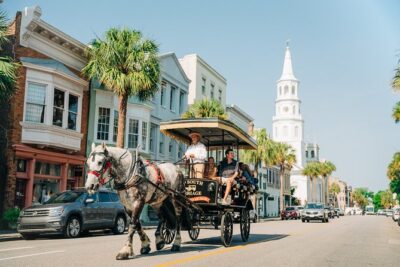
You’ll stop at the French Huguenot Church, a Gothic Revival building from 1845. This isn’t just an architectural sight—it’s connected to a specific religious community that still matters.
The tour notes that it houses one of the only practicing Huguenot communities in the country. That detail changes how you see the church: it’s not only a relic. It’s a functioning link in a religious and cultural line that survived many changes.
This stop is free. It also tends to be a nice breather from the street bustle, because churches naturally invite slower looking: stonework, shapes, and the overall mood of the building.
Dock Street Theater: From Planter’s Hotel to a Professional Stage
Dock Street Theater is one of those Charleston buildings where the layers really show. You’ll hear that it’s built on the site of the first theater in the British colonies, with the tour connecting it to later building history as well.
As you approach, the tour explains that the current Dock Street Theatre was built around 1937 and restored from the old Planter’s Hotel from around 1809. That’s the kind of fact that makes you look twice at older structures: a place can switch roles without losing its identity.
Entrance depends on availability, and it’s free as part of the walk. Once inside (when possible), it’s also good context for modern Charleston. The Charleston Stage company is described as the largest professional theater company in South Carolina, with about 120 performances each year. So you’re seeing how the city keeps performing arts alive, not just preserving buildings.
Charleston City Hall and the Four Corners of Law
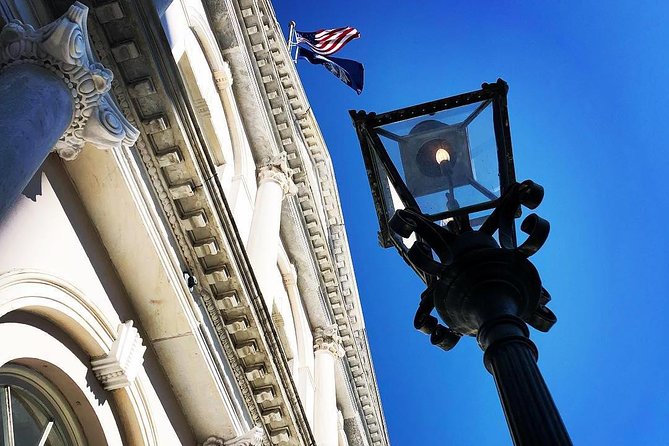
City Hall is the kind of stop that rewards curious readers. The building sits at one of the “Four Corners of Law,” a concept named by Robert Ripley. That playful reference is a nice way to introduce why civic buildings deserve attention in a walking tour.
The building story is also practical and specific: built in 1801 as a bank, it has served as a city hall since 1818. It’s described as one of the oldest continuously run city halls in the country.
On weekdays, visitors can enter the council chamber and see the collection complimentary. That’s a rare chance to step into a working civic interior rather than only viewing exteriors. So if you can time your tour on a weekday, take it seriously—this is likely the best “inside” moment after the initial historical stop.
St. Michael’s Church: Tiffany Stained Glass and Constitution Signers in the Churchyard
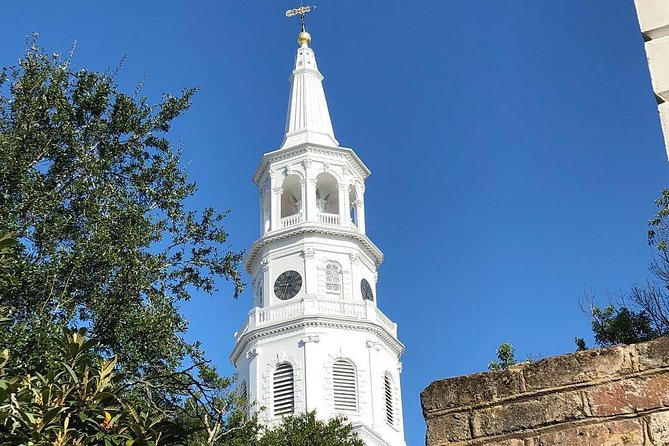
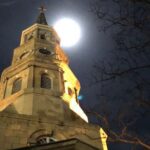
St. Michael’s Church is the tour’s spiritual heavyweight. It’s described as the oldest house of worship in Charleston, around 1761, and the building holds original woodwork plus Tiffany stained glass windows.
This stop matters because it links religious life to political history. The churchyard includes graves of US Constitution signers John Rutledge and Charles Cotesworth Pinckney. Those names help you understand why Charleston’s churches weren’t just religious venues—they were part of the social framework where important decisions and reputations formed.
Entrance depends on availability, and this stop is free. Even if you only see part of the space, the exterior and the churchyard context make the stop memorable.
Nathaniel Russell House Garden: Federal-Style Merchant Life
Nathaniel Russell House brings you into the domestic world of early Charleston wealth. You’ll enter the garden of this Federal-style townhouse built around 1808 and owned by Nathaniel Russell.
The tour frames Russell as a wealthy merchant involved in shipping, originally from Rhode Island. That “merchant and shipping” angle is key because it ties back to what you saw earlier at Rainbow Row—Charleston’s economy was coastal and trade-driven, and these residences were built to match that status.
Admission isn’t included for this stop. Still, the garden access is part of the tour, so you get a sense of scale and a calmer pocket away from the street noise.
Edmondston-Alston House and the High Battery View to Fort Sumter
The last major theme is the shift from early America to the Civil War era. You’ll walk up onto the High Battery wall for waterfront mansion views and discussion of the beginning of the Civil War.
Fort Sumter is in view from this area, and that geographical detail changes how the story lands. Instead of abstract dates, you see the coastline that shaped strategic thinking. The Edmondston-Alston House is described as a family home since 1838, and it’s tied to the moment when General Beauregard watched the bombardment of Fort Sumter along with other onlookers.
Admission isn’t included for this stop. But the payoff here is the perspective: Charleston’s topography and coastal lines are doing storytelling work in real time.
Pacing, Small Details, and Why Shoes Matter
A walking tour only works if the pace feels human. With a maximum of 20 people, you should be able to ask questions without feeling like you’re interrupting a factory line. The tour is also offered in English, with service animals allowed, and it’s near public transportation—helpful if your feet or schedule need backup.
Most travelers can participate, but remember: it’s still downtown walking. Come ready for uneven sidewalks, stairs or sloping curbs, and a few stretches where you’ll stand and look rather than keep moving. If you hate rushing, you’ll be happier here than on a cookie-cutter bus ride.
What Makes the Best Guides (Brian and Finn) So Effective
This is the part I care about most when booking any city tour: can the guide connect facts to what you’re seeing right now? On this walk, guides like Brian and Finn (both named by past guests) are praised for matching the tour to what the group wants and for telling stories with humor and energy.
What you’ll benefit from is the way they link different parts of American history back to Charleston. You’re not just learning what happened locally; you’re learning how Charleston fit into the larger national story. That’s why architecture feels more than decorative. It becomes evidence.
Also, guides on this tour are described as responsive to questions, and the timing can stretch when people want more answers. If you enjoy dialogue rather than a monologue, this format fits you well.
Value Check: Where Your Time and Money Actually Go
I can’t quote a price here because none is given, but I can still help you judge value. You’re paying primarily for a guided route, a licensed guide, and the storytelling glue that makes the stops click.
You’ll also notice a built-in value mix: several stops are free on the walk (Rainbow Row, French Huguenot Church, Dock Street Theater, City Hall, St. Michael’s Church). Others require admission tickets not included (like the Old Exchange & Provost Dungeon), and there are also stops where you don’t enter the building (like the Old Slave Mart Museum).
So the value equation is simple: if you’re happy with exterior views at some sites and you’re willing to pay for optional admissions at the ones you care most about, this becomes a very efficient way to spend two hours. If you want to enter every building regardless of cost, you’ll want to plan extra time on your own after the walk.
Who This Tour Fits Best
This is an excellent choice if you:
- Want a fast, guided overview of historic Charleston with context you can remember later
- Like architecture but also want the people and events that shaped it
- Prefer walking with time for questions rather than a rushed drive-by route
- Are traveling with someone who enjoys history, politics, and cultural details
It’s also a strong pick if you’ve visited before. The tour includes stops that connect early national events, the slave trade context, religious sites, and Civil War beginnings—topics that deepen your understanding beyond postcard sightseeing.
Should You Book This Charleston Highlights Tour?
Yes, if you want a smart first move in Charleston—one that helps you read the city’s buildings instead of just looking at them. It’s also a great “history plus architecture” format that doesn’t drag on too long.
I’d say book it with eyes open if you’re the type who gets impatient with partial entrances or separate admissions. A few sites here have ticketing not included, and entrance can depend on what’s happening that day. Still, the overall structure makes sense: you get strong orientation fast, plus a set of landmark stops you’ll remember when you wander later.
FAQ
How long is the tour?
The tour lasts about 2 hours.
Is the tour offered in English?
Yes. The tour is offered in English.
Where does the tour start?
The meeting point is 122 E Bay St, Charleston, SC 29401, USA.
Are admission tickets included for all stops?
No. Some stops list admission tickets as not included (including the Old Exchange & Provost Dungeon and a few other sites). Other stops are free.
Do you enter every building on the tour?
No. For example, the Old Slave Mart Museum stop does not include entering the building. Entrance for places like Dock Street Theater and St. Michael’s Church depends on availability.
What’s the group size limit?
The tour has a maximum of 20 travelers.
What if the weather is poor or I need to cancel?
The tour requires good weather. If it’s canceled due to poor weather, you’ll be offered a different date or a full refund. There is free cancellation up to 24 hours in advance for a full refund.
More History Tours in Charleston





More Charleston Tours Worth Booking



More Architecture & Homes Tours in Charleston





Still deciding? Here are the newest Charleston tours and experiences we have reviewed








Charleston Architecture & Homes, compared.
 ★ 5.0Historic Charleston Walking Tour: Rainbow Row, Churches, and MoreFrom $40691 reviews
 ★ 4.8History and Architecture Guided Walking TourFrom $29349 reviews
 ★ 5.0Charleston History, Homes, and Architecture Guided Walking TourFrom $28267 reviews
 ★ 4.5Historic City and Southern Mansion Combo TourFrom $45129 reviews
 ★ 5.0Charleston History and Architecture Walking TourFrom $2763 reviews
 ★ 5.0Charleston Architectural Walking TourFrom $506 reviews
Browse the lists this tour appears in