

Reviewed · HISTORIC DISTRICT WALKING TOURS
Charleston historical walking tour with a Professor of History at The Citadel
Charleston comes alive with a professor. This 3-hour historical walking tour threads nearly 400 years of Charleston into one walk, guided by Eric Lager, Ph.D. from The Citadel, as you move from stately churches and squares to the French Quarter and the harbor. I like how the route mixes well-known landmarks with the kind of building-story details that make you notice what’s right in front of you.
I especially like the small group size (12 max). It keeps the pace human and makes it easy to ask real questions, not just listen while everyone shuffles. I also like that many stops have free admission, so you get more “walk-and-learn” than “pay-and-stand in line.”
One consideration: the tour packs a lot into a short window, so it helps to enjoy walking and to expect a brisk rhythm. Also, a few stops have admissions marked as not included, so you may pay extra if you choose to go inside those specific places.
In This Review
- Key Things You Should Know Before You Go
- A professor-led Charleston walk that feels like a history class
- Price and value: what $40 buys in real street time
- The route from Mills House to the Battery: what each stop teaches
- How the 3-hour format keeps it engaging (and not exhausting)
- Practical tips so you enjoy every minute
- Who this tour is best for
- Should you book this Charleston history walking tour?
- FAQ
- How long is the Charleston historical walking tour?
- What is the group size?
- Who is the guide?
- Is the tour offered in English?
- Where does the tour start and end?
- Is bottled water included?
- Is admission included at every stop?
- Are there any stops that require extra admission?
- Is the tour suitable for someone with moderate physical fitness?
- What happens if weather is poor?
Key Things You Should Know Before You Go
- A PhD guide from The Citadel: Eric Lager leads the tour with a teacher’s sense of flow and Q&A time.
- Max 12 people: small enough for real interaction, big enough that the group energy stays fun.
- Many stops are free-entry: several key buildings are accessible without added admission fees.
- Civil War to Revolution to early colonial Charleston: the stories move across centuries without feeling random.
- Fort Sumter viewing without going to the fort: you get the big moment from the Battery viewpoint.
- End right where you want to keep exploring: the walk finishes at the Battery near Rainbow Row.
A professor-led Charleston walk that feels like a history class
This tour isn’t built around quick trivia or postcard captions. With Eric Lager, Ph.D. from The Citadel guiding you, you get a guided conversation on Charleston’s past—political, religious, architectural, and human. It’s the kind of explanation that helps you connect why a building looks the way it does, and what that meant at the time.
What makes it work is the structure: you’re outdoors, seeing the real streets and facades, and the guide’s stories land while you’re standing there. Expect topics to move from early settlement-era clues through Revolution-era civic life and onward to the Civil War years and beyond. In other words, you don’t leave with isolated facts—you leave with context.
There’s also a clear rhythm to how the guide answers questions as you walk. You’re not stuck waiting until the end, and the group size helps you actually hear the answers.
Trade one set of cobblestones for another with more Charleston walking tours.
- Historic Charleston Guided Sightseeing Walking Tour★ 5.0 · 6,216 reviews
- Charleston Horse-Drawn Carriage Tour: Explore Historic Charleston★ 5.0 · 3,561 reviews
- Ghosts of Charleston Night-Time Walking Tour with Unitarian Church Graveyard★ 4.5 · 2,835 reviews
Price and value: what $40 buys in real street time
At $40 per person, the value comes from two things: the guide quality and the amount of access built into the route. The tour includes all fees and taxes, and many stops list admission as free, which matters if you’re trying to keep costs predictable.
Here’s the practical tradeoff: a few stops are marked with admission not included. That doesn’t make the tour bad—it just means you should plan for optional extra costs if you want to enter every place. You’ll still get plenty from the exterior history points, but if going inside is your priority, budget a bit for those specific admissions.
Also note what isn’t included: bottled water. On a warm Charleston day (or a chilly one—weather can flip fast near the harbor), you’ll want to buy water near the route or bring your own.
The route from Mills House to the Battery: what each stop teaches
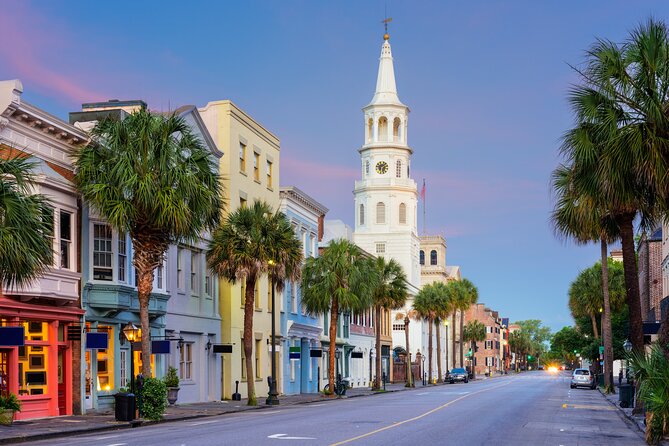
You start at 108 Meeting St and you end at 39 E Battery, finishing near Rainbow Row. Along the way, the stops are spaced to keep you moving without constantly feeling like you’re speed-walking.
Below is what you’ll likely notice at each place, and why it’s worth your time.
1) Mills House Charleston (Curio Collection by Hilton)
This is where the story takes an early-Civil War turn. The Mills House Hotel played an important role in the early part of the American Civil War, and the guide’s point is to show how “downtown lodging” and major historical events were never separate in Charleston. The lesson isn’t just the fact—it’s how war reshaped civic life in ordinary places.
2) Dock Street Theater
Dock Street Theater is a quick stop with a strong hook: the guide talks about the first theatre built in North America and the colorful, infamous characters tied to its history. It’s a reminder that Charleston’s identity wasn’t only churches and squares—entertainment and public life mattered too.
3) Pink House Gallery (circa 1712)
One of Charleston’s oldest buildings, dating to around 1712, is easy to spot and fun to compare with newer-looking structures nearby. The guide uses it to connect architecture with time: what survives, why it was built, and what “old” meant in a city that kept rebuilding and adapting.
4) Washington Square
Washington Square is a history billboard, filled with monuments and layers of meaning. This stop is about how public space works in Charleston—how commemorations sit in the landscape, and how shifts in politics and identity can show up in monuments over time. Even if you don’t read every plaque, you’ll understand what you’re looking at.
5) Charleston City Hall
This is the stop where the guide explains evolution in a literal way. The building once served as a meat market and bank before becoming City Hall. That sequence helps you grasp Charleston’s changes in commerce and governance—how the same structure can reflect different priorities across eras.
6) Charleston County Courthouse
The courthouse connects the city to state-level power and governance. The guide points out what it used to be: the old South Carolina statehouse. It’s a useful way to understand the city’s role as a political center—and to see how legal buildings are designed to communicate authority.
7) St. Michael’s Church (completed 1761)
Charleston’s oldest church edifice, completed in 1761, gives you a big dose of early religious architecture and community continuity. The guide’s focus here is on how church life shaped Charleston neighborhoods and how the timing of construction ties into broader American history.
8) Heyward-Washington House
This is where George Washington comes into the story. You’ll see where Washington stayed when he visited Charleston in 1791. Admission is marked as not included, so you can treat this as an exterior history stop unless you decide to pay for entry. Either way, it’s a clear marker of Charleston’s importance in the early republic.
9) Old Exchange & Provost Dungeon
This stop is compact but loaded. You’ll learn about the last public building built by the British in North America, and where the Constitution was ratified in 1788. Admission is marked as not included, so decide based on how strongly you want interior context. The payoff is a sense of where the ideas of the new nation became real.
10) French Huguenot Church
The French Huguenots are a core thread in Charleston’s story, and this church helps you understand why. The guide also covers that it was the first church built in the Gothic Revival style. You get both immigrant community history and architectural style history—hand-in-hand.
11) French Quarter
Then you get the postcard part, but with brains attached. The French Quarter stop is your chance to slow down and take in charm and urban form. The guide’s angle is why this part of town developed the way it did, not just how it looks for photos.
12) Hibernian Hall
Hibernian Hall is another “history in a building” moment. The guide explains that this is where the seeds of disunion were sown, and it also connects to America’s relationship with Greek Revival architecture. It’s a good stop if you like political history told through stone, not just dates.
13) Fort Sumter National Monument (view from the Battery)
You won’t go out to the fort. Instead, you look toward it from the Battery on Charleston Harbor—exactly the kind of viewpoint that helps you understand the harbor’s strategic role. The big takeaway is the moment when the first shots of the Civil War were fired, framed through the location rather than a classroom diagram. Admission is marked as not included, which fits with the fact that you’re viewing from shore.
How the 3-hour format keeps it engaging (and not exhausting)
This walk runs about 3 hours and uses an intimate group size of no more than 12 travelers. That matters more than it sounds. When the group is small, you’re not constantly waiting for the guide to catch up, and you’re more likely to hear the details even when you’re near the back.
The stop durations are fairly short, typically around 5 to 15 minutes each. That pacing helps the guide cover a wide span of history without making you feel trapped at any one spot. The flip side is that it’s not a long sit-and-read tour. Bring comfortable walking shoes, expect a steady pace, and treat the tour like a “walk-and-learn” sprint, not a slow meander.
Weather matters. The tour requires good weather, and if it’s canceled due to poor conditions, you’ll be offered a different date or a full refund. In practice, that means you should plan for flexibility—Charleston’s coastal weather can change faster than your packing decisions.
Practical tips so you enjoy every minute
A few small choices make a big difference here:
- Wear grippy shoes for uneven sidewalks and curb steps. Charleston’s historic areas are charming, but they’re not always flat.
- Bring layers. You may start in one temperature and finish in another, especially if you’re near the harbor.
- Have water handled since bottled water isn’t included. You’ll feel better if you’re hydrated from stop to stop.
- Come with a question. The tour is built for back-and-forth. If you care about architecture, politics, religion, or the Revolution-to-Civil War transition, ask early and you’ll get more out of the whole route.
- Use it early in your trip if you can. Finishing near Rainbow Row means you can immediately turn the walk into self-guided browsing with better context.
Also, the tour uses a mobile ticket, and it’s offered in English. It’s near public transportation, which helps if you’d rather not worry about parking.
Dig deeper into the past with more Charleston history tours.





Who this tour is best for
This is a strong match if you love history that connects people, places, and causes—not just dates. If you’re the kind of traveler who looks at a church facade and wonders what that style meant, you’ll get a lot out of the architecture-and-context approach.
It’s also ideal for small-group travelers who want to ask questions without shouting. Couples, solo history fans, and anyone who likes a guide who can handle follow-ups will likely feel like you’re getting a real class in motion.
If you prefer a purely casual photo walk with minimal talking, this might feel heavy on explanation. And if you don’t want any chance of paying admission at certain stops, you’ll want to choose what you’re willing to enter versus simply view from the street.
Should you book this Charleston history walking tour?
If you want Charleston’s past explained with seriousness and energy—and you like the idea of learning while you’re actually looking at the buildings—yes, I’d book it. The combination of a PhD historian from The Citadel, a tight group size of 12 or fewer, and a route that spans major turning points from the Revolution through the Civil War makes the $40 price feel justified rather than stretched.
Book early if you can. This tour is often reserved about 22 days in advance on average, and the small-group cap is real. If your schedule is flexible, picking an earlier date also helps with the best shot at good weather.
Just go in with realistic expectations: it’s an active walk, some stops may cost extra to enter, and you’ll get the most out of it if you’re ready to ask questions. If that sounds like your style, this is one of the best ways to understand Charleston beyond the obvious highlights.
FAQ
How long is the Charleston historical walking tour?
It runs about 3 hours, approximately.
What is the group size?
The tour has a maximum of 12 travelers.
Who is the guide?
The tour is led by Eric Lager, Ph.D.
Is the tour offered in English?
Yes, the tour is offered in English.
Where does the tour start and end?
It starts at 108 Meeting St, Charleston, SC 29401 and ends at 39 E Battery, near the Rainbow Row area.
Is bottled water included?
No, bottled water is not included.
Is admission included at every stop?
Not at every stop. Some stops list admission ticket free, while others are marked as admission ticket not included.
Are there any stops that require extra admission?
Yes. Heyward-Washington House, Old Exchange & Provost Dungeon, Hibernian Hall, and Fort Sumter National Monument are listed as admission ticket not included.
Is the tour suitable for someone with moderate physical fitness?
The tour is noted as suitable for travelers with a moderate physical fitness level.
What happens if weather is poor?
The experience requires good weather. If it’s canceled due to poor weather, you’ll be offered a different date or a full refund.
More Tours Across Charleston






More Charleston Tours Worth Booking
More Historic District Walking Tours in Charleston



Still deciding? Here are the newest Charleston tours and experiences we have reviewed











Historic District Walking Tours, compared.
 ★ 5.0Historic Charleston Guided Sightseeing Walking TourFrom $306,216 reviews
 ★ 5.0Charleston Horse-Drawn Carriage Tour: Explore Historic CharlestonFrom $493,561 reviews
 ★ 4.5Ghosts of Charleston Night-Time Walking Tour with Unitarian Church GraveyardFrom $352,835 reviews
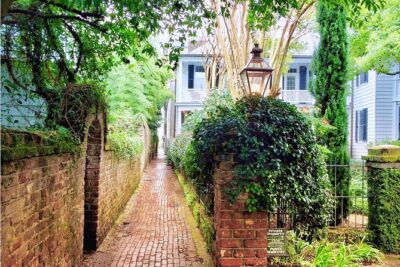 ★ 5.0Hidden Alleyways and Historic Sites Small-Group Walking TourFrom $342,335 reviews
 ★ 5.0Highlights of Charleston Guided Walking Tour2,206 reviews
 ★ 5.0Charleston Haunted Booze and Boos Ghost Walking TourFrom $391,569 reviews
 ★ 5.0Charleston’s Pleasing Terrors Night-Time Walking Ghost TourFrom $291,345 reviews
 ★ 4.5Charleston Ghost & Graveyard Night-Time Guided Walking TourFrom $401,100 reviews
Browse the lists this tour appears in