

Reviewed · SELF-GUIDED AUDIO & APP TOURS
300 Years of War and Peacetime in Charleston: A Self-Guided Audio Tour
Charleston’s streets tell stories fast. This self-guided audio tour turns a simple walk into a guided timeline, linking sights from the Revolutionary War era onward, with tough chapters included. I especially like how the route cues you at major landmarks, and how the Pineapple Fountain stop gives you a distinctly South-focused detail you can actually see in front of you.
You’ll also get a real “you control the pace” experience. The audio is on your phone through VoiceMap, and the tour includes offline access to audio, maps, and geodata, so you’re not stuck hunting for signal. The main drawback is simple: you need to bring your own smartphone and headphones, since they’re not provided.
In This Review
- Key Things to Know Before You Start
- Walking the Historic Core: Market Hall to the Powder Magazine
- VoiceMap on Your Phone: How the Self-Guided Part Feels
- A 300-Year Timeline You Can Actually Follow
- City Market Start and the Custom House Walk-By
- High Cotton and The Notebook Connection
- Pineapple Fountain: Learning Why Pineapples Show Up Everywhere
- The Old Slave Mart Museum and the Old Exchange/Provost Dungeon Stops
- Rainbow Row and The Battery: Classic Views With Real Context
- Dubose Heyward House, Dock Street Theatre, and St. Philip’s Church
- Ending Outside the Powder Magazine Museum: One Last Anchor
- Price and Value: Is $14.99 Worth It?
- Should You Book This Self-Guided Audio Tour?
- FAQ
- How long is the 300 Years of War and Peacetime in Charleston audio tour?
- How much does the tour cost?
- What language is the tour offered in?
- What app do I need for the audio?
- Can I use the tour offline?
- Where does the tour start?
- Where does the tour end?
- Are museum tickets or entrance fees included?
- Do I need to bring a phone and headphones?
- Can I cancel and get a full refund?
- Is the tour private?
Key Things to Know Before You Start

- A route built for walking: about 1.5 to 2 hours, with stops spread along the historic core.
- Audio cues at big-name landmarks: you hear context while you pass places like Rainbow Row and The Battery.
- A mix of moments, not just pretty views: slavery history is part of the storyline as you walk by the Old Slave Mart Museum.
- South-specific details: the Pineapple Fountain explanation connects pineapples to Charleston culture.
- Good for film fans: you’ll hear about High Cotton Charleston Restaurant and its connection to The Notebook.
- Lifetime access to the English audio: you can replay later without buying again.
Walking the Historic Core: Market Hall to the Powder Magazine

This is designed as a straight, scenic loop you can knock out in a little under two hours. You start at the Museum at Market Hall on Meeting Street, and you finish outside the Powder Magazine Museum on Cumberland Street, close to where you began. That matters because you’re not planning a scavenger hunt across town—you’re moving through the compact heart of Charleston.
The pacing is also built into the way the tour works: audio plays as you’re walking past each stop. So instead of pausing to read signage or guessing what you’re looking at, you get a quick explanation on the move and then you can immediately look up at the building, street, or view. For me, that’s what makes it feel efficient without feeling rushed.
A practical tip: wear comfortable shoes. You’re covering multiple landmark areas, and some streets are uneven. If you plan to photograph a lot, add a little extra time for the waterfront and Rainbow Row area.
Go at your own speed with more Charleston self-guided and audio tours.
- Fort Sumter Admission and Self-Guided Tour with Roundtrip Ferry★ 4.5 · 3,343 reviews
- Charleston in a Nutshell Private Tours★ 5.0 · 375 reviews
- Middleton Place Admission with Self Guided Tour and Lunch★ 4.5 · 326 reviews
VoiceMap on Your Phone: How the Self-Guided Part Feels
The whole experience runs through the VoiceMap app on Android or iOS. The tour includes offline access to audio, maps, and geodata, which is a big deal in a historic downtown where mobile signal can be spotty block to block.
Here’s how you can make this style of tour work well: set your phone volume to something you’ll be able to hear outdoors, then treat each stop like a “chapter.” At each point, listen, then glance around until you feel oriented. That short feedback loop is how the stories stick.
Also, headphones are not included. You’ll want a pair that’s comfortable for long walks. If you don’t like headphones, you might struggle with street noise—Charleston streets are active, and the audio is meant to be listened to right when you pass the featured spot.
A 300-Year Timeline You Can Actually Follow
This tour is framed as a long sweep of Charleston’s history, going back far enough to include the Revolutionary War era. The best thing about that kind of structure is that you start seeing cause and effect instead of treating each landmark as an isolated postcard.
The route includes both the “big architectural” Charleston you expect—custom houses, theatres, churches—and the darker places too. As you move, the tour specifically brings you to the Old Slave Mart Museum and the Old Exchange and Provost Dungeon. Those stops add weight to what you’re looking at, because they connect the physical buildings to the human reality that happened there.
One thing I like: the audio doesn’t just toss dates at you. You’re hearing context while you’re standing nearby. That helps you connect the story to the street layout and scale of the buildings, which makes the city feel less like a museum and more like a place that lived through centuries.
City Market Start and the Custom House Walk-By

You begin outside the Historic Charleston City Market area, and the audio starts by setting the scene—what the market is, why it matters, and how to use the VoiceMap app. That is more useful than it sounds. If you’re new to self-guided tours, this “how to” moment helps you avoid the classic mistake of fumbling with your phone right when you should be taking in the street.
From there, you pass the United States Custom House while you walk. Custom houses are often where trade, power, and money get written into stone. Even if you’re not a history student, you’ll get enough context through the audio to understand why this kind of federal building shows up in a port city like Charleston.
This section is also a nice warm-up. It’s not where you hit the heaviest themes yet. Instead, it gets you moving, listening, and getting your bearings before the tour’s more serious stops.
High Cotton and The Notebook Connection
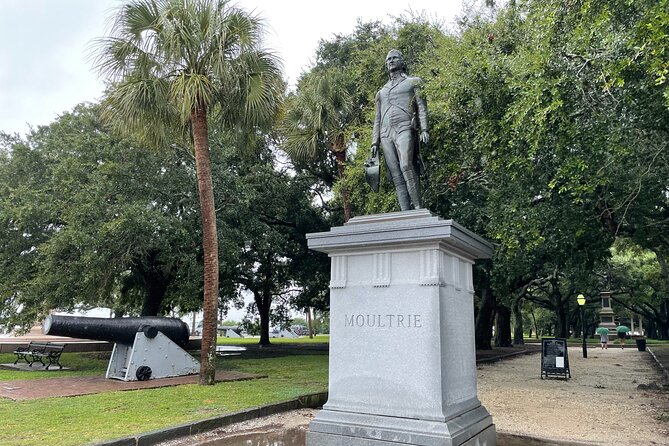
Next up is the walk past High Cotton Charleston Restaurant, where the audio includes the restaurant’s connection to The Notebook. If you’re a movie person, this can be a fun pivot point: you’re still in history mode, but now you’re also thinking about how Charleston shows up in modern storytelling.
What makes this stop worth your attention is that it reminds you Charleston isn’t frozen in time. Buildings and neighborhoods carry meanings across eras. You get to notice how a place can be “seen” by different audiences—locals, visitors, filmmakers, and history buffs—without changing where it sits on the map.
If you’re not into movies, it still works. You’ll simply get an extra layer of context about why certain places feel recognizable, even when you’ve never been there before.
Prefer a guide out front? Browse more guided Charleston tours.



Pineapple Fountain: Learning Why Pineapples Show Up Everywhere

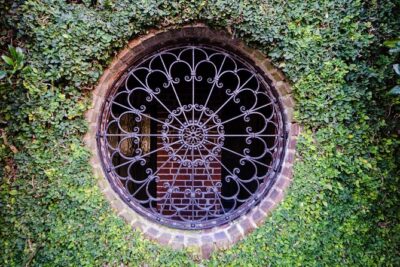
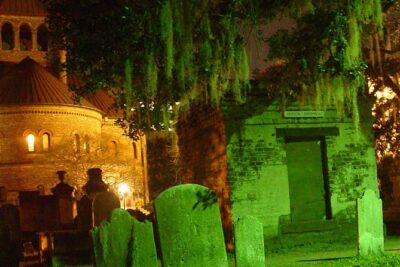
A highlight on this route is the Pineapple Fountain stop. You’ll hear about the fountain and why pineapples are so prominent in the South. Even without turning this into a food history lecture, it’s one of those Charleston details that you can spot in your photos and then understand later.
What I like here is the specific “you can see it” angle. Charleston has a lot of architecture, and it can blend together if you’re just rushing from building to building. A pineapple-focused stop gives your eyes a break and gives your brain a hook.
Also, this is one of the best moments to slow down. Stand near the fountain area, listen to the explanation, and then look at the surroundings. When you connect a symbol to a place, the whole neighborhood starts to make more sense.
The Old Slave Mart Museum and the Old Exchange/Provost Dungeon Stops
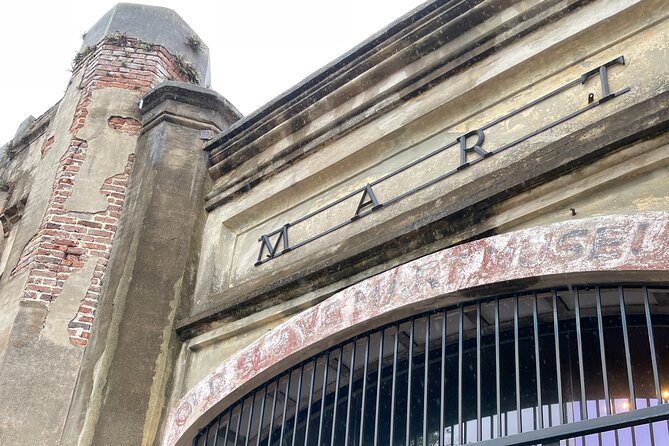
If there’s a section you should treat with extra attention, it’s the part that covers slavery and punishment. The tour passes by the Old Slave Mart Museum, and you’ll hear about Charleston’s connection to slavery while you walk.
Then you continue to the Old Exchange and Provost Dungeon. Again, the audio is tied to the building itself, so you’re not just reading about history—you’re walking past the setting where power was enforced.
This isn’t the kind of tour that stays polite and vague. If you want Charleston history that includes the real suffering built into the city’s past, this route is built for you. If you’d rather avoid heavy topics while sightseeing, you may find these stops emotionally intense.
My practical advice: plan your mental energy. If you’re traveling with family or someone who prefers lighter content, you can decide in advance how long you want to spend listening at these points, or whether you want to pause the audio briefly.
Rainbow Row and The Battery: Classic Views With Real Context
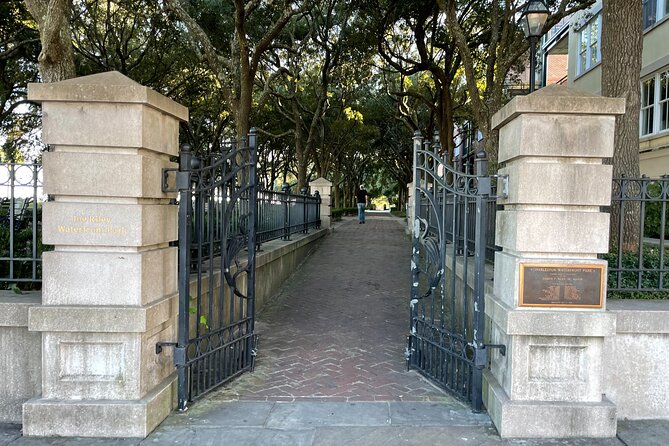
Rainbow Row is one of the stops that turns this tour into something you’ll remember with your eyes. You’ll walk down Rainbow Row and hear how it got started. The fun part of listening on this stretch is that you can watch the color and architecture while the audio explains the origin story.
Then the tour passes by The Battery. The Battery is where Charleston starts to feel like a postcard you can walk into: water views, breezes, and skyline moments. You’ll hear about the area while you pass, and you’ll also get photo-friendly opportunities around Battery Park—ideal for that classic “I’m here” shot.
Timing matters here. If you’re going at a warmer time of day, you’ll likely want to linger a bit for light and photos. If it’s hot, take short breaks between audio chapters rather than trying to power through every stop at once.
Dubose Heyward House, Dock Street Theatre, and St. Philip’s Church
This later stretch mixes cultural landmarks, and the audio keeps you connected to the idea of Charleston as a living stage for art, faith, and public life.
You’ll pass the Dubose Heyward House and hear about Dubose Heyward and his connection to Charleston. Then you’ll move on to the Dock Street Theatre, where the audio shares some of its history and details about the building. After that comes St. Philip’s Church, with an audio moment about the church as you walk by.
What makes this group work is variety. After heavier stops earlier in the route, these points let you shift your attention to different kinds of legacy—creative, civic, spiritual. And because the tour is self-paced, you can decide how much you want to listen at each landmark without booking museum tickets or waiting for timed entry.
Even if you don’t know the names going in, the route gives enough context to keep you interested, not confused. The goal is to help you notice what makes each place distinct in the city’s overall story.
Ending Outside the Powder Magazine Museum: One Last Anchor
You finish outside the Powder Magazine. The audio closes with a segment about the historical building before the tour wraps up.
The Powder Magazine is a strong ending point because it’s a reminder that Charleston’s past wasn’t just cultural—it was strategic and connected to conflict and defense. By the time you reach the end, you’ve already heard about war-era roots and peace-era life, so the final chapter lands with more meaning than if this were just another stop.
Because the end point is close to the start, it’s easy to keep your momentum. If you still have energy, you can continue walking at your own pace or grab a bite nearby—though food and drink aren’t included in the tour.
Price and Value: Is $14.99 Worth It?
At $14.99 per person, this tour is priced like a “buy once, use often” walking guide. The standout value is lifetime access to the English audio plus offline access to the tour content. That means you can replay the route later if you come back to Charleston or if you want to retake the story with fresh context.
You also get a lot of landmark coverage without paying entrance fees along the way. Tickets to museums or attractions are not included, but you’re still guided past major sites like the Custom House, Rainbow Row, The Battery area, and multiple historic institutions.
If you want a quick way to understand Charleston’s layout and story within a focused time window, it’s a solid deal. If you need a guided conversation with a live person, or if you want to go inside ticketed sites, you’ll likely feel limited. This works best when you’re happy with a strong walk-and-listen format.
Should You Book This Self-Guided Audio Tour?
Book it if you want a self-paced way to learn Charleston’s story across centuries while you walk between major landmarks. I’d also choose it if you like detailed context that hits both the well-known and the harder topics—because the route includes stops connected to slavery and to the city’s war-linked past.
Skip it (or pair it with something else) if you don’t like outdoor walking, or if you expect museum-style entry tickets. This is audio guidance from the sidewalk, not a guided visit inside buildings.
If you’re the type who enjoys pinpointing symbols and stories—pineapples at the Pineapple Fountain, film connections at High Cotton, and big-picture sight lines at Rainbow Row and The Battery—you’ll probably feel right at home with this one.
FAQ
How long is the 300 Years of War and Peacetime in Charleston audio tour?
It’s listed as approximately 1 hour 30 minutes to 2 hours.
How much does the tour cost?
The price is $14.99 per person.
What language is the tour offered in?
The tour is offered in English.
What app do I need for the audio?
You use the VoiceMap app on Android and iOS.
Can I use the tour offline?
Yes. It includes offline access to audio, maps, and geodata.
Where does the tour start?
The tour starts outside the Historic Charleston City Market area, at the Museum at Market Hall, 188 Meeting St, Charleston, SC 29401.
Where does the tour end?
It ends outside the Powder Magazine Museum, at 79 Cumberland St, Charleston, SC 29401.
Are museum tickets or entrance fees included?
No. Tickets or entrance fees to museums and other attractions are not included.
Do I need to bring a phone and headphones?
Yes. A smartphone and headphones are not included.
Can I cancel and get a full refund?
Yes. You can cancel for a full refund up to 24 hours in advance of the experience start time.
Is the tour private?
It’s listed as private, meaning only your group participates.
More Tours Across Charleston






More Charleston Tours Worth Booking
More Self-Guided & Audio Tours in Charleston





Still deciding? Here are the newest Charleston tours and experiences we have reviewed












Self-Guided Audio & App Tours, compared.
 ★ 4.5Fort Sumter Admission and Self-Guided Tour with Roundtrip FerryFrom $433,343 reviews
 ★ 5.0Charleston in a Nutshell Private Tours375 reviews
 ★ 4.5Middleton Place Admission with Self Guided Tour and LunchFrom $120326 reviews
 ★ 4.5Charleston’s Haunted Ghost Tour – Solo Smart Phone Guided TourFrom $665 reviews
 ★ 4.0Charleston TourPass 1-Day Pass – Includes 40 Top ToursFrom $5952 reviews
 ★ 5.0Pirate Escape Charleston Scavenger Hunt and Free MuseumFrom $940 reviews
 ★ 4.7Tour Pass with 40+ AttractionsFrom $11940 reviews
 ★ 4.5Charleston Self Guided Walking TourFrom $939 reviews
Browse the lists this tour appears in