
Reviewed · SUNSET SAILS & DOLPHIN CRUISES
Charleston Harbor History Day-Time or Sunset Boat Cruise
Charleston Harbor looks different from the water. This 90-minute, fully narrated cruise pairs big-name landmarks like Fort Sumter with Civil War details you’d miss from shore, plus close passes under the Cooper River bridges. Two things I really like are the captain-led narration (clear, story-driven, and easy to follow) and the near-water views of the fortifications. One thing to plan for: on busier departures, top-deck seating can be tight, so arrive early if you care about a seat.
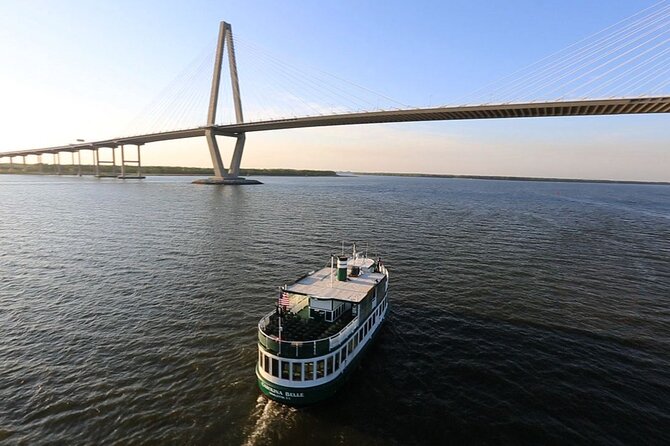
You’ll start at the Charleston Maritime Center in the French Quarter area, board the 80-foot Carolina Belle, and then float along the Cooper River at a relaxed pace. You can pick morning, afternoon, or sunset departures depending on how much you want scenery versus classic Golden Hour light. Drinks are sold onboard, and you’ll end back where you started.
At $44.50 per person, this isn’t a “quick look and snap photos” trip. It’s built to give you context while you watch the shoreline slide by. If you want a history walk with views, it’s a solid use of time in Charleston.
In This Review
- Quick hits before you go
- From the French Quarter to the Carolina Belle: where it starts
- The 90-minute plan: how the Cooper River route is paced
- Fort Sumter close-up views: why this stop anchors the whole cruise
- WWII-era USS Yorktown and the story of overlapping eras
- Fort Moultrie, Fort Johnson, and St. Michael’s steeple: the details worth leaning into
- Cooper River bridges and the Arthur Ravenel Jr. Bridge pass
- Charleston Waterfront Park: the end-of-route scenery
- Dolphins, pelicans, and the “watch your horizon” mindset
- Daytime versus sunset departures: what changes in real life
- Price and value at $44.50: what you’re really buying
- Seating, decks, and comfort on a full 80-foot boat
- Accessibility, getting on board, and who this fits
- Should you book the Charleston Harbor History Cruise?
- FAQ
- How long is the Charleston Harbor History cruise?
- Where does the cruise depart from?
- Is the tour narrated?
- What landmarks will I see?
- Does the cruise offer sunset departures?
- Are drinks available onboard?
- What’s the seating setup like?
- What happens if the weather is bad?
Quick hits before you go
- Captain narration you can actually hear while you scan the shoreline for forts and famous landmarks
- Fort Sumter close-up angles as you cruise toward Fort Sumter National Monument
- WWII-era USS Yorktown views plus Civil War forts like Moultrie and Johnson
- Bridges + city waterfront including the Arthur Ravenel Jr. Bridge pass
- Nature sightings possible with bottlenose dolphins and pelicans over the water
- Arrive early for the top deck if you want the best viewing comfort
From the French Quarter to the Carolina Belle: where it starts
Your tour starts at the Charleston Maritime Center at 10 Wharfside St, right in Charleston’s French Quarter zone. That’s a convenient launch point because you can pair it with other downtown time before or after the cruise.
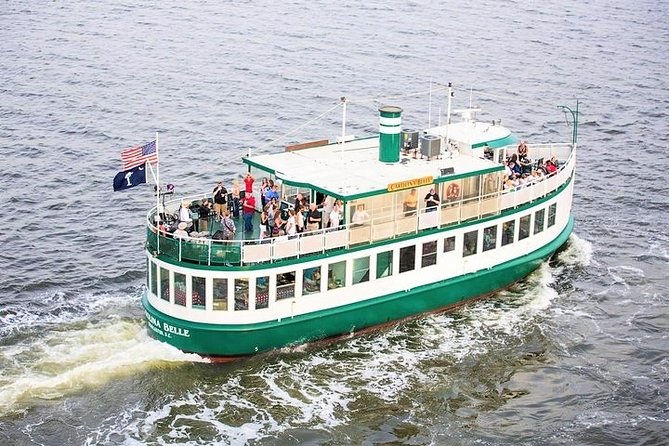
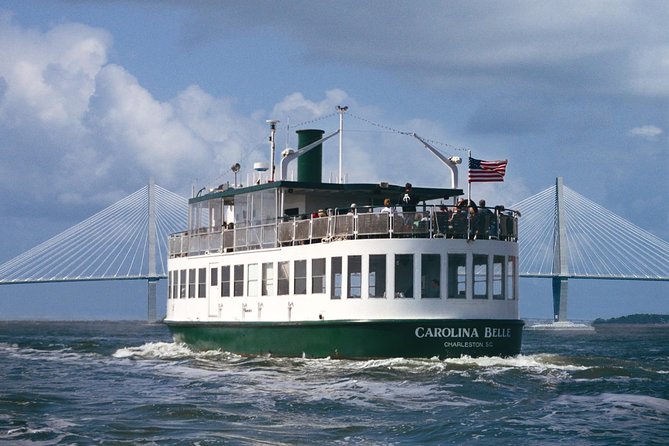
The boat is the Carolina Belle, an 80-foot sightseeing vessel. Boarding is straightforward: you’ll step onto the top deck first, with stairs down to the lower level. Restrooms are on the top deck, so plan your “quick breaks” there if you want to avoid extra up-and-down walking.
This is also a real-deal city cruise, not a deep-sea outing. You’re moving along the harbor and Cooper River corridor, which means you get constant visual variety without feeling like you’re on a long, boring ride.
Back on the water soon? Browse more Charleston harbor cruises.
- Charleston Harbor History Day-Time or Sunset Boat Cruise★ 4.5 · 2,788 reviews
- Charleston: Daytime or Sunset Historic Harbor Cruise★ 4.5 · 1,352 reviews
- Charleston Water Taxi Cruise with Dolphin Sighting★ 5.0 · 857 reviews
The 90-minute plan: how the Cooper River route is paced
The cruise runs about 1 hour 30 minutes. That length matters because it’s long enough for the captain’s story to connect the dots, but short enough that it doesn’t steamroll your day.
A typical flow is simple: you leave Charleston Maritime Center, head along the Cooper River, take in major shoreline landmarks, pass under bridges, and then return to the same starting point for drop-off. Because it’s a sightseeing route, you won’t be sitting in one place waiting for your turn—you’ll see different viewpoints as the boat tracks the waterfront.
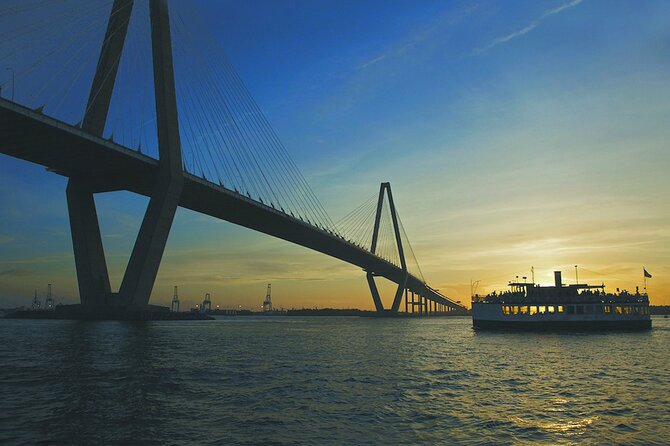
You can also choose morning, afternoon, or sunset timing. The daytime sails tend to feel more “history-focused,” while sunset sails can shift more toward scenery and atmosphere (expect fewer details and more lighting benefits as the sky darkens).
Fort Sumter close-up views: why this stop anchors the whole cruise
Fort Sumter is the headline, and the route is set up to bring you close. As the boat heads toward Fort Sumter National Monument, you get the kind of angles that make it easier to understand why this site mattered.
What I’d watch for: the way the coastline and fort layout make military sense. The captain’s narration usually ties what you see to the first shots of the Civil War, so you’re not just staring at stone—you’re learning how the geography shaped the conflict.
Even if you’ve seen photos online, seeing Fort Sumter from the harbor gives you a better sense of distance and scale. It also makes the story feel immediate, because you’re physically moving along the same water corridor tied to those events.
WWII-era USS Yorktown and the story of overlapping eras
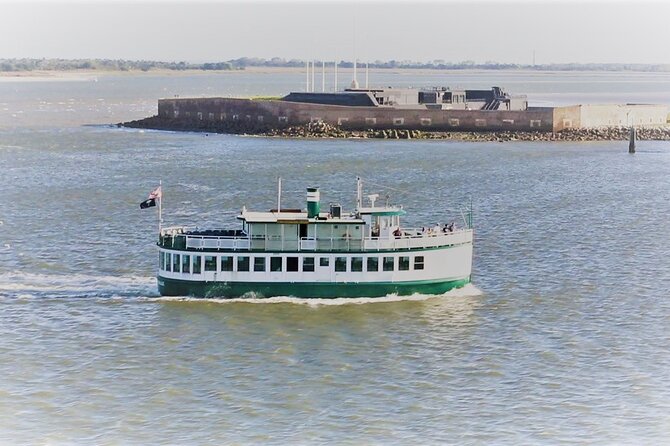
One of the smart touches here is how the narration stitches multiple time periods into one trip. Along the route, you pass the Essex-class USS Yorktown, often called the Fighting Lady aircraft carrier, which earned battle stars during WWII.
This matters because Charleston’s waterfront doesn’t belong to only one era. The city’s coastal story keeps layering—Revolutionary-era survival, Civil War fortifications, and then modern military history. From the boat, those shifts feel clear because you’re watching the harbor change while the captain keeps the timeline moving.
If you like history with context, this part is a win. You’re not asked to memorize dates while bouncing around. Instead, you get a moving timeline tied to landmarks you can actually point at.
Fort Moultrie, Fort Johnson, and St. Michael’s steeple: the details worth leaning into
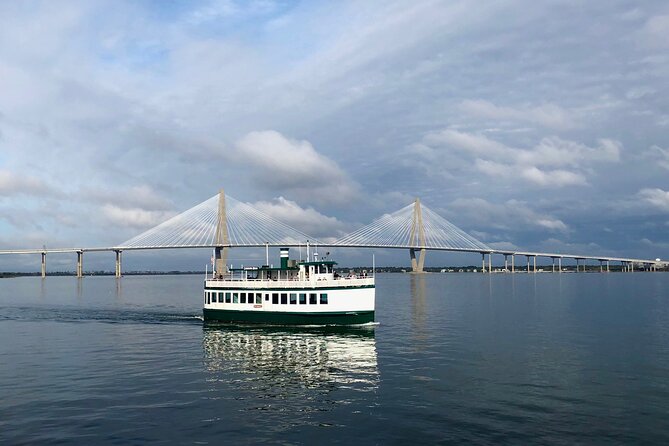
The cruise also passes key forts tied to both sides of the Civil War. Fort Moultrie and Fort Johnson sit in the larger picture as places where Confederate and Union soldiers were housed. Seeing them from the harbor helps you understand why these sites were chosen and how they functioned as defenses across the water.
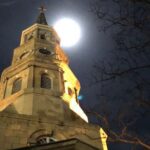
Then there’s St. Michael’s Episcopal Church. One of its most striking details is the steeple painted black so it wouldn’t be an easy target during fighting. From the water, that kind of detail becomes more than trivia—it’s a reminder that even a church steeple had to adapt to war.
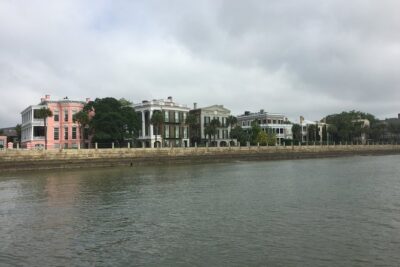
The Battery is another big draw. You’ll pass stately antebellum homes along the Battery, and this is where the cruise gives you the “Charleston elegance” side of the story, not just forts and cannons. If you’ve ever wondered how the city could be both graceful and heavily strategic, the waterfront makes that contrast visible fast.
Catch another golden hour on more Charleston sunset sails and dolphin cruises.
Cooper River bridges and the Arthur Ravenel Jr. Bridge pass
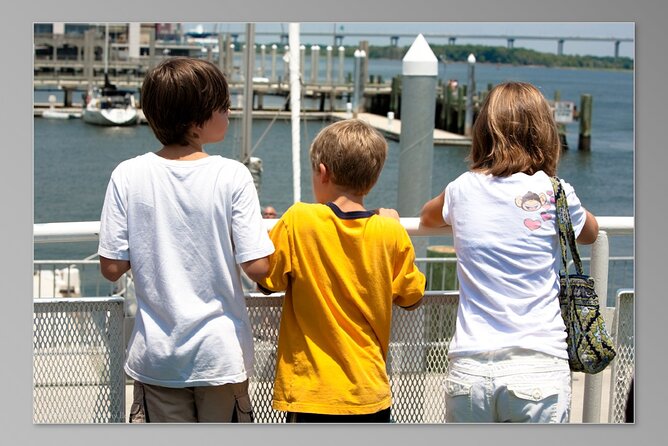
One of the most practical reasons to do this cruise is the bridge views. You’ll pass Cooper River bridges, including the Arthur Ravenel Jr. Bridge, which is a modern link between downtown Charleston and Mount Pleasant.
This is where you get a strong sense of how the city is built around water access. It’s also a “today’s Charleston” moment tucked between the older landmarks—so your trip doesn’t feel like it’s stuck in the past the whole time.
If you’re photographing, bring your eyes as much as your camera. The bridge gives you a clean frame for skyline shots, and the motion of the boat helps you see the harbor in layers instead of as one flat postcard view.
Charleston Waterfront Park: the end-of-route scenery
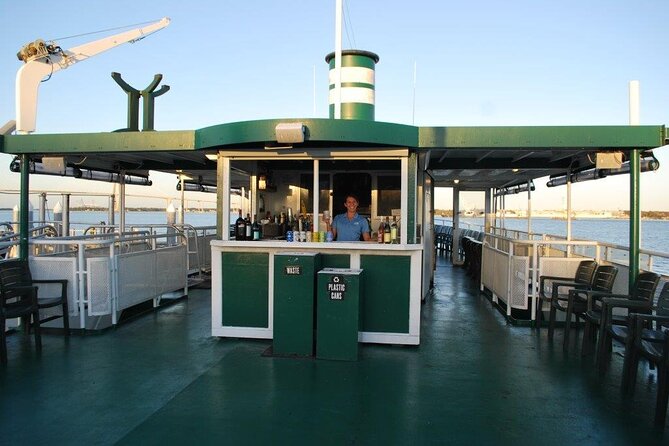
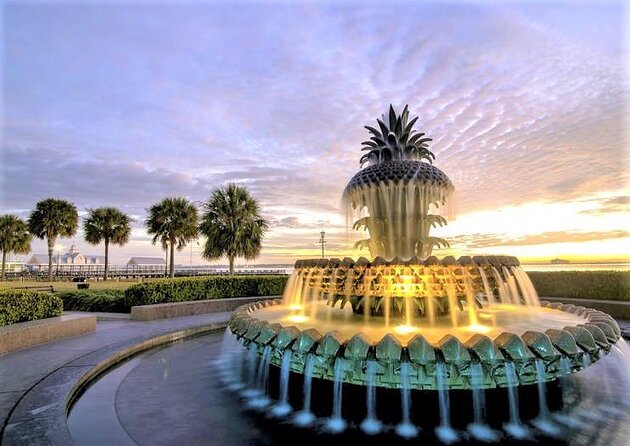
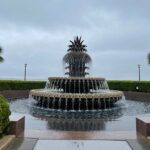
The cruise includes views of the Charleston Waterfront Park area. This is a more relaxed, modern-feeling waypoint, and it’s a good reminder that the harbor is a living place, not just a historic set.
You’ll get a final sweep of the waterfront as you head back toward the Charleston Maritime Center. It’s a nice wrap because it ties together what you’ve just learned: defenses, ships, and neighborhoods all arranged along the same waterline.
Dolphins, pelicans, and the “watch your horizon” mindset
Sometimes the best moments are the simple ones. Because this is water cruising, it’s possible you’ll spot bottlenose dolphins skimming the surface and pelicans swooping for food.
You don’t need to be a wildlife expert. The key is to keep your attention up and out while the captain is talking. The captain’s narration is the backbone, but the horizon is where the surprise moments happen.
If you’re going with kids, this is often the part that turns history talk into pure excitement. Even adults who came for Fort Sumter usually end up enjoying the nature sightings too.
Daytime versus sunset departures: what changes in real life
The cruise offers multiple departure times, including sunset. Here’s the practical difference to plan for:
- Daytime sails often feel more like a “history cruise,” with more narrative focus as you pass landmarks.
- Sunset sails can shift toward views and atmosphere. Expect the scenery to be the star, and plan that the narration may feel lighter depending on timing.
Sunset also changes your priorities for comfort. Seats and viewing angles matter more when people are trying to catch the light. If you’re chasing the best views, aim to arrive early and be ready to pick a side of the boat that fits your photo goals.
Price and value at $44.50: what you’re really buying
At $44.50 per person, you’re paying for three things: time, access, and a guided story. You’re not just getting a boat ride. You’re getting an 80-foot sightseeing boat route built around Charleston’s most recognizable water landmarks.
Value-wise, the big question is whether you’ll use the narration. If you like understanding what you’re looking at, this price makes sense. If you only care about photos and don’t want to pay for guidance, you might feel like a shorter, less structured cruise would be enough. But for many visitors, the captain’s storytelling turns the waterfront into something you can remember later.
One cost note: drinks (including alcoholic drinks) are available to purchase onboard. If you want bottled water or sodas, keep in mind that onboard prices may be higher than you expect. This isn’t unusual for boats, but it’s worth factoring into your budget.
Seating, decks, and comfort on a full 80-foot boat
This is where you can make or break your experience. The Carolina Belle has a top deck where boarding begins and restrooms are located, plus a lower level reached by stairs. On busy departures, top-deck seating can run out, and you may end up standing for parts of the ride.
So my practical advice is simple: arrive early if you want a seat. Reviews often mention limited seating and crowding during full sailings. If you end up standing, keep comfortable shoes in mind and consider bringing a light layer in case it cools off on the water.
Also, the lower level can feel less ideal for sightlines. If your goal is to see the landmarks clearly when the captain points them out, the top deck is your best bet. In other words: don’t choose the lower deck thinking it’s the same experience. It’s not.
For motion and weather comfort, you’re on the harbor, not the open ocean. Still, bring a sensible plan for wind and changing light, especially on sunset cruises.
Accessibility, getting on board, and who this fits
This cruise is designed to be fairly easy to join. There’s a flat pier out to the boat, and the boarding ramp is about 30 feet long. You’ll board on the top deck, then stairs lead down to the lower level, and restrooms are on the top deck.
Service animals are allowed, and the meeting area is near public transportation. That’s helpful if you’d rather not rely on parking downtown.
In terms of who this tour suits: it’s great for couples, families, and first-time Charleston visitors. It works well for people who want a “big overview” without hiking or driving from site to site.
Should you book the Charleston Harbor History Cruise?
Book it if you want a guided waterfront story with Fort Sumter and WWII-era context in one tight, 90-minute window. It’s especially worth it if you like your sightseeing paired with clear narration—this one is built around landmarks, not just general talk.
Skip or adjust your expectations if you’re sensitive to crowding. On fuller sailings, top-deck seating can be limited, so you’ll need to choose between a seat early or accepting standing time. Also, if you’re doing sunset, plan on the vibe being more scenic than lecture-like.
If you like practical history, good views, and a smooth schedule, this cruise is a strong Charleston bet.
FAQ
How long is the Charleston Harbor History cruise?
It runs for about 90 minutes.
Where does the cruise depart from?
You meet at the Charleston Maritime Center at 10 Wharfside St, Charleston, SC 29401, and the cruise ends back at the same meeting point.
Is the tour narrated?
Yes. The captain provides fully narrated commentary during the cruise.
What landmarks will I see?
You’ll pass or get close views of Fort Sumter, the USS Yorktown, Fort Moultrie and Fort Johnson, St. Michael’s Episcopal Church (noted for its blackened steeple), stately homes along the Battery, the Arthur Ravenel Jr. Bridge, and views of Charleston Waterfront Park. Dolphins and pelicans may also be spotted.
Does the cruise offer sunset departures?
Yes. You can choose from morning, afternoon, or sunset departure times.
Are drinks available onboard?
Yes. Drinks are available to purchase during the trip, including alcoholic drinks.
What’s the seating setup like?
You board on the top deck, with stairs to the lower level. Restrooms are on the top deck, and the tour can be crowded when departures are full.
What happens if the weather is bad?
The experience requires good weather. If it’s canceled due to poor weather, you’ll be offered a different date or a full refund.
More Charleston Tours Worth Booking





More Sunset Sails & Dolphin Cruises in Charleston


More Historic Charleston Harbor Cruises


Still deciding? Here are the newest Charleston tours and experiences we have reviewed








Sunset Sails & Dolphin Cruises, compared.
 ★ 5.0Charleston Harbor Sunset CruiseFrom $60905 reviews
 ★ 5.0Charleston Water Taxi Cruise with Dolphin Sighting857 reviews
 ★ 4.5Sightseeing Harbor Tour & Dolphin WatchFrom $40649 reviews
 ★ 4.5Afternoon Schooner Sightseeing Dolphin Cruise on Charleston HarborFrom $45620 reviews
 ★ 5.0Private Luxury Yacht Charters, BYOB & DolphinsFrom $499395 reviews
 ★ 4.8Sunset Harbor CruiseFrom $60260 reviews
 ★ 4.6Schooner Sailing Harbor Tour & Dolphin WatchFrom $48255 reviews
 ★ 3.5Charleston Sunset Blues & BBQ Dinner CruiseFrom $72148 reviews
Browse the lists this tour appears in