
Reviewed · HISTORIC DISTRICT WALKING TOURS
Charleston Architectural Walking Tour
Charleston’s buildings tell stories fast. This 2-hour walking tour threads through some of the city’s best-known architecture, with a guide who keeps the conversation going and makes the details stick. I especially like the mix of church architecture plus waterfront views, so you get both design lessons and real street-level atmosphere.
I also like the pace and the group size. With a maximum of 10 people, it feels easier to ask questions and keep up as you move from stop to stop. If you’re the type who likes to probe, that format helps.
One consideration: this is a good-weather walk. If conditions are poor, the tour can be canceled and you’ll need a backup plan, since it runs outdoors for most of the experience.
In This Review
- Key highlights of the Charleston Architectural Walking Tour
- Two hours of Charleston architecture: what the walk feels like
- St. Michael’s Church: design influence and graveyard atmosphere
- South Battery and White Point Gardens: seawall views with built-in context
- Nathaniel Russell House: preservation that keeps details readable
- French Huguenot Church: the last active one, built in 1845
- Price and value: is $50 worth it?
- What you’ll learn (and what you’ll notice later)
- Who this tour is best for
- Should you book this Charleston Architectural Walking Tour?
- FAQ
- What is the duration of the Charleston Architectural Walking Tour?
- How much does the tour cost?
- Where does the tour start and end?
- What sites are included on the tour?
- Do I need to pay admission fees at the stops?
- What language is the tour offered in?
- What happens if the weather is poor or I cancel?
Key highlights of the Charleston Architectural Walking Tour
- Small group cap (max 10) for a more conversational walk
- St. Michael’s Church focus on design influence plus the quirks and graveyard atmosphere
- South Battery + White Point Gardens time set aside for the seawall and mansion views
- Nathaniel Russell House preservation and the specific features that make it distinct
- French Huguenot Church as the last active French Huguenot church in the US, built in 1845
- Multiple stops with free admission tickets, so you pay for the guide, not site entry
Two hours of Charleston architecture: what the walk feels like
This tour starts at 18 Vendue Range and runs from 9:30 am, ending at the Four Corners of Law area on Broad Street and Meeting Street. The schedule is built around short, focused visits, not long museum-style stands. That matters in Charleston, where you want your time to feel purposeful, not rushed.
With an approximate duration of 2 hours, you’ll be walking enough to feel the neighborhood rhythm, but not so long that you burn the whole day. The stop timing also suggests a style that’s meant for learning by looking: brief pauses, then movement, then another set of observations. I like this approach because it makes the architecture feel practical, like something you can spot and interpret on your own afterward.
Another plus for planning: it uses a mobile ticket and the tour is offered in English. You’ll get confirmation at booking time, and the experience allows service animals. It’s also marked as being near public transportation, which is helpful if you’re trying to keep logistics low-effort.
Trade one set of cobblestones for another with more Charleston walking tours.
- Historic Charleston Guided Sightseeing Walking Tour★ 5.0 · 6,216 reviews
- Charleston Horse-Drawn Carriage Tour: Explore Historic Charleston★ 5.0 · 3,561 reviews
- Ghosts of Charleston Night-Time Walking Tour with Unitarian Church Graveyard★ 4.5 · 2,835 reviews
St. Michael’s Church: design influence and graveyard atmosphere
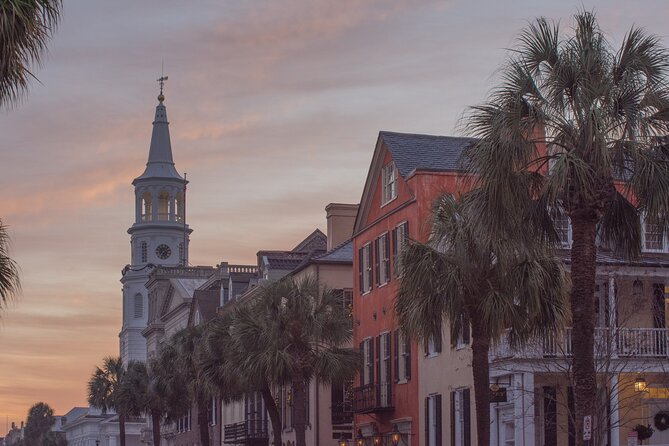
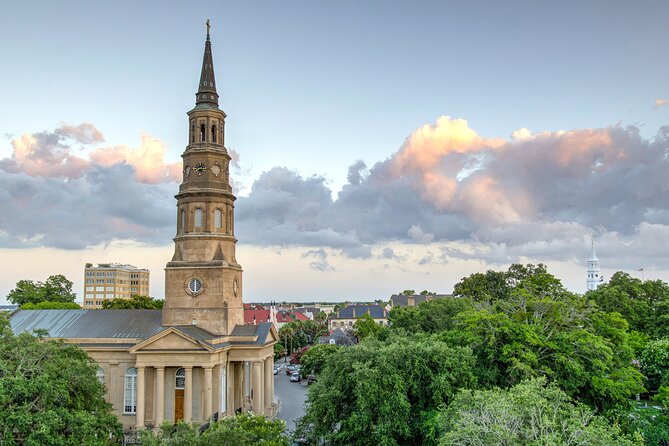
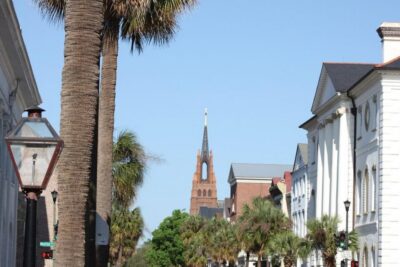
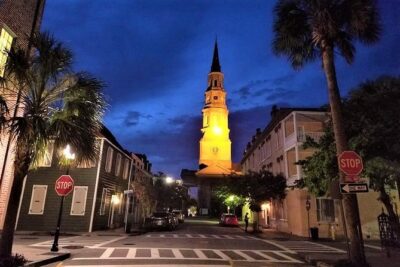
The first stop is St. Michael’s Church. You’ll spend about 10 minutes here, and the conversation centers on the church’s history and design influence, plus the quirks you can notice, and the feel of the graveyard. Even if you’ve seen a lot of old churches, this kind of stop works because it gives you a checklist of what to look for rather than just general storytelling.
St. Michael’s is a strong anchor for the whole tour. It sets the tone for Charleston’s mix of formality and personality: places that look formal at first glance, but reward closer attention. The graveyard part is especially effective because it changes how you read the site. You start thinking about the building as part of a living timeline, not just a backdrop.
A practical note: churches often have their own rules about noise and where you can stand. Even though the stop is short, you’ll get more out of it if you’re ready to slow down, listen, and look without trying to multitask.
South Battery and White Point Gardens: seawall views with built-in context
Next you head to the Battery and White Point Gardens area. You’ll get two separate chunks of time here: one of about 15 minutes, then later another 20 minutes. That split makes sense. You’re not just passing through a scenic stretch. You’re being guided to notice architectural patterns and then given time to absorb the view.
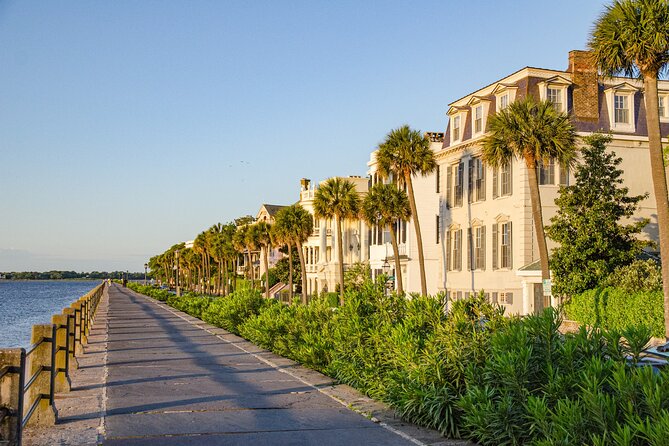
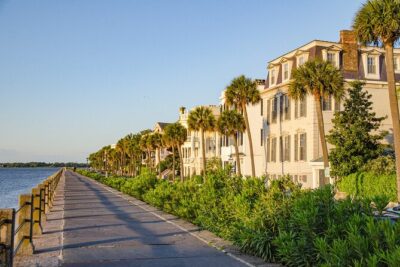
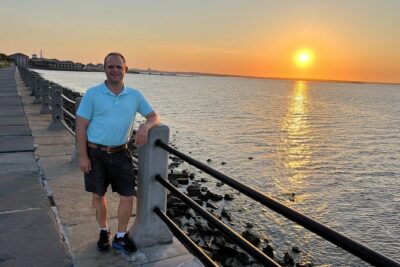
The highlight is the South Battery: the seawall, the mansion-lined outlook, and the overall architectural framing along the waterfront. The tour approach helps you avoid the common trap of only taking photos. Instead, you learn how to read what you’re looking at: the placement, the relationship between buildings and the water, and why the waterfront feels so iconic.
White Point Gardens is the kind of stop where context turns a pretty scene into something more meaningful. With the guide’s framing, the gardens don’t feel like a pause on the walk. They feel like a viewpoint that connects Charleston’s architecture to how the city grew and how people lived with the water at arm’s reach.
If you’re visiting during sunny hours, this is where you’ll likely feel the walk the most. There isn’t any hidden trick here: bring water if it’s warm, wear shoes that work well on sidewalks, and plan on using your short rest breaks wisely.
Nathaniel Russell House: preservation that keeps details readable
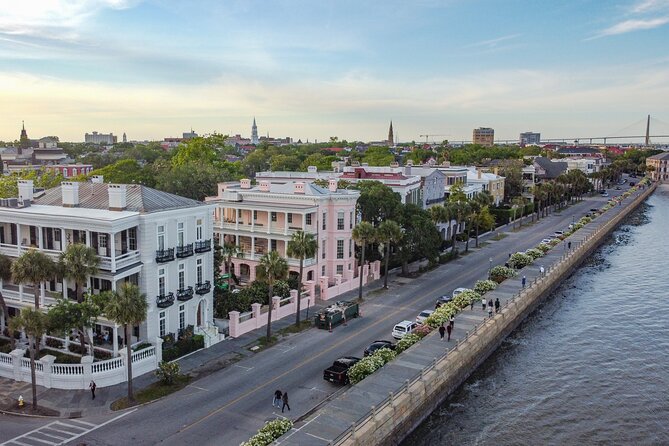
A quick stop follows at the Nathaniel Russell House, with about 5 minutes set aside. That brevity might sound like a lot of rushing, but it’s actually a smart use of time. When a site is smaller or more focused, you get the essentials: how it’s preserved and the distinct features that make it unique.
This is the kind of stop I recommend for anyone who likes architecture for the reasons beyond scale. You start noticing that preservation is not just keeping a building standing. It’s keeping the details readable enough to understand why the design matters. Even in a short window, you’re likely to come away with a sharper sense of what separates this house from the general category of historic homes.
The drawback to a short stop is obvious: if you want to linger, you may feel you’re packing your attention into a small time slot. Still, the value is that you don’t waste time getting the big picture. Then you move on while the idea is fresh.
French Huguenot Church: the last active one, built in 1845
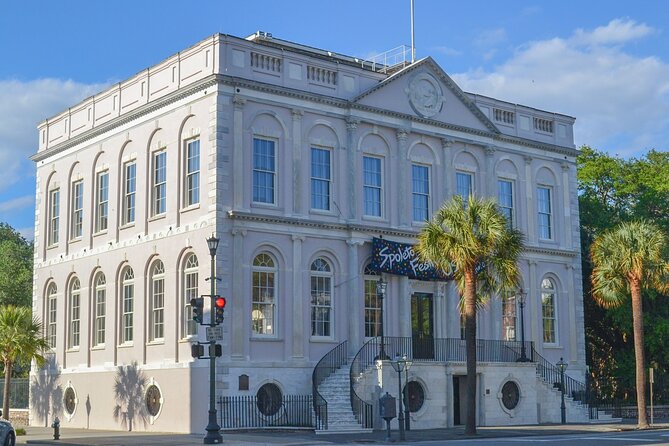
Another key stop is the French Huguenot Church, about 8 minutes. The tour frames it as the last active French Huguenot Church in the US, built in 1845. That combination of date and ongoing function makes the visit feel more grounded than a purely historical site.
Why this matters to you: a lot of old churches become silent monuments. Here, the emphasis on it being still active reminds you that architecture is connected to community, not just aesthetics. You’re not only learning about what was built. You’re learning about what continued.
You’ll also likely appreciate the contrast it creates with earlier stops. The tour isn’t only telling you that Charleston has old structures. It’s showing how different communities shaped the city, each with their own identity. With a short stop like this, the most helpful thing you can do is keep your mind open. Let the guide’s framing do the heavy lifting of connecting the architecture to the people.
Look up at more porches and piazzas on our other Charleston architecture tours.
Price and value: is $50 worth it?
At $50 per person for about 2 hours, this isn’t a “cheap and forget it” walking tour. It also isn’t priced like an all-day, multi-activity tour. So the real question is value: what are you paying for?
Here’s the practical math. The stops you visit list admission ticket free at each location. That means you’re paying primarily for interpretation and access to multiple landmark viewpoints in a tight time window. You also get a small group (max 10), plus a guide who stays responsive when you ask questions. One of the most praised elements from recent experiences is exactly that: the guide stayed engaged, circled back to the topic, and didn’t shut down when questions kept coming.
Also, the tour is offered in English and uses a mobile ticket, which tends to reduce friction on the day. You’re not dealing with paper tickets, and you can plan your arrival at the start point more confidently.
Finally, it’s getting booked ahead: it’s commonly booked about 18 days in advance on average. That’s a small sign of popularity, and Charleston tours often sell out for good-weather days. If you’re traveling in peak season or around major events, it’s smart to reserve early rather than hoping.
What you’ll learn (and what you’ll notice later)
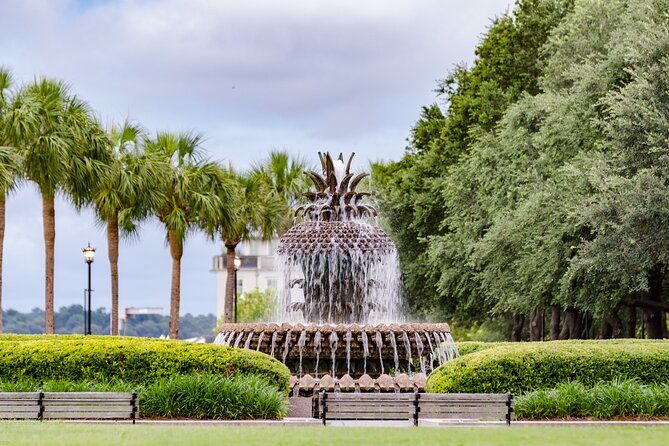
Even if you’ve walked around Charleston before, a focused architectural tour can reset how you look at the city. This one is built to teach you patterns: how churches shape the street presence, how waterfront building lines create a visual experience, and how preservation helps you understand specific features instead of treating historic homes as anonymous old buildings.
The most useful part for me is that it ties the visible to the interpretive. You don’t just hear that a site is old. You learn how its design choices and context create meaning. Then, when you walk away, you start spotting the same themes around you: building form, placement, and the way public spaces relate to private structures.
The short, timed stops also work in your favor. You’re not stuck waiting for one long explanation. You get a chunk of learning, a chance to look, then you move on.
Who this tour is best for
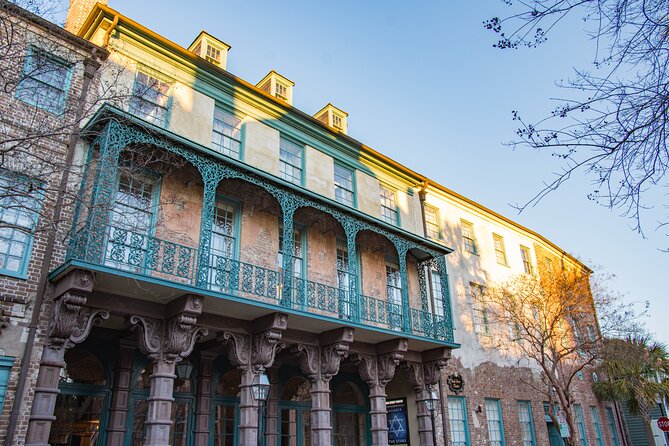
This tour fits best if you like architecture and want a guided framework without the commitment of a full day. It’s also a good match if you’re visiting Charleston for the first time and you want your bearings quickly through the city’s most recognizable historic spaces.
It’s especially suitable for:
- People who enjoy asking questions and talking through details while walking
- Travelers who want a small group experience rather than a large crowd shuffle
- Visitors who want both church architecture and the Battery waterfront in one outing
If you’re the type who hates walking, this may not be your easiest option. It’s labeled as most travelers can participate, but it still functions as an outdoor walking tour. Come prepared to move at a comfortable pace.
If your schedule is flexible and you like to be outside in the morning, you’ll probably enjoy the timing. Starting at 9:30 am often helps you get a head start before the day’s heat ramps up.
Should you book this Charleston Architectural Walking Tour?
I think this one is a solid booking when you want a guided, high-focus overview of Charleston architecture without paying for entry fees at multiple sites. The biggest reasons to choose it are the combination of small group size, free admission at the stops, and a guide who stays responsive when you ask follow-up questions.
You should consider passing or rescheduling if:
- You’re traveling during a stretch of uncertain weather, since the experience requires good conditions
- You don’t like guided walks and prefer to wander independently
- You want longer time at any single building, since several stops are intentionally short
If you like architecture, want a practical framework, and can do a morning walk, you’ll likely get good value from this $50 experience.
FAQ
What is the duration of the Charleston Architectural Walking Tour?
It runs for about 2 hours.
How much does the tour cost?
The price is $50.00 per person.
Where does the tour start and end?
It starts at 18 Vendue Range, Charleston, SC 29401 and ends at Broad Street & Meeting Street, at the Four Corners of Law area.
What sites are included on the tour?
You’ll visit St. Michael’s Church, Battery & White Point Gardens, Nathaniel Russell House, and the French Huguenot Church.
Do I need to pay admission fees at the stops?
The stops are listed with Admission Ticket Free, so there are no separate admission tickets mentioned for those locations.
What language is the tour offered in?
The tour is offered in English.
What happens if the weather is poor or I cancel?
The experience requires good weather. If it’s canceled due to poor weather, you’ll be offered a different date or a full refund. You can cancel for a full refund up to 24 hours in advance. Within 24 hours, the amount paid is not refunded.
More Charleston Tours Worth Booking






More Architecture & Homes Tours in Charleston





More Historic District Walking Tours in Charleston

Still deciding? Here are the newest Charleston tours and experiences we have reviewed









Historic District Walking Tours, compared.
 ★ 5.0Historic Charleston Guided Sightseeing Walking TourFrom $306,216 reviews
 ★ 5.0Charleston Horse-Drawn Carriage Tour: Explore Historic CharlestonFrom $493,561 reviews
 ★ 4.5Ghosts of Charleston Night-Time Walking Tour with Unitarian Church GraveyardFrom $352,835 reviews
 ★ 5.0Hidden Alleyways and Historic Sites Small-Group Walking TourFrom $342,335 reviews
 ★ 5.0Highlights of Charleston Guided Walking Tour2,206 reviews
 ★ 5.0Charleston Haunted Booze and Boos Ghost Walking TourFrom $391,569 reviews
 ★ 5.0Charleston’s Pleasing Terrors Night-Time Walking Ghost TourFrom $291,345 reviews
 ★ 5.0Charleston historical walking tour with a Professor of History at The CitadelFrom $401,284 reviews
Browse the lists this tour appears in