

Reviewed · HISTORIC DISTRICT WALKING TOURS
Charleston History, Homes, and Architecture Guided Walking Tour
Charleston history is easier on your feet. This guided walking tour strings together key downtown stops with architecture you can actually see, plus Powder Magazine Museum time with included tickets. You’ll move at a human pace with a pro local guide, and you can choose a morning or afternoon departure.
Two things I really liked: first, the way guides such as Dennis and Duggar explain the buildings without making it a lecture. Second, the tour feels well paced, with frequent pauses at major sites and good attention to comfort—one guide even worked in humor while covering serious topics with care.
The main thing to plan for is walking. It’s a 2-hour outdoor route in all weather, so bring comfy shoes and expect some stops with little shade, and in a couple of stories the info can run long depending on the guide.
In This Review
- Key Highlights You’ll Feel On This Walk
- Starting Outside City Hall on Broad Street
- Washington Square: A Quick Stop That Sets the Stage
- St. Michael’s Episcopal Church and George Washington’s Connection
- Rainbow Row: Georgian Houses and Real-World Porch-Level Detail
- The Old Exchange & Provost Dungeon: Where the Stories Feel Close
- Down Toward the Battery and White Point Gardens Seawall Walk
- Powder Magazine Museum: Using the Included Ticket Like a Pro
- How the Tour Helps You Understand Charleston’s Big Turning Points
- Price and Value: Why $28 Can Feel Like a Bargain
- What to Bring and How to Time Your Visit
- Should You Book This Charleston Walking Tour?
- FAQ
- How long is the Charleston History, Homes, and Architecture Guided Walking Tour?
- Where does the tour start and end?
- Is the Powder Magazine Museum included?
- Do I need to print a ticket?
- Are there morning and afternoon departure times?
- How big is the group?
- Does the tour run in bad weather?
- What should I bring?
- Is it wheelchair-friendly or accessible?
- Is there free cancellation?
Key Highlights You’ll Feel On This Walk
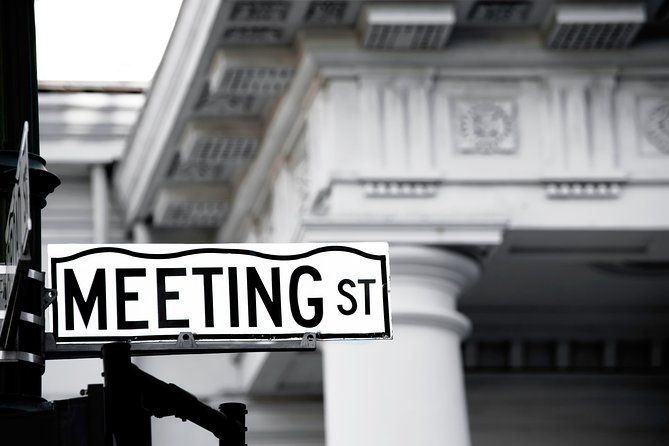
- Licensed local guides who bring the streets to life, often with a light tone and personal anecdotes (like Dennis and Al).
- Rainbow Row + South of Broad homes, letting you see the architecture up close instead of just reading about it.
- St. Michael’s Church and Washington Square, two stops that help you connect Charleston’s civic and religious past.
- Old Exchange & Provost Dungeon, a short visit that still packs big stories about pirates, patriots, and presidents.
- Battery seawall views and mansions, where you can understand why Charleston looked (and built) the way it did.
- Powder Magazine Museum entrance included, so you can extend the day without paying extra.
Starting Outside City Hall on Broad Street
Your tour begins at 80 Broad St, outside Charleston City Hall. This is a smart starting point because Broad Street is where so many downtown “threads” meet—government, commerce, and the grid-like streets that shape how Charleston feels today. You’ll start with an easy orientation, then head out on foot.
City Hall sits within the idea of the Four Corners of Law, and the guide uses that to set the tone: how Charleston’s power was organized, and why the city’s most important buildings weren’t scattered randomly. The group is kept small—up to 20 people—which matters. It helps you hear the guide clearly and makes it easier to stop without the whole street feeling blocked.
You’ll also want to be mentally ready for the route style. This is not a “hop-on-hop-off” tour. You’ll be outside for much of the experience, so if it’s hot, bring water; if it rains, dress for it. One practical tip shows up again and again in guide feedback: good shoes and water make the whole thing easier.
Trade one set of cobblestones for another with more Charleston walking tours.
- Historic Charleston Guided Sightseeing Walking Tour★ 5.0 · 6,216 reviews
- Charleston Horse-Drawn Carriage Tour: Explore Historic Charleston★ 5.0 · 3,561 reviews
- Ghosts of Charleston Night-Time Walking Tour with Unitarian Church Graveyard★ 4.5 · 2,835 reviews
Washington Square: A Quick Stop That Sets the Stage
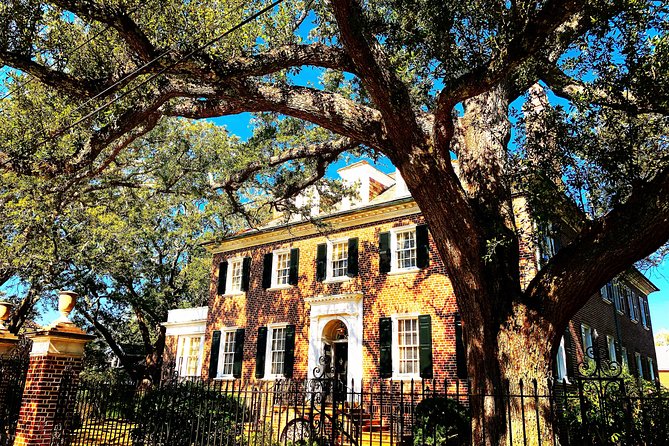
Next comes Washington Square Park, a short walk and a natural “breather” before the more iconic landmarks. This stop helps you understand Charleston as a living city, not just a museum. Parks and squares here were historically social and civic spaces—places where people gathered, watched, traded stories, and kept an eye on what was happening.
Even if you only have a few minutes, it’s useful. You’ll get a short explanation of why this spot matters, then you’ll move on without feeling like you’ve lost time. It’s the kind of stop that works for first-time visitors because it gives context before you hit the big-picture photo stops.
If you’re the type who likes to connect the dots, don’t rush through it. Look around for sightlines and the way the streets feed into the square. That’s the visual “map” your guide will keep referencing as the walk continues.
St. Michael’s Episcopal Church and George Washington’s Connection
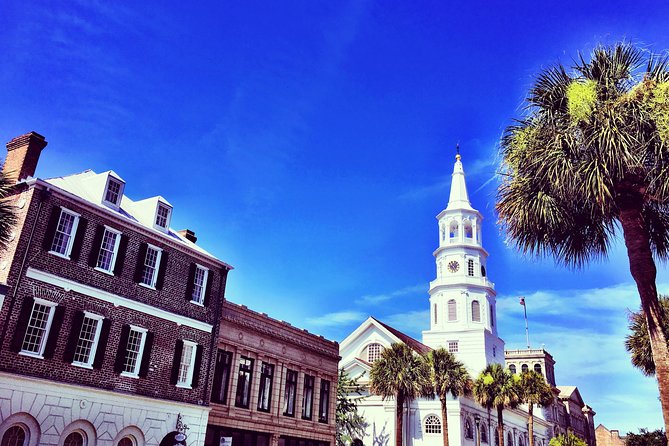
St. Michael’s Church is one of the most memorable moments on this walk. You’ll learn about this historic Episcopal church, and specifically the connection that George Washington once worshipped there. For many visitors, it’s a “wait, really?” kind of moment—one that turns Charleston from a pretty postcard into a place tied to the early days of the United States.
This stop also shows why architecture matters in Charleston. Churches are not just buildings; they’re a record of what a community valued and who had the power (and the wealth) to build. Pay attention to the details your guide points out—because once you know what to look for, the whole neighborhood changes. You start seeing the city as a timeline.
Time is limited here, so if you want extra depth, consider spending a bit longer on your own afterward. The tour itself gives you the framework; your extra time fills in the questions.
Rainbow Row: Georgian Houses and Real-World Porch-Level Detail
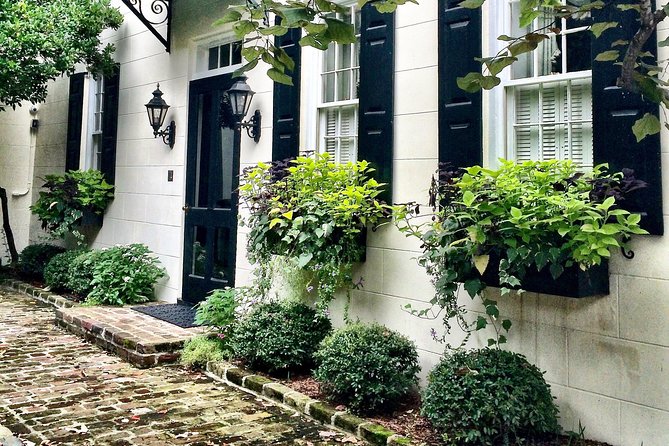
Rainbow Row is the star stop for a reason. You’ll walk along the colorful Georgian houses along East Bay Road and hear what makes them significant. It’s the kind of place where a photo tells you the color, but a guide helps you understand the why—how the houses reflect Charleston’s growth, wealth, and changing tastes over time.
What I like about this portion is that it’s not treated like a postcard line. The guide uses the houses to talk about building style and local evolution, so you’re learning as you look. You also get a chance to notice small design cues from street level—proportions, facades, and how the street layout frames the view.
Practical tip: expect a crowd vibe here at times. Bring patience and let the group’s flow do its thing. The guide usually keeps moving just enough to avoid turning Rainbow Row into a standing-still bottleneck.
The Old Exchange & Provost Dungeon: Where the Stories Feel Close
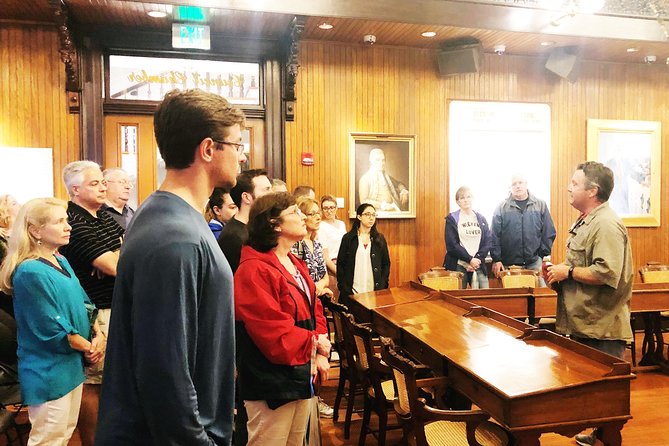
Then you’ll head to the Old Exchange & Provost Dungeon. This is one of those stops that feels like it should take an hour, but the tour gives you the essential story beats quickly. Your guide focuses on why the Old Exchange Building is so historic in South Carolina, and then connects it to the dungeon with a 300-year thread that includes pirates, patriots, and presidents.
This is also one of the stops where your guide’s style really shows. People mention guides like Al and Dennis for balancing humor with serious content. In Charleston, you can’t cover the colonial and American eras without touching difficult subjects. The best guides handle that carefully, and the tour feedback points to guides who aim to be respectful when discussing Charleston’s slave history.
Because the dungeon and exchange are closely tied to power, justice, and control, this stop gives you a “how did people live and survive” perspective. It’s not only about dates; it’s about systems. Even a short visit can reframe what you think you’re seeing when you look at old streets and old buildings.
A small caution: if a specific story line goes long on your tour, you might feel it here. The fix is simple—listen for the themes, not each detail. Look at the building, take a breath, and let the guide’s main point land.
Look up at more porches and piazzas on our other Charleston architecture tours.

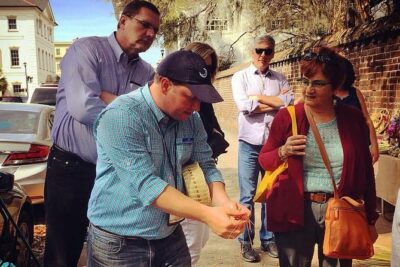




Down Toward the Battery and White Point Gardens Seawall Walk
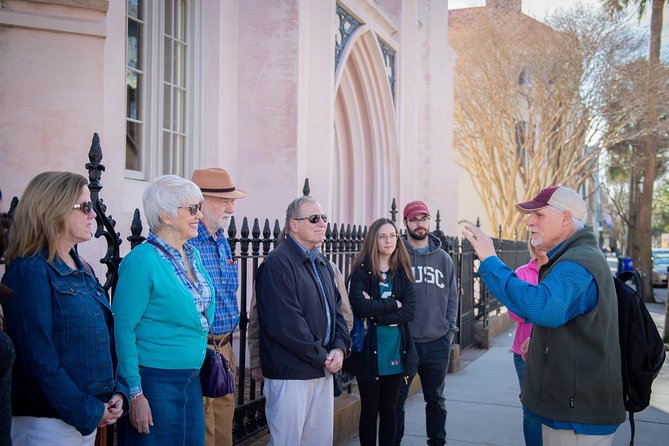
Next you’ll stroll near the Battery & White Point Gardens. This is where the walk shifts from street-and-facade detail to coastal perspective. You’ll move along the seawall and hear about the stately mansions that line the Battery.
Charleston’s waterfront setting shapes almost everything—trade routes, defense thinking, and where wealthy residents chose to build. Your guide uses the ocean-facing context to explain why these homes and streets make sense in their location. Even if you don’t know the architecture terms, you’ll understand the logic of the city’s layout.
This portion also tends to be a favorite because it feels scenic without requiring extra tickets for views. You’ll get that sense of scale: long sightlines, open space, and the contrast between the mansions and the everyday energy of the area.
Because the walk continues outdoors, pacing matters. Several guides in the feedback are praised for thoughtful pacing and keeping the group comfortable, including attention to heat and shade. Still, you’ll get more out of it if you dress for conditions and take sips of water as you go.
Powder Magazine Museum: Using the Included Ticket Like a Pro
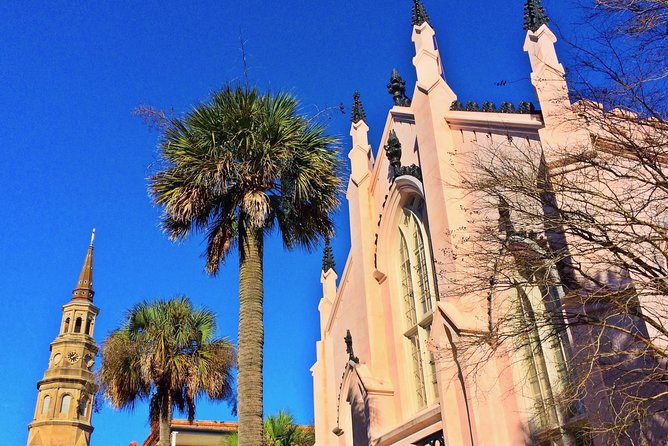
The tour includes entrance tickets to the Powder Magazine Museum, and you can explore it at your leisure. This is a smart add-on because it gives you a second layer without having to squeeze it into the two hours.
Why this works well: the walking tour is all about “where” and “how the city connects.” The museum time is where you can slow down and absorb more about what’s behind those streets and buildings. If you love architecture, you can use the museum to understand the city’s practical engineering and defensive history in a way that complements the exterior views.
You’ll want to plan your timing so the museum doesn’t become an afterthought. If your day is packed, pick a short window after the walk when you can still think clearly. Then you’re not just ticking a box—you’re connecting the museum content back to what you saw on the streets.
How the Tour Helps You Understand Charleston’s Big Turning Points
The guide ties together Charleston’s pivotal role in American history, especially from the American Revolution to the Civil War and beyond. You’ll hear these threads woven through the stops—city government buildings, churches, merchant-era architecture, and the exchange/dungeon story.
This is where the best guiding pays off. A good guide doesn’t just recite a timeline. They connect the past to what you’re standing near. When you’re at City Hall, you understand the civic power. When you’re at St. Michael’s, you understand religious influence. When you’re at the Old Exchange and dungeon, you understand law and control. And when you’re at the Battery, you understand how geography shaped decisions.
If you’re sensitive to historical topics, you’ll likely appreciate that guides on this tour are praised for handling slave history respectfully. That matters in Charleston, where so much of the architecture and wealth has complicated roots.
Price and Value: Why $28 Can Feel Like a Bargain
At $28 per person for about 2 hours, this tour is positioned as good value—especially because it includes museum entry to the Powder Magazine Museum. Even without doing mental math on museum ticket value, the bigger savings can be time and clarity: you’re paying for a licensed local guide who can point out what you’d otherwise miss.
This also helps first-timers. You get a compact overview of the historic district and key neighborhoods like the French Quarter and South of Broad. Instead of spending your whole first day trying to build a route, you follow a walk that’s designed to make sense.
The small group size (max 20) helps, too. If you’ve ever tried to learn in a big crowd, you know it can become noisy and rushed. Here, you’re more likely to get the “good questions and good listening” experience that makes the price feel justified.
What to Bring and How to Time Your Visit
Come prepared, because the tour runs in all weather conditions. That means you should plan for rain gear if skies look sketchy and sunscreen if it’s bright.
At minimum, I’d bring:
- Comfortable shoes for a steady 2-hour walk
- A water bottle, especially in summer heat
- Layering in cooler months, since outdoor walking can change fast
If you’re traveling with kids, children must be accompanied by an adult, and the tour is usually best for families who can handle walking and short explanations at each stop.
Timing matters in another way: the tour starts promptly, and one experience note indicates guides expect you to arrive early so check-in and restroom needs don’t slow the group down. If you hate being rushed, add a buffer to your arrival time.
Also, the end point is a few blocks from where you start, at 94 Battery Pl. If you want help returning to the start, the guide can walk you back if requested.
Should You Book This Charleston Walking Tour?
I think you should book this tour if you want an efficient first taste of downtown Charleston with real architecture and clear historical connections. It’s especially worth it if you like walking through neighborhoods and want a guide who can balance humor with the heavier parts of the story.
I’d skip it—or at least adjust expectations—if you strongly prefer to minimize walking or you don’t want any chance of longer explanations at stops. Since it’s a 2-hour outdoor experience in all weather, it’s best for people who are comfortable on their feet.
If you’re on the fence, the decision is simple: the mix of Downtown landmarks, Rainbow Row, the Old Exchange & Provost Dungeon, and the included Powder Magazine Museum ticket makes it a smart use of limited time in Charleston.
FAQ
How long is the Charleston History, Homes, and Architecture Guided Walking Tour?
It runs about 2 hours.
Where does the tour start and end?
The tour starts at 80 Broad St, Charleston, SC 29401, and ends a few blocks away near 94 Battery Pl. The exact ending spot can vary by route.
Is the Powder Magazine Museum included?
Yes. Entrance to the Powder Magazine Museum is included, and you can explore it at your leisure.
Do I need to print a ticket?
No. It uses a mobile ticket.
Are there morning and afternoon departure times?
Yes, you can choose from morning or afternoon departures.
How big is the group?
The maximum group size is 20 travelers.
Does the tour run in bad weather?
It operates in all weather conditions. If it’s canceled due to poor weather, you’ll be offered another date or a full refund.
What should I bring?
Comfortable shoes and a water bottle are recommended. Dress appropriately for the weather.
Is it wheelchair-friendly or accessible?
The information provided says most travelers can participate, but it does not list detailed accessibility features. If accessibility is a concern for you, it’s best to check directly with the provider before booking.
Is there free cancellation?
Yes. You can cancel up to 24 hours in advance for a full refund, with refunds not available if you cancel less than 24 hours before the start time.
More Charleston Tours Worth Booking






More Architecture & Homes Tours in Charleston





More Historic District Walking Tours in Charleston



Still deciding? Here are the newest Charleston tours and experiences we have reviewed











Historic District Walking Tours, compared.
 ★ 5.0Historic Charleston Guided Sightseeing Walking TourFrom $306,216 reviews
 ★ 5.0Charleston Horse-Drawn Carriage Tour: Explore Historic CharlestonFrom $493,561 reviews
 ★ 4.5Ghosts of Charleston Night-Time Walking Tour with Unitarian Church GraveyardFrom $352,835 reviews
 ★ 5.0Hidden Alleyways and Historic Sites Small-Group Walking TourFrom $342,335 reviews
 ★ 5.0Highlights of Charleston Guided Walking Tour2,206 reviews
 ★ 5.0Charleston Haunted Booze and Boos Ghost Walking TourFrom $391,569 reviews
 ★ 5.0Charleston’s Pleasing Terrors Night-Time Walking Ghost TourFrom $291,345 reviews
 ★ 5.0Charleston historical walking tour with a Professor of History at The CitadelFrom $401,284 reviews
Browse the lists this tour appears in