
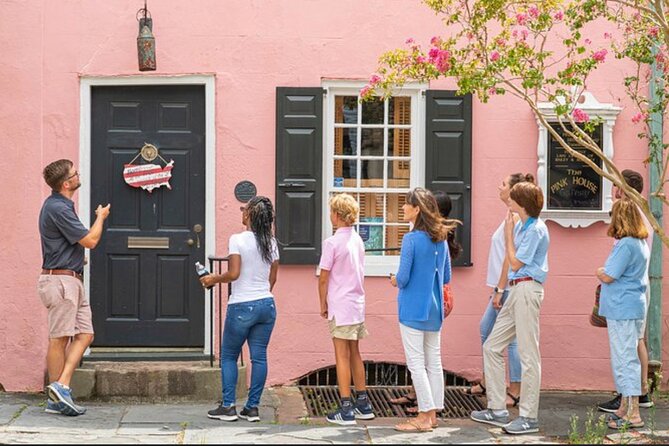
Reviewed · HISTORIC DISTRICT WALKING TOURS
Charleston History and Architecture Walking Tour
Charleston can feel like a movie set, but this walk explains the script. You’ll follow an architectural historian guide through classic streets and photo stops, including Rainbow Row, the Unitarian Church, and lanes packed with old Charleston drama. It’s a smart way to get your bearings fast while learning what shaped the city’s look and culture.
My favorite part is how the guide’s stories make the buildings feel personal instead of just pretty. I also like that the route keeps moving so you can pack a lot into about two hours on foot. The main drawback to watch for is that this is a walking tour with repeated stops and city streets that can be uneven, so comfortable shoes matter.
In This Review
- Key highlights to look for
- Why This Charleston History Walk Works for New Arrivals
- Meeting at 195 E Bay St and Staying on a 2-Hour Foot Pace
- Pineapple Fountain: Your Fast, Fun First Photo Stop
- Rainbow Row: Pastel Antebellum Homes and the Why Behind the Color
- Unitarian Church in Charleston: Architecture Details and Tiffany-Window Moments
- Twenty-one Magazine: Scary Stories Built Into the Architecture
- Old Exchange & Provost Dungeon: Colonial Layouts That Explain Harsh History
- Philadelphia Alley (Duelers Alley): Tight Lines, Strong Photos
- Price and Value: What $27 Buys You in Charleston
- Guides Who Bring It to Life: Emerson and Paige Highlights
- Tips to Make This Walk Feel Easy (Not Exhausting)
- Who This Tour Suits Best
- Should You Book This Charleston History and Architecture Tour?
- FAQ
- How long is the Charleston History and Architecture Walking Tour?
- How much does the tour cost?
- Where does the tour start and end?
- What type of ticket do I need?
- Is the tour limited to a small group?
- Are the sights included in the stops free to view?
- What happens if the weather is poor?
Key highlights to look for
- Rainbow Row in context: You’ll see 13 pastel antebellum homes and hear what makes them historically special.
- Church architecture and possible interior time: Expect strong photo moments, with past groups even getting inside for views like Tiffany windows.
- Scary colonial-era storytelling: Stops like Twenty-one Magazine add tension to the architecture.
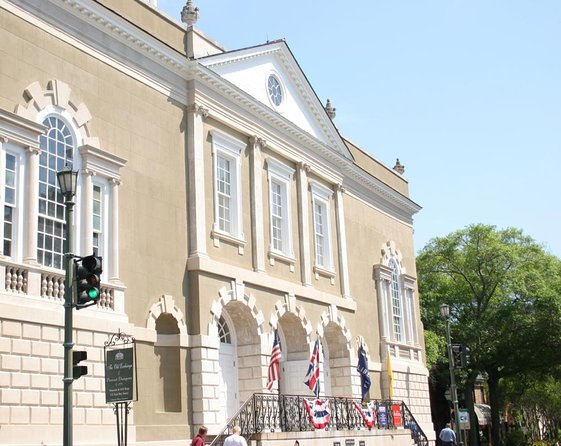
- Colonial justice at Old Exchange & Provost Dungeon: The building’s layout helps explain how history worked.
- Philadelphia Alley photo angles: Known as Duelers Alley, it’s built for cool perspectives.
- Small-group feel: The tour caps at 20 travelers, so questions stay easy.
Why This Charleston History Walk Works for New Arrivals
If this is your first time in Charleston, you face a simple problem: there’s so much to see that you can end up sightseeing without understanding. This tour solves that. You get a guided route designed to show why the city looks the way it does—through streets, churches, and small architectural details—without you having to plan every turn.
At $27 for about two hours, the price is less about buying tickets to attractions and more about buying time with a guide who can connect buildings to the people who made them. Many of the stops are free to view from the outside, and the walk format means you’re constantly moving through the city’s atmosphere instead of waiting around.
I also appreciate the tone: it’s not just dates and names. The best moment is when a guide turns a street into a story you can picture—whether it’s why Rainbow Row is painted the way it is or how a dark chapter of colonial Charleston connects to a real building.
Trade one set of cobblestones for another with more Charleston walking tours.
- Historic Charleston Guided Sightseeing Walking Tour★ 5.0 · 6,216 reviews
- Charleston Horse-Drawn Carriage Tour: Explore Historic Charleston★ 5.0 · 3,561 reviews
- Ghosts of Charleston Night-Time Walking Tour with Unitarian Church Graveyard★ 4.5 · 2,835 reviews
Meeting at 195 E Bay St and Staying on a 2-Hour Foot Pace
The tour starts at 195 E Bay St, a convenient location near the waterfront area where it’s easy to plug into other sightseeing plans. You end at Waterfront Park, Vendue Range, Concord St, which is also handy because you’re still close to more places you’ll likely want to visit afterward.
A walking tour only feels good if the pace matches the time. This one runs for about two hours, with each stop timed to let you look, take photos, and listen without feeling rushed. That balance makes it ideal if you don’t want to spend half a day committing to just one neighborhood loop.
Also, the tour has a maximum of 20 people. That size helps your guide keep track of the group and answer questions without everything turning into a slow shuffle.
Pineapple Fountain: Your Fast, Fun First Photo Stop
The walk begins at the Pineapple Fountain, a quick stop that’s mostly about snap-worthy photos and setting the tone. It’s Charleston, so you get style right away—bright, distinctive, and instantly recognizable.
This first stop matters more than it seems. It breaks the ice, gives you a landmark to orient yourself, and helps you start noticing details you might otherwise skip—like how Charleston signage, shapes, and color work together in the streetscape.
One small consideration: since the stop is short, don’t expect a long explanation here. Think of it as the warm-up, then the tour turns into deeper architecture and history.
Rainbow Row: Pastel Antebellum Homes and the Why Behind the Color
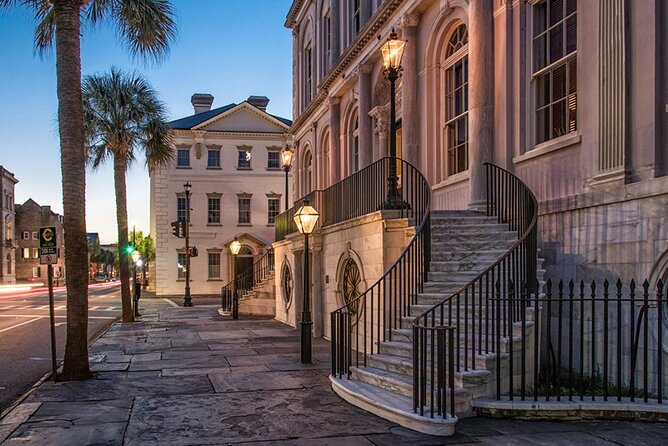
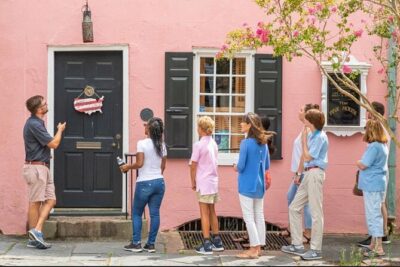
Next up is Rainbow Row, the iconic stretch with 13 privately-owned antebellum homes painted in pastel colors. It’s one of those places you’ve probably seen in photos, but the tour adds what those photos often miss: the human story and the architectural logic behind what you’re seeing.
Hearing that these are privately owned makes a difference. It changes your mindset from viewing them as a postcard backdrop to seeing them as lived-in historic properties. And that’s the key: you’re learning how Charleston protects and presents its past while still functioning as a real city.
You’ll also get time to look closely. Pay attention to the rhythm of windows and facades, and notice how the street layout creates a consistent viewing corridor—one reason the images of Rainbow Row look so clean and symmetrical.
Drawback to consider: it’s a famous stop, so it can feel busy in general. With the guided timing and photo breaks, you’ll have a better shot than trying to linger alone, but still keep expectations realistic for a well-known landmark.
Unitarian Church in Charleston: Architecture Details and Tiffany-Window Moments
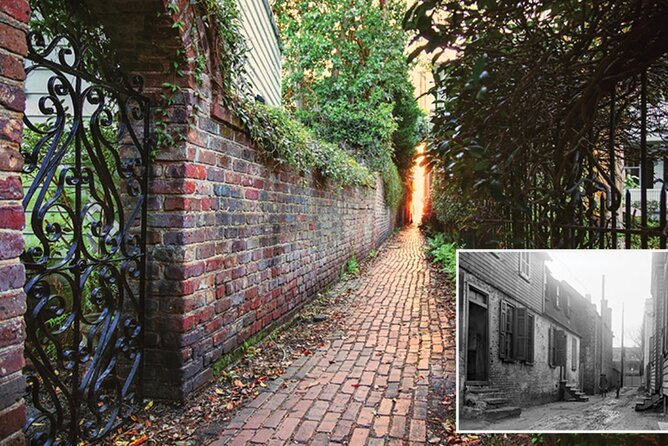
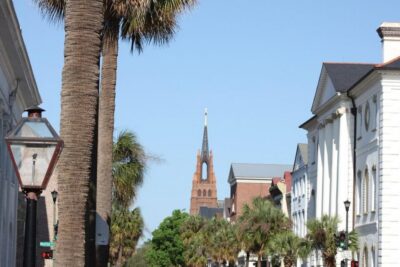
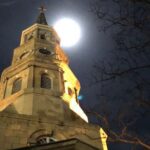
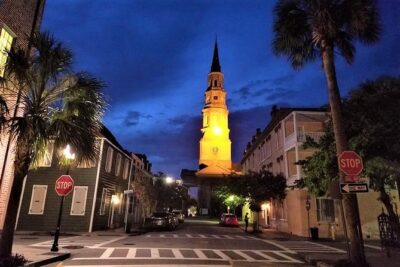
The tour then moves to the Unitarian Church in Charleston. This stop is all about the “look closer” type of experience: the guide explains how the building’s design fits into Charleston’s architectural story, and you’ll have time for great photos.
One thing that stands out from past groups is that some tours have included a chance to go inside. People specifically highlighted breathtaking Tiffany windows as a major highlight. Even if interior access isn’t the same for every day, the point remains: this is one of those stops where the exterior sets expectations and the interior, when available, can blow them away.
If you care about church design—windows, materials, and how the structure shapes light—this stop will land with you. If you’re only here for exterior views, you’ll still get value through the guide’s explanation of what you’re seeing.
Practical tip: bring your phone camera charged. Church-lighting can be tricky, and you’ll want to capture details without rushing.
Look up at more porches and piazzas on our other Charleston architecture tours.


Twenty-one Magazine: Scary Stories Built Into the Architecture
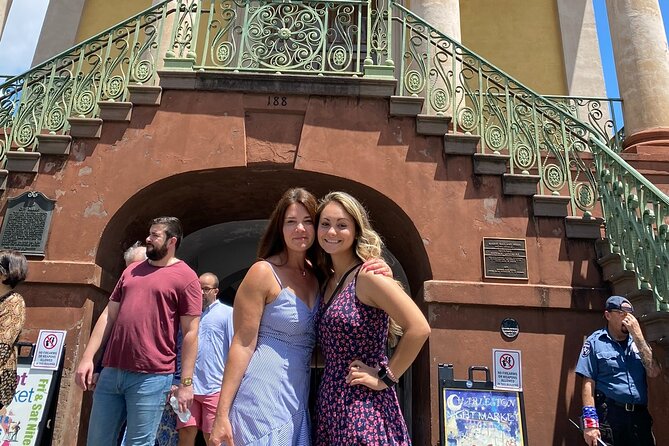
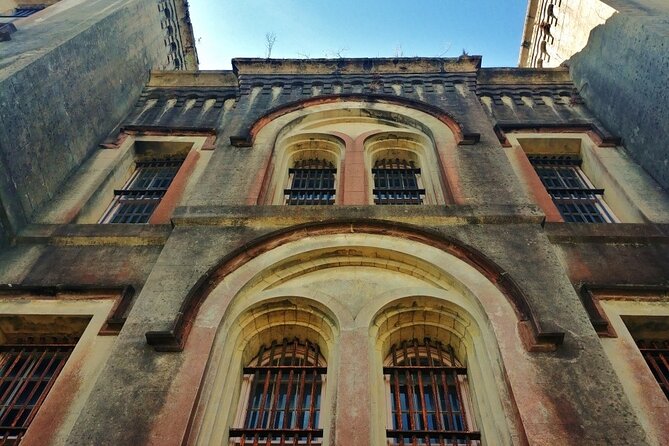
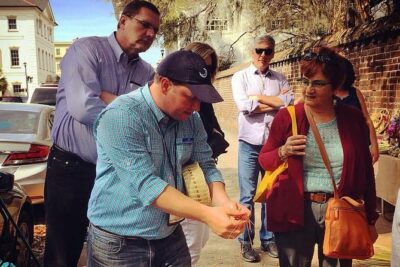
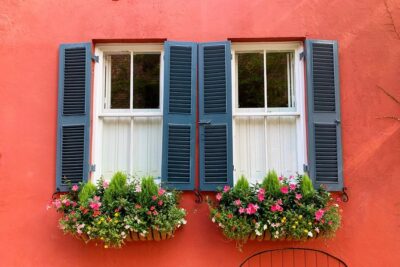
At Twenty-one Magazine, the tour shifts tone. This is where Charleston history turns more dramatic. You’re guided to a stop associated with scary stories, history, and architecture, and the guide’s storytelling helps the building make sense in a way a photo can’t.
Why it works: buildings like this are part of a city’s memory system. Even when you’re standing outside, you’re reading the location for clues—what it was built for, and why its presence mattered. The guide connects that purpose to the kind of tension people lived with at the time, so the site becomes more than a label.
The only downside is pacing. This is still a walking tour with timed stops, so if you love getting lost in every historical layer, you might want more time here than you’ll get in the tour window. Still, as a sampler that prepares you for deeper independent exploration later, it’s a strong choice.
Old Exchange & Provost Dungeon: Colonial Layouts That Explain Harsh History
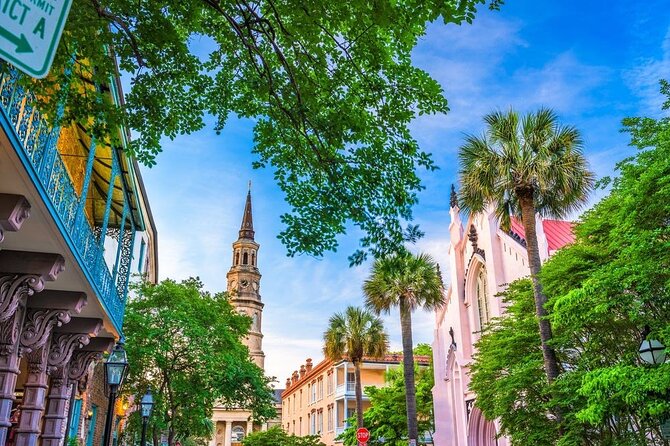
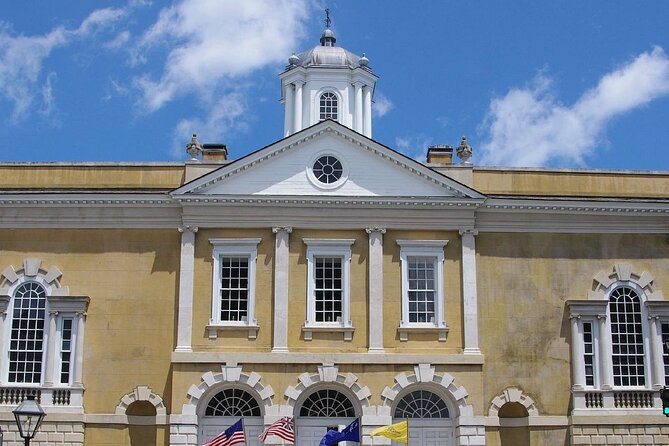
Then comes Old Exchange & Provost Dungeon, a stop that ties colonial-era architecture to what happened inside the city’s systems. The guide focuses on colonial history and architecture, and the setting helps you understand why this building is remembered.
This is the kind of stop where the structure itself becomes a teaching tool. When you hear the story while looking at the spaces, it’s easier to grasp how authority and punishment operated in earlier Charleston. It also gives you a more complete picture of the city beyond the iconic pastel streets.
Photo angle note: this is one of those locations where exterior shots can look dramatic, but the best understanding comes from listening. If you only take pictures and don’t track the guide’s explanations, you may miss the real value.
Philadelphia Alley (Duelers Alley): Tight Lines, Strong Photos

Finally, the walk reaches Philadelphia Alley, also known as Duelers Alley. This stop is a favorite because it hits two goals at once: it’s visually cool and it’s story-driven.
In narrow spaces like this, architecture acts like a frame. The guide’s background helps you see why the alley feels the way it does—how the scale and layout influence sightlines, and why the name Duelers Alley stuck around as part of Charleston’s legend-making.
You’ll get time for photos, and because this is the late part of a tour, you’ll likely have the mental context to take better shots. You’re not just photographing an alley; you’re photographing a piece of the city’s social history.
One consideration: narrow alleys can feel a bit crowded even with a small group. If you’re photographing, step aside briefly so you don’t block others, then grab your angle.
Price and Value: What $27 Buys You in Charleston
For $27, you’re paying for structure and interpretation. In Charleston, it’s easy to spend money on entry tickets to single attractions. This tour is different: it gives you a curated set of architectural and historical stops over about two hours, with a format that reduces guesswork.
A big value point is how much you’re able to see without getting lost. You don’t have to stitch together a route across neighborhoods. The guide does that, and you benefit from learning the “why” behind the scenes as you go.
Also, the tour is mobile ticket friendly, which is practical when your day is already packed. The stops themselves are free to view at each stop point, which means your money goes mostly toward the live guide and the time saved.
Group size matters too. With a maximum of 20 travelers, the experience feels more personal than you’d expect from a generic bus-style tour, and you can ask the guide quick questions without waiting for a pause.
Guides Who Bring It to Life: Emerson and Paige Highlights
The guides are a major part of what makes this tour shine. People have praised guides like Emerson for being entertaining and for bringing the city’s history to life with stories tied to specific buildings. Others have highlighted guides like Paige for enthusiasm and in-depth facts, including details about the land Charleston sits on.
Here’s the practical takeaway for you: if you’re the type who likes to ask why something exists—why a church looks a certain way or why a building is connected to a darker chapter—this style of guiding is a good fit. You’ll get context that helps you recognize what matters when you later walk those streets on your own.
Tips to Make This Walk Feel Easy (Not Exhausting)
This is a walking tour, so set yourself up. Wear comfortable shoes, because historic Charleston streets can include uneven pavement and cobblestone-type texture. Bring a water bottle if it’s warm, and plan for sun since outdoor stops are repeated.
Weather is another real factor. The experience notes that it requires good weather, and if it’s canceled due to poor weather, you’ll be offered a different date or a full refund. If you’re traveling during a season when rain is likely, have a backup attitude: even when tours run in less-than-perfect conditions, you’ll want flexible plans.
Camera-wise, this tour is built for photos. The Pineapple Fountain, Rainbow Row, the church, and Duelers Alley give you variety. You’ll enjoy it more if you slow down at each stop and take a few careful shots rather than snapping everything at once.
Who This Tour Suits Best
This tour is ideal if you:
- Want a high-coverage introduction to Charleston in about two hours
- Like architecture and want the stories tied to specific buildings
- Prefer walking with a guide over reading plaques and guessing meanings
It’s also a good match for new arrivals who want to feel oriented quickly. After this, you’ll likely find yourself understanding Charleston’s street layout and architectural patterns much more easily.
If you’re traveling with a group and want everyone to get something out of it—pretty streets, architecture, and history with drama—this works well because the stops vary in mood.
Should You Book This Charleston History and Architecture Tour?
Yes, if you want an efficient, guide-led way to understand Charleston’s architecture while you see major photo stops without getting lost. At $27 and around two hours, it’s strong value for the amount of ground covered and the way the guide’s storytelling ties each building to a bigger picture.
I’d skip it only if you hate walking on uneven streets or if you’re looking for a slow, museum-style experience where you can linger for long at one site. For a first pass through Charleston’s signature landmarks and alleyway stories, this is a smart booking.
FAQ
How long is the Charleston History and Architecture Walking Tour?
It lasts about 2 hours.
How much does the tour cost?
The price is $27.
Where does the tour start and end?
It starts at 195 E Bay St, Charleston, SC 29401, USA and ends at Waterfront Park, Vendue Range, Concord St, Charleston, SC 29401, USA.
What type of ticket do I need?
The tour uses a mobile ticket.
Is the tour limited to a small group?
Yes. It has a maximum of 20 travelers.
Are the sights included in the stops free to view?
The admission ticket is listed as free for each stop.
What happens if the weather is poor?
The experience requires good weather. If it is canceled due to poor weather, you’ll be offered a different date or a full refund.
More Charleston Tours Worth Booking






More Architecture & Homes Tours in Charleston





More Historic District Walking Tours in Charleston


Still deciding? Here are the newest Charleston tours and experiences we have reviewed










Historic District Walking Tours, compared.
 ★ 5.0Historic Charleston Guided Sightseeing Walking TourFrom $306,216 reviews
 ★ 5.0Charleston Horse-Drawn Carriage Tour: Explore Historic CharlestonFrom $493,561 reviews
 ★ 4.5Ghosts of Charleston Night-Time Walking Tour with Unitarian Church GraveyardFrom $352,835 reviews
 ★ 5.0Hidden Alleyways and Historic Sites Small-Group Walking TourFrom $342,335 reviews
 ★ 5.0Highlights of Charleston Guided Walking Tour2,206 reviews
 ★ 5.0Charleston Haunted Booze and Boos Ghost Walking TourFrom $391,569 reviews
 ★ 5.0Charleston’s Pleasing Terrors Night-Time Walking Ghost TourFrom $291,345 reviews
 ★ 5.0Charleston historical walking tour with a Professor of History at The CitadelFrom $401,284 reviews
Browse the lists this tour appears in