Reviewed · HISTORICAL TOURS
Jewish History Private Driving Tour of Charleston
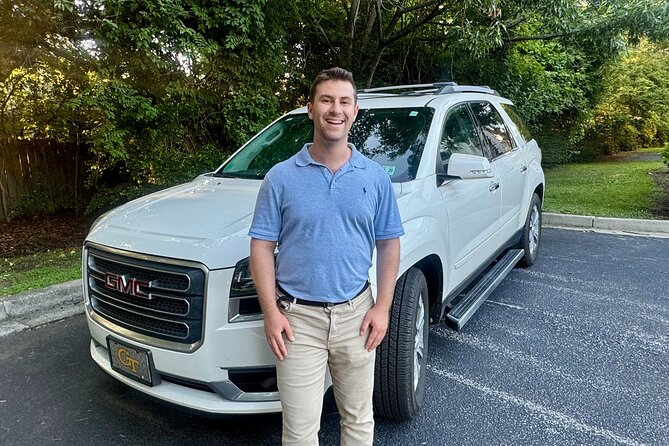
Charleston hides its Jewish story in plain sight, and this private driving tour strings it together with real-world stops. I love the way Ronnie connects architecture to people, so the sites feel alive instead of like dates on a plaque. You’ll follow the thread from Sephardic roots, through community institutions, and into later history like the Holocaust Memorial.
I also like how easy logistics make this worth doing even on a tight Charleston schedule. You get roundtrip transportation from your downtown hotel, and you start and end near Kahal Kadosh Beth Elohim, so you spend less time figuring out where to park.
One thing to keep in mind: the tour runs about 2 hours, so you move steadily between stops. It also depends on good weather, which matters in Charleston if you’re visiting in hot or rainy seasons.
In This Review
- Key things I’d circle on your map
- Why this Charleston Jewish tour feels different from the usual highlights
- Getting started at Kahal Kadosh Beth Elohim on Hasell Street
- The synagogue cemetery: where history turns from labels into names
- Grace Peixotto’s story and the surprise of mixed motives
- Dr. Jacob de la Motta, the pharmacy angle, and what charity signals
- BSBI and the feeling of continuity in Ashkenazi Orthodox life
- Little Jerusalem: when you can almost read the neighborhood
- Charleston’s Holocaust Memorial: what the structure forces you to notice
- Price and value: $395 for a private group that actually delivers
- What the guide does that makes the whole thing click
- Is this tour for you? The simple fit test
- Should you book this Jewish History Private Driving Tour of Charleston?
- FAQ
- How long is the Jewish History Private Driving Tour of Charleston?
- How many people are in a group?
- Do you offer hotel pickup and transportation?
- What if I’m staying outside downtown Charleston?
- Where does the tour start and end?
- Is the tour in English?
- Do I get a mobile ticket?
- When will I receive confirmation after booking?
- Are service animals allowed?
- What happens if the weather is bad?
- What is the cancellation policy?
Key things I’d circle on your map
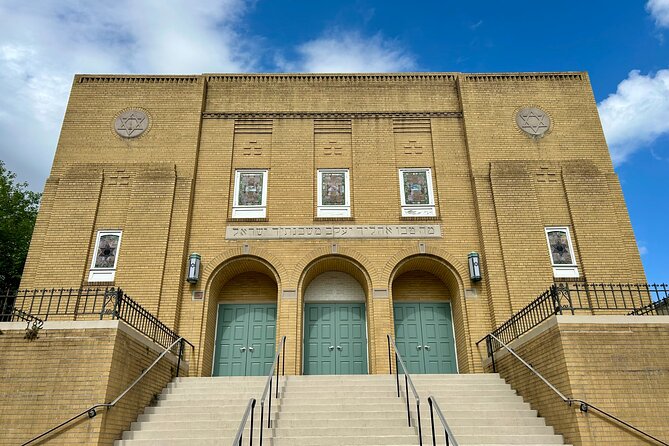
- Kahal Kadosh Beth Elohim (KKBE): Sephardic roots, the oldest synagogue in continuous use in the U.S., and a major birthplace of American Reform Judaism
- Grace Peixotto’s story: faith, family status, and the brothel she owned and operated in this area
- Dr. Jacob de la Motta + Jewish institutions: a former pharmacy that became the first Jewish-owned pharmacy in the U.S., plus the Hebrew Orphan Society
- Old Ashkenazi presence at BSBI: the oldest Ashkenazi Orthodox synagogue in continuous use in the U.S.
- Little Jerusalem and the neighborhood scale view: an Ashkenazi Jewish quarter from the 1800s, seen through how people actually lived
Why this Charleston Jewish tour feels different from the usual highlights
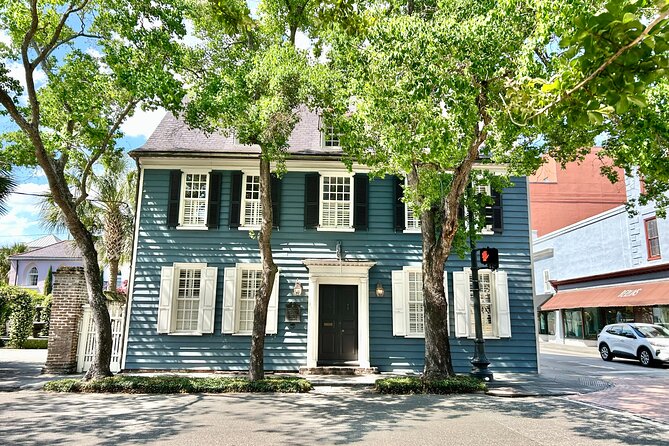
Most Charleston tours focus on big houses, big views, and big squares. This one keeps you closer to the city’s daily-life networks—where religious life, charity, business, and even controversy all overlap in the streets you can still walk today.
Because it’s private and sized for up to 2 people, you don’t get stuck listening while the loudest voices steer the conversation. You can ask questions, linger when something matters, and let Ronnie’s pacing bring the story forward one stop at a time.
You’ll also feel the “why” behind each place. The stops aren’t random. They’re picked to show how Charleston’s Jewish community grew, adapted, and left lasting marks in law, commerce, worship, and remembrance.
Want it just for your group? See more private Charleston tours.
- Private Luxury Yacht Charters, BYOB & Dolphins★ 5.0 · 395 reviews
- Charleston in a Nutshell Private Tours★ 5.0 · 375 reviews
- Private Daytime Horse-Drawn Carriage Tour of Charleston★ 5.0 · 340 reviews
Getting started at Kahal Kadosh Beth Elohim on Hasell Street
The tour begins at Kahal Kadosh Beth Elohim (90 Hasell St), which is where the timeline clicks into place fast. Even before you move to other locations, you learn why KKBE matters: it’s the oldest synagogue in continuous use in the U.S. and is tied to the beginnings of American Reform Judaism.
What I like about starting here is the “root system” effect. Ronnie can point out how the Sephardic community’s choices—who they were, what they needed, and how they organized—shaped later chapters of Charleston’s Jewish story. You’re not just seeing a building. You’re seeing the starting point for later institutions.
If you’re doing this tour with hotel pickup, your guide meets you in the lobby and confirms the exact pickup spot by text. If you’re outside downtown, you’ll meet at the front gate of KKBE, which keeps things straightforward even if you’re staying a bit further out.
The synagogue cemetery: where history turns from labels into names
One of the strongest moments in this experience is time at the synagogue cemetery. It’s the kind of stop that changes your brain from “tour mode” to “human mode” quickly.
Here, you can see graves connected to major U.S. conflicts, including the Revolutionary War and the War of 1812, alongside other veterans. Ronnie also connects many graves to well-known Charleston Jewish families, which helps the cemetery feel like part of the city’s social fabric—not an isolated corner behind a fence.
If you’re expecting only architectural viewing, plan to slow down. Cemeteries make you do that automatically. And Ronnie’s storytelling gives those dates and surnames a context you can actually carry with you as you keep driving.
Grace Peixotto’s story and the surprise of mixed motives
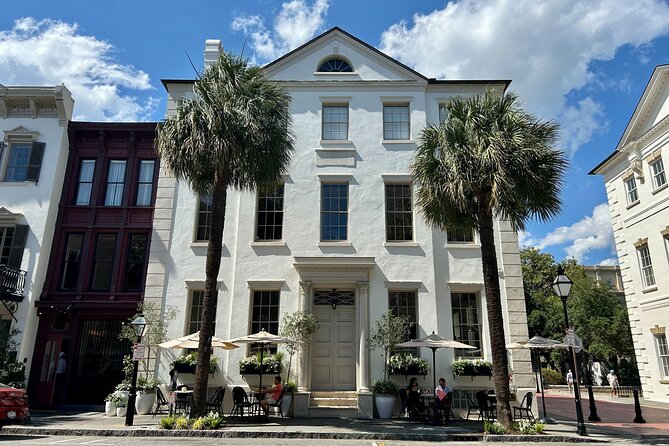
Grace Peixotto enters the story in a way that’s hard to ignore: she was the daughter of a religious leader, and she owned and operated a brothel here. That combination can feel jarring at first, but that’s the point.
Charleston wasn’t a set of tidy moral categories. It was a working port city with real people navigating real pressures—family, faith, money, reputation, and survival. Ronnie uses Grace’s story to show how the city’s social world could include startling contradictions, and how Jewish individuals could hold influence in multiple lanes.
I like this stop because it resists making history only about piety or only about conflict. You get a fuller picture of how community members lived, not just how they prayed.
Dr. Jacob de la Motta, the pharmacy angle, and what charity signals
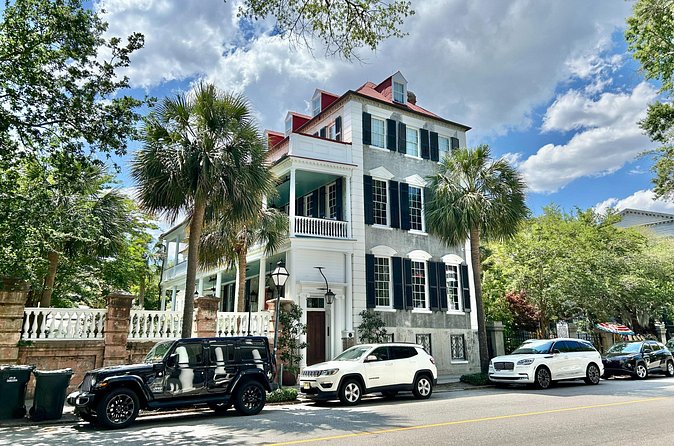
Next you’ll see the former pharmacy connected to Dr. Jacob de la Motta, which became the first Jewish-owned pharmacy in the U.S. Even if you’re not a pharmacy nerd, it’s a powerful lens. It shows Jewish entrepreneurship and professional life landing directly in local health and commerce.
Then Ronnie connects that civic role to organized care by bringing you to the Hebrew Orphan Society, described as the oldest incorporated Jewish charity in the U.S. That charity focus matters because it shows how community responsibility was built into institutions, not just private goodwill.
Taken together, these stops explain something you can easily miss if you only look at synagogues. In Charleston, the Jewish footprint wasn’t limited to worship spaces. It also showed up in services people relied on when times were hard.
Dig deeper into the past with more Charleston history tours.
BSBI and the feeling of continuity in Ashkenazi Orthodox life
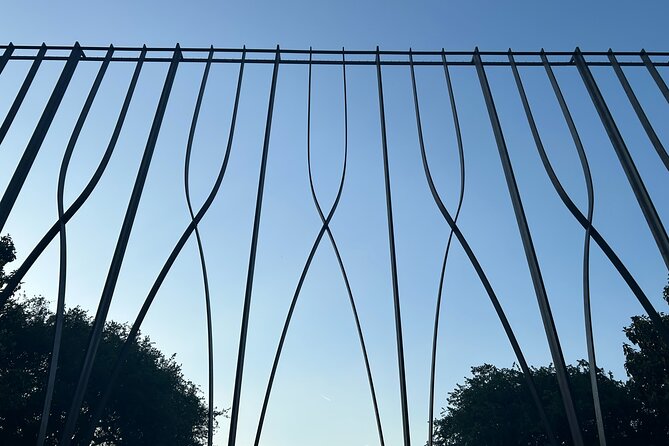
You’ll also visit BSBI, the oldest Ashkenazi Orthodox synagogue in continuous use in the U.S. This stop gives you a different religious tone from the earlier KKBE context, and that contrast helps you understand how diverse Jewish life could be in the same city.
What I like here is how the tour builds continuity. You’re seeing how one community maintains traditions while still existing inside the broader Charleston environment.
If you’re the type who enjoys seeing faith through real geography—where people gathered, how they organized, and what they kept going—this is one of your most satisfying stops.
Little Jerusalem: when you can almost read the neighborhood
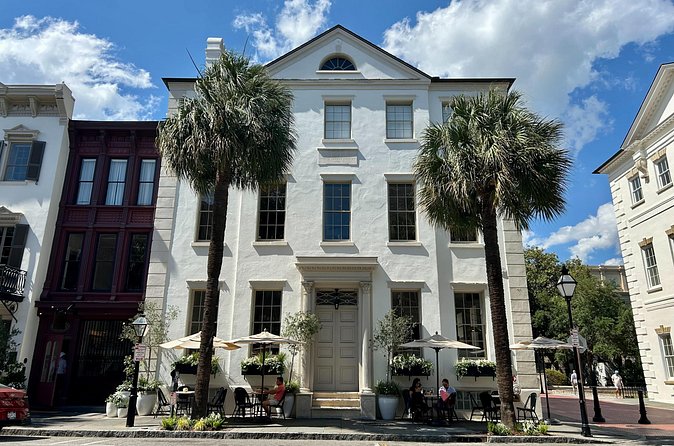
After the synagogues and institutions, the tour moves into the neighborhood-scale story: Little Jerusalem, an Ashkenazi Jewish quarter from the 1800s. Driving past areas like this is useful because it turns history into spatial memory.
Instead of thinking of Jewish life as something that happened only in a few named buildings, you start to see how it fit into housing patterns, commerce, and everyday movement. Ronnie’s approach helps you interpret what you’re seeing now in light of what used to be there.
This is also where the off-the-beaten-path factor tends to kick in. Charleston is famous, but Jewish Charleston isn’t usually what first comes to mind. That’s why this stop feels like you’re getting a side of the city that most visitors never actively look for.
Charleston’s Holocaust Memorial: what the structure forces you to notice
One of the later stops is Charleston’s Holocaust Memorial. The tour emphasizes the symbolism of its unique structure, and you’ll walk away thinking about how public remembrance can be designed to shape emotion, not just provide information.
A Holocaust memorial isn’t like a statue of a famous person where you mostly observe. It’s meant to change you a little—to make you slow down, reflect, and take the theme seriously even if the rest of your day is moving fast.
If you’ve been to other memorials before, you’ll still find this one worth your attention because Ronnie talks about what makes it different. If you haven’t, this stop still works, because the tour frames it with care and context.
Price and value: $395 for a private group that actually delivers
At $395 per group (up to 2), this isn’t a bargain-basement add-on. But for what you get, it’s fairly easy to justify.
First, the private format matters. You’re paying for a guide who can tailor pacing and answer questions, and you’re not waiting your turn in a crowd. Second, the tour includes roundtrip transportation from downtown Charleston hotels, which can save time and stress during a visit.
You also get a concentrated route with a lot of meaningful stops packed into about 2 hours. That’s not meant to feel rushed in the usual way; Ronnie’s style keeps the story coherent, so each stop feels like part of the same argument rather than separate errands.
If you’re visiting with just one other person, the “per person” cost gets more reasonable than you might expect. If you’re a solo traveler, it can still make sense if you strongly prefer private guiding and hate wasting vacation time on group logistics.
What the guide does that makes the whole thing click
The real “value” isn’t a single building. It’s how Ronnie talks about connections.
Across synagogues, charities, and neighborhood corners, Ronnie repeatedly links places to people and choices. You hear how institutions formed, how individuals navigated community expectations, and how Charleston’s Jewish life evolved in ways that still show up on the city map.
That kind of storytelling is why the tour doesn’t feel like a facts dump. It feels like you’re being handed a working understanding of Charleston’s Jewish presence—Sephardic beginnings, Ashkenazi continuity, community care, and modern remembrance—tied together by geography.
Is this tour for you? The simple fit test
This tour is a great fit if you want:
- Religion and community history connected to real places you can see
- A private experience with pickup so the day stays smooth
- Stops that include both synagogue life and broader community institutions
You might not love it if:
- You want a long, slow walk with lots of free time at each site
- You’re only interested in one narrow theme and don’t want stories that include difficult complexity, like Grace Peixotto’s life and role
In other words, if you like your sightseeing with context, this tour will land well.
Should you book this Jewish History Private Driving Tour of Charleston?
Yes, if your goal is to understand Jewish Charleston as something lived and organized—not just a list of buildings. Starting at KKBE, then moving through stories like Grace Peixotto, the pharmacy legacy, the Hebrew Orphan Society, BSBI, Little Jerusalem, and the Holocaust Memorial gives you a strong “whole picture” view in a manageable time window.
Book it especially if you’ll be in Charleston for only a short time or you want a tour that’s more about meaning than checklists. If you can go when the weather looks good and you’re up for a steady pace, you’ll get a day-changing perspective without turning your schedule into chaos.
FAQ
How long is the Jewish History Private Driving Tour of Charleston?
The tour lasts about 2 hours.
How many people are in a group?
This is a private tour/activity, and it’s priced for up to 2 people per group.
Do you offer hotel pickup and transportation?
Yes. The tour includes roundtrip transportation from your downtown Charleston hotel. The guide meets you in the lobby and a text is sent beforehand to confirm the exact location within the lobby.
What if I’m staying outside downtown Charleston?
You may meet the guide at Kahal Kadosh Beth Elohim (KKBE) at your tour start time, meeting at the front gate.
Where does the tour start and end?
It starts at Kahal Kadosh Beth Elohim, 90 Hasell St, Charleston, SC 29401. The tour ends back at the meeting point.
Is the tour in English?
Yes, it’s offered in English.
Do I get a mobile ticket?
Yes, this experience provides a mobile ticket.
When will I receive confirmation after booking?
You’ll receive confirmation within 48 hours of booking, subject to availability.
Are service animals allowed?
Yes, service animals are allowed.
What happens if the weather is bad?
The experience requires good weather. If it’s canceled due to poor weather, you’ll be offered a different date or a full refund.
What is the cancellation policy?
You can cancel for free up to 24 hours in advance for a full refund. If you cancel less than 24 hours before the start time, the amount paid will not be refunded.
More Private-Group Charleston Tours






More Tours Across Charleston



More Charleston Tours Worth Booking
Still deciding? Here are the newest Charleston tours and experiences we have reviewed







Historical Tours, compared.
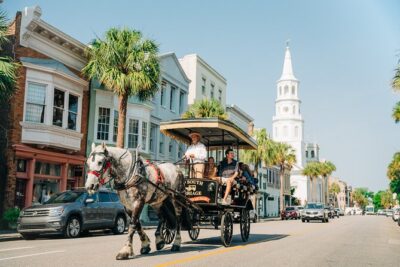 ★ 5.0Charleston’s Old South Carriage Historic Horse & Carriage TourFrom $5010,023 reviews
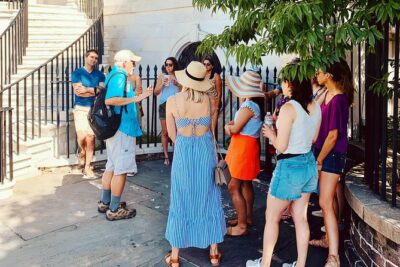 ★ 5.0Historic Charleston Guided Sightseeing Walking TourFrom $306,216 reviews
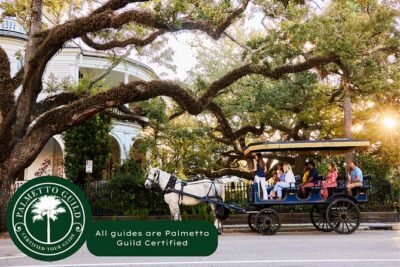 ★ 5.0Charleston Horse-Drawn Carriage Tour: Explore Historic CharlestonFrom $493,561 reviews
 ★ 4.5Charleston Harbor History Day-Time or Sunset Boat CruiseFrom $442,788 reviews
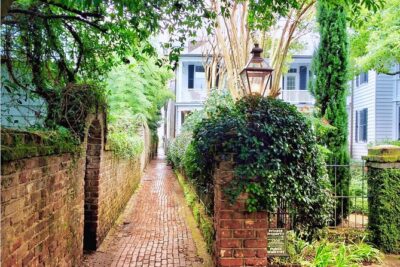 ★ 5.0Hidden Alleyways and Historic Sites Small-Group Walking TourFrom $342,335 reviews
 ★ 4.5Daytime or Sunset Historic Harbor CruiseFrom $491,352 reviews
 ★ 5.0Charleston historical walking tour with a Professor of History at The CitadelFrom $401,284 reviews
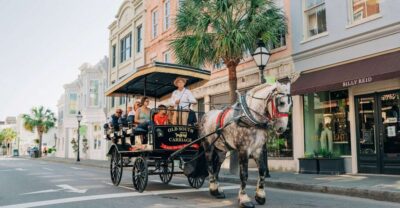 ★ 4.8Historical Downtown Tour by Horse-drawn CarriageFrom $501,009 reviews
Browse the lists this tour appears in