
Reviewed · HISTORIC DISTRICT WALKING TOURS
Semi-private SMALL group Historic Walking Tours w/certified guide
Charleston history walks right into your afternoon. This semi-private historic walking tour is built for an easy, guided stroll through Old Charleston, with stops that frame the city’s story from early buildings to the Charleston Battery views.
I really like two things about it. First, the group stays small (up to 10 travelers), which makes questions practical instead of shouted-from-the-back. Second, the guide focuses on details you can’t easily spot on your own, like historic homes and churches that predate the American Revolution.
One thing to consider: you’re outside for about two hours. On a hot or rainy day, you’ll feel it, so wear good walking shoes and keep a plan for weather.
In This Review
- Key things to know before you go
- Why this 2-hour Old Charleston walk feels worth your time
- Starting at 80 Broad St, then hitting the City Hall story
- The first walk: historic homes, churches, and buildings before the Revolution
- A quick reality check on pacing
- Charleston Battery: the waterfront stop that ties history to place
- Why the small group (max 10) makes a real difference
- The guide is the product here (and the names people mention are a good sign)
- How to get the most out of your guide
- What you’ll actually do during the 2 hours (a practical expectation)
- Architecture watching: what to look for as you walk
- Weather, comfort, and timing tips that make a difference
- Price and value: why $35 can feel like a bargain
- Who should book this tour (and who might want something else)
- Should you book this Charleston historic walking tour?
- FAQ
- What is the duration of the tour?
- How much does it cost?
- How many people are in the group?
- Where does the tour start and end?
- Is the tour offered in English?
- Is a guide included?
- Are mobile tickets used?
- Is free cancellation available?
- FAQ
- Are service animals allowed on this tour?
- Is the meeting point near public transportation?
- Do most travelers be able to participate?
- What attractions are included?
Key things to know before you go
- Up to 10 people keeps the pace friendly and the Q&A real
- Licensed, certified guides bring the city’s timeline to life as you walk
- City Hall and the Four Corners of Law give you a neat way to understand Charleston
- Charleston Battery rounds out the tour with a classic waterfront stop
- 20 minutes + 15 minutes focus blocks help you remember what matters most
- Mobile ticket means less fiddling when you’re meeting in a busy downtown area
Why this 2-hour Old Charleston walk feels worth your time
Charleston is one of those cities where the streets look pretty from a distance and then get really interesting up close. This tour is designed for that sweet spot. You get guided context while you’re still fresh enough to enjoy the architecture, not only speed-walking to the next photo spot.
The value here is not just that you see important places. It’s that the walk gives you a simple narrative you can carry with you after the tour. The guide points out what you’re looking at—historic homes, churches, public buildings—and ties it back to why Charleston mattered. One review praised how the tour covered war, art, food, customs, and vernacular, which is exactly the kind of broad context that makes the city click.
And since the group is capped at 10, you’re not stuck in a moving crowd where half the info gets lost. People also described being able to ask questions, and that’s the difference between a nice stroll and a tour that actually improves your whole trip.
Trade one set of cobblestones for another with more Charleston walking tours.
- Historic Charleston Guided Sightseeing Walking Tour★ 5.0 · 6,216 reviews
- Charleston Horse-Drawn Carriage Tour: Explore Historic Charleston★ 5.0 · 3,561 reviews
- Ghosts of Charleston Night-Time Walking Tour with Unitarian Church Graveyard★ 4.5 · 2,835 reviews
Starting at 80 Broad St, then hitting the City Hall story

You’ll start at 80 Broad St, Charleston, SC 29401, and the walk ends near the Dock Street Theatre at 135 Church St. That starting point matters because Broad Street is one of the main spines of downtown. It’s an easy place to orient yourself, and it puts you right in the historic-center flow.
The first big “set the stage” moment happens around City Hall. The guide covers early history and then zeroes in on a very specific concept tied to an unusual intersection called the Four Corners of Law. If you like history that’s tied to real places you can point at, this is a good stop. It’s also a useful mental hook: when you later look at Charleston buildings and streets, you’ll remember that law, order, and civic identity shaped the city as much as trade did.
You’ll also be walking with enough structure to keep you from getting lost in the pretty-but-random. The tour uses short focus blocks—like the 15-minute introduction around City Hall—so you know what you’re learning and why you’re there.
The first walk: historic homes, churches, and buildings before the Revolution
The tour’s early part is a gentle stroll where the guide points out the kind of architecture that defines Old Charleston. Expect commentary as you pass historic homes, churches, and public buildings, including references to structures that predate the American Revolution.
This is one of the best segments for first-timers. Charleston can feel like a blur of columns and brickwork. The guide helps you slow down enough to notice patterns—what types of buildings show up, how the streets feel different near certain landmarks, and why these structures stayed important.
One review highlighted learning about homes, churches, and public buildings in a time-walk style, which is exactly what you want in a 2-hour overview. You’re not trying to master a textbook. You’re getting enough context that your next self-guided walk makes sense.
A quick reality check on pacing
Because it’s a walking tour, the “leisurely stroll” part depends on your group’s pace and the weather. A couple of reviews mentioned adjusting timing when plans changed (like visiting a site already), which is a good sign. Still, if you’re tight on stamina, you’ll want comfortable shoes and a water bottle.
Charleston Battery: the waterfront stop that ties history to place

The tour includes the Charleston Battery, and that’s a smart choice. The Battery isn’t just a scenery break. It’s a place where Charleston’s coastal identity shows up fast.
This is also where the tour’s theme can shift from streets and buildings to the city’s connection to the harbor and the wider world. In reviews, guides were praised for covering war and the big-picture reasons Charleston mattered, and the Battery stop is a natural bridge for that.
Even if you’re not a hardcore history person, a waterfront moment works because it gives your brain a visual reset. You’ll see the city’s role in coastal life, trade, and defense more clearly than you would from a map alone.
Prefer a guide out front? Browse more guided Charleston tours.



Why the small group (max 10) makes a real difference

Let’s be blunt: in some “historic walking tours,” the small-group angle is marketing fluff. Here, it’s the core of the experience.
With a group capped at 10 travelers, you can actually hear the guide. Several reviews praised being able to ask questions and talk more directly with the guide. Others described a situation where the group was extremely small—like just a couple or only a few people—which made engagement easier.
This matters for three reasons:
- You can get answers that match what you care about, instead of waiting for generic information.
- The guide can steer the walk when something changes, like a pre-visited site.
- You feel less rushed. Charleston streets already move at a slow, scenic pace. A calmer group makes that pace enjoyable rather than chaotic.
One review specifically mentioned a family group with elderly parents and praised patience. That’s the kind of practical detail that tells you the guide isn’t only thinking about timing—they’re thinking about people.
The guide is the product here (and the names people mention are a good sign)

The tour includes a licensed and certified guide. In a place like Charleston, where the details matter, that’s not a small thing.
People named guides like Steve, Kay, and Kate in their reviews. A common thread: guides brought energy, were flexible, and made the history feel personal instead of delivered like a lecture. One review called out how the guide’s lifelong knowledge showed up in the stories. Another praised how the guide was easy to engage with and answered questions in a way that helped you get more from your time.
There’s also a nice clue in how reviews describe guide behavior: people noted accommodating timing when a ship departure was a factor. That suggests the guide understands that your trip has real constraints, not just a schedule pinned to a wall.
How to get the most out of your guide
You’ll do best if you bring at least one question into the walk. For example:
- What made Charleston so important early on?
- How did the city’s legal and civic systems shape daily life?
- What should I look for on my next walk without getting lost?
Then watch how the guide uses the city itself—street corners, building fronts, landmark geometry—to answer you.
What you’ll actually do during the 2 hours (a practical expectation)
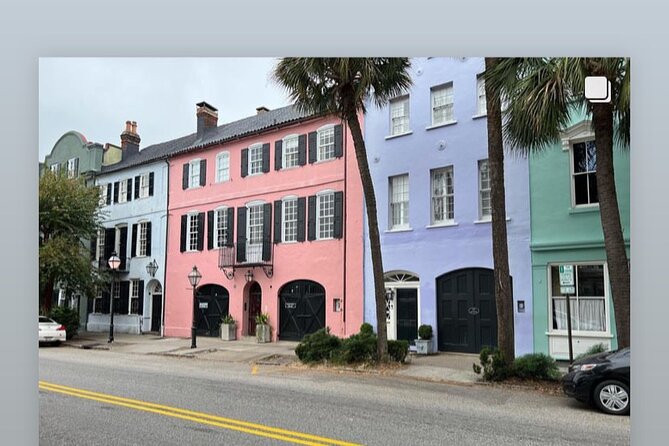
This is an approximately 2-hour walking tour with structured segments. While the exact route details beyond the key stops aren’t spelled out, the format is clear enough to plan your day.
Here’s what you can expect in the real world:
- You’ll start at 80 Broad St in downtown Charleston and meet your guide.
- You’ll take an intro walk that frames early Charleston: historic homes, churches, and public buildings (including references to pre-Revolution eras).
- You’ll pause near City Hall and talk through the early history of the starting area and the Four Corners of Law intersection.
- You’ll continue through the historic center and architecture-focused streets, then include time at the Charleston Battery.
The tour also uses short focus blocks (like the 20-minute and 15-minute segments mentioned for the early stops), which is useful. It means you’re not stuck in endless narration. You’re learning in chunks and then moving on to the next visible clue.
Architecture watching: what to look for as you walk
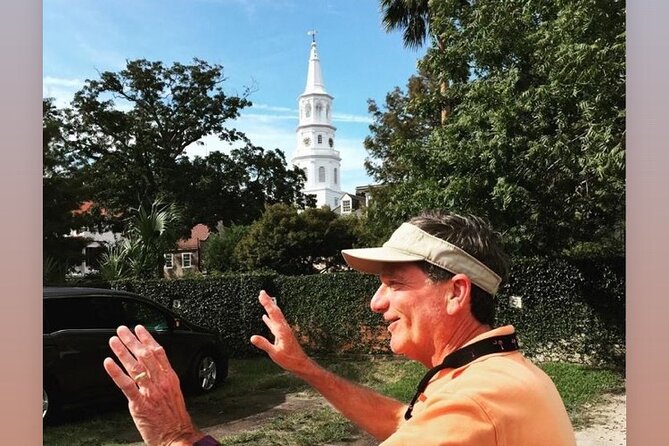
Charleston architecture can be “pretty” at a glance and “meaningful” once someone points out what you’re seeing. That’s the real payoff of a guided history walk here.
As you stroll, keep an eye out for:
- Building styles and older-looking facades that signal pre-Revolution eras
- Churches and public buildings that anchor the civic story
- The street geometry around major intersections, especially where legal and civic ideas meet the city’s layout (that City Hall and Four Corners of Law stop is your clue)
If you do this, the tour becomes more than information. It becomes practice. After it ends, you’ll spot details without needing a guide every minute.
Weather, comfort, and timing tips that make a difference
Two hours of outdoor walking sounds easy—until you hit summer heat or a surprise shower. One review mentioned getting a bit wet, and another praised the tour on a very hot humid day, which is basically a reminder that Charleston weather doesn’t ask permission.
So plan like this:
- Wear shoes that handle uneven sidewalks and curb edges.
- Bring a bottle of water in warm weather.
- If it’s rainy, have a light rain layer.
- Start your day with a light breakfast. You’ll want energy more than you think.
Also, the tour can handle real-life changes. One review described flexibility when a planned site was already visited, and another noted accommodating a ship schedule. So if you have a time constraint, it’s worth mentioning it early so the guide can work with you.
Price and value: why $35 can feel like a bargain
At $35 per person, this is a very reasonable price for a guided walk in a major historic city. Walking tours can be cheaper, but they’re often bigger groups or less structured. Here, you’re paying for the combo of:
- a licensed, certified guide
- a small group size (max 10)
- a route that hits both civic history and a waterfront highlight
Also, the tour is booked about 22 days in advance on average, which usually means it sells out faster than the average “no big deal” tour. That’s another value signal: if you wait too long, you might lose the chance to get your preferred date.
If you’re comparing against day-long tours, this is also a low-commitment way to get a strong baseline. Spend the afternoon learning the big picture, then use the rest of your time for deeper self-guided exploring.
Who should book this tour (and who might want something else)
This is ideal if you:
- want an easy introduction to Old Charleston without a museum ticket plan
- like history tied to places you can physically see
- prefer a small group where questions are welcome
- want a practical, architecture-focused overview plus the classic Battery stop
It’s less ideal if you’re looking for an all-day program, a heavy-duty deep dive into one specific topic, or a strictly indoors experience. This is built for walking and seeing, not for sitting in one place for long periods.
Should you book this Charleston historic walking tour?
Yes, if you want a smart, friendly way to understand Charleston in a couple of hours. The tour’s biggest strength is the small group format, which makes the guide’s stories and answers actually useful. The City Hall stop with the Four Corners of Law gives you a memorable anchor, and the Charleston Battery adds a classic waterfront perspective that connects the city to the coast.
Before you book, just check your comfort for outdoor walking and pick shoes you trust. If you do, you’ll leave with a clearer sense of why Charleston looks the way it does—and what those streets and buildings are telling you.
FAQ
What is the duration of the tour?
The tour runs for about 2 hours.
How much does it cost?
It costs $35.00 per person.
How many people are in the group?
The tour has a maximum of 10 travelers.
Where does the tour start and end?
It starts at 80 Broad St, Charleston, SC 29401, and ends at Dock Street Theatre, 135 Church St, Charleston, SC 29401.
Is the tour offered in English?
Yes, it is offered in English.
Is a guide included?
Yes. The tour includes a licensed and certified guide.
Are mobile tickets used?
Yes, the tour uses a mobile ticket.
Is free cancellation available?
Yes. You can cancel up to 24 hours in advance for a full refund.
FAQ
Are service animals allowed on this tour?
Yes, service animals are allowed.
Is the meeting point near public transportation?
Yes, it is near public transportation.
Do most travelers be able to participate?
Most travelers can participate.
What attractions are included?
The tour includes highlights such as Charleston architecture in the historic center and a visit to the Charleston Battery.
More Tours Across Charleston






More Charleston Tours Worth Booking
More Historic District Walking Tours in Charleston



Still deciding? Here are the newest Charleston tours and experiences we have reviewed











Historic District Walking Tours, compared.
 ★ 5.0Historic Charleston Guided Sightseeing Walking TourFrom $306,216 reviews
 ★ 5.0Charleston Horse-Drawn Carriage Tour: Explore Historic CharlestonFrom $493,561 reviews
 ★ 4.5Ghosts of Charleston Night-Time Walking Tour with Unitarian Church GraveyardFrom $352,835 reviews
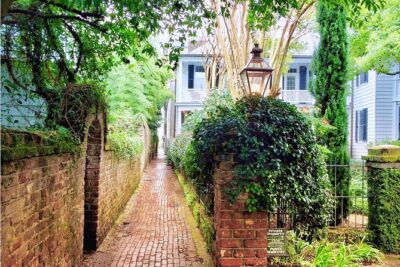 ★ 5.0Hidden Alleyways and Historic Sites Small-Group Walking TourFrom $342,335 reviews
 ★ 5.0Highlights of Charleston Guided Walking Tour2,206 reviews
 ★ 5.0Charleston Haunted Booze and Boos Ghost Walking TourFrom $391,569 reviews
 ★ 5.0Charleston’s Pleasing Terrors Night-Time Walking Ghost TourFrom $291,345 reviews
 ★ 5.0Charleston historical walking tour with a Professor of History at The CitadelFrom $401,284 reviews
Browse the lists this tour appears in