
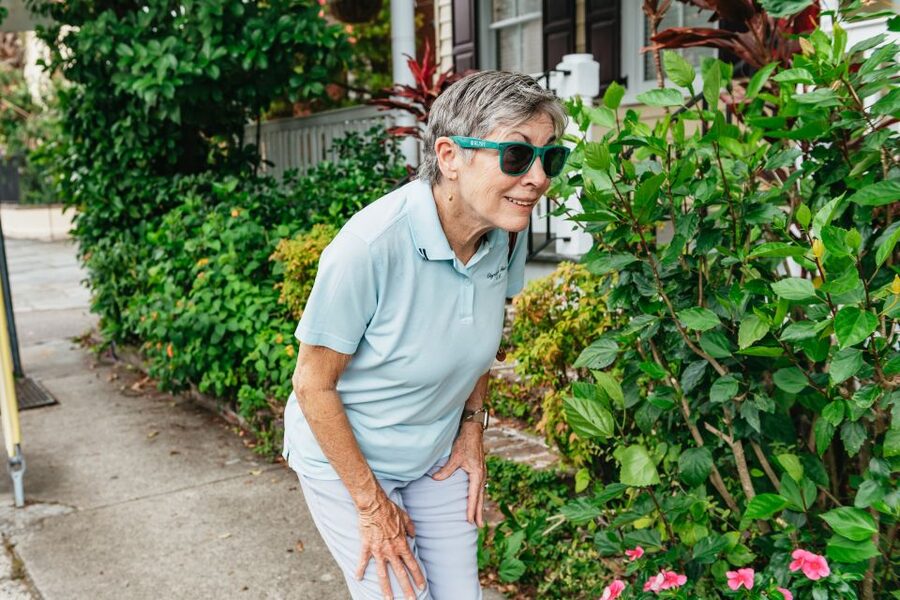
Reviewed · HISTORIC DISTRICT WALKING TOURS
Charleston: Old Walled City Historical Walking Tour
Two hours can change how you see Charleston. This guided walk threads together colonial roots, piracy-era ambition, and the rebuilding after disasters in the only English walled city in North America. Guides often lean on family connections to the place, with stops explained by locals like Bruce (a 7th-generation Charlestonian in one case) and storytellers such as Al, Ed, and Eric.
What I like most is the way the route mixes big, recognizable sights with smaller details you’d miss on your own. You’ll get photo stops and short visits at key landmarks, including Rainbow Row, Dock Street Theatre, and St. Michael’s Episcopal Church, tied to real episodes and human stakes. Another strong plus: the best guides know how to make tough topics honest without turning the mood grim.
The main drawback is simple: it’s a real walking tour. Expect cobblestones, sun, and a tight two-hour schedule—so bring water and good shoes, and don’t count on long stops or leisurely pacing.
In This Review
- Key things to know before you go
- Charleston’s only English walled-city storyline in 2 hours
- Where the walk starts on Meeting Street and Chalmers Street
- French Quarter streets: colonial roots you can feel in the sidewalk
- Dock Street Theatre: culture in the middle of power and change
- Old Exchange & Provost Dungeon: where the city’s darker side gets specific
- Waterfront Park and the view logic behind the port city
- Rainbow Row: why the iconic pastel row is more than a photo
- Heyward-Washington House: noticing architecture like a local
- St. Michael’s Episcopal Church and the tombstone-symbol lesson
- The city’s disaster timeline: how fires, hurricanes, and even earthquakes shaped it
- Price and value: what $30 buys in a two-hour format
- Tips to make the cobblestones and sun behave
- Should you book the Old Walled City Historical Walking Tour?
- FAQ
- How long is the Charleston Old Walled City Historical Walking Tour?
- What is the price of the tour?
- Where do I meet the guide?
- What language is the tour offered in?
- Is this a walking tour?
- What should I bring with me?
- What stops are included on the route?
- Is a professional guide included?
- Can I cancel and get a refund?
- Is there a pay later option?
Key things to know before you go
- A guide with true local roots: In the guides you might meet, names like Bruce (7th-generation), Al, Ed, and Alfie (long-time guide) show up often.
- A route that hits both icons and context: Rainbow Row, waterfront views, and church exteriors—plus the “why” behind what you’re seeing.
- Disaster stories are part of the walking plan: Seven major fires, hurricanes, epidemics, sieges, bombardments, and a devastating earthquake.
- You’ll look at details differently: Tombstones and symbols come up, along with how Charleston changed over time.
- Questions are welcome: Guides are set up to answer group questions and adjust the pacing when needed.
- Wear shoes that handle cobblestones: This is substantial walking in a historic district.
Charleston’s only English walled-city storyline in 2 hours

Charleston can feel like a postcard—until someone explains why the postcard keeps getting reprinted. This tour is built around that idea: you walk the old core and hear the city’s chapters in order, from early colonial days to the eras that made money, power, and legend out of the port. The walled-city concept matters because it shaped how Charleston defended itself, traded, and expanded.
The format is straightforward: you start with a guide, then move from stop to stop along the historic streets—often with a photo moment, a short look at the site, and then the story that explains what you’re seeing. What makes it work is the guide’s voice: many of the most praised guides are locals with deep family ties, and even when the story gets intense, they keep it human and clear.
Trade one set of cobblestones for another with more Charleston walking tours.
- Historic Charleston Guided Sightseeing Walking Tour★ 5.0 · 6,216 reviews
- Charleston Horse-Drawn Carriage Tour: Explore Historic Charleston★ 5.0 · 3,561 reviews
- Ghosts of Charleston Night-Time Walking Tour with Unitarian Church Graveyard★ 4.5 · 2,835 reviews
Where the walk starts on Meeting Street and Chalmers Street
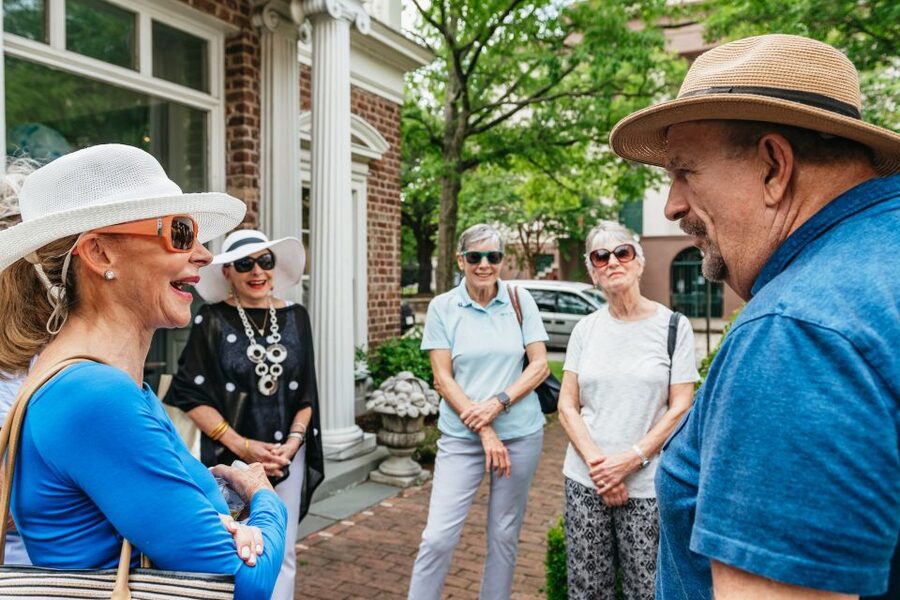
Your meeting point is on the sidewalk at the corner of Meeting Street and Chalmers Street—the cobblestone section—so yes, the walking starts right away. Many tours begin with an orientation check-in, and that matters because the rest of the walk is about noticing patterns: street layouts, architecture choices, and what survived versus what didn’t.
The route also runs from the historic core back toward Shop Historic Charleston, your starting area and return point. That means you’re not drifting into random areas; you’re staying inside the historic district rhythm, where each landmark is close enough to connect to the last one.
If you’re hoping for a calm first hour, you’ll want to show up a bit early. Cobblestones and crowd flow can slow you down before the guide even starts narrating.
French Quarter streets: colonial roots you can feel in the sidewalk
The first segment heads into the French Quarter area, with time for a photo stop and sightseeing right away. This is a good warm-up because the guide can set the tone: Charleston’s identity wasn’t built in one day, and the streets you’re walking are the physical record of that.
Expect the story to move through early colonial roots and the city’s complicated past. Guides tend to connect architecture and street placement to what people were trying to do—live, trade, worship, defend, or get by during unstable times.
Practical tip: if you want the best photos, start by taking one wide shot early on. Later, you’ll be busy listening for the details—like what a building’s purpose suggests or how certain eras left visible marks.
Dock Street Theatre: culture in the middle of power and change
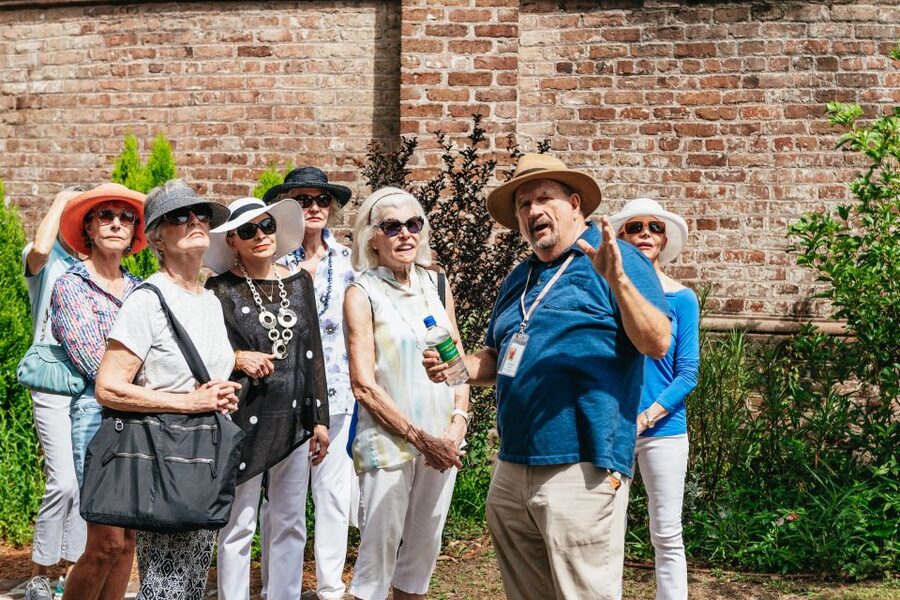
Next comes Dock Street Theatre, a shorter stop but an important one. The theatre is a reminder that Charleston’s story isn’t only wars and disasters—it’s also entertainment, civic life, and the confidence of a growing city.
This is the kind of stop where the guide often ties past and present together. You’ll hear how the city’s fortunes moved through different periods and how public life could rise even when the environment was unpredictable. Even when the tour is moving fast, the guide’s job is to make this quick pause feel purposeful, not random.
If you’re a person who likes architecture or city vibes, this stop gives you a break from the bigger “headline” landmarks while still advancing the narrative.
Old Exchange & Provost Dungeon: where the city’s darker side gets specific
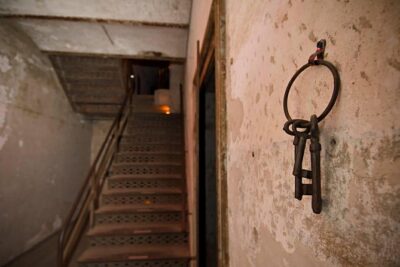
At Old Exchange & Provost Dungeon, you’re in the part of Charleston’s story where the stakes get real. The dungeon context turns the city’s growth into something you can’t treat as purely decorative. It’s also one of the best stops for hearing how power worked in practical terms—through institutions tied to the port and the enforcement side of city life.
Guides often use this stop to connect major themes: how Charleston protected economic interests, how law and punishment played out, and how the city handled conflict. Because it’s a short time window, the guide will likely point you to the highlights you can actually absorb without rushing through everything.
If you’re sensitive to difficult history, many guides handle it carefully and honestly, keeping the focus on context rather than shock.
Cover more ground on our other Charleston bus and trolley tours.


Waterfront Park and the view logic behind the port city
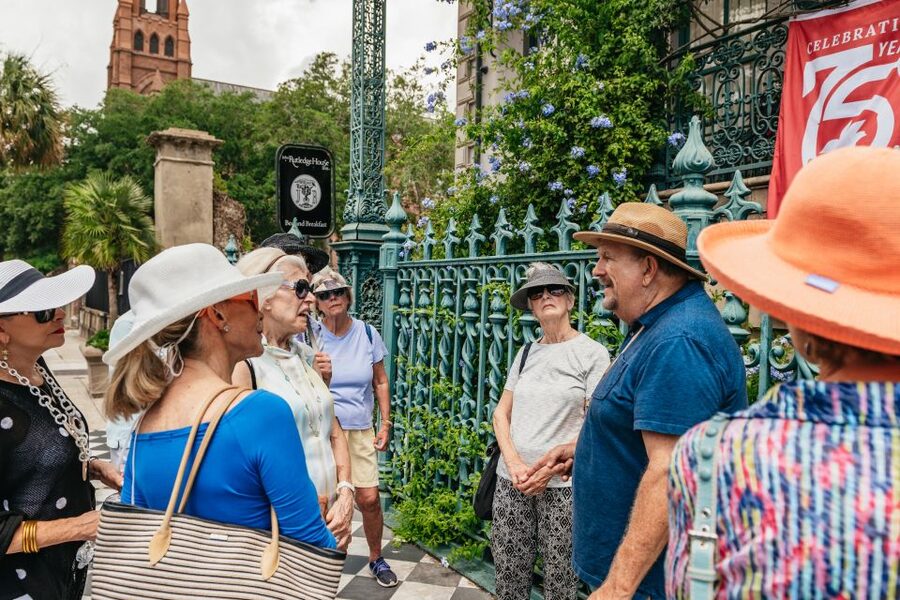
Then you shift toward the water with Waterfront Park and scenic views along the way. This section is useful even if you think you’re just there for buildings. Seeing the waterfront helps you understand why Charleston’s history reads like a port story: ships, commerce, and the constant pressure of being important.
The walking time here tends to include sight lines—glimpses that help you map where you are and how the city’s growth likely unfolded. When a guide points out how the waterfront connects to trade and defense, it clicks: disasters and rebuilding weren’t abstract. They shaped an economy that depended on movement through the harbor.
Bring water here. Even if it’s “not that hot yet,” Charleston sun can turn a two-hour walk into a thirsty one.
Rainbow Row: why the iconic pastel row is more than a photo
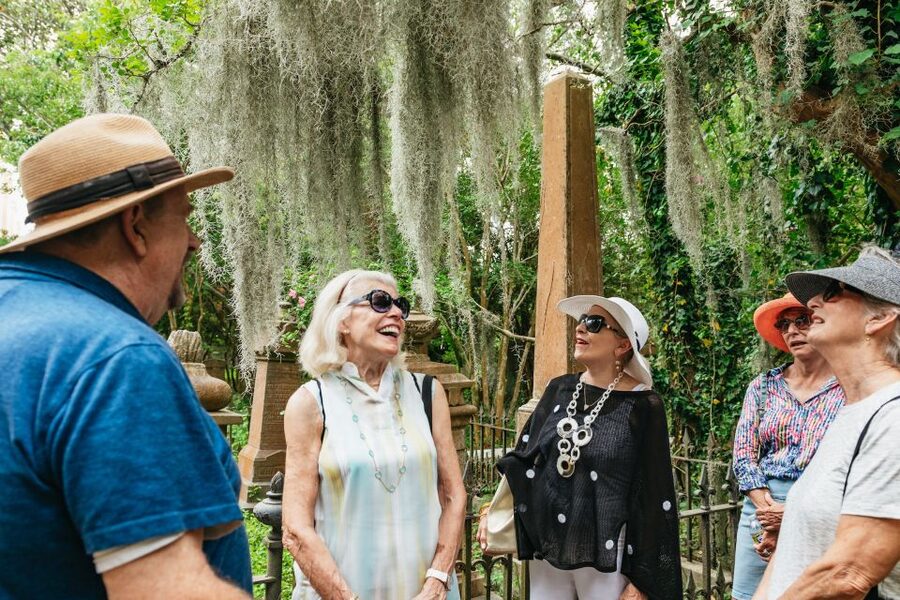
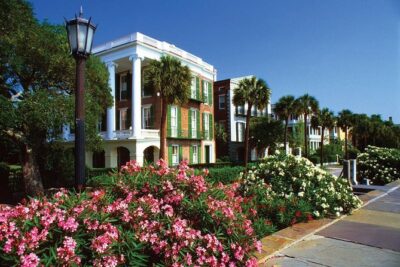
Rainbow Row is your short scenic highlight, and it’s also where the guide’s storytelling skills get tested. The row is famous, but the best version of this stop is when you understand why it became famous and what came before it.
Because Charleston has faced repeated fires, hurricanes, epidemics, sieges, and bombardments, the buildings you see are tied to decisions about reconstruction and durability. This stop is a visual checkpoint: you’re looking at an outcome, not just a landmark.
If you care about architecture, watch how the guide talks about materials and design choices in connection to the city’s turbulent history. If you don’t care, still do the stop. It gives you a strong image to remember after you leave the district.
Heyward-Washington House: noticing architecture like a local
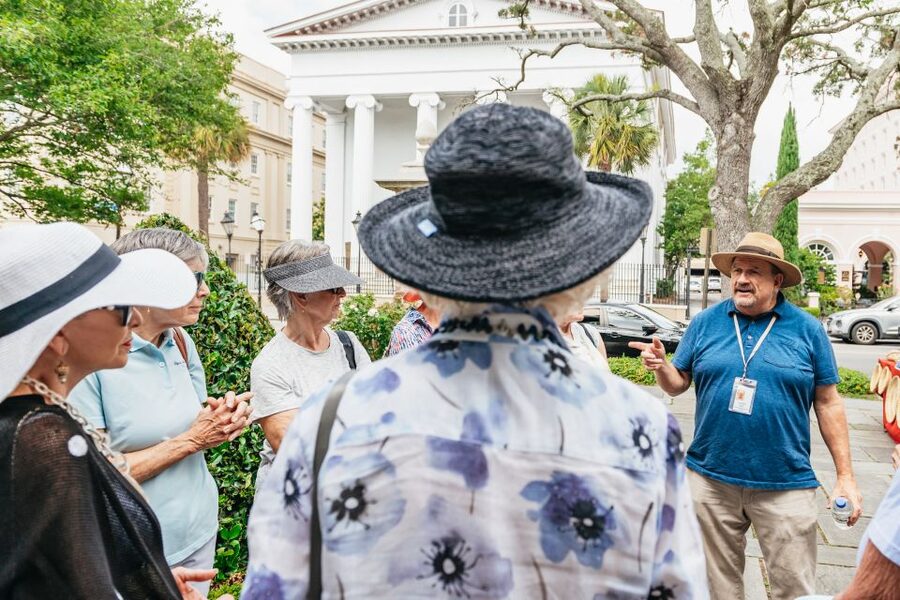
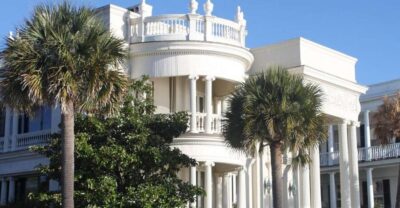
At the Heyward-Washington House, you’ll get another quick photo-and-sightseeing moment. This stop often helps you “unlock” the city’s look, because it’s easier to notice patterns once you’ve heard how Charleston changed across eras.
Guides typically use houses like this to explain what people prioritized—status, protection from hazards, daily life needs, and the influence of wealth from the port. This is also where the walking tour’s value shows up: you’re not just seeing a pretty façade. You’re getting a reason behind the façade.
If you’re traveling with family or someone who isn’t a pure history buff, this house stop is a good bridge. It stays visual while still connecting to the bigger chapters.
St. Michael’s Episcopal Church and the tombstone-symbol lesson
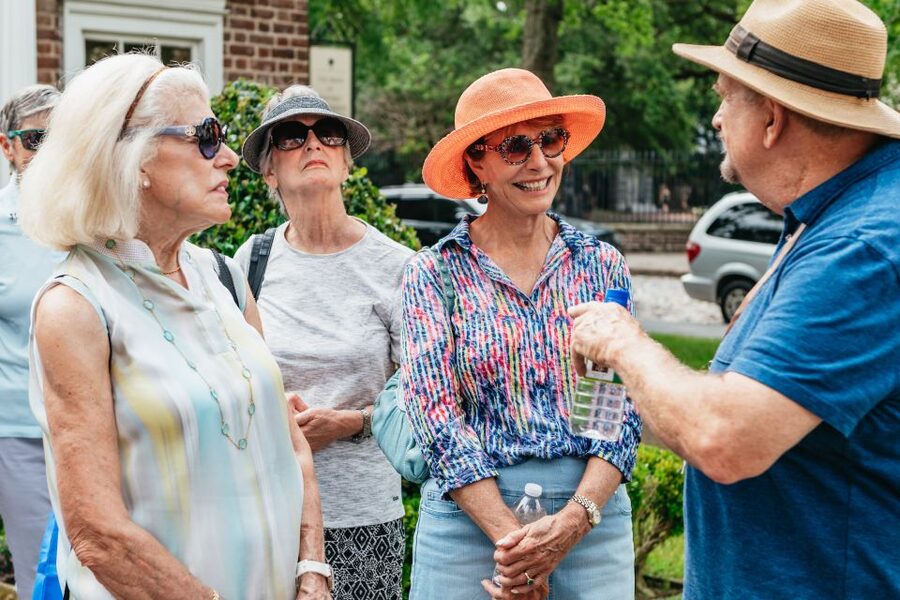
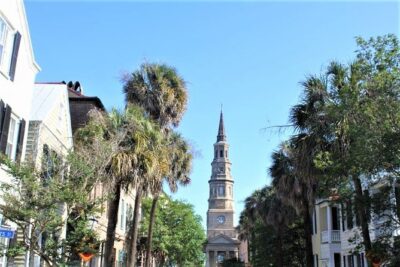
One of the final anchors is St. Michael’s Episcopal Church. Even if you don’t go inside (the tour is built around sightseeing), it’s a major landmark for reading Charleston as a city of belief systems, community structure, and long continuity.
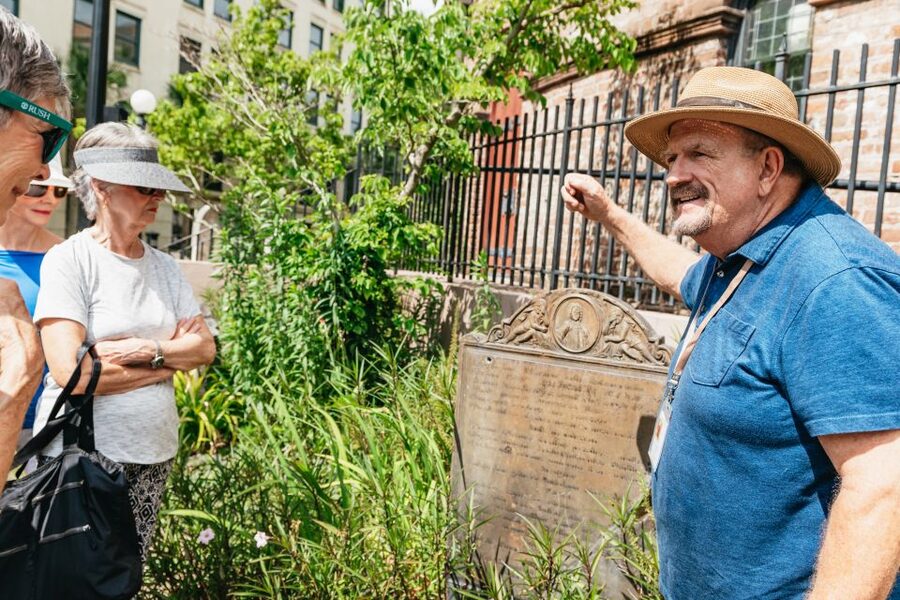
In many versions of the tour’s story, the guide also brings up tombstones and ancient symbols—a reminder that Charleston’s history isn’t only in buildings. It’s also in the language people used to mark identity, faith, and memory.
This stop is a great chance to slow down for a minute and look around rather than just up at the landmark. The church area helps you feel the scale of the district and how the neighborhood grew around key institutions.
The city’s disaster timeline: how fires, hurricanes, and even earthquakes shaped it
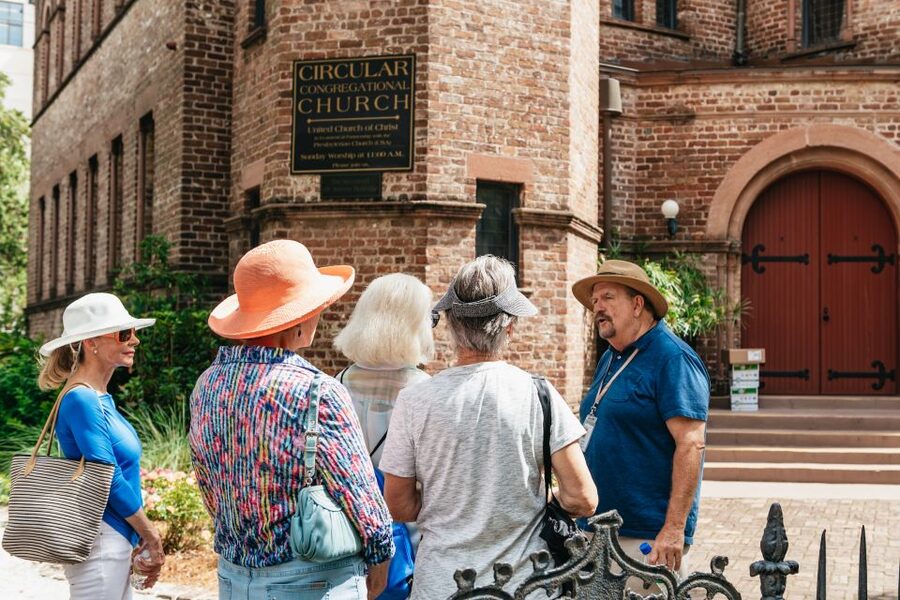
The backbone of the tour is Charleston’s “survival chapters.” Expect the guide to connect the city’s timeline to major setbacks: seven major fires, hurricanes, epidemics, sieges, bombardments, and a devastating earthquake. That list is heavy, but the way it’s told on the walk makes it understandable.
Here’s why it matters for you: when you learn that Charleston repeatedly had to rebuild, you stop treating the city’s beauty as luck. You start seeing it as a pattern of decisions—about what to rebuild, what to change, and how to keep living in a place that could be hit again.
The guide usually keeps moving, so the trick is to listen for how each disaster altered the next chapter. If you do that, Rainbow Row, churches, and even the dungeons feel connected instead of random.
Price and value: what $30 buys in a two-hour format
At $30 per person for about two hours, this tour is priced like a solid intro rather than an all-day deep study. That’s a good thing. You get a guided route with a professional guide, a fast tour of standout landmarks, and the stories that connect them.
If you’re short on time on your first morning or afternoon, this is the kind of experience that gives you bearings. Once the guide names eras—colonial roots, piracy years, rice planters—and explains how disasters reshaped the city, you can walk on your own afterward with a better sense of what you’re looking at.
The best value shows up when your guide is a strong storyteller. Many praised guides like Al, Ed, Bruce, Eric, Kent, Alfie, and Judi are described as funny, engaging, and able to answer questions. If you get one of those voices, the ticket feels small.
Tips to make the cobblestones and sun behave
This walk involves substantial walking, so plan like it’s a mini hike through the historic core.
- Wear comfortable shoes built for cobblestones and uneven pavement.
- Bring sunscreen and water, especially for the waterfront and open-street stretches.
- Dress for weather. Charleston can swing fast between warm and muggy.
- If you’re easily tired, pace your photos. Take the big shots early, then listen more than you shoot.
- If you’re sensitive to pacing or sound, know that different guides speak at different speeds. In one case, a faster delivery was noticed; another mentioned the voice getting quieter. You can ask the guide to repeat or face the group so everyone catches the main points.
Should you book the Old Walled City Historical Walking Tour?
Book it if you want the fastest way to understand Charleston beyond postcard views. This tour gives you a tight loop through major landmarks—Rainbow Row, Dock Street Theatre, Old Exchange & Provost Dungeon, Waterfront Park, Heyward-Washington House, and St. Michael’s Episcopal Church—plus the “why” behind the architecture and street layout.
Skip it if you hate walking, want lots of time inside buildings, or prefer history told only in timelines without the emotional weight of disasters. With a two-hour format, it’s built for motion and storytelling, not slow museum-style browsing.
If you do book, treat it like your first draft of Charleston: you’ll leave knowing what to look for next.
FAQ
How long is the Charleston Old Walled City Historical Walking Tour?
It lasts about 2 hours.
What is the price of the tour?
The cost is $30 per person.
Where do I meet the guide?
Meet on the sidewalk at the corner of Meeting Street and Chalmers Street (the cobblestone street).
What language is the tour offered in?
The tour is guided in English.
Is this a walking tour?
Yes. It’s a walking tour and involves a substantial amount of walking.
What should I bring with me?
Bring comfortable shoes, sunscreen, water, and weather-appropriate clothing.
What stops are included on the route?
Stops include areas such as the French Quarter, Dock Street Theatre, Old Exchange & Provost Dungeon, Waterfront Park, Rainbow Row, Heyward-Washington House, and St. Michael’s Episcopal Church.
Is a professional guide included?
Yes. The tour includes a professional live guide.
Can I cancel and get a refund?
There is free cancellation up to 24 hours in advance for a full refund.
Is there a pay later option?
Yes. You can reserve now and pay later.
More Charleston Tours Worth Booking






More Bus & Trolley Tours in Charleston






More Historic District Walking Tours in Charleston



Still deciding? Here are the newest Charleston tours and experiences we have reviewed









Historic District Walking Tours, compared.
 ★ 5.0Historic Charleston Guided Sightseeing Walking TourFrom $306,216 reviews
 ★ 5.0Charleston Horse-Drawn Carriage Tour: Explore Historic CharlestonFrom $493,561 reviews
 ★ 4.5Ghosts of Charleston Night-Time Walking Tour with Unitarian Church GraveyardFrom $352,835 reviews
 ★ 5.0Hidden Alleyways and Historic Sites Small-Group Walking TourFrom $342,335 reviews
 ★ 5.0Highlights of Charleston Guided Walking Tour2,206 reviews
 ★ 5.0Charleston Haunted Booze and Boos Ghost Walking TourFrom $391,569 reviews
 ★ 5.0Charleston’s Pleasing Terrors Night-Time Walking Ghost TourFrom $291,345 reviews
 ★ 5.0Charleston historical walking tour with a Professor of History at The CitadelFrom $401,284 reviews
Browse the lists this tour appears in