

Reviewed · HISTORIC DISTRICT WALKING TOURS
Small-Group Tour: Charleston Old Walled City Historical Walking Tour
Charleston’s old streets pack a lot of story. This small-group walking tour threads through the peninsula’s standout sites, from historic churches to Atlantic-era landmarks, with on-foot narration that helps you read what you’re seeing. I especially like how it connects buildings to real events, not just dates and names, so the walking feels like a guided film.
Two things I really like: the hill-free, easy-to-walk route for active travelers, and the stop-by-stop pacing that keeps you oriented as you move across the city. You’ll hit big hitters like French Quarter streets, Rainbow Row, and The Battery while also slowing down for quieter places where Charleston’s past feels close and specific.
One drawback to keep in mind: the experience depends on the guide’s clarity and on-time start. A few past participants flagged issues with understanding a fast pace or with the guide not showing up, so I’d plan a little buffer and arrive early at the meeting point.
In This Review
- Key highlights to look for
- Why this Charleston Old Walled City walk feels different
- Getting started at 108 Meeting St and ending somewhere else
- Circular Congregational Church: slate tombstones and early settlement depth
- Powder Magazine: Charleston’s built-in pressure of war
- St. Philip’s Church: political founders resting in plain sight
- French Huguenot Church: one active French Calvinist congregation
- Dock Street Theater and the layer-cake of Charleston performance spaces
- Four Corners of Law: a small intersection with big meaning
- Old Slave Mart Museum: confronting a specific place tied to sale and display
- Old Exchange & Provost Dungeon: the Revolutionary War era in one stop
- St. Michael’s Church and the siege timeline you can actually picture
- Rainbow Row: pastel storefronts tied to Caribbean connections
- The Battery and Fort Sumter: waterfront views and the start of a war
- Nathaniel Russell House garden: the design details without the ticket line
- Small-group pacing: who this walk suits best
- Practical tips to get the most out of the walk
- Should you book this Charleston Old Walled City walking tour?
- FAQ
- How long is the Charleston Old Walled City Historical Walking Tour?
- Is the tour ticket digital?
- What language is the tour offered in?
- Where does the tour start?
- Does the tour end at the same place?
- How large is the group?
- Are admission fees included?
- What should I wear?
- Is the tour accessible for everyone?
- FAQ
- What if the weather is bad?
- Are hotel pickup and drop-off included?
- Can I get a free cancellation?
Key highlights to look for

- A 2-hour, small-group walk (max 15) that keeps the tour feeling personal
- Free entry sites along the route, so you’re not hunting tickets mid-walk
- Stone markers and graveyard narration that make early Charleston legible
- Big viewpoints without the hassle: Fort Sumter is framed from The Battery seawall
- Spots that most self-guided visitors skip, like the Old Slave Mart Museum
Why this Charleston Old Walled City walk feels different
I like Charleston best when I can connect the pretty scenes to what was going on behind the doors. This tour does that by using a steady sequence of stops—religious buildings, civic structures, and waterfront landmarks—so you gradually understand how power, trade, and law shaped the city.
The route also makes practical sense. You cover the peninsula on foot, and because the city is described as hill-free, it works well if you want a history tour but don’t want to train for a stair race.
Lastly, the small-group size (up to 15) matters more than you’d think. You get a rhythm that feels like walking with a local friend who knows where to slow down—and when to move on.
Trade one set of cobblestones for another with more Charleston walking tours.
- Historic Charleston Guided Sightseeing Walking Tour★ 5.0 · 6,216 reviews
- Charleston Horse-Drawn Carriage Tour: Explore Historic Charleston★ 5.0 · 3,561 reviews
- Ghosts of Charleston Night-Time Walking Tour with Unitarian Church Graveyard★ 4.5 · 2,835 reviews
Getting started at 108 Meeting St and ending somewhere else
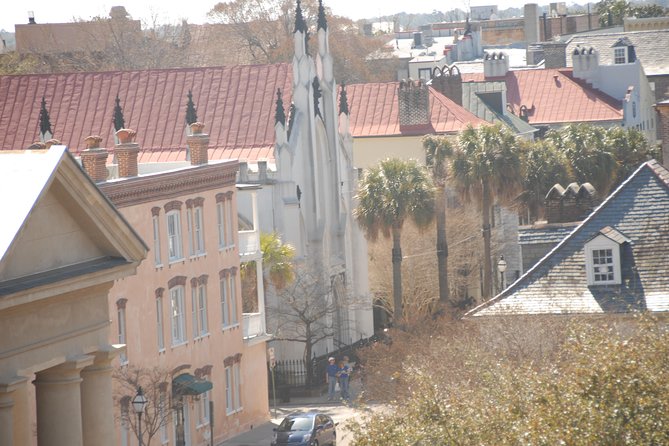
The tour starts at 108 Meeting St, Charleston, SC 29401, and it ends in a different location. That matters if you’re planning dinner reservations right after, so I suggest keeping your schedule flexible and giving yourself time to regroup.
You’ll also be using a mobile ticket, and the tour runs in English. The operator notes that most travelers can participate, and the pace is built for walking, so comfortable shoes are a must.
One more practical note: it operates in all weather conditions, so bring a plan for sun, heat, or rain. If the day looks stormy, pack something you can actually move in.
Circular Congregational Church: slate tombstones and early settlement depth
The tour kicks off at Circular Congregational Church, where worship has taken place on the site since 1681. This stop leans into the quieter kind of Charleston learning: you don’t just see the church, you take in what’s around it.
The most memorable part here is the graveyard narration and the collection of clearly legible eighteenth-century slate tombstones. Even if you’re not a cemetery person, the readable stones make the past feel anchored in real lives—names, dates, and the cadence of a community forming over time.
A practical detail: this stop is about 20 minutes, longer than most. I’d use that time to look slowly, especially at the style and layout of the tombstones, because that’s where the story becomes visual.
Powder Magazine: Charleston’s built-in pressure of war
Next comes the Powder Magazine, a compact but telling stop. Charleston had a need for gunpowder storage, and by 1713 this was built as a facility designed for a city under constant threat.
It’s also described as the oldest surviving public structure between St Augustine and Williamsburg. That makes the site feel less like a random detour and more like a rare, physical clue to what life required in the colonial era.
Expect a short sidewalk narration. Since this is only around 5 minutes, you won’t get a full museum-style experience here, but you’ll leave with a clearer sense of how “war readiness” shaped the city’s infrastructure.
St. Philip’s Church: political founders resting in plain sight
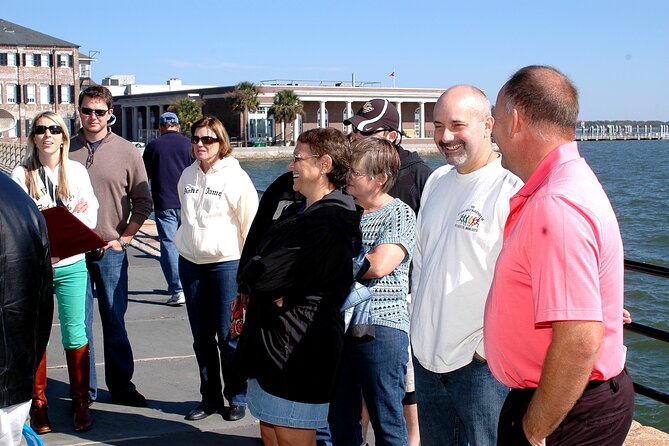
At St. Philip’s Church, the tour takes you into the story of one of the oldest congregations in the Carolinas, founded around 1680. The church is framed as the church of planters and politicians, which instantly tells you this wasn’t only about worship—it was about social power too.
In the graveyard, you’ll hear about national figures, including signers of the Declaration and the Constitution. That’s the kind of stop where the architecture matters, but the names on the ground do even more.
This stop runs about 10 minutes, combining sidewalk and graveyard narration. If you’re short on time in Charleston, it’s one of those moments that’s hard to replicate on your own unless you already know what to look for.
Cover more ground on our other Charleston bus and trolley tours.

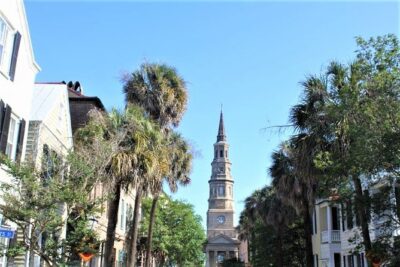


French Huguenot Church: one active French Calvinist congregation
Then the tour swings toward the French Huguenot Church, an elegant Gothic Revival church. It’s described as home to the only active French Calvinist congregation in North America, with worship on site since 1706.
This stop is quick—about 5 minutes—but it’s a strong reminder that Charleston wasn’t only shaped by English-speaking settlers. It also held space for distinct immigrant communities, and the church’s presence signals how those communities lasted.
If you care about the texture of history—who lived here, what faith they practiced—this is a good palate cleanser before the tour turns more political and civic.
Dock Street Theater and the layer-cake of Charleston performance spaces

At Dock Street Theater, you’ll hear how the building connects to both New Deal-era building and earlier theatrical roots. The theater is framed as a WPA project built in 1937, and it sits on the site of an earlier playhouse dating to 1736 in British North America.
This is one of those stops where the narration helps you see continuity. Even though the building is newer than many surrounding landmarks, the city’s urge to stage performances has deep roots.
It’s a short 5-minute stop, but it can be fun if you like cultural history. You’ll also get a better sense of why Charleston keeps reinventing its institutions without fully erasing what came before.
Four Corners of Law: a small intersection with big meaning

The Four Corners of Law is a designated public intersection used since 1680. You’ll also hear a quirky claim that Ripley’s Believe It or Not! singled out—an intersection where the four governing laws of mankind are said to meet.
Take the stop as a mental bookmark for how Charleston organized civic life. Even something as small as an intersection can signal who had authority, how rules were enforced, and how the city ran day to day.
This is another 5-minute sidewalk narration stop. You’ll probably snap a photo quickly, but the real value is the context the guide adds in the short time.
Old Slave Mart Museum: confronting a specific place tied to sale and display
Next is the Old Slave Mart Museum, described as the only surviving Charleston structure used as a showroom for slave sales, now a museum chronicling the slavery story in the Lowcountry. This stop is only around 5 minutes on the tour route, so think of it as an orientation moment.
That’s exactly why it works in a walking tour. Charleston can be gorgeous and forgettable in the same breath if you don’t have a framework. This stop forces a shift in focus—from façades to consequences—without turning the day into an endless lecture.
If you want to learn more, this is the place you might plan extra time on your own afterward. The tour gives you the “where and what,” and then you can decide how deep to go.
Old Exchange & Provost Dungeon: the Revolutionary War era in one stop
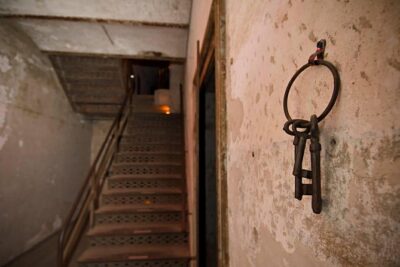
At Old Exchange & Provost Dungeon, the tour frames this Revolutionary War museum site as part of the groundwork for the nation. You’ll hear that President Washington was entertained here four times in 1791, which is a striking detail for understanding how this space functioned.
It’s about 7 minutes with sidewalk narrative, so don’t expect a full exhibit walkthrough. The value is in how it connects the site to the political energy of the period and helps you understand why Charleston mattered.
If you’re into “where history happened” rather than “what history says happened,” this stop is a must.
St. Michael’s Church and the siege timeline you can actually picture
Then you’ll reach St. Michael’s Church, described as the oldest surviving church from 1761. The tour also highlights how the church was targeted during the British siege in 1780 and the Federal siege from 1863–1865.
That means the building isn’t presented as a single-era relic—it’s shown as a landmark caught in multiple chapters of conflict. Two Constitution signers are also described as resting in the graveyard, keeping the focus on how national politics lived alongside daily life.
This stop runs about 7 minutes with sidewalk and graveyard narration. If you like comparing church styles, this is also where you can see different architectural messages across Charleston’s sacred spaces.
Rainbow Row: pastel storefronts tied to Caribbean connections
At Rainbow Row, you’ll see a grouping of 18th-century commercial buildings painted in soft pastels. The tour ties the colors and commercial feel to Charleston’s early connections to Barbados, Antigua, and Nevis.
This is a 5-minute sidewalk narration stop, so it’s not about museum detail. Instead, it’s about teaching your eye: think of these buildings as trade-era infrastructure dressed in color.
If you’re photographing, go slow. I’d take a second look from a slightly different angle, because the buildings read differently once you understand they were part of the city’s economic network.
The Battery and Fort Sumter: waterfront views and the start of a war
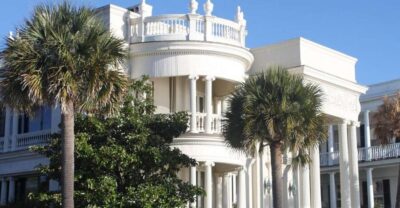
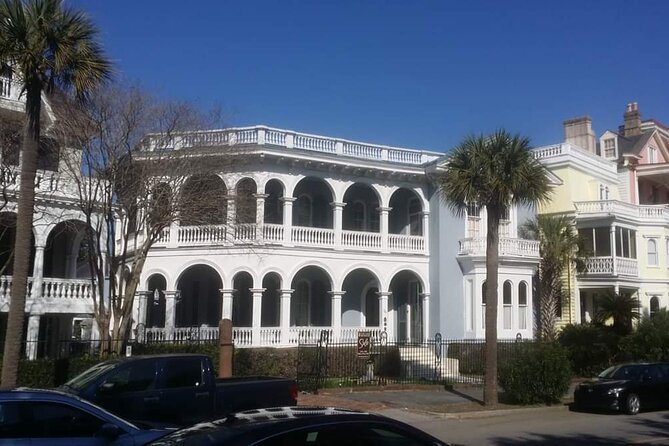
The tour moves to The Battery, a waterfront lined with grand mansions, many built in the first half of the 19th century. The tour frames them as party palaces for the Winter Season, but it also connects the skyline to a major turning point.
You’ll hear that from one of these houses, General Pierre Beauregard gave orders to fire at Fort Sumter, starting the first battle of the Civil War. That link between private mansions and public catastrophe is exactly why I like this portion of the route.
This stop lasts about 10 minutes, mostly sidewalk narration, and it sets you up for the next one.
Then comes Fort Sumter National Monument, viewed from the High Battery seawall. The tour tells the siege and bombardment story and also the dramatic fall of the city after 587 days—with narration designed to help you picture what civilians faced.
This is about 8 minutes. Even without stepping into Fort Sumter, the vantage point helps you see why the waterfront mattered. It’s also a good moment to rest your legs and rehydrate.
Nathaniel Russell House garden: the design details without the ticket line
The final stop is the Nathaniel Russell House (1808) garden area. Here, you’ll discuss horticulture and garden design, plus how an 18th-century Charleston property was laid out.
A helpful detail: the tour notes no house admittance—it’s focused on the garden and narration. So if you’re hoping for interior rooms, this isn’t that stop; it’s more about learning how outdoor space shaped daily life and social status.
Expect about 10 minutes, with garden narration. If you want to close the tour with something calmer after the wartime and slavery-centered stops, this works nicely.
Small-group pacing: who this walk suits best
This tour works best for active walkers who want a guided route that hits both famous and overlooked stops. It’s also a good fit for first-timers to Charleston who want to understand the city’s layout quickly—peninsula landmarks, downtown density, and waterfront context.
It’s not ideal if you want a slow, sit-down format. Even with a relaxed pace, the structure is built around moving stop to stop, and many sites are brief.
And if your biggest priority is total immersion—like long graveyard reading time or a full museum exhibit visit—consider treating this as the foundation. You’ll get the framework fast, then you can choose what to revisit later.
Practical tips to get the most out of the walk
Wear shoes that can handle uneven sidewalks and frequent stops. This is a walking tour in real city conditions, not a flat mall loop.
Bring a water bottle and plan for sun. Charleston can heat up quickly, and the tour notes it runs in all weather, so your comfort depends on your prep.
For the narration: if you’re sensitive to speed or accents, position yourself where you can hear clearly at each stop. You’ll also get more out of the church and graveyard segments if you pause long enough to actually look.
Finally, use your camera strategically. Some of the best moments aren’t the skyline shots—they’re the slate tombstones, the specific intersections, and the waterfront story links that make the photos make sense.
Should you book this Charleston Old Walled City walking tour?
I’d book it if you want a smart introduction to Charleston with a route that connects architecture, politics, and the waterfront. The value isn’t just the big names; it’s the way the tour adds meaning to each stop, including places like the Old Slave Mart Museum where the city’s beauty doesn’t tell the whole story.
I’d think twice if you’re very schedule-tight or if you’re uncomfortable with narration that may move quickly at certain stops. The main thing to watch is the guide’s on-time start and clarity so you don’t lose momentum right away.
If you’re the type who likes walking history with your eyes open, this one is a strong way to get your bearings fast and learn how Charleston pieces together.
FAQ
How long is the Charleston Old Walled City Historical Walking Tour?
It lasts about 2 hours.
Is the tour ticket digital?
Yes, it uses a mobile ticket.
What language is the tour offered in?
The tour is offered in English.
Where does the tour start?
It starts at 108 Meeting St, Charleston, SC 29401.
Does the tour end at the same place?
No. It ends in a different location, and the details are provided with your booking information.
How large is the group?
The tour has a maximum of 15 travelers.
Are admission fees included?
The tour notes that each listed stop’s admission is free, and it includes taxes, fees, and handling charges.
What should I wear?
Bring comfortable walking shoes. The tour operates in all weather, so dress appropriately for rain or sun.
Is the tour accessible for everyone?
Most travelers can participate, and children must be accompanied by an adult. Service animals are allowed. (If you have specific accessibility needs, check with the operator before booking.)
FAQ
What if the weather is bad?
The tour operates in all weather conditions, so plan for rain or heat.
Are hotel pickup and drop-off included?
No. You’ll need your own transportation to and from the attractions, and there’s no hotel pickup or drop-off.
Can I get a free cancellation?
Yes, you can cancel for a full refund up to 24 hours before the experience starts.
More Charleston Tours Worth Booking






More Bus & Trolley Tours in Charleston




More Historic District Walking Tours in Charleston



Still deciding? Here are the newest Charleston tours and experiences we have reviewed









Historic District Walking Tours, compared.
 ★ 5.0Historic Charleston Guided Sightseeing Walking TourFrom $306,216 reviews
 ★ 5.0Charleston Horse-Drawn Carriage Tour: Explore Historic CharlestonFrom $493,561 reviews
 ★ 4.5Ghosts of Charleston Night-Time Walking Tour with Unitarian Church GraveyardFrom $352,835 reviews
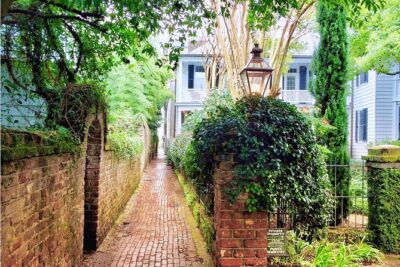 ★ 5.0Hidden Alleyways and Historic Sites Small-Group Walking TourFrom $342,335 reviews
 ★ 5.0Highlights of Charleston Guided Walking Tour2,206 reviews
 ★ 5.0Charleston Haunted Booze and Boos Ghost Walking TourFrom $391,569 reviews
 ★ 5.0Charleston’s Pleasing Terrors Night-Time Walking Ghost TourFrom $291,345 reviews
 ★ 5.0Charleston historical walking tour with a Professor of History at The CitadelFrom $401,284 reviews
Browse the lists this tour appears in