
Reviewed · HISTORIC DISTRICT WALKING TOURS
Charleston Historical Walking Tour: Pirates, Patriots, and More
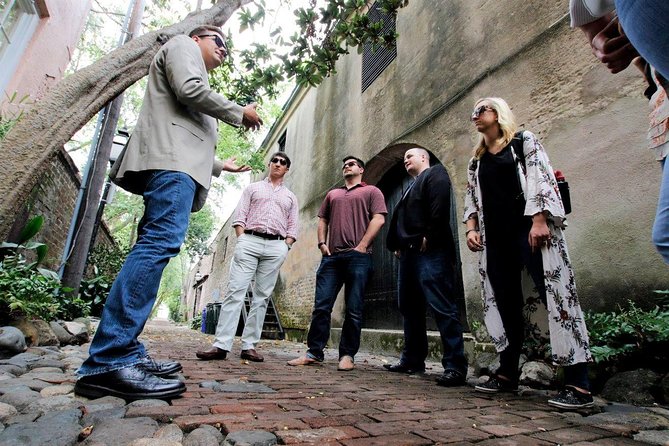
Charleston hits different on foot. This 90-minute walking tour strings together pirates, patriots, and architecture while you move through the parts of the peninsula cars can’t easily reach. I really like that it covers about 2.5 miles at a leisurely pace, with planned photo stops, so you’re not just rushing from one photo spot to the next.
What I love most is the guide-led storytelling. The experience puts real names and places front and center, and guides like Benjamin are praised for being funny while also tying events together across centuries. Second, I like the route choices: you get those quieter side streets and “how did we never walk here?” corners, not just the obvious postcard blocks.
One thing to consider is that this is still real walking. You’ll want moderate physical fitness, good walking shoes, and a plan for sun, wind, or rain since the tour runs in all weather conditions.
In This Review
- Key highlights worth knowing
- Getting your bearings: Waterfront Park, Circular Fountain, and The Battery
- Nathaniel Russell House Museum: neoclassical elegance at 51 Meeting Street
- New Exchange and Customs House (1771): where politics and power played out
- Rainbow Row: the longest run of Georgian row houses in the U.S.
- Riley Waterfront Park: a breather near The Market
- White Point Gardens at The Battery: 6 acres of southern waterfront calm
- St. Michael’s Church and the Battery route: how the story stays connected
- What the guide actually does (and why it matters on a walking tour)
- How to prepare: shoes, weather, and a good morning mindset
- Who this tour is best for
- Should you book Charleston Pirates, Patriots, and More?
- FAQ
- How long is the Charleston Historical Walking Tour?
- How much walking should I expect?
- Where does the tour start and where does it end?
- Is the tour offered in English, and how large are the groups?
- Does the tour run in bad weather?
- What is the cancellation window for a full refund?
Key highlights worth knowing
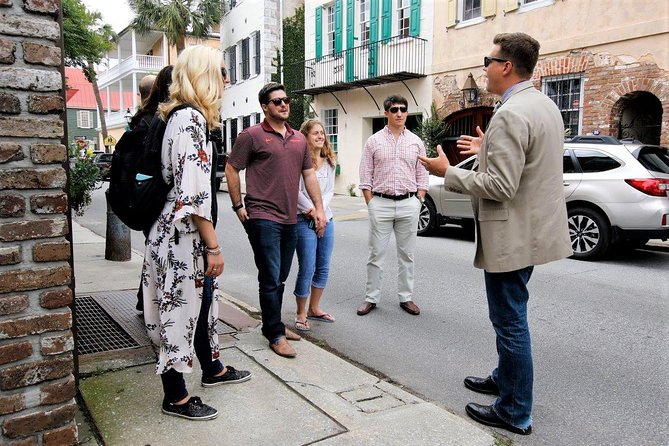
- Pro guide storytelling that connects pirates, patriots, architecture, and the Civil War into one walking narrative
- About 2.5 miles covered at an easy pace with photo pauses along the way
- Stop-by-stop context at major landmarks like the Nathaniel Russell House and the Old Customs Exchange
- Rainbow Row and Georgian row houses explained as more than just a picture backdrop
- Battery area viewpoints at White Point Gardens, with sweeping waterfront energy
- Small group size (max 20) helps the guide manage pace and keep things engaging
Getting your bearings: Waterfront Park, Circular Fountain, and The Battery

The tour starts around the waterfront area, using the Circular Fountain at Waterfront Park as the launching point for your stroll. From the beginning, the goal is simple: help you understand where you are in Charleston, then help you see it differently as time passes.
You’ll spend most of your time in the heart of the historic district, working toward The Battery area and back again. Even if Charleston is your first time on the peninsula, this kind of guided orientation is a smart use of time because it gives you a mental map for everything you do after.
And yes, it’s a walking tour, so your comfort matters. Expect a leisurely pace, plus breaks for photos. That sounds small, but it changes the whole feel of the day—Charleston is best when you can stop, look up, and read the city’s details without sprinting between stops.
Trade one set of cobblestones for another with more Charleston walking tours.
- Historic Charleston Guided Sightseeing Walking Tour★ 5.0 · 6,216 reviews
- Charleston Horse-Drawn Carriage Tour: Explore Historic Charleston★ 5.0 · 3,561 reviews
- Ghosts of Charleston Night-Time Walking Tour with Unitarian Church Graveyard★ 4.5 · 2,835 reviews
Nathaniel Russell House Museum: neoclassical elegance at 51 Meeting Street
One of the early stops brings you to the Nathaniel Russell House Museum at 51 Meeting Street. The tour frames it as one of America’s most important neoclassical dwellings, which is a fancy way of saying this building has real weight in the story of the city.
When a guide points out what to notice on a façade and how a building signals power, trade, and taste, you start looking at architecture like historical evidence. You’re not just admiring a pretty home—you’re learning how Charleston’s wealth and social order shaped what got built and why.
Practical angle: this stop is especially useful if you like architecture or you’ve ever wondered what people mean by neoclassical. A walking guide can point out the cues quickly, which is hard to do when you’re just wandering with no context.
New Exchange and Customs House (1771): where politics and power played out
Next up is the building that locals often treat like a timeline you can stand beside: the former New Exchange and Customs House, completed in 1771. The tour explains it as South Carolina’s most historic building, and it packs a lot into that one block.
Here’s what you should expect the guide to connect for you:
- Patriots were imprisoned there
- The Constitution was ratified there
- George Washington was entertained there
That combination matters. It turns an old civic building into a “this is where big decisions happened” place. In a city like Charleston—where wealth, trade, and politics often share the same streets—this stop gives you a spine for the rest of the walk.
If you like history that feels human, pay attention to how the guide talks about people moving through these spaces. Even when you can’t step inside certain areas, you can still understand the role the site played in shaping the early republic.
Rainbow Row: the longest run of Georgian row houses in the U.S.
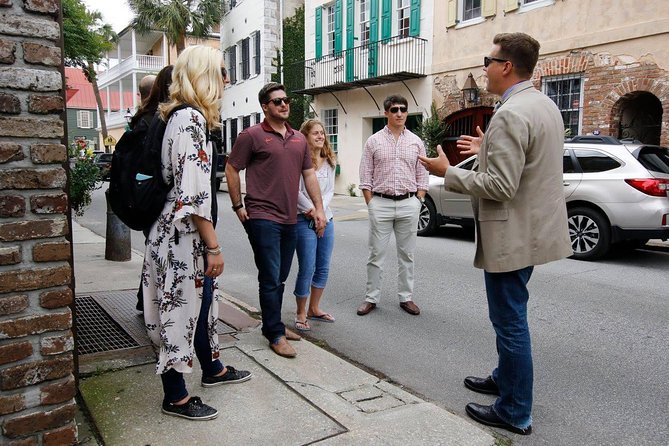
No Charleston walk is complete without Rainbow Row, and this one treats it as more than just a perfect photo wall. Rainbow Row represents the longest cluster of Georgian row houses in the United States, and the guide uses that fact to help you understand how the city’s design language became its identity.
You’ll likely pause here for photos—this tour builds those moments into the route—so you can capture the colorful look of the buildings. But the payoff is learning why those houses matter: Georgian design, repeated forms, and the practical realities of building in a tight, thriving seaport.
A small tip: come ready to slow down. Rainbow Row is visually busy, and if you rush it, you miss the way the guide turns the street into a story about style, planning, and community.
Riley Waterfront Park: a breather near The Market

The route also includes Riley Waterfront Park, close to The Market area. The tour describes it as one of the most visited and popular parks in the area, and that makes sense: it’s open space where you can reset your legs and your eyes.
I like stops like this because they break up the walking rhythm without feeling like a random detour. You get a chance to look out toward the waterfront vibe and then keep moving through the historic streets with fresh attention.
If you’re the type who reads the city better when you’re not staring at walls the whole time, this park pause helps. It also gives you a natural point to compare what you learned at political stops (Customs Exchange) with what you’re seeing in daily-life spaces (waterfront and market-adjacent areas).
More Charleston pirate history is waiting to be dug up.




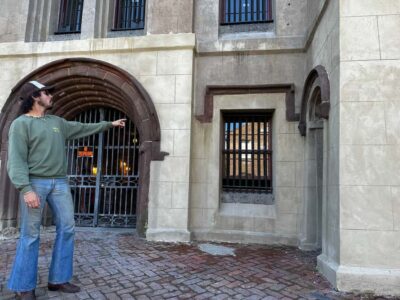
White Point Gardens at The Battery: 6 acres of southern waterfront calm
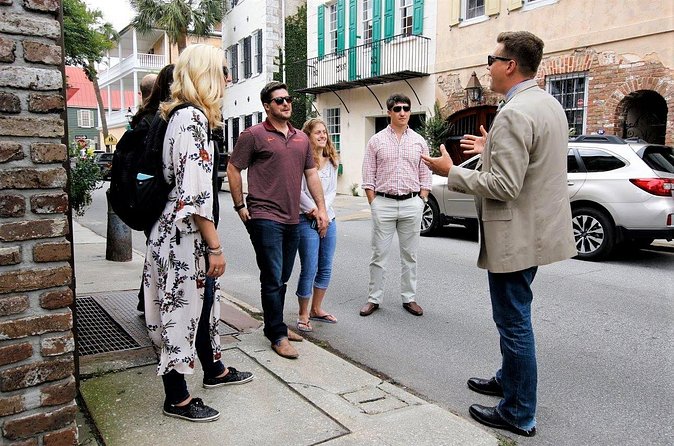
As you near the southern end of The Battery, the tour heads to White Point Gardens, a 6-acre public park in that exact spot. The guide frames it as a key Battery-area viewpoint, which is useful because you start to feel the geography of Charleston more than just the architecture.
This is the kind of stop where even people who claim they hate “history walks” usually enjoy the atmosphere. You’re watching the city edges—water, open lawns, and the feel of a place built for both commerce and ceremony.
Practical advice: treat this like your best chance to get fresh air and take a longer look for details. If it’s hot, plan to linger just long enough for photos and then head back into shade when you can. The tour’s “photo stops + leisurely pace” setup helps, but you’ll still want to listen to your body.
St. Michael’s Church and the Battery route: how the story stays connected
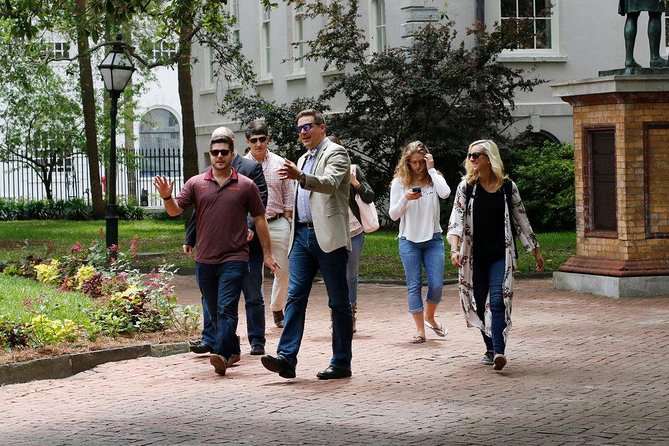
You’ll also pass by major landmarks that anchor the route in Charleston’s wider narrative, including St. Michael’s Church and the Battery area. Even without a long stop at every single spot, the guide’s job is to keep the timeline coherent while you walk.
One of the most praised parts of this tour is how the guide handles the transitions. The story doesn’t jump around randomly; it tends to move through themes like:
- bawdy taverns and pirates
- heroic patriots
- the grandeur of antebellum architecture
- the devastation of the Civil War
That thematic pacing matters. Charleston’s layers are close together. Standing in a single neighborhood, you can feel how one era sets the stage for another, and the guide makes those connections easier to hold in your mind.
This also shows up in the way guides talk about the city’s early rise. The tour includes Charleston’s origin story—founded in 1670 and quickly becoming a cosmopolitan seaport—so the city stops feeling like a museum and starts feeling like a working engine that kept changing over time.
What the guide actually does (and why it matters on a walking tour)
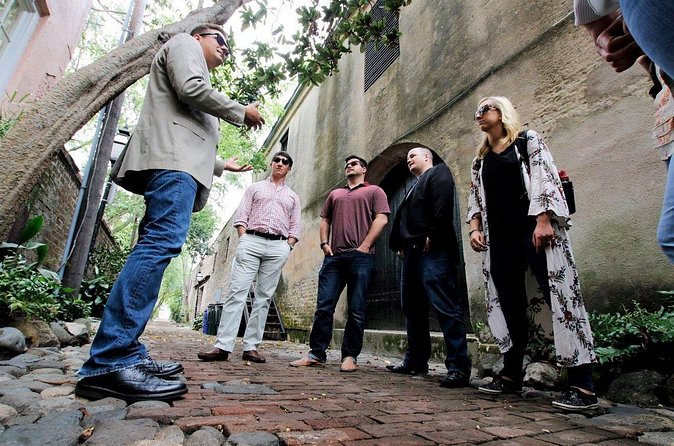
The real engine of this experience is the guide. Many of the reviews focus on Benjamin for a reason: he’s praised for being both funny and highly engaging, with a talent for connecting the dots rather than reciting names like a textbook.
And the best part is that humor isn’t just entertainment here—it’s a teaching tool. When a guide uses short, memorable phrases and story-based explanations, you remember details later, like what happened at the Old Customs Exchange or how Georgian design shaped Rainbow Row.
You’ll also notice guides actively manage comfort when possible. For example, Benjamin tried to keep shade in the hot sun during one tour, which is a big deal in a walking itinerary. Ron Smith is also praised for keeping a warm, upbeat tone during freezing weather, which matters when the tour runs in all conditions.
Small group size helps too. With up to 20 people, you’re more likely to hear your guide clearly, and the pacing feels less like a cattle walk and more like a conversation you can join.
How to prepare: shoes, weather, and a good morning mindset
This tour is outdoors and operates in all weather conditions, so dressing matters more than usual. Bring layers if mornings are cool, and if it’s warm, plan for heat and sun.
Start time is 10:15 am, so you’ll likely get good daylight for photos. Still, Charleston can swing from pleasant to sweaty fast, so it’s smart to bring water and plan for shade when you can.
Because you’ll cover roughly 2.5 miles, good shoes are not optional. A moderate physical fitness level is recommended, which usually means you can enjoy the walk as long as you don’t expect zero discomfort. If your legs tire easily, pace yourself early and tell the guide if you need a slower rhythm.
Who this tour is best for
I think this tour is ideal if you want:
- a fast way to learn Charleston’s big themes
- a guided route through the historic core
- photos plus context, not just scenic stops
It’s also a solid pick for first-timers. If you’ve never walked the peninsula before, the guide’s orientation makes your later self-guided wandering better.
Families can enjoy it too, as long as kids are accompanied by an adult. One note from the tour info: the child rate applies only when sharing with 2 paying adults, so plan your group mix accordingly.
If you’re a fan of architecture, this tour gives you at least two major anchors—like the Nathaniel Russell House and the Georgian row-house story at Rainbow Row—that turn visual interest into understanding.
Should you book Charleston Pirates, Patriots, and More?
Yes, I’d book it if you want a history walk that feels lively and practical. The biggest reason is the guide style: you’re not just given facts, you’re given connections—between people, places, and time periods—while you walk through the parts of Charleston that feel best on foot.
Skip it if you’re looking for a long, museum-style day where you spend lots of time inside buildings. This experience is built around moving through key outdoor locations at a relaxed walking pace, so it’s more about seeing and understanding the city than about deep standalone indoor visits.
If you’re deciding between doing a quick drive-by and a guided stroll, this one wins on value. You leave with a map in your head, a few specific stops you can point out later, and a story that makes Charleston’s streets easier to read.
FAQ
How long is the Charleston Historical Walking Tour?
It runs for about 90 minutes (approximately 1 hour 30 minutes).
How much walking should I expect?
You’ll cover roughly 2.5 miles at a leisurely pace, with photo stops along the way.
Where does the tour start and where does it end?
The tour starts at 1 Vendue Range, Charleston, SC 29401 and ends back at the same meeting point.
Is the tour offered in English, and how large are the groups?
Yes, the tour is offered in English. The experience has a maximum group size of 20 travelers.
Does the tour run in bad weather?
Yes. The tour operates in all weather conditions, so dress appropriately.
What is the cancellation window for a full refund?
You can cancel for a full refund up to 24 hours before the experience start time. Canceling less than 24 hours before means you won’t receive a refund.
More Charleston Tours Worth Booking






More Pirate History Tours in Charleston






More Historic District Walking Tours in Charleston



Still deciding? Here are the newest Charleston tours and experiences we have reviewed











Historic District Walking Tours, compared.
 ★ 5.0Historic Charleston Guided Sightseeing Walking TourFrom $306,216 reviews
 ★ 5.0Charleston Horse-Drawn Carriage Tour: Explore Historic CharlestonFrom $493,561 reviews
 ★ 4.5Ghosts of Charleston Night-Time Walking Tour with Unitarian Church GraveyardFrom $352,835 reviews
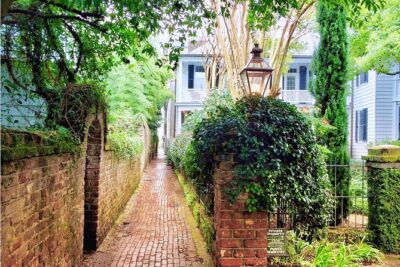 ★ 5.0Hidden Alleyways and Historic Sites Small-Group Walking TourFrom $342,335 reviews
 ★ 5.0Highlights of Charleston Guided Walking Tour2,206 reviews
 ★ 5.0Charleston Haunted Booze and Boos Ghost Walking TourFrom $391,569 reviews
 ★ 5.0Charleston’s Pleasing Terrors Night-Time Walking Ghost TourFrom $291,345 reviews
 ★ 5.0Charleston historical walking tour with a Professor of History at The CitadelFrom $401,284 reviews
Browse the lists this tour appears in