
Reviewed · HISTORIC DISTRICT WALKING TOURS
Charleston Chicora 2 Hours Walking Tour
Charleston can feel like a puzzle in the morning. This 2-hour walking tour is an efficient way to piece together the city’s major stories, from religious landmarks to the hardest history, while still leaving you time to explore on your own.
I especially like the small group size (max 20) and how the guide keeps the pace light but meaningful. I also like the stop mix: you get famous postcard views like Rainbow Row plus sobering stops like the Old Slave Mart Museum without the tour becoming one-note.
One thing to consider: a chunk of the tour includes places where admission tickets are not included, so your total cost may rise a bit depending on what you choose to pay for at each indoor stop.
In This Review
- Key things I’d bet on before you book
- A 2-Hour Charleston Orientation on Foot
- Starting at Bitty and Beau’s on Church Street
- Stop by Stop: Churches, Theater, and the City’s Real Memory
- St. Philip’s Church: Old congregation, and a key lesson
- French Huguenot Church: Gothic style with a rare story
- Dock Street Theater: Built for performance, not for convenience
- Pink House Gallery: A small stop with a big clue
- Old Slave Mart Museum: The hardest stop on the route
- Old Exchange & Provost Dungeon: Business meets punishment
- Rainbow Row: The iconic break for photos and perspective
- Nathaniel Russell House: A historic mansion stop
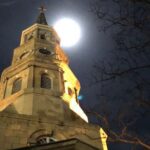
- St. Michael’s Church: The oldest church in Charleston
- Circular Congregational Church: The oldest graveyard
- The Powder Magazine: Charleston’s oldest municipal building
- What You’re Really Paying For: Value vs Extra Admissions
- Why the Guide Matters (Jonathan Green’s storytelling style)
- Who This Tour Is Best For
- Small-Group Notes and Weather Reality
- Should You Book the Charleston Chicora 2-Hour Walking Tour?
- FAQ
- How long is the Charleston Chicora walking tour?
- How much does the tour cost?
- What time and where does the tour start?
- Is the tour offered in English?
- Are admissions included for all the stops?
- What’s the maximum group size?
- What happens if the weather is bad?
Key things I’d bet on before you book
- A tight 2-hour overview that’s perfect when you only have a morning or first-day time pressure
- Church and civic highlights (St. Michael’s, Powder Magazine, and more) that explain Charleston’s built-up past
- Honest coverage of slavery through the Old Slave Mart Museum and the surrounding context
- Photo-friendly breaks at famous spots like Rainbow Row
- Jonathan Green’s storytelling style—energetic, interactive, and designed to keep you moving
- Mostly walkable free stops, with only a few stops requiring extra admission
A 2-Hour Charleston Orientation on Foot
If you’re trying to get oriented fast, this tour does the job. You’re walking through a concentrated stretch of downtown and learning how Charleston connects its buildings to the people, institutions, and conflicts that shaped it. Two hours is short enough to stay fun, but long enough that the stories start to stick.
What makes it especially practical is the pace and structure. You’re not wandering aimlessly. You hit a clear set of stops, each one adding a different piece: churches and cemeteries, entertainment history, major mansions, and then the heavy stuff—Charleston’s role in slavery—kept in the conversation instead of pushed aside.
You do have to be ready for an on-foot format. It’s described for moderate physical fitness. That usually means comfortable walking shoes, steady steps, and no expecting a sit-down marathon.
Trade one set of cobblestones for another with more Charleston walking tours.
- Historic Charleston Guided Sightseeing Walking Tour★ 5.0 · 6,216 reviews
- Charleston Horse-Drawn Carriage Tour: Explore Historic Charleston★ 5.0 · 3,561 reviews
- Ghosts of Charleston Night-Time Walking Tour with Unitarian Church Graveyard★ 4.5 · 2,835 reviews
Starting at Bitty and Beau’s on Church Street
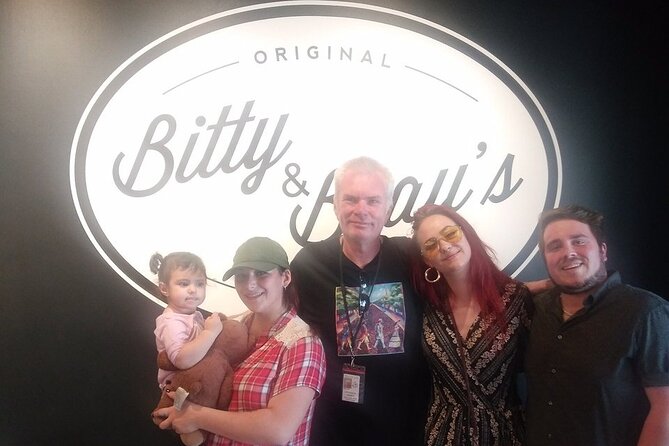
You’ll meet at Bitty and Beau’s Coffee, 159 Church St, Charleston, SC 29401, with the tour starting at 10:00 am. The good news: you’re starting in a real, central area where it’s easy to grab coffee or water before you begin, and it’s simple to finish back near where you started.
This is also the kind of tour that works well if you’re using public transportation. The route is built for downtown walking, and the tour is set up so you can plug it into your day without needing a car.
Bring a bottle of water. Charleston heat can turn a “quick walk” into an endurance test fast, and you’ll want something in your hand instead of searching for a shop mid-tour.
Stop by Stop: Churches, Theater, and the City’s Real Memory
This is the spine of the tour. You’ll move from one iconic site to the next and get explanations that help each place make sense. Some stops are brief, some are emotionally heavier, but the tour keeps a steady flow so you don’t feel stuck in any one theme.
St. Philip’s Church: Old congregation, and a key lesson
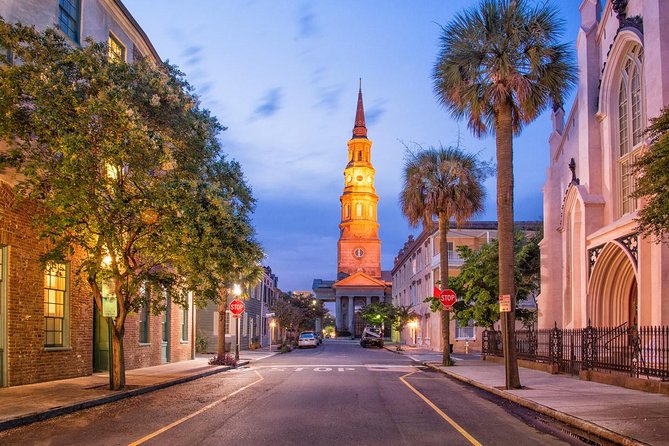
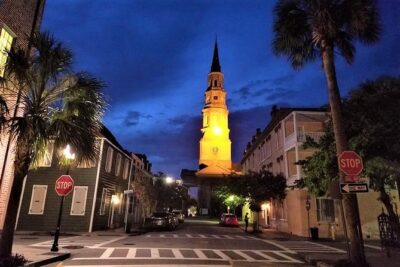
Your first stop is St. Philip’s Church. This is one of Charleston’s most iconic churches and home to the oldest congregation in Charleston. You’ll also hear about the cemetery space—and the tour helps you understand the difference between a graveyard and a cemetery, which is a handy local detail if you keep exploring on your own afterward.
This stop matters because it grounds you in how Charleston built identity around worship and community. It’s not just architecture; it’s also social structure.
French Huguenot Church: Gothic style with a rare story
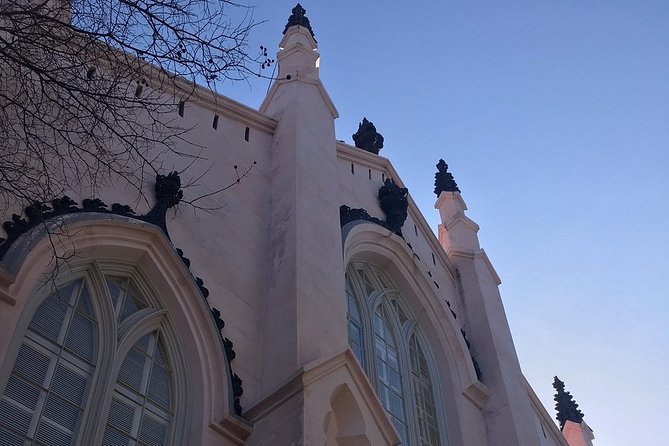
Next is the French Huguenot Church. The standout detail here is that it’s described as the only Calvinist French Huguenot church in the Western Hemisphere. It’s also presented as a beautiful Gothic-style church, so you get both atmosphere and context in a short visit.
If you’ve ever wondered how Charleston attracted different groups and carried their traditions forward, this is a good early answer.
A few more Charleston tours worth a look before you go.


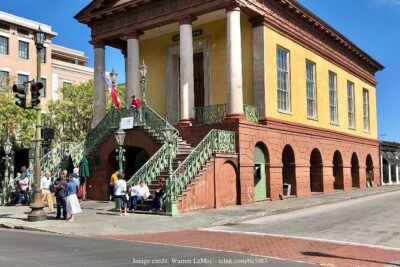
Dock Street Theater: Built for performance, not for convenience
From worship to stages: you’ll see Dock Street Theater, described as the first building in North America built specifically for putting on theatrical productions. That’s a striking idea when you’re standing outside the building—Charleston didn’t just have entertainment, it invested in purpose-built performance space.
This is a quick stop, but it helps balance the darker historical topics with cultural life.
Pink House Gallery: A small stop with a big clue
Then comes the Pink House Gallery, described as the second oldest house in Charleston. The stop is short, but it’s a useful contrast. You’ll start to see how residential structures sit in the same city fabric as churches, theaters, and institutions.
It’s one of those stops that’s easy to overlook if you’re sightseeing without a plan. With the tour, you know why it’s there.
Old Slave Mart Museum: The hardest stop on the route
After that comes Old Slave Mart Museum, a stop built around the dark reality of slavery in Charleston. It’s identified as a slave market from 1856, and the tour specifically addresses the history and Charleston’s role.
Admission isn’t included here, so plan your budget if you want to go inside. Even if you choose to spend more time outside the museum space, this stop is the tour’s emotional turning point—and it’s one you should go into mentally prepared.
For many people, this is the part that makes the whole tour feel honest. The tour doesn’t treat slavery as a footnote. It’s part of the city’s story.
Old Exchange & Provost Dungeon: Business meets punishment
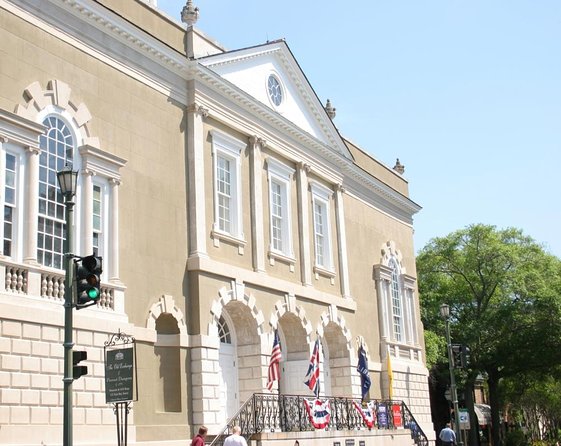
You’ll then visit the Old Exchange & Provost Dungeon, described as one of the most historical buildings in the entire country. Like the Slave Mart, admission isn’t included, so think of this as a place where you may spend extra time and money depending on what you prefer.
The value here is the contrast: a building that ties together official civic power and the enforcement side of history. It’s a reminder that institutions ran everything—from trade and politics to how people were controlled.
Rainbow Row: The iconic break for photos and perspective
Then you get the crowd-pleaser: Rainbow Row. It’s described as one of Charleston’s most iconic areas, and yes, it’s a great place for photos. The tour timing gives you a short window to look closely and reset your brain after the weightier stops.
But Rainbow Row isn’t just a picture moment in this tour. You’ll likely leave with a better understanding of why these homes became symbols of Charleston identity in the first place.
Nathaniel Russell House: A historic mansion stop
Next is Nathaniel Russell House, listed as one of the oldest and most historic mansions in Charleston. Admission isn’t included, so you can choose how much you want to pay to go deeper.
Even without going inside, this stop helps you see how elite domestic architecture relates to the broader city system—social, economic, and historical.
St. Michael’s Church: The oldest church in Charleston
Then: St. Michael’s Church, described as the oldest church in Charleston. This is a great stop for anyone who likes to spot how a city’s religious institutions helped shape its laws, rhythms, and community life.
It’s short, but it reinforces a theme you’ve already been building: Charleston’s identity is tightly connected to its sacred spaces.
Circular Congregational Church: The oldest graveyard
You’ll finish the church-and-community cluster at the Circular Congregational Church. This stop highlights the oldest graveyard in Charleston, and you’ll be nudged to look at how burial spaces carry meaning long after the people are gone.
This is another stop where you’re not just looking. You’re learning the language of local memory.
The Powder Magazine: Charleston’s oldest municipal building
The last stop is the Powder Magazine, described as the oldest municipal building in Charleston. Admission isn’t included. If you’re into historic infrastructure and civic power, this can feel like an extra layer of understanding—how a city prepared for conflict and managed public resources.
It’s a fitting end because it’s the bridge between “people and churches” and the city as an organized machine.
What You’re Really Paying For: Value vs Extra Admissions
At $40 per person for about two hours, this tour is positioned as an efficient way to get a guided overview without spending all day on a bus. The math works best when you treat it like a first-day foundation: you walk away with context and a better sense of what to explore again later.
The main budgeting twist: several stops have admission tickets not included. That includes Old Slave Mart Museum, Old Exchange & Provost Dungeon, Nathaniel Russell House, and The Powder Magazine. Meanwhile, other stops are listed as free entries, including St. Philip’s Church, French Huguenot Church, Dock Street Theater, Pink House Gallery, Rainbow Row, St. Michael’s Church, and Circular Congregational Church.
So your total out-of-pocket cost could range depending on how many of those indoor, paid stops you choose to enter. If you’re trying to keep costs tight, you can still learn a lot from the tour outside those spaces. If you want the full experience inside each site, set aside a bit more.
Also note that the tour is capped at 20 travelers, and it’s conducted in English. Small groups and a clear language match are part of what you’re paying for: you get stories you can actually follow without fighting crowd noise.
Why the Guide Matters (Jonathan Green’s storytelling style)
This is one of those tours where the guide can make the difference between seeing buildings and understanding why they matter. The guide for this experience is Jonathan Green of JWalk Tours, and the vibe people describe is very consistent: he’s entertaining, interactive, and clearly invested in Charleston.
In a 2-hour format, that matters. A tight route needs someone who can keep pace while still answering questions and making the city feel human. Many comments point to a balance of humor, strong storytelling, and thoughtful context—enough to keep you engaged, not so much that you feel overloaded.
You’ll also find that the tour feels flexible in the moment. People mention he’ll engage with questions and keep things flowing even when small disruptions happen. That kind of smooth handling helps when you’re walking in old-city areas where time can get a little unpredictable.
Who This Tour Is Best For
This is a strong fit if you:
- Have limited time and want the “key sites” version of Charleston
- Want a guided walk that covers both celebrated landmarks and the harder parts of history
- Like walking tours but don’t want a long, exhausting day
It’s also a good match for first-timers. You’ll come away with a map in your head: where the major historic anchors are, which neighborhoods feel like the heart of the city, and which sites you may want to revisit later.
The physical requirement is moderate. If you have mobility limitations, this might still work depending on your comfort level with continuous walking. Keep in mind it’s outdoors and weather matters.
Small-Group Notes and Weather Reality
The tour is limited to up to 20 people, which usually translates into a more personal feel than the big-bus approach. It’s also the kind of group size where questions can actually happen without derailing the whole morning.
It runs in the open air, and the experience notes that it requires good weather. If the weather turns, you’ll be offered a different date or a full refund. That’s the right kind of policy for a walking tour, and it means you should plan for a backup day if your schedule is tight.
Should You Book the Charleston Chicora 2-Hour Walking Tour?

I’d book it if you want a guided Charleston overview that doesn’t dodge the difficult stories. For $40, you get a structured walk through major landmarks—churches, theater, mansions, and iconic streets—plus the historical framing that helps the city click.
I’d hesitate only if you strongly prefer to avoid paying extra for indoor sites. Since several stops have admission not included, your final cost may creep up if you decide to go inside all of them. You’ll also want to be comfortable walking for about two hours at a moderate level.
If you’re planning your first trip and you want context alongside the photos, this tour is one of the most sensible ways to spend a morning in Charleston.
FAQ
How long is the Charleston Chicora walking tour?
It lasts about 2 hours.
How much does the tour cost?
The price is $40.00 per person.
What time and where does the tour start?
It starts at 10:00 am at Bitty and Beau’s Coffee, 159 Church St, Charleston, SC 29401. The tour ends back at the meeting point.
Is the tour offered in English?
Yes, the tour is offered in English.
Are admissions included for all the stops?
Not all stops include admission. Stops like the Old Slave Mart Museum and Old Exchange & Provost Dungeon list admission ticket not included, while several other stops are listed as free.
What’s the maximum group size?
The tour has a maximum of 20 travelers.
What happens if the weather is bad?
The tour requires good weather. If it’s canceled due to poor weather, you’ll be offered a different date or a full refund. Free cancellation is available up to 24 hours in advance for a full refund.
More Tours Across Charleston



More Charleston Tours Worth Booking
More Historic District Walking Tours in Charleston
Still deciding? Here are the newest Charleston tours and experiences we have reviewed







Historic District Walking Tours, compared.
 ★ 5.0Historic Charleston Guided Sightseeing Walking TourFrom $306,216 reviews
 ★ 5.0Charleston Horse-Drawn Carriage Tour: Explore Historic CharlestonFrom $493,561 reviews
 ★ 4.5Ghosts of Charleston Night-Time Walking Tour with Unitarian Church GraveyardFrom $352,835 reviews
 ★ 5.0Hidden Alleyways and Historic Sites Small-Group Walking TourFrom $342,335 reviews
 ★ 5.0Highlights of Charleston Guided Walking Tour2,206 reviews
 ★ 5.0Charleston Haunted Booze and Boos Ghost Walking TourFrom $391,569 reviews
 ★ 5.0Charleston’s Pleasing Terrors Night-Time Walking Ghost TourFrom $291,345 reviews
 ★ 5.0Charleston historical walking tour with a Professor of History at The CitadelFrom $401,284 reviews
Browse the lists this tour appears in