
Reviewed · HISTORIC DISTRICT WALKING TOURS
Walking history tour Charleston SC
Charleston’s history walks fast, and well. A 2-hour guided stroll through the oldest walled-city core turns the usual postcard stops into a clear story of who built this place and why. You’ll move from Charlestowne into the heart of the Historic District while your guide ties architecture, war-era history, and even pop-culture filming locations to the streets you’re standing on.
I especially like the way the tour centers on big, specific landmarks—Rainbow Row and the grand homes that define the city’s wealth and design. I also like the human touch: your guide, Mike Frederick, is a long-term resident with local stories and volunteer work tied to historical preservation, plus he’ll steer you toward good restaurant picks after the walk. One real consideration: this is rain or shine and it’s a walking tour, so if you’re dealing with mobility limits, you’ll want to skip it.
In This Review
- Key points worth planning for
- A 2-Hour Route That Hits the Postcard Spots and the Power Centers
- Meeting at 1 1/2 Meeting Street: Easy Start, Tight Time Window
- Rainbow Row and White Point Gardens: Why the Views Matter
- Williams Mansion and the City’s Largest Homes: Architecture as a Language
- Charlestowne and the Site of the Original Walled City: Reading the Old Footprint
- High Battery: Revolution and Civil War, Including Battery Wagner in Glory
- Tradd Street and Church Street: The Patriot and Porgy and Bess on the Ground
- What You Get for $47: Value in the Licensed Guide and Tight Route
- Who Should Book This Walking History Tour (and Who Should Skip It)
- Should You Book Historic Charleston Tours’ Walking History Tour?
- FAQ
- How long is the Walking History tour in Charleston?
- What’s the price per person?
- What sites will I see?
- Who leads the tour?
- How big is the group?
- Is food and drink included?
- Where do I meet the guide?
- Will the tour run in bad weather?
- Is the tour wheelchair accessible?
- Can I cancel and get a refund?
Key points worth planning for
- Small group (max 10) keeps the pace conversational and helps you hear every detail.
- Rainbow Row + White Point Gardens give you both the iconic view and the waterfront setting behind it.
- Charlestowne neighborhood and the original walled-city site help you understand how the city protected itself at the start.
- High Battery stories connect the Revolution and Civil War to the Glory connection for Battery Wagner.
- Tradd Street and Church Street anchor scenes from The Patriot and Porgy and Bess to the real streets.
- Licensed city guide with strong local context makes the walk feel grounded, not scripted.
A 2-Hour Route That Hits the Postcard Spots and the Power Centers
This is the kind of walking history tour that’s built around the idea that Charleston doesn’t make sense if you only see pretty views. In two hours, you’re meant to get a tight, memorable line from the city’s earliest footprint to the places that later signaled status, defense, and community life.
The route is also structured so you’re not just bouncing between famous names. You start in the oldest area—Charlestowne—and then you work outward toward the High Battery views and the grand homes. Along the way, Rainbow Row isn’t treated like a photo stop. It’s positioned as part of a bigger story about street life, wealth, and the way the city developed.
And because it’s a small group, you’re less likely to feel rushed past things. It’s easier to ask a question or stay with a spot long enough to understand what you’re looking at. That matters, because Charleston rewards attention to detail: rooflines, garden walls, street placement, and how buildings relate to each other.
Trade one set of cobblestones for another with more Charleston walking tours.
- Historic Charleston Guided Sightseeing Walking Tour★ 5.0 · 6,216 reviews
- Charleston Horse-Drawn Carriage Tour: Explore Historic Charleston★ 5.0 · 3,561 reviews
- Ghosts of Charleston Night-Time Walking Tour with Unitarian Church Graveyard★ 4.5 · 2,835 reviews
Meeting at 1 1/2 Meeting Street: Easy Start, Tight Time Window
The meeting point is 1 1/2 Meeting Street, at the very southern end of Meeting Street. That’s handy because it’s not a vague “meet near a landmark” situation—you can line it up quickly on foot or with a map.
Because the tour is 2 hours, timing matters more than on longer tours. If you arrive late, you’ll miss the opening context that helps the rest of the walk click. I’d treat this like a good theater start: get there, get oriented, and then enjoy the show.
The tour runs rain or shine, so dress like the weather can change its mind mid-walk. Lightweight rain gear or a packable layer is a smart call, since you’re outside for the full duration.
Rainbow Row and White Point Gardens: Why the Views Matter
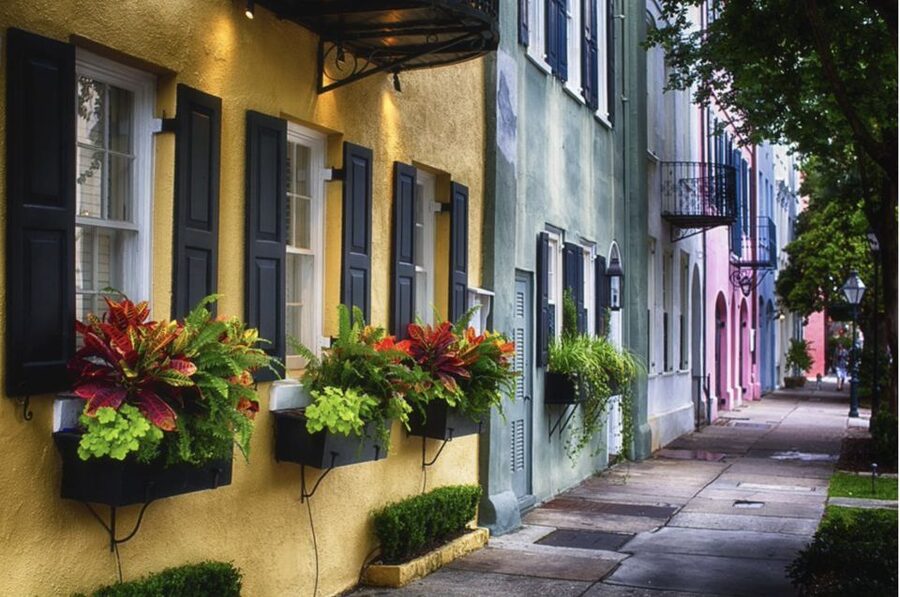
You’ll see Rainbow Row, one of Charleston’s most recognizable streetscapes. The best part is that you don’t just get told that it’s historic. Your guide frames it as part of how Charleston presented itself over time—pretty, planned, and clearly tied to the people who built and lived in these homes.
Then the tour moves into the garden-and-waterfront side with White Point Gardens. That shift is more than scenic. It helps you read the city as both architecture and public space, where grand homes and open areas meet. You get a sense of how the city’s layout supports gathering and movement, not just private living.
If you’re the kind of person who likes pictures, this is your section. But if you prefer meaning over photos, it’s still worth it because these stops explain why certain spots are celebrated in the first place—and why they’re paired with other key locations on the route.
Williams Mansion and the City’s Largest Homes: Architecture as a Language
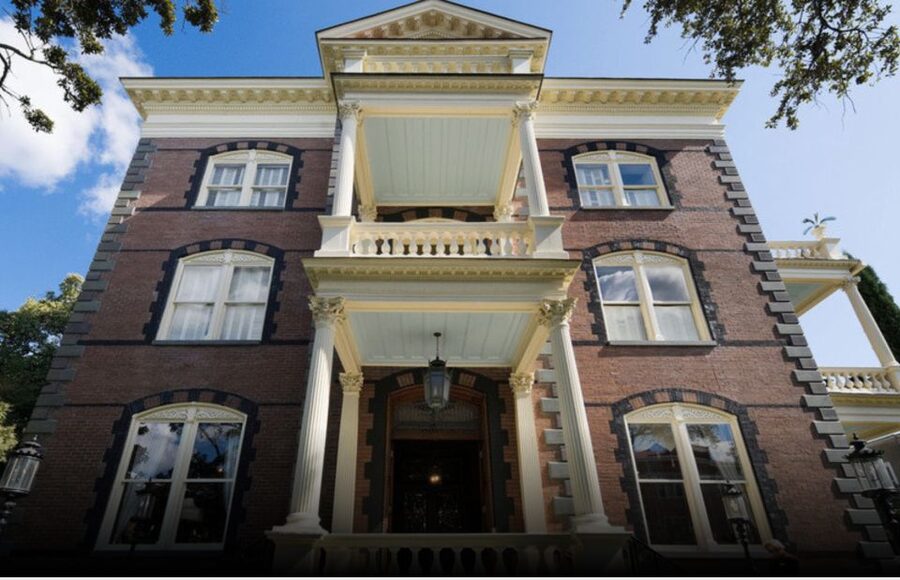
One of the headline stops is Charleston’s biggest home, the Williams mansion, sized at about 25,000 sq. ft. That number isn’t there to impress people at trivia night. It helps you feel how far the city’s wealth was able to scale up the built environment.
When you’re standing near a place like this, you’re meant to notice more than size. You’ll get guidance on how grand homes reflect the priorities of their owners—status, hospitality, and a certain kind of permanence. Even if you don’t care about architecture in general, a mansion this large forces you to think about how people wanted Charleston to look and function.
This tour also keeps the mansion from feeling like a random detour. It’s part of a larger arc that includes other historic residences and museum houses along the way. So the city’s “big home” theme lands with context, not as an isolated sightseeing moment.
Charlestowne and the Site of the Original Walled City: Reading the Old Footprint
Charlestowne is the oldest part of Charleston that this walk focuses on. You’ll spend time around the Charlestowne neighborhood and the site of the original walled city, which is the key to understanding Charleston’s early design.
Walls change how a city grows. They shape movement, boundaries, and the psychology of safety and control. This is the section where a good guide earns their walking shoes—because you’re not just looking at old streets; you’re learning what those streets were for when the city started as something smaller and more defended.
The practical payoff is that your brain starts building a map. Instead of thinking, I saw Rainbow Row and some churches, you can connect neighborhoods to their origins. That’s what makes this tour feel like more than a list of landmarks.
Dig deeper into the past with more Charleston history tours.



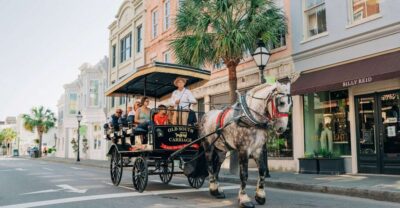
High Battery: Revolution and Civil War, Including Battery Wagner in Glory
The High Battery portion is where the tour’s stakes get higher. Your guide talks about both the Revolution War and the Civil War, using the vantage and story of the area to frame key moments.
A featured point here is the battle of Battery Wagner, which is also connected to the movie Glory. Even if you’ve only seen the film, this is helpful because it gives you physical context. You’re not stuck with scenes in your head. You’re standing in a place where the landscape helped shape what happened.
This is also a good moment to check how you’re feeling physically. It’s still a walking tour, and the High Battery is a major focus. If you’re prone to getting tired on uneven sidewalks, this is the stretch where you’ll notice it first. Still, it’s an excellent payoff if you like history that has real geometry behind it.
Tradd Street and Church Street: The Patriot and Porgy and Bess on the Ground
Two of the most fun parts of this tour are the street-to-story connections tied to film and stage.
On Tradd Street, your guide highlights where The Patriot was filmed. The value here isn’t that you’re chasing movie trivia. It’s that the film location gives you an anchor point. Once you know a scene was set here, you start seeing the street differently—proportions, sightlines, and how people would have moved through these streets long before the camera showed up.
Then, on Church Street, you’ll see Catfish Row, linked to the play Porgy and Bess. Again, it’s not about memorizing a reference. It’s about recognizing how Charleston became a setting—how authors and filmmakers found something here that felt right on screen and stage.
These pop-culture stops are a clever way to keep the walk engaging. They also help you remember the route. I find that if you can attach landmarks to a story you already know, the rest of the history sticks better.
What You Get for $47: Value in the Licensed Guide and Tight Route
The price is $47 per person for a 2-hour small group walk. That’s not pocket change, but you’re paying for interpretation from a licensed city guide, not just motion from point A to point B.
Here’s what makes the value feel real: the tour doesn’t treat history as a list. It’s delivered through specific stops—Rainbow Row, the largest homes, the original walled-city site, churches and museum houses, plus the High Battery war stories and film locations. That structure reduces the amount of guesswork you’d have doing this on your own.
The reviews also point to strong local credibility from the guide. Several guests praised Mike Frederick for his historical storytelling about architecture, gardens, and Charleston’s people, plus his long-term residency perspective. One review also notes his volunteer roles tied to historical preservation, and that authenticity matters because you can feel when someone is describing a place they genuinely care about.
Also, one practical bonus: he’s known for sharing restaurant recommendations. It’s not included as a formal part of the tour, but the fact that people mention it tells you the tour aims to help you after the walk, not just during it.
Who Should Book This Walking History Tour (and Who Should Skip It)
This tour is a strong fit if you:
- enjoy history that’s tied to real buildings and street layouts
- like architecture, gardens, and how wealth showed up in the city’s design
- want war-era context paired with a major Charleston location like the High Battery
It’s also a good choice if you’re the kind of visitor who likes a guided route. Charleston can be easy to wander in—and hard to understand without a framework. This gives you a framework fast.
I’d skip it if you:
- have mobility impairments or use a wheelchair, since it’s noted as not suitable
- want a tour that includes food and drink (it does not), because you’ll be outside and walking for two hours without a meal break planned
Even if you can walk comfortably, bring water or a small snack for before or after. Food isn’t part of the tour, and Charleston days can run warmer than you expect.
Should You Book Historic Charleston Tours’ Walking History Tour?
I think this is worth booking if your goal is to understand Charleston in a short time and you like a guide who connects details into a story. The mix of oldest Charleston (Charlestowne and the walled-city site), the standout landmarks (Rainbow Row, Williams mansion, White Point Gardens), and the bigger narratives (Revolution and Civil War at the High Battery, plus Battery Wagner tied to Glory) makes it feel like a complete introduction rather than random sightseeing.
It’s also ideal if you enjoy the city through familiar cultural references. Seeing Tradd Street for The Patriot and Catfish Row for Porgy and Bess helps the route stick, even if you’re not a die-hard history fan.
The main reason not to book is simple: it’s a walking tour and it’s not set up for wheelchair users or people with mobility impairments. If that’s you, look for an alternative format.
If you’re good on your feet, show up on time at 1 1/2 Meeting Street, dress for rain, and treat the two hours as your “getting-orientated” plan for Charleston. You’ll leave with a map in your head and a lot more meaning in your next walk.
FAQ
How long is the Walking History tour in Charleston?
It lasts 2 hours.
What’s the price per person?
The price is $47 per person.
What sites will I see?
You’ll see Rainbow Row, the original walled city site, Charlestowne, White Point Gardens, the Williams mansion (about 25,000 sq. ft.), and more stops including older churches and museum houses. The walk also includes the High Battery area, Tradd Street (linked to The Patriot), and Church Street / Catfish Row (linked to Porgy and Bess).
Who leads the tour?
It includes a licensed city guide. The tour is conducted in English.
How big is the group?
It’s a small group limited to 10 participants.
Is food and drink included?
No. Food and drink are not included.
Where do I meet the guide?
The meeting point is 1 1/2 Meeting Street, at the very southern end of Meeting Street.
Will the tour run in bad weather?
Yes. It takes place rain or shine.
Is the tour wheelchair accessible?
No. It’s not suitable for mobility impairments and not for wheelchair users.
Can I cancel and get a refund?
You can cancel up to 24 hours in advance for a full refund.
More Tours Across Charleston





More Charleston Tours Worth Booking
More Historic District Walking Tours in Charleston

Still deciding? Here are the newest Charleston tours and experiences we have reviewed









Historic District Walking Tours, compared.
 ★ 5.0Historic Charleston Guided Sightseeing Walking TourFrom $306,216 reviews
 ★ 5.0Charleston Horse-Drawn Carriage Tour: Explore Historic CharlestonFrom $493,561 reviews
 ★ 4.5Ghosts of Charleston Night-Time Walking Tour with Unitarian Church GraveyardFrom $352,835 reviews
 ★ 5.0Hidden Alleyways and Historic Sites Small-Group Walking TourFrom $342,335 reviews
 ★ 5.0Highlights of Charleston Guided Walking Tour2,206 reviews
 ★ 5.0Charleston Haunted Booze and Boos Ghost Walking TourFrom $391,569 reviews
 ★ 5.0Charleston’s Pleasing Terrors Night-Time Walking Ghost TourFrom $291,345 reviews
 ★ 5.0Charleston historical walking tour with a Professor of History at The CitadelFrom $401,284 reviews
Browse the lists this tour appears in