

Reviewed · HISTORIC DISTRICT WALKING TOURS
Small Group Historic Charleston walking Tour
Charleston history walks by your feet. This small-group walking tour strings together Rainbow Row, the Battery waterfront, and classic Meeting Street homes with story-driven context from a longtime local guide, Mike Frederick. You’ll walk the same streets that shaped the city’s early growth and later conflicts, with real details you’d miss if you were just sightseeing solo.
I particularly like the small group size (max 10), because it keeps the pace calm and makes it easier to ask questions. I also like Mike Frederick’s approach: he connects architecture to events, from the Civil War to the Revolutionary era, while sprinkling in today’s Charleston life without turning it into fluff.
One drawback to plan for: parts of the walk are outdoors and can feel long in hot weather. Also, if you come specifically for slavery history, you’ll need to be clear about that focus at the start so you get the angle you want.
In This Review
- Key highlights you’ll actually feel on the walk
- Why this 90-minute Charleston route works so well
- Meeting point at 1 1/2 Meeting St: you’ll get your bearings fast
- Stop 1: White Point Garden and the 1680 founding story
- What to watch for at this stop
- Possible drawback
- Stop 2: East Battery, Rainbow Row, and the Civil War details
- Why this stop is such good value
- Watch-outs
- Stop 3: Tradd Street’s walled-city feel and Catfish Row meaning
- A key cultural note
- Possible drawback
- Stop 4: Meeting Street homes, Beauregard’s headquarters, and the Williams Mansion
- Why this ending lands
- Civil War vs. slavery focus: how to get what you came for
- Price and value: why $47 feels fair for this kind of guided walk
- Pacing, heat, and what to bring for a comfortable walk
- Who should book this tour (and who might skip it)
- Should you book this Charleston walking tour with Historic Charleston Tours?
- FAQ
- How long is the small group Historic Charleston walking tour?
- Where does the tour start?
- How big is the group?
- What languages is the tour offered in?
- Do I need to buy tickets for the stops?
- Can I get a mobile ticket?
- Can I cancel for a full refund?
Key highlights you’ll actually feel on the walk
A local guide named Mike Frederick who explains Charleston’s buildings and battles in plain language
Battery to Meeting Street route that covers the city’s postcard sights and the street-level backstory
Rainbow Row and High Battery views plus hard-to-miss Civil War details, like the cannon on a historic roof
Tradd Street’s early walled-city atmosphere and the meaning behind Catfish Row
Easy customization to lean harder into Civil War or slavery topics during the walk
Short stops with a relaxed flow (about 90 minutes on paper, often closer to two in practice)
Why this 90-minute Charleston route works so well
This tour is built for one thing: giving you context fast. You start in the historic core, then move street by street through the parts of Charleston that best explain how the city grew, how it fought, and how its wealth and power shaped the homes you see today.
The route makes sense geographically. You’re not zigzagging across town all day. You’re doing a walk that mostly stays in the Battery and historic district area, then heads toward Meeting Street. That means you can focus on what’s in front of you—window boxes, porches, street geometry, and the way certain neighborhoods developed.
And the time window is realistic for a first-day view. The schedule calls it about 1 hour 30 minutes, but in real life it can run longer. That’s not automatically a problem. It often means your guide has enough time to answer your questions and slow down when something catches your interest—especially if you’re a Civil War fan.
Trade one set of cobblestones for another with more Charleston walking tours.
- Historic Charleston Guided Sightseeing Walking Tour★ 5.0 · 6,216 reviews
- Charleston Horse-Drawn Carriage Tour: Explore Historic Charleston★ 5.0 · 3,561 reviews
- Ghosts of Charleston Night-Time Walking Tour with Unitarian Church Graveyard★ 4.5 · 2,835 reviews
Meeting point at 1 1/2 Meeting St: you’ll get your bearings fast

The tour meets at 1 1/2 Meeting St, Charleston, SC 29401, then loops back to the same spot at the end. That matters for practical reasons: you don’t have to figure out a second pickup location or worry about being left somewhere awkward.
You’ll also feel the benefit of the max group size of 10. In a bigger group, guides have to rush. Here, Mike Frederick can stop and explain without everyone falling behind. Many guides can recite facts. The better ones help you understand why the facts matter. That’s the vibe you’re looking for on this walk.
Also, it’s offered in English with a mobile ticket. If you like spending more time looking around and less time figuring out paperwork, you’ll appreciate that.
Stop 1: White Point Garden and the 1680 founding story
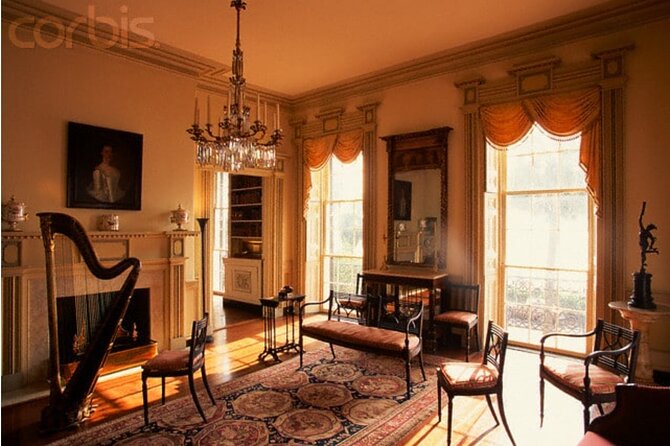
The walk begins at White Point Garden, tied to Charleston’s earliest start. Here’s where you’ll hear how settlers landed in 1680, and you’ll connect that landing story to how the city took shape.
A standout detail at this stop is the link to King Charles II gifting the area to the Lord Proprietors. That sets up why Charleston’s early growth feels so tied to power and planning rather than random settlement.
Then you move through the visual history of major houses and the preservation mindset that emerged later. You’ll hear about the Stevens Lather House—described at about 17,000 sq. ft.—and one of the most important culture notes on the entire tour: in 1920, Charleston established the Society for the Preservation of Old Dwellings in the ballroom of that home. It’s presented as the first preservation society in the country, which gives you a strong sense of why Charleston protects its own past so aggressively.
What to watch for at this stop
- Listen closely for the “why this location matters” framing, not just the dates.
- If you love preservation stories, ask how that ballroom meeting ties to what you’re seeing today.
Possible drawback
This stop is more “story and context” than “big view.” If you’re the type who wants constant scenery, you may need a quick mental reset before the Battery waterfront section kicks in.
Dig deeper into the past with more Charleston history tours.
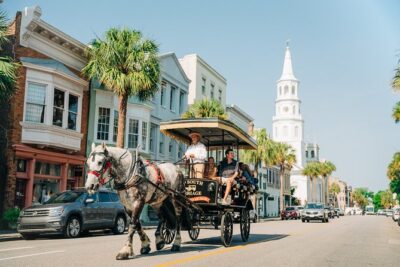


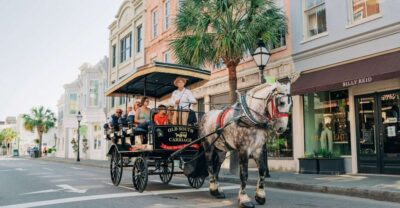
Stop 2: East Battery, Rainbow Row, and the Civil War details
Next comes the High Battery waterfront area, where history becomes visible. As you stroll, Mike Frederick ties together Civil War and Revolutionary era references, and you start to see how the shoreline and fortifications shaped the conflict.
This is where the tour gets especially good for anyone who wants specific military references. You’ll hear about the Battle of Battery Wagner, famously connected to Glory, and you’ll keep picking up “look, there it is” moments as you walk. One of the most memorable details is the story of a 900-piece cannon that landed on the roof of the Roper House in 1864 and is still there.
Then the tour shifts into the postcard highlights you probably pictured before arriving: you’ll pass by the Carolina Yacht Club and see Rainbow Row as part of the Battery corridor experience. The Rainbow Row mention isn’t just “great photos.” It’s used to frame how Charleston’s wealth and architecture turned into lasting streetscapes.
Why this stop is such good value
You’re not getting a generic waterfront history lecture. You’re getting a guided walk that points out concrete features with names and outcomes. That turns the waterfront into a map, not just a pretty backdrop.
Watch-outs
- This is an outdoor stretch. Sun and heat can hit fast.
- Bring water and plan to slow down when you feel your energy dip.
Stop 3: Tradd Street’s walled-city feel and Catfish Row meaning
Tradd Street is where the tour leans into atmosphere. You’ll walk in what’s described as the original walled city area, which helps explain why some streets feel tighter and more intentional than they do in newer American neighborhoods.
Here you’ll see early grand homes from the 1740s and 1750s, plus the street-level charm that’s easy to appreciate once you’re standing there. Tradd Street’s window boxes get called out, and it’s noted as one of the streets often featured in Southern Living Magazine. Even if you’ve never read that magazine, you’ll get why it’s a favorite: the street does a lot with small details.
You’ll also hear about Catfish Row, identified as Church Street between Tradd Street and Broad Street. The tour frames it as the black neighborhood in Charleston before the Civil War and connects it to Porgy and Bess, which gives you a cultural anchor for what you’re seeing.
A key cultural note
This is also where the “customize the tour” concept becomes more than a menu option. If you care about how Charleston’s neighborhoods functioned and who had power, this is the kind of stop where you’ll want your guide to be direct and specific.
Possible drawback
If you want a slavery-focused narrative, you can’t assume it will be automatically covered in the depth you want. One guest found the tour didn’t provide the dark-chapter detail they expected. That doesn’t mean the guide can’t discuss it—it means you should set expectations early.
Stop 4: Meeting Street homes, Beauregard’s headquarters, and the Williams Mansion
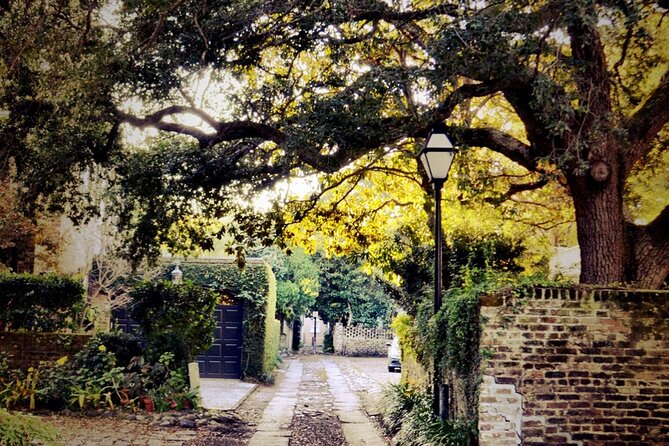
Meeting Street is where you see the city’s architecture at a big-league scale. You’ll walk through more examples of pre-Revolutionary War homes and learn why these buildings mattered.
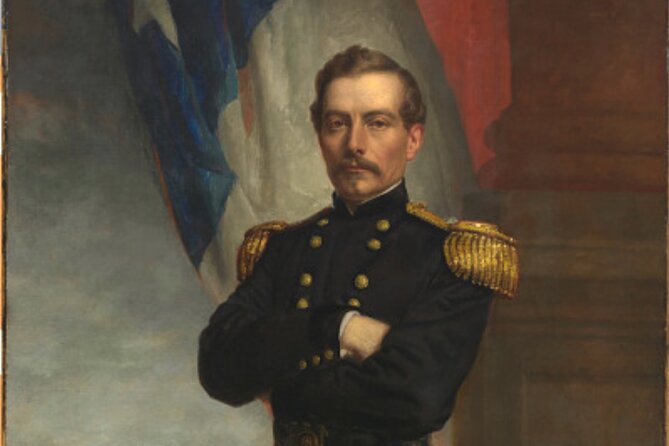
A major stop on this leg is the James Simmons House, described as General Beauregard’s headquarters during the Civil War. That kind of pinpointing is what makes guided tours worth it. The house stops being an attractive façade and becomes part of a bigger chain of events.
Then you’ll see the Nathanial Russell home, noted as one of Charleston’s finest museum homes, and you’ll get a look at a Charleston Single House style example. That helps you understand how local architecture solved practical needs—narrow city lots, airflow, and street-facing design.
Finally, the tour finishes at the Williams Mansion, described as 24,000 sq. ft., also noted as the largest home in Charleston. You’ll hear it’s Italianate in style and that George Williams built it after the Civil War. Two story details make this one stick:
- Williams was a blockade runner during the Civil War.
- Margaret Mitchell visited when she was 13, and the tour suggests that visit may have sparked the genesis of Gone with the Wind.
Why this ending lands
By the time you reach this last stretch, you’ve already learned how the waterfront, the street layout, and the early growth stories connect. Meeting Street then wraps those ideas into physical scale: bigger homes, named figures, and the social hierarchy you can literally see in the architecture.
Civil War vs. slavery focus: how to get what you came for

The tour is designed so you can customize your focus toward either the Civil War or slavery in Charleston. That’s a big deal, because Charleston’s history is not one story. It’s multiple stories running at once—some celebrated, some suppressed, and some painfully intertwined.
Here’s the practical way to make customization work:
- At the start, tell Mike Frederick what you want most: Civil War military history, neighborhood life, or slavery and its aftereffects.
- Ask for specifics, not generalities. For example, if you want slavery covered, request that the tour address enslaved people directly and not only through references to plantation owners.
One of the clearest lessons from guest feedback is that you should not assume the slavery angle will automatically be treated in the depth you personally need. If that’s your priority, you’ll get the best outcome by setting the tone immediately.
Price and value: why $47 feels fair for this kind of guided walk
At $47 per person, this tour sits in the “good deal” zone for a guided walking experience in a major historic city. The value comes from three things, not one:
- Small group size (max 10), which protects the pacing and question time.
- A local guide with long-term familiarity, which is why you’re hearing specific place-based stories (like the cannon on a historic roof, not just generic war talk).
- A route that covers multiple standout streets, including Battery, Rainbow Row, Tradd Street, and Meeting Street, without requiring you to buy separate attractions to understand the context.
Also, you’re not paying for museum entry here. Most stops are listed as admission ticket free, so your money goes toward the guidance and interpretation—exactly where a great guide can save you time and improve your understanding.
Pacing, heat, and what to bring for a comfortable walk
The tour is marked as most travelers can participate, and it’s a walking format. Still, Charleston weather can change the experience fast. One guest called out the walk as difficult in the heat, which is common for outdoor historic walking tours even when the distance isn’t huge.
So do the simple prep:
- Wear comfortable walking shoes with grip.
- Bring water, especially if you’re going in warmer months.
- Use sun protection. Even shaded streets can be exposed stretches.
If you’re doing this as part of a busy day, plan for a little extra time. The schedule is about 1.5 hours, but multiple guests reported it ran closer to two hours, and one said closer to 2.5. Build a buffer so you’re not rushing off to your next reservation.
Who should book this tour (and who might skip it)
Book this if:
- You want a guided way to connect Charleston’s architecture to major historical events.
- You’re excited by Civil War stories tied to real places (like Battery Wagner and Beauregard’s connection).
- You like small groups and clear explanations with room for questions.
- You want a guide who can also point you toward practical next steps, including food suggestions.
You might think twice if:
- You’re extremely sensitive to walking in heat and want lots of indoor breaks (this is mostly outdoors).
- You specifically want a deep slavery-focused narrative and you’re worried it won’t be covered to your standard. In that case, book it only if you can communicate your priorities at the start and be prepared to ask for direct coverage.
Should you book this Charleston walking tour with Historic Charleston Tours?
Yes, I think it’s a strong pick for most first-time visitors who want more than photo stops. The combination of a small group (max 10) and Mike Frederick’s place-based storytelling turns landmarks like Rainbow Row and the High Battery into something you understand, not just something you pass.
If slavery history is your main goal, don’t be shy. Make it clear from the first conversation that you want that focus, and ask for specifics. When you do that, this tour is at its best: a walk that helps you read Charleston like a living text.
FAQ
How long is the small group Historic Charleston walking tour?
The tour is listed at about 1 hour 30 minutes, and it may run longer in practice.
Where does the tour start?
The meeting point is 1 1/2 Meeting St, Charleston, SC 29401, USA, and the tour ends back at the meeting point.
How big is the group?
The tour has a maximum of 10 travelers.
What languages is the tour offered in?
It is offered in English.
Do I need to buy tickets for the stops?
The tour notes the stops with admission ticket free.
Can I get a mobile ticket?
Yes, the tour includes a mobile ticket.
Can I cancel for a full refund?
You can cancel for a full refund if you cancel at least 24 hours in advance. If you cancel less than 24 hours before the start time, it isn’t refunded.
More Tours Across Charleston






More Charleston Tours Worth Booking
More Historic District Walking Tours in Charleston



Still deciding? Here are the newest Charleston tours and experiences we have reviewed








Historic District Walking Tours, compared.
 ★ 5.0Historic Charleston Guided Sightseeing Walking TourFrom $306,216 reviews
 ★ 5.0Charleston Horse-Drawn Carriage Tour: Explore Historic CharlestonFrom $493,561 reviews
 ★ 4.5Ghosts of Charleston Night-Time Walking Tour with Unitarian Church GraveyardFrom $352,835 reviews
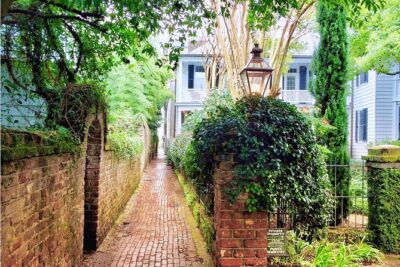 ★ 5.0Hidden Alleyways and Historic Sites Small-Group Walking TourFrom $342,335 reviews
 ★ 5.0Highlights of Charleston Guided Walking Tour2,206 reviews
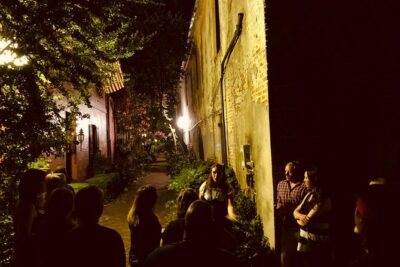 ★ 5.0Charleston Haunted Booze and Boos Ghost Walking TourFrom $391,569 reviews
 ★ 5.0Charleston’s Pleasing Terrors Night-Time Walking Ghost TourFrom $291,345 reviews
 ★ 5.0Charleston historical walking tour with a Professor of History at The CitadelFrom $401,284 reviews
Browse the lists this tour appears in