

Reviewed · HISTORIC DISTRICT WALKING TOURS
REV Walks – History Walking Tour
Charleston can feel like a postcard until you read the streets. This Revolutionary Charleston History Walking Tour turns famous sights into a guided story of how this peninsula shaped lives—some marked by pride, others by cruelty. I love that the walk is built for people who want context, not just photos, and the French Quarter stops help you see why certain blocks matter.
My second favorite part is the way the route connects eras in a short time. You’ll hit recognizable highlights like Rainbow Row and the Charleston City Market, but you also get a guided explanation of how the city’s different periods shaped what you see today.
One possible drawback: part of the hardest history is handled as a pass-by moment, not an extended visit, and the tour moves rain or shine. If you prefer long museum time or you’re sensitive to heavy topics, plan accordingly.
In This Review
- Key highlights worth planning around
- Finding your guide fast at Washington Square Park
- French Quarter history: seeing the city through the blocks
- Old Slave Mart Museum pass-by: hard history, handled with care
- Rainbow Row on foot: why the colors aren’t the whole story
- Charleston City Market: the street-level energy stop
- Battery & White Point Gardens: the waterfront view and the bigger picture
- What 2 hours actually means on the ground
- Price and value: $34 for a guide-led city timeline
- Who this tour fits best (and who might want a different plan)
- Should you book Revolutionary Charleston History Walking Tour?
- FAQ
- How long is the Revolutionary Charleston History Walking Tour?
- How much does the tour cost?
- Where do we meet for the tour?
- What should I bring?
- Does the tour run in bad weather?
- Is the tour wheelchair accessible?
Key highlights worth planning around
- Licensed guide storytelling that makes streets feel like chapters, not just scenery
- French Quarter focus with history tied to the exact blocks you’re walking
- Pass-by stops with purpose, including the Old Slave Mart area
- Rainbow Row viewing on foot, so the colors connect to the city’s timeline
- Smaller-group feel and a tour that can flex to your interests
- Waterfront perspective toward Fort Sumter from the Battery area
Finding your guide fast at Washington Square Park

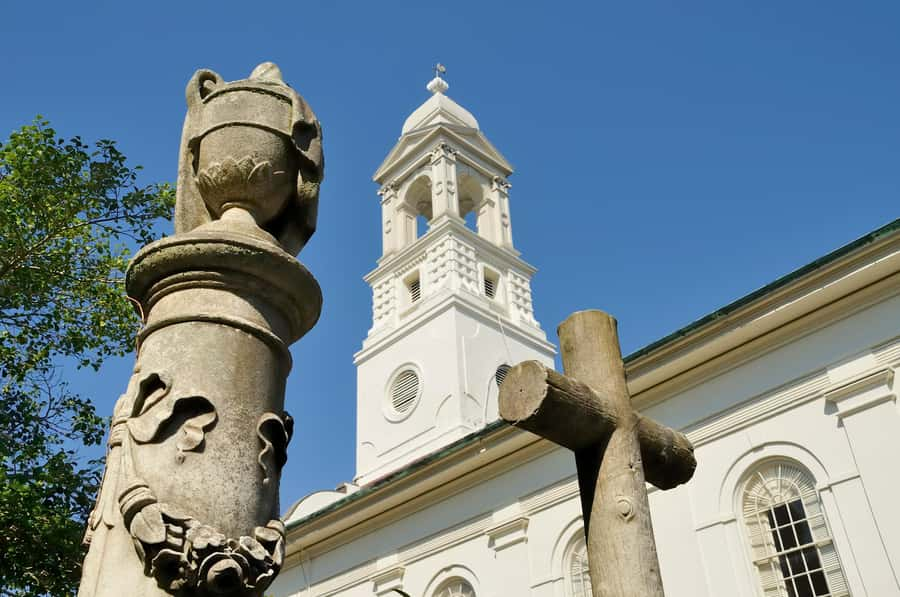
The tour meets at Washington Square Park, behind City Hall, and you’ll spot your guide by the Elizabeth Jackson Monument. It looks a bit like a tombstone, so don’t worry if you’re unsure at first—you’ll recognize it once you’re there.
This is a smart meeting point for first-timers. You start in the heart of downtown, and from there you can walk into the older streets quickly. Also, because it’s a true walking tour, getting oriented before you start matters. Once you’re with the group, you’ll move at a pace that’s easy enough for a 2-hour loop without feeling like you’re stuck in a long transit slog.
Quick practical tip: arrive a few minutes early so you can regroup if the group forms before you get your bearings.
Trade one set of cobblestones for another with more Charleston walking tours.
- Historic Charleston Guided Sightseeing Walking Tour★ 5.0 · 6,216 reviews
- Charleston Horse-Drawn Carriage Tour: Explore Historic Charleston★ 5.0 · 3,561 reviews
- Ghosts of Charleston Night-Time Walking Tour with Unitarian Church Graveyard★ 4.5 · 2,835 reviews
French Quarter history: seeing the city through the blocks
Charleston’s French Quarter isn’t just a name on a map. On this tour, you’ll learn how the area developed and why its layout, architecture, and street life reflect different chapters of the city’s past. The best part is that the guide ties the story to what you’re literally standing in front of, so the information sticks.
The guides get consistently praised for bringing energy to the history. In particular, I like hearing about guides such as Paul and John—people mention how they made the information fun, and how they filled the walk with real personality, not just dates. Another guide mentioned in feedback is Brie, who took groups through streets you might not notice on your own. That matters because Charleston rewards attention. If you only wander, you can miss the why behind the what.
What you’ll likely feel here: a shift from passive sightseeing to active noticing. Instead of only looking at facades, you start reading the city’s layers—who lived where, how the city grew, and how its public spaces reflected power and everyday life.
Old Slave Mart Museum pass-by: hard history, handled with care

This tour includes a pass-by of the Old Slave Mart Museum area (at 6 Chalmers St). The key word is pass-by: you’ll be in the vicinity, but you won’t treat it like a long interior museum visit.
That can be either a strength or a limitation. It’s a strength because it keeps the day moving through multiple eras, and it prevents the walk from turning into one single subject only. It’s also a limitation if you want deeper on-site time. If you’re the type who needs to sit, read, and absorb at your own pace, you might plan a separate museum stop on another day.
Even as a pass-by, it’s still a meaningful moment. Charleston’s beauty exists alongside its cruelty, and this stop helps the tour acknowledge that directly. You should go in prepared for uncomfortable material. If you’re traveling with people who don’t want that content, talk it through before you start, so nobody feels blindsided.
Rainbow Row on foot: why the colors aren’t the whole story
You’ll spend time at Rainbow Row, including the 79 E Bay St area. Yes, it’s famous for its colorful houses—and you’ll enjoy the views. But the best way to experience Rainbow Row is with an explanation of what those buildings represent in the broader Charleston timeline.
Here’s why this stop is valuable: it shows you how visual charm can sit next to history. The guide’s job is to connect the present-day look—painted facades, iconic lines, postcard-perfect angles—to the city’s changing eras. That turns the photo-op into something more thoughtful, and it helps you avoid the common mistake of treating Rainbow Row like a theme park.
One practical detail: this is an outdoor, light-walking portion of the route. Bring sun protection and watch the sidewalks. Charleston can be hot and humid, and even when the story is compelling, your comfort still affects how well you take it in.
Charleston City Market: the street-level energy stop
You’ll also see Charleston City Market (at 188 Meeting St). This is the kind of place where Charleston feels immediate—merchants, local crafts, and the constant rhythm of people coming and going.
What makes City Market a good stop on a guided history walk is perspective. Earlier stops help explain the city’s political and social layers. City Market adds the human layer: commerce, daily life, and how the downtown economy shaped what visitors and residents experienced.
This stop can also be a useful breather. Even if you don’t buy anything, you can reset—grab a drink, check your phone, and let the history settle before you head onward.
If you’re hoping for serious shopping bargains, don’t assume it’s a bargain market. Treat it as a lively place to notice what Charleston markets themselves as, and decide if anything feels worth your money.
Dig deeper into the past with more Charleston history tours.




Battery & White Point Gardens: the waterfront view and the bigger picture

The tour includes Battery & White Point Gardens, a classic Charleston shoreline area that’s ideal for seeing the city’s geography. From here, the story shifts again. You’ll be thinking beyond streets and architecture and into water routes, coastal strategy, and how the waterfront influenced the city’s destiny.
This section matters because Charleston’s peninsula layout makes history physical. You’re walking on ground that’s tied to defense, trade, and migration. Even if you’ve read about coastal life before, it lands differently when you’re standing near the places that shaped it.
You’ll also connect this area to Fort Sumter National Monument. While the details of timing and how close you get aren’t spelled out, the inclusion signals that you’ll incorporate Fort Sumter into the waterfront story. For many people, this is one of those moments where the history becomes more than an idea. It turns into a mental map of where events played out—and why the city sits the way it does.
If you get motion sickness easily, the waterfront environment (open space, wind, walking pace) is generally manageable, but plan to pause if you need to.
What 2 hours actually means on the ground
The tour runs about 120 minutes, so it’s not meant to be an all-day deep academic seminar. It’s designed for a specific result: see the highlights, learn the major eras, and get a guided thread tying them together.
That time window is one reason the experience feels good value for many visitors. You’re paying $34 per person for a structured walk with a live guide. In practical terms, that price makes sense when you consider you’d otherwise spend time trying to piece together the city’s timeline from your phone, guidebook, or random wandering. Here, you get a path and a story.
If you’re a slow walker or if you like lots of photo stops, you might find the pace brisk by the end. It’s still a reasonable length, just don’t plan to squeeze it into a day when you also need long museum time and multiple faraway destinations.
Price and value: $34 for a guide-led city timeline
Let’s talk value honestly. $34 isn’t cheap, but it’s not wild either for a 2-hour, guided, city-centered walk through major downtown landmarks. The value comes from three things:
- You’re getting a live guide who can answer questions in real time.
- You get context at multiple stops, not just one big attraction.
- The tour has flexibility. One highlight from feedback is that the walk can be tailored to your interests, and that smaller group vibe can make it easier to interact.
If your goal is to see Charleston efficiently with minimum planning stress, this format delivers. If your goal is maximum time at museums or you dislike walking tours, then you may prefer a more self-paced day.
Who this tour fits best (and who might want a different plan)
This tour is a great match if you:
- want a structured overview of Charleston without reading 10 pounds of books first
- enjoy history tied to real locations
- like asking questions and learning as you walk
- want something you can do even on a day when your schedule is tight
It may not be ideal if you:
- need extended time inside museums rather than pass-by moments
- get uncomfortable with heavy, slavery-era history topics
- prefer fully self-guided trips with no group pacing
For families: it can work, but the history content is serious. If you’re bringing kids, you’ll want to judge maturity level before you go.
Should you book Revolutionary Charleston History Walking Tour?
I’d recommend booking it if you want Charleston’s story in a clean, walkable package. The strongest selling points for me are the guide quality and the way the walk connects key landmarks—French Quarter, Rainbow Row, City Market, and the Battery/White Point waterfront—into an understandable timeline. The feedback that highlights guides like Paul, John, and Brie also lines up with what you want from a tour like this: energy, clarity, and routes that feel more purposeful than random wandering.
I’d hesitate only if you strongly prefer long museum visits over pass-by stops, or if your group really can’t handle uncomfortable history content. In that case, you might still enjoy the city, but you might pair a shorter guided walk with separate museum time elsewhere.
FAQ
How long is the Revolutionary Charleston History Walking Tour?
The tour lasts about 2 hours (120 minutes).
How much does the tour cost?
The price is $34 per person.
Where do we meet for the tour?
You meet at Washington Square Park, located behind City Hall. Find the guide by the Elizabeth Jackson Monument.
What should I bring?
Bring water and plan for comfort in comfortable clothes and insect repellent. Sunscreen is also recommended, and comfortable shoes help a lot.
Does the tour run in bad weather?
Yes. The tour takes place rain or shine.
Is the tour wheelchair accessible?
Yes, the tour is listed as wheelchair accessible.
More Tours Across Charleston






More Charleston Tours Worth Booking
More Historic District Walking Tours in Charleston



Still deciding? Here are the newest Charleston tours and experiences we have reviewed












Historic District Walking Tours, compared.
 ★ 5.0Historic Charleston Guided Sightseeing Walking TourFrom $306,216 reviews
 ★ 5.0Charleston Horse-Drawn Carriage Tour: Explore Historic CharlestonFrom $493,561 reviews
 ★ 4.5Ghosts of Charleston Night-Time Walking Tour with Unitarian Church GraveyardFrom $352,835 reviews
 ★ 5.0Hidden Alleyways and Historic Sites Small-Group Walking TourFrom $342,335 reviews
 ★ 5.0Highlights of Charleston Guided Walking Tour2,206 reviews
 ★ 5.0Charleston Haunted Booze and Boos Ghost Walking TourFrom $391,569 reviews
 ★ 5.0Charleston’s Pleasing Terrors Night-Time Walking Ghost TourFrom $291,345 reviews
 ★ 5.0Charleston historical walking tour with a Professor of History at The CitadelFrom $401,284 reviews
Browse the lists this tour appears in