
Reviewed · HISTORIC DISTRICT WALKING TOURS
Private Walking Tour Culture and History of Charleston
Keys to Charleston start on Meeting Street. This private culture and history tour blends short walks with a golf cart ride, then layers in stories you miss when you travel solo. I also like that the guide is Bruce, a 7th-generation Charlestonian, so the city comes at you through real street knowledge.
I love the way the stops stay focused on the soul of Charleston—places tied to worship, performance, and the politics of early America. You’ll see landmark religious sites plus major civic spots, all in about two hours without feeling dragged from one end of town to the other.
One consideration: admission for the Heyward-Washington House isn’t included, and bottled water isn’t provided. So if you get thirsty, plan for it before the tour starts.
In This Review
- Key things to know before you go
- Private walking tour with a golf cart in Charleston: the real appeal
- Starting at 105 Meeting St: how the 2-hour experience flows
- Who guides this tour (and why Bruce’s background matters)
- Stop 1: Unitarian Church in Charleston and the early-settler angle
- Stop 2: The Battery & White Point Gardens for military-plus-social Charleston
- Stop 3: Dock Street Theater and the early theater connection to Porgy and Bess
- Stop 4: Heyward-Washington House and the Washington–Heyward link
- Stop 5: A quick look at Charleston and Anglican roots
- Stop 6: Marion Square and Francis Marion’s Revolutionary War footprint
- Stop 7: St. Philip’s Church for Charleston’s most prominent church story
- Included value: why $35 can make sense (or not)
- Who should book this Charleston history tour
- Should you book Bruce Knows Charleston Tours?
- FAQ
- How long is the private walking tour in Charleston?
- Where does the tour start?
- Is the tour really private?
- What’s included, and what should I bring?
- What places do you visit?
- Is there free cancellation?
Key things to know before you go
- 7th-generation Bruce: local street stories and smart context that makes the past feel close
- Golf cart + walking: you get around efficiently while still touching the cobblestones
- Landmark mix: churches, a famous theater, Battery viewpoints, and a Revolutionary War monument
- Access through private gates/gardens: Bruce often has the kind of access most visitors won’t
- Short, timed stops: around 5–20 minutes each, so you get variety without marathon pacing
- Private group format: only your party participates, so you can ask questions as you go
Private walking tour with a golf cart in Charleston: the real appeal
Charleston looks historic even when you’re standing still. This tour is about moving just enough—at a comfortable pace—to understand why the city is the way it is. The setup matters: you get a golf cart for the longer stretches, then step out for short walks so you’re not stuck waiting at every turn.
The big win is that you’re not just collecting facts. Bruce’s Charleston runs on social detail: who lived where, how neighborhoods functioned, and what different buildings were for in daily life. The route also hits a strong mix of themes—religion, war-era commemoration, and public culture—so you end up with a more complete picture than you’d get from a single-topic tour.
And because it’s private, you’re not squeezed into a rigid group rhythm. You can take a few extra minutes when a door, alley, or view catches your attention, then move on without feeling guilty about slowing down everyone else.
Trade one set of cobblestones for another with more Charleston walking tours.
- Historic Charleston Guided Sightseeing Walking Tour★ 5.0 · 6,216 reviews
- Charleston Horse-Drawn Carriage Tour: Explore Historic Charleston★ 5.0 · 3,561 reviews
- Ghosts of Charleston Night-Time Walking Tour with Unitarian Church Graveyard★ 4.5 · 2,835 reviews
Starting at 105 Meeting St: how the 2-hour experience flows
You meet at 105 Meeting St, Charleston, SC 29401, and the tour ends back at the same spot. Expect roughly 2 hours total, with each stop lasting about 5 to 20 minutes depending on the site.
That “short-stop” design is practical. Charleston’s streets can be a little unpredictable—cobblestone footing, turns that hide landmarks, and the occasional cluster of visitors at famous corners. A timed route helps you see a lot while still having time to ask questions and look closely at details you’d otherwise walk past.
One more practical note: the tour is offered in English, and the pace assumes moderate physical fitness. It’s not a long hike, but you’ll be on your feet for multiple short stretches, and you’ll want comfortable shoes.
Who guides this tour (and why Bruce’s background matters)
Bruce Knows Charleston Tours is led by Bruce, who’s described as a 7th-generation Charlestonian. That kind of local lineage isn’t just trivia—it changes how the guide tells the story. Instead of reciting dates, Bruce connects buildings to the lived-in social fabric that shaped the city.
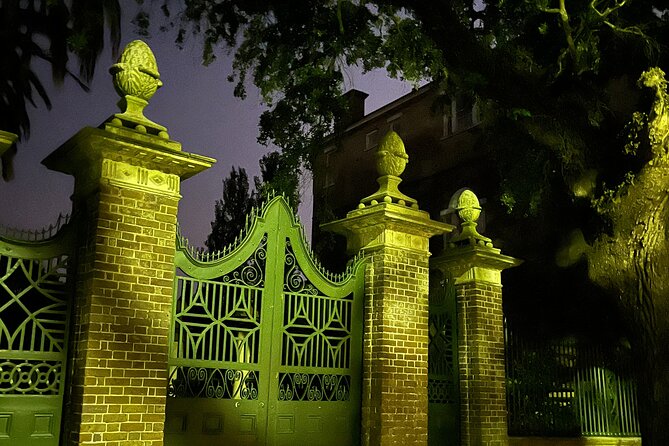
From the way Bruce guides, you can tell he’s built relationships and familiarity over decades. One highlight that comes up again and again: Bruce has access that goes beyond what most visitors expect. The tour may include gates to private gardens and escorts into places that are not generally open to the public.
Does that mean you’ll get some magical inside-only surprise at every stop? Not guaranteed in every circumstance, but the overall pattern is consistent: you’ll get more than the “look-and-walk” sightseeing experience. You’ll also get street-level storytelling, including detours into alleys and side lanes when they help explain how Charleston worked.
Stop 1: Unitarian Church in Charleston and the early-settler angle
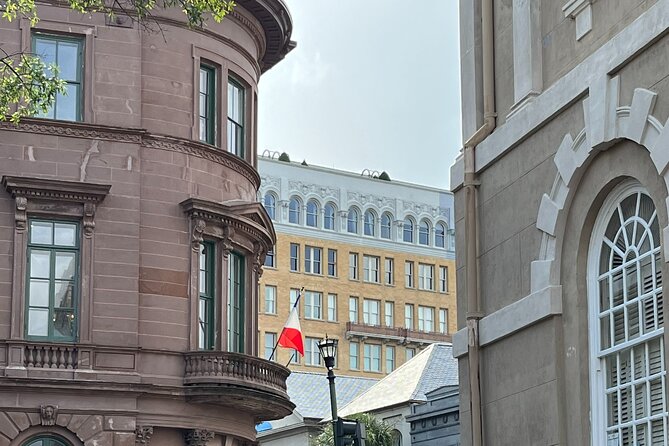
Your first stop is the Unitarian Church in Charleston, with about 20 minutes on site. It’s described as a worshipping home for early settlers to Charleston, and that framing is key. This isn’t just a pretty church exterior stop. You’re stepping into the idea that Charleston’s early community life included dissenting voices and a range of beliefs, not one single official narrative.
The admission here is listed as free, which is nice because it keeps the tour’s cost predictable. If you want to get the most from this stop, slow down at the details—doorways, layout, and any interpretive materials you’re offered. With a good guide, a church visit becomes a shortcut to understanding community life: where people gathered, what mattered to them, and how faith showed up in public space.
Potential drawback: religious sites can be quiet and rules-based. You’ll want to keep your voice low, follow any posted guidance, and expect you may not always be able to wander freely everywhere.
Stop 2: The Battery & White Point Gardens for military-plus-social Charleston
Next up is Battery & White Point Gardens, around 15 minutes. This is Charleston’s blend of function and style: the area ties to military importance and also to early day social life. That combination is exactly why this stop works well early in the tour—now you can start seeing how the city balanced defense, commerce, and leisure.
You’ll get the chance to orient yourself with the shoreline-side views and the park spaces that grew into major social scenery. Even if you don’t spend a lot of time sightseeing waterfronts on this trip, this stop helps you understand where the “public face” of Charleston formed.
Admission is free, so you’re not paying extra to learn what the landscape meant. Practical tip: if the weather is warm, this is a good place to take in shade options and pace yourself. Parks can be deceptively tiring if the sun hits just right.
Want it just for your group? See more private Charleston tours.


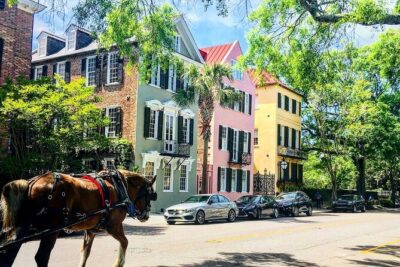
Stop 3: Dock Street Theater and the early theater connection to Porgy and Bess
After that, you’ll visit Dock Street Theater for about 15 minutes. The tour frames it as an early day theater in Charleston, with a connection to Porgy and Bess. Even if you don’t come in knowing the theater’s full story, you’ll leave with a better sense of how Charleston treated performance as public culture.
This stop is the “arts and imagination” chapter. In a city shaped by plantations, ports, and politics, theater becomes a place where stories circulated—sometimes reflecting local life, sometimes pushing against it. A strong guide can point out how a theater location fits into the surrounding neighborhood story.
Admission is listed as free. That doesn’t always mean you’ll go inside for long, but it does suggest the stop is designed to be accessible without extra ticket costs.
One consideration: theater visits can be time-sensitive depending on what’s happening. You’ll still get the key context, but you may not always get a long, open-ended “wander time.”
Stop 4: Heyward-Washington House and the Washington–Heyward link
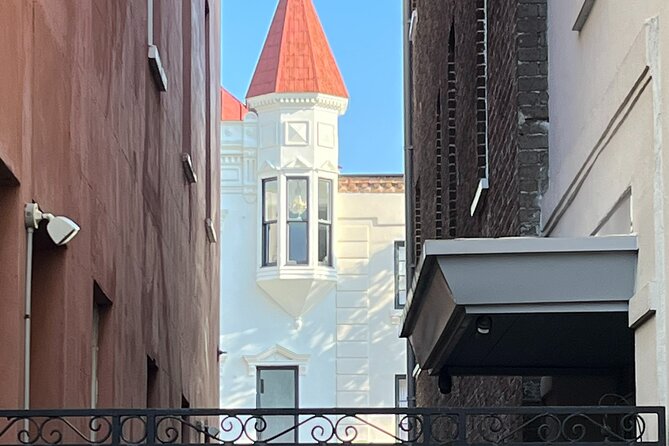
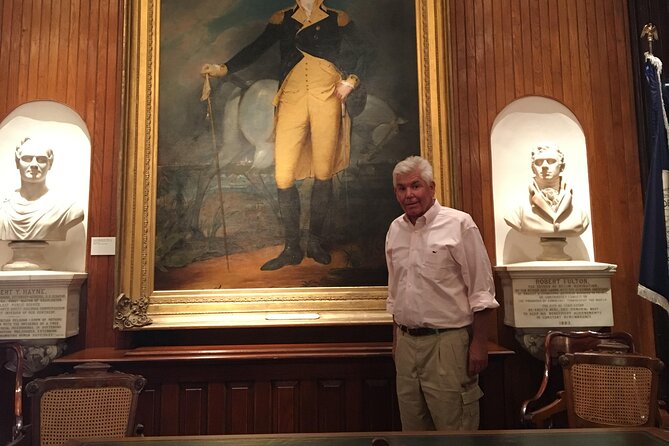
Then it’s Heyward-Washington House for about 10 minutes. This is where the tour shifts from general landmarks into direct political connection: it’s described as a place tied to President George Washington while he was visiting colonial delegate Thomas Heyward.
Here’s the practical part: admission isn’t included. That means if you want to step inside and spend time with exhibits or interior details, you should budget for separate entry. The stop still counts as a meaningful segment even if you mostly take it in from outside, because the guide’s context turns the building into a narrative, not just a facade.
Potential drawback: with only about 10 minutes, you’ll want to be clear with your guide about what you care about most—interior interpretation or exterior context—so you don’t feel rushed.
Stop 5: A quick look at Charleston and Anglican roots
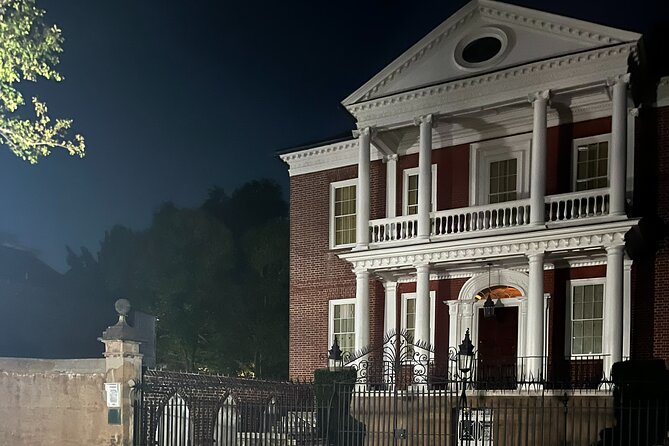
Next is a very short stop—about 5 minutes—focused on Charleston’s Anglican religion roots in America. This is one of those “blink and you miss it” moments, but it’s still useful. Anglican influence shows up in architecture, church prominence, and even the way civic identity formed around institutions.
The admission is listed as free, so the value here comes from explanation more than from ticketed access. If you like learning through quick orientation points, this stop gives you that bridge to later church visits.
The only real downside is the time. If you’re someone who likes longer church stops, you’ll probably treat this as a fast marker and rely on the next church stop for deeper detail.
Stop 6: Marion Square and Francis Marion’s Revolutionary War footprint
At Marion Square, you’ll spend about 10 minutes. The park is dedicated to Revolutionary War hero Francis Marion, and that name matters in Charleston’s identity. Marion is often called the Swamp Fox in Revolutionary War storytelling, and the point of this stop is to show how the city commemorates its heroes in everyday public space.
This stop is different from the church sites because it’s about civic memory. You’re looking at how a city keeps legends and political outcomes present in daily life—right where people walk, meet, and pass through.
Admission is free. You’ll likely use this segment for quick photos, a short reset, and a moment to absorb what you’ve heard so far without the weight of indoor spaces.
Practical tip: if you need a water break, this is a decent time to pause—just remember bottled water isn’t included, so plan accordingly.
Stop 7: St. Philip’s Church for Charleston’s most prominent church story
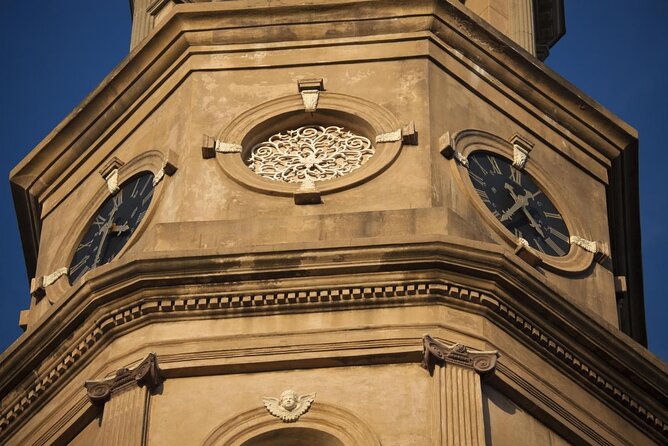
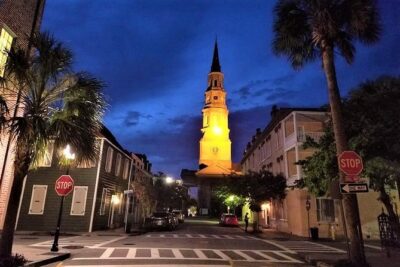
Your last stop is St. Philip’s Church for about 10 minutes. It’s described as the most prominent church in Charleston, and that label sets expectations: this is where the tour leans hard into major religious influence in the city’s public identity.
You’ll get a sense of why it’s “prominent”—not only in architecture or size, but in the role churches played in Charleston’s community structure. Since the tour already pointed you toward Anglican roots earlier, this stop gives you the full arc: origins, institutional presence, and what it meant for social life.
Admission is listed as free. That keeps the stop accessible, so you’re not making last-minute choices about paying for entry. If you want to get the most from this finale, listen for the guide’s connections to earlier stops. One of the nice things about a well-led route is that you start noticing patterns.
Included value: why $35 can make sense (or not)
At $35 per person for about two hours, the value is all about what you get besides “walking and pointing.” This tour includes a golf cart, which quietly changes the math. Instead of you paying separately for transport or spending more time walking every leg, you get mobility built into the experience.
It also looks cost-friendly in how admissions are handled: most stops are listed with free admission, while Heyward-Washington House is the main exception where admission isn’t included. That means you can often predict your total spending better than with tours where several sites require tickets.
Finally, there’s the access factor. Multiple accounts emphasize Bruce’s local depth and his ability to get you into places through gates and private garden access that visitors usually don’t see. If you care about “how to see more” without doing extra ticket shopping, that’s the part that justifies the price for many people.
Who might find it less worth it? If you’re mainly chasing museum-grade interiors with long time inside each venue, a short 5–20 minute stop style may not be enough. This is about street-level understanding and smart connections, not a slow deep museum day.
Who should book this Charleston history tour
This tour fits best if you want:
- A first-time Charleston orientation that focuses on culture and institutions, not just general sightseeing
- A guided experience with a real local, Bruce, who can explain how different parts of town connect
- A format that’s easier on your legs thanks to the golf cart while still letting you walk cobblestone blocks
It may be a less ideal match if you:
- Want a long, purely walking-focused tour with extended time inside buildings
- Need bottled water provided for you (it isn’t listed as included)
If you’re traveling with friends or family and want your group to move at your pace, the private format is a big plus.
Should you book Bruce Knows Charleston Tours?
I’d book this if you want a guided Charleston experience that makes the city’s institutions feel understandable and human. The stop mix is strong—churches, Battery waterfront energy, Dock Street Theater culture, and civic commemoration at Marion Square. The golf cart addition keeps it practical, and Bruce’s 7th-generation perspective is the kind of detail that turns landmarks into a story you remember.
If the Heyward-Washington House interior visit is a must for you, plan for separate admission since it isn’t included. Otherwise, this is a solid, efficient way to get a lot of Charleston context in about two hours.
FAQ
How long is the private walking tour in Charleston?
The tour runs for approximately 2 hours.
Where does the tour start?
You’ll meet at 105 Meeting St, Charleston, SC 29401, USA, and the tour ends back at the meeting point.
Is the tour really private?
Yes. It’s a private tour/activity, so only your group participates.
What’s included, and what should I bring?
A golf cart is included. Bottled water is not included, so you may want to bring your own.
What places do you visit?
The tour includes stops at the Unitarian Church, the Battery & White Point Gardens, Dock Street Theater, the Heyward-Washington House, a stop related to Anglican religion in America, Marion Square, and St. Philip’s Church.
Is there free cancellation?
Yes. You can cancel for a full refund up to 24 hours in advance of the experience start time.
More Tours Across Charleston




More Charleston Tours Worth Booking
More Historic District Walking Tours in Charleston

Still deciding? Here are the newest Charleston tours and experiences we have reviewed







Historic District Walking Tours, compared.
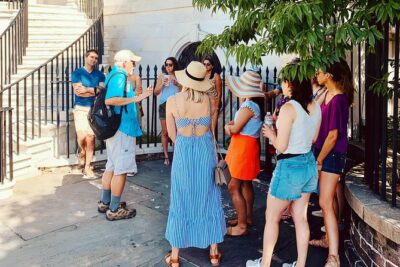 ★ 5.0Historic Charleston Guided Sightseeing Walking TourFrom $306,216 reviews
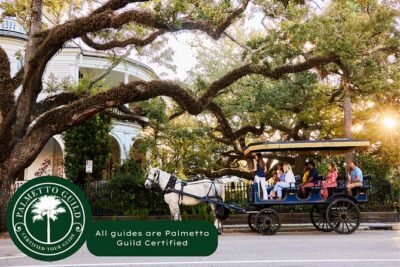 ★ 5.0Charleston Horse-Drawn Carriage Tour: Explore Historic CharlestonFrom $493,561 reviews
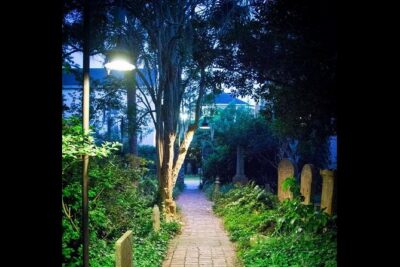 ★ 4.5Ghosts of Charleston Night-Time Walking Tour with Unitarian Church GraveyardFrom $352,835 reviews
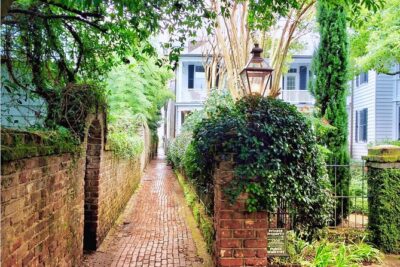 ★ 5.0Hidden Alleyways and Historic Sites Small-Group Walking TourFrom $342,335 reviews
 ★ 5.0Highlights of Charleston Guided Walking Tour2,206 reviews
 ★ 5.0Charleston Haunted Booze and Boos Ghost Walking TourFrom $391,569 reviews
 ★ 5.0Charleston’s Pleasing Terrors Night-Time Walking Ghost TourFrom $291,345 reviews
 ★ 5.0Charleston historical walking tour with a Professor of History at The CitadelFrom $401,284 reviews
Browse the lists this tour appears in