
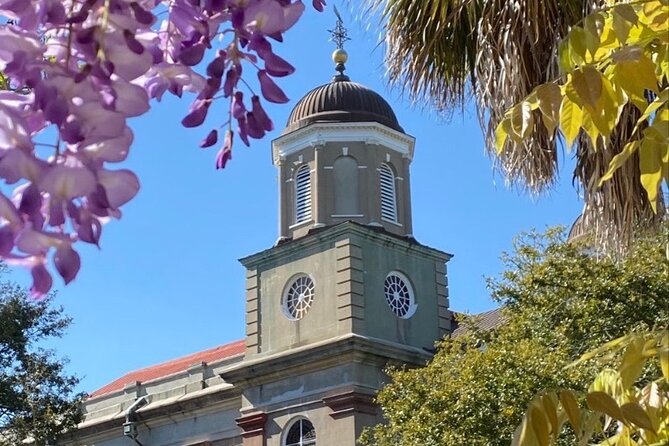
Reviewed · HISTORIC DISTRICT WALKING TOURS
Private customized walking tour of Charleston
A good tour in Charleston should feel like a city lesson, not a script. This private customized walking tour uses Charleston’s most classic streets—historic homes, churches, public buildings—and turns them into clear, memorable stories with Kay Abrams as your guide.
What I like most: you’ll get tailored storytelling (based on your interests) and you’ll walk at a human pace with built-in stops for meaning, not just photos. The biggest plus is that the guide uses visual aids to connect what you’re seeing to the bigger picture, so the details stick.
One thing to consider: you’ll be moving for about 2 hours with a moderate fitness level, so plan on steady walking even though it’s a relaxed stroll.
In This Review
- Key highlights you should care about
- Charleston on foot, but with real direction
- Why this private tour works: custom stories + manageable size
- Meeting at 80 Broad St: start where the city’s energy begins
- Stop 1: Revolutionary-era vibes on a leisurely historic stroll
- Stop 2: City Hall and The Four Corners of Law
- South of Broad: grand homes and the human stories behind them
- A tip of the peninsula moment: comfort plus scenery
- Pacing and questions: the tour doesn’t rush you
- Price and value: $350 for up to 10, and why that’s not just a number
- What to bring (and how to plan your 2 hours)
- Who this tour suits best
- Should you book this Charleston private walking tour?
- FAQ
- How long is the private walking tour?
- What is the price for this Charleston walking tour?
- Is this a private experience or shared with other groups?
- Where does the tour start and where does it end?
- What language is the tour offered in?
- Is there free cancellation?
Key highlights you should care about

- Up to 10 people keeps the tour feeling semi-private and helps with pacing
- Kay Abrams tailors the walk to what your group wants to focus on
- Exterior, no-fuss sightseeing (admission is listed as free)
- Two major story anchors: Revolutionary-era sights plus the City Hall area and The Four Corners of Law
- Visual aids help you connect stories to actual buildings and streets
- Small-business energy: friendly, professional, and clearly invested in your experience
Charleston on foot, but with real direction
Charleston has a way of making you slow down—brick by brick, doorway by doorway. This tour leans into that. You’re not rushing through landmarks. You’re learning how the city grew and why certain corners matter, while still getting to see the most postcard-ready parts of downtown.
And the tone is practical. You get stories you can actually picture when you’re back in your hotel. The guide has a teacher’s skill: explain the why, then point at the exact street-level evidence. That’s a big deal in a place where everything looks historic at first glance.
Trade one set of cobblestones for another with more Charleston walking tours.
- Historic Charleston Guided Sightseeing Walking Tour★ 5.0 · 6,216 reviews
- Charleston Horse-Drawn Carriage Tour: Explore Historic Charleston★ 5.0 · 3,561 reviews
- Ghosts of Charleston Night-Time Walking Tour with Unitarian Church Graveyard★ 4.5 · 2,835 reviews
Why this private tour works: custom stories + manageable size
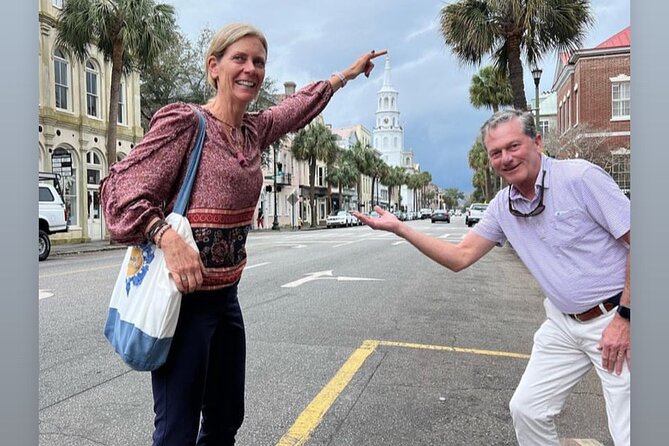
If you’ve ever done a group tour where you spend more time waiting than walking, you’ll appreciate the limit: up to 10 people. That size is big enough that the tour doesn’t feel awkward, but small enough that questions don’t get swallowed.
I also like how the tour isn’t one-track. Kay is known for asking what you’re into and then shaping the emphasis as you go—so you might hear more about the lives behind the houses if that’s your thing, or more about how the port and industries shaped the city if you want the economic storyline. That flexibility makes a difference because Charleston can be approached from a few angles: architecture, commerce, law, social history. This tour tries to meet you where you are.
Meeting at 80 Broad St: start where the city’s energy begins
Your day kicks off at 80 Broad St, Charleston, SC 29401. Broad Street is a strong choice because it gets you into the downtown rhythm fast—close enough to feel the historic core without wasting time crossing the whole peninsula.
Starting on Broad also sets up what comes next. The walk quickly shifts from general “look at that old building” to more specific, cause-and-effect conversations: how this area developed, what people were building, and why the layout of downtown kept mattering.
Stop 1: Revolutionary-era vibes on a leisurely historic stroll
The first stop is built around a leisurely stroll through America’s most historic city—meaning you’ll be passing by historic homes, churches, and public buildings, including some that predate the American Revolution. That wording matters. You’re not just looking at old-looking structures; you’re hearing how old the neighborhood feel is.
What you can expect here is mostly outside sightseeing: you walk, you look, and you get story context that gives the buildings meaning. Kay’s approach (teacher-style, with visuals) helps you notice details you’d normally miss—things that answer questions like: What role did this building play? What kind of people would’ve been around here? How did the city’s priorities show up in its architecture?
Possible drawback: this kind of stop is visual and story-driven. If you’re the type who wants mostly quiet scenic time or you’re easily distracted by long explanations, you might want to steer the conversation toward the parts you care about most right away. The tour’s designed to be flexible, so use that.
Stop 2: City Hall and The Four Corners of Law
Next, you meet near City Hall and shift to early Charleston—then to one of the city’s most pointed ideas about governance: the intersection known as The Four Corners of Law.
This is a smart pivot. Charleston’s beauty is obvious, but the legal and civic framework is what explains why certain systems and power structures mattered in daily life. When your guide talks about that intersection, it’s not trivia. It’s a way to understand the city as a working system, not just a pretty shell.
At this point, the tour also becomes more about “how the past worked.” Expect explanation that links street-level landmarks to what happened there—who had authority, how rules affected residents, and why that intersection became a symbolic and functional landmark.
Want it just for your group? See more private Charleston tours.


South of Broad: grand homes and the human stories behind them
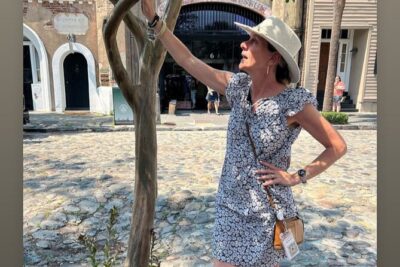
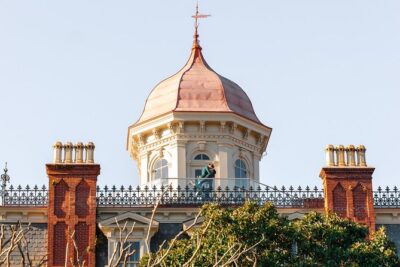
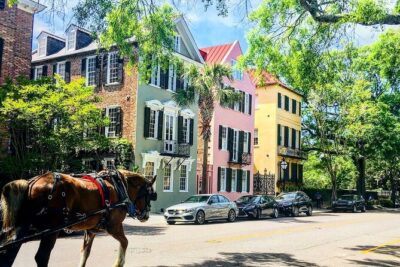
One of the most praised parts of this experience is the time around the grand homes south of Broad. Charleston’s South of Broad area can feel like a museum from the outside, but Kay’s style makes it personal. You’re not just learning dates. You’re hearing how the neighborhood developed and what kinds of life and industries surrounded it.
You should also expect the tour to touch on Charleston’s old port and the industries tied to it. That matters because the port is a major reason Charleston grew the way it did. When you connect homes to commerce, the city’s layout makes more sense. And you start understanding why money, ships, and trade left fingerprints on neighborhoods.
A small but meaningful detail from what you’ll likely notice: Kay has a knack for talking as if she can place people in time—helpful when you’re staring at historic facades and trying to picture real residents. Even if you don’t care about every name, the vibe is: you walk away with a better mental map of who lived where and why.
A tip of the peninsula moment: comfort plus scenery
Some tours stay strictly on foot. This one adds a bit of motor-friendly practicality—there’s mention of getting to the tip of the peninsula and ending with a walking stretch that’s described as magnificent.
That combination is a win for most people. You get views and atmosphere without turning the whole day into nonstop sidewalk mileage. It also helps you see Charleston from more than one angle, which is important in a city where the “meaning” of buildings can change depending on where you’re standing.
Pacing and questions: the tour doesn’t rush you
Several experiences like this succeed or fail on one thing: pace. Here, the guide keeps things moving, but not at the expense of questions or comprehension. The tour is built for a two-hour window, so it’s tight enough to feel like you did a lot, but relaxed enough that you can ask for clarification.
I’d treat this as a good tour if you like interaction. If you want to ask about architecture, street layout, or how Charleston’s systems worked, the guide is set up to answer and adjust. That’s one reason people rate this tour so highly—because it feels like a conversation with a guide who’s ready for follow-ups.
Price and value: $350 for up to 10, and why that’s not just a number
At $350 per group (up to 10), this tour is priced like a true private experience, not a “pay-per-person” mass event. Whether it’s a good value for you depends on how you’re traveling.
Here’s how I think about it:
- If you’re a couple or a family, the cost can still feel high—but you’re buying the customization and the time. You’re not waiting for strangers to catch up.
- If you’re a small group, this becomes easier to justify. Split across multiple people, it starts to look like a sensible way to get a guided understanding of downtown rather than trying to piece it together from apps.
- You’re also not paying for museum-style admissions during the walk. Admission is listed as free, which means the value is mostly in the guidance and storytelling.
In plain terms: you’re paying for a guide who knows where to point and what to say so you don’t leave with a pile of photos and vague memories.
What to bring (and how to plan your 2 hours)
The tour is listed as requiring moderate physical fitness. That tells you the basics: you’ll be walking enough to feel it, but it’s not a strenuous hike.
Pack like you’re doing a downtown walk in Charleston:
- Comfortable walking shoes
- Water (especially in warmer months)
- Sunscreen or a hat if you’re sensitive to sun
- A phone with enough battery for using the mobile ticket
If you’re sensitive to heat or humidity, plan to start earlier in the day when possible. Not because the tour is “hard,” but because Charleston weather can be a character of its own.
Who this tour suits best
This is a strong match if:
- You want a private walking tour that stays flexible to your questions
- You care about understanding how Charleston worked—law, port influence, neighborhood growth—not just what it looks like
- You like guides who teach through explanation and visuals (not just lecturing)
It may be less ideal if:
- You prefer long, silent sightseeing with minimal talk
- You’re looking for a long multi-day itinerary (this is about a focused 2 hours)
Also worth noting: the tour allows service animals, and it’s near public transportation. That’s helpful if you want to avoid complicated parking plans.
Should you book this Charleston private walking tour?
Yes, if you want Charleston with structure and personality. The biggest reason to book is that this tour isn’t just “walk and point.” It’s guided sense-making—Revolutionary-era context early on, then the City Hall area and The Four Corners of Law, plus a route that gets you into South of Broad and out toward the tip of the peninsula.
I’d especially recommend it to small groups who want real conversation, and to people who want their time in Charleston to feel worth it even if they’re only here for a short visit.
FAQ
How long is the private walking tour?
The tour lasts about 2 hours.
What is the price for this Charleston walking tour?
It costs $350 per group, with a maximum group size of up to 10 people.
Is this a private experience or shared with other groups?
This is a private tour/activity, so only your group participates.
Where does the tour start and where does it end?
It starts at 80 Broad St, Charleston, SC 29401, USA and ends at 122 E Bay St, Charleston, SC 29401, USA.
What language is the tour offered in?
The tour is offered in English.
Is there free cancellation?
Yes. You can cancel for a full refund up to 24 hours before the experience starts.
More Tours Across Charleston






More Charleston Tours Worth Booking
More Historic District Walking Tours in Charleston



Still deciding? Here are the newest Charleston tours and experiences we have reviewed









Historic District Walking Tours, compared.
 ★ 5.0Historic Charleston Guided Sightseeing Walking TourFrom $306,216 reviews
 ★ 5.0Charleston Horse-Drawn Carriage Tour: Explore Historic CharlestonFrom $493,561 reviews
 ★ 4.5Ghosts of Charleston Night-Time Walking Tour with Unitarian Church GraveyardFrom $352,835 reviews
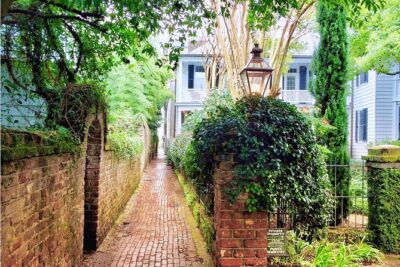 ★ 5.0Hidden Alleyways and Historic Sites Small-Group Walking TourFrom $342,335 reviews
 ★ 5.0Highlights of Charleston Guided Walking Tour2,206 reviews
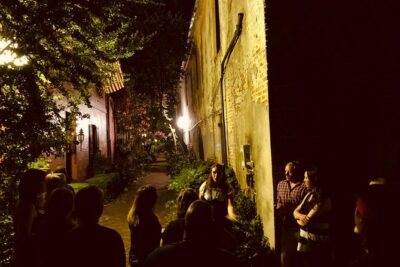 ★ 5.0Charleston Haunted Booze and Boos Ghost Walking TourFrom $391,569 reviews
 ★ 5.0Charleston’s Pleasing Terrors Night-Time Walking Ghost TourFrom $291,345 reviews
 ★ 5.0Charleston historical walking tour with a Professor of History at The CitadelFrom $401,284 reviews
Browse the lists this tour appears in