Reviewed · HISTORIC DISTRICT WALKING TOURS
Lost Stories of Black Charleston Walking Tour
Charleston has missing chapters. This tour connects street corners to real people and real decisions. Led by writer and historian Damon Fordham, you get Black Charleston stories that don’t usually land in a quick sightseeing script.
I really like the way the tour blends historical facts with personal perspective, so the city feels less like a postcard and more like a living place. The stories come with names, context, and a sense of how the past keeps showing up.
One thing to consider: some stories are emotionally heavy, and a few guests felt the delivery could come off sharp or too theatrical at times. If you prefer a softer tone, go in prepared for honesty.
In This Review
- Key things to know before you go
- Where the tour starts: Buxton Books, then right into the story
- The $39 value: why this is priced like a real experience
- The day’s route: City Market to the harbor (and back again)
- Charleston City Market (about 30 minutes): commerce with memory
- Catfish Row and Porgy and Bess: how art shapes what you think you know
- Jehu Junes Hotel site: a reminder that history has local addresses
- The quick pass by the Heyward-Washington House (about 10 minutes)
- Old Slave Mart Museum (about 15 minutes): the stop that changes your tone
- Waterfront Park (about 30 minutes): from slavery to Reconstruction to civil rights
- What Damon Fordham’s style feels like in the moment
- Who this tour is best for
- Practical tips to make the most of the 2 hours
- Should you book Lost Stories of Black Charleston?
- FAQ
- How long is the Lost Stories of Black Charleston walking tour?
- How much does the tour cost?
- Where do we meet for the tour?
- What time does the tour start?
- Who leads the tour?
- What sites does the tour include?
- Are admission tickets included for museums?
- What language is the tour offered in?
- What weather requirements apply?
- Final note before you go
Key things to know before you go
- Small group feel (max 20) keeps this from turning into a moving lecture hall
- Damon Fordham brings writer, historian, educator, and licensed guide credentials to the route
- Old Slave Mart Museum is on the walk, not just a pass-by photo stop
- Catfish Row and Porgy and Bess show how Charleston culture gets remembered (and reframed)
- Waterfront Park ties themes from slavery through Reconstruction to civil rights
- You’ll hear Mother Emanuel A.M.E. Church stories that the tour frames as easily forgotten
Where the tour starts: Buxton Books, then right into the story
The tour meets at Buxton Books, 160 King St, Charleston. You’re told to arrive and gather at 3:30pm, and then the group heads off on foot through historic neighborhoods.
What I like about this start point is simple: King Street is already the heart of downtown life. You don’t begin miles away from the action, and you don’t spend the first half hour hunting for the “right” place to start understanding Charleston. You’re in the right zone immediately.
You’ll also get an early framing moment: the tour’s concept is built around the idea of street-level history—places speaking to you once you know what to listen for. Damon Fordham’s approach is part lecture, part narrative, and (based on guest comments) part performance as well. That matters because it keeps the walk from feeling like memorizing dates off a sidewalk plaque.
Trade one set of cobblestones for another with more Charleston walking tours.
- Historic Charleston Guided Sightseeing Walking Tour★ 5.0 · 6,216 reviews
- Charleston Horse-Drawn Carriage Tour: Explore Historic Charleston★ 5.0 · 3,561 reviews
- Ghosts of Charleston Night-Time Walking Tour with Unitarian Church Graveyard★ 4.5 · 2,835 reviews
The $39 value: why this is priced like a real experience
At $39 per person for about 2 hours, this is priced like a serious guided walk, not a casual stroll. And that price makes sense once you think about what’s included: a guided route by a licensed guide who is also a writer and historian, plus time at key sites such as the Old Slave Mart Museum area and Waterfront Park.
You should also know the tradeoff that comes with most walking tours that include major history stops. Not every site’s admission is included, so you may pay extra at a couple of points along the way. Still, for the amount of on-foot interpretation you get, the value holds up—especially if you want context instead of just architecture.
The day’s route: City Market to the harbor (and back again)
This tour is built as a loop that moves from downtown landmarks toward the waterfront and then back to where you started. You’ll move at a walking pace, but you should expect the tour to pause for stories—sometimes you’ll stand in place while Damon Fordham brings a scene to life.
The itinerary includes these featured stops:
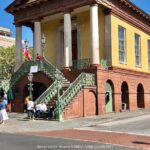
- Charleston City Market
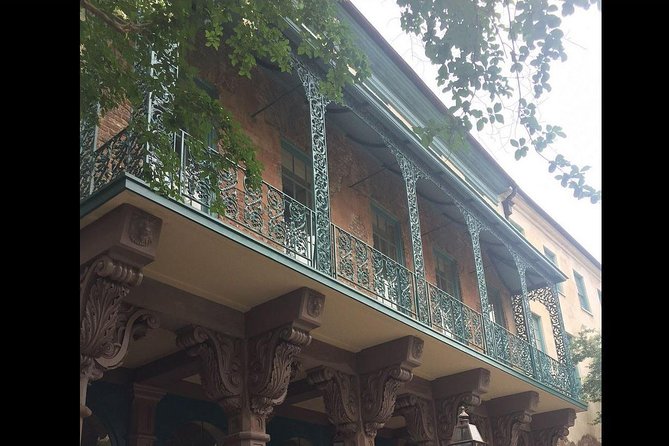
- Jehu Junes Hotel site
- Catfish Row (connected to Porgy and Bess)
- Heyward-Washington House (pass-by)
- Old Slave Mart Museum
- Waterfront Park along the harbor area
The overall plan works because it gradually widens the lens. You start with a marketplace and cultural landmarks, then move toward slavery-era sites and the public spaces where Charleston’s later struggles and wins played out.
Charleston City Market (about 30 minutes): commerce with memory
Your first proper landmark is the Charleston City Market, with the visit time set around 30 minutes. The entry is noted as free for this stop.
City Market isn’t just about shopping. In the tour’s framing, it’s a way to talk about how Charleston functioned day-to-day—who could buy, who worked, and who got ignored by the stories people chose to tell later.
From there you continue on foot toward the Jehu Junes Hotel site and the Catfish Row area. That’s a big part of why I think this tour is worth your time: it doesn’t treat history as one straight line. It shows how different parts of town carried different meanings for different communities, even when the city looked “the same” from a distance.
Catfish Row and Porgy and Bess: how art shapes what you think you know
Catfish Row is famous in connection with Porgy and Bess, and this stop is used to connect Charleston culture to how stories are remembered, repeated, and sometimes simplified.
Here’s the practical takeaway for you: if you’ve heard of Catfish Row but only know it from the opera, this tour helps you slow down. You’ll get a sense of how real places became symbols—and how symbols can both preserve and distort. That kind of context can make your later reading or performances much more meaningful.

Jehu Junes Hotel site: a reminder that history has local addresses
The tour also includes time for the Jehu Junes Hotel site, which points to a side of downtown life that many visitors miss. The value isn’t in the building being a single highlight you pose in front of; it’s in what the stop teaches you to notice next.
When a tour brings you to sites like this, it trains your eyes for the overlooked details: who had access, what neighborhoods served which needs, and how “where you stayed” connected to power.
The quick pass by the Heyward-Washington House (about 10 minutes)
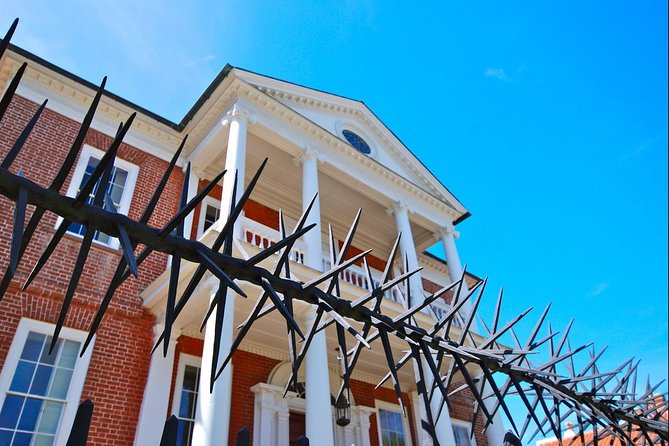
Next comes a pass-by at the Heyward-Washington House. The tour gives it about 10 minutes here, and admission is noted as not included.
This stop matters because Thomas Heyward Jr. is a signer of the Declaration of Independence, and the tour uses that connection to create context. In other words, it’s not about worshiping famous names; it’s about showing that famous names sit inside messy social systems.
If you’ve only ever seen that kind of landmark as “the important family house,” you’ll likely appreciate the way this tour reframes it. It’s also a chance to compare how white, elite history gets preserved—and how Black history is often pushed to the edges unless someone insists on the full story.
Old Slave Mart Museum (about 15 minutes): the stop that changes your tone
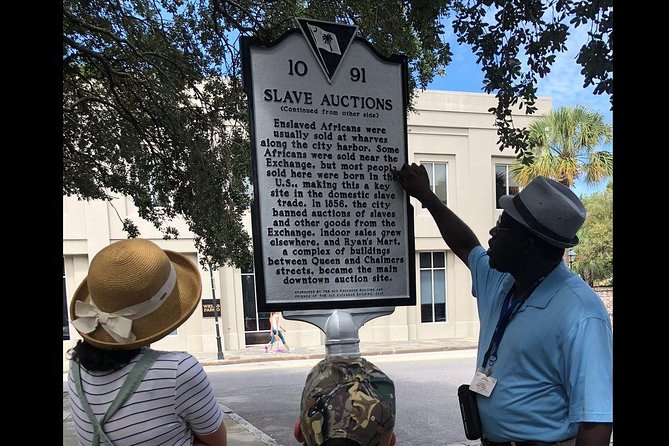
The tour then moves to the Old Slave Mart Museum, with time set around 15 minutes. Admission is also noted as not included here.
Even with a short visit time, this is a big moment. The building is described as the place that once held slave auction galleries in downtown Charleston. You’re not just “learning about slavery” in a general way—you’re confronting an actual location that connects policy, commerce, and human suffering.
Practical advice: if you’re sensitive to difficult history, go in with permission to feel what comes up. This isn’t designed to sanitize the past. A few guests specifically highlighted that some truths are eye-opening and frustrating, and that reaction is part of what the tour is aiming for—so you leave understanding the stakes, not just collecting facts.
Waterfront Park (about 30 minutes): from slavery to Reconstruction to civil rights
One of the most important segments comes at Waterfront Park, allocated about 30 minutes, and noted as free.
The way this stop is framed is key: you’re guided along the waterfront while hearing about places where heroes and heroines made history but didn’t get full coverage in the usual books. The walk also links themes across time—slavery, then Reconstruction, then civil rights.
I like this structure because it prevents the “one era only” problem. Some tours treat history like a timeline you can check off. This one treats the waterfront like a witness—an area that kept shaping daily life even as the country changed.
And yes, you also get the harbor setting itself. Waterfront Park gives you visual breathing room, which matters because the topic is heavy. The tour uses that contrast to help you keep moving and keep listening.
What Damon Fordham’s style feels like in the moment
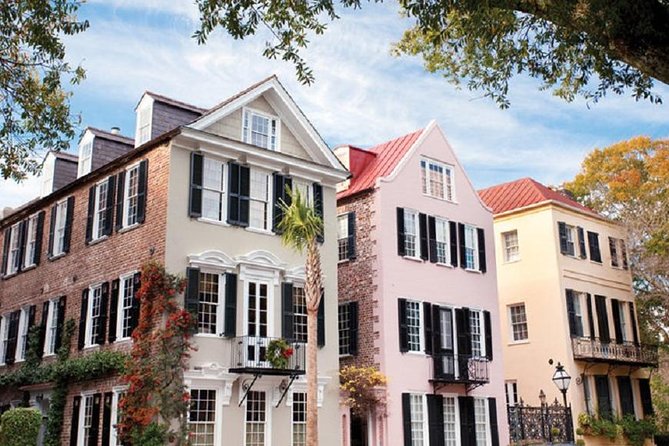
Damon Fordham leads the tour and is described as an author, historian, educator, and licensed tour guide. Guests consistently praise his ability to connect complex ideas to real people and to Charleston’s present-day issues.
A couple of specific details worth knowing because they affect your experience:
- Guests mention humor and wit alongside the heavy material.
- Some comment on musical elements, including his use of a melodica.
- Several say he answers questions and ties in personal and familial perspective, which can make stories land with more weight.
Still, there’s a real balance to consider. One review described the delivery as sometimes abrasive or scolding, and another said theatrical parts like dual voices felt awkward. That doesn’t mean the facts are wrong. It just means his presentation style may not match everyone’s taste.
If you’re someone who loves passionate storytelling, you’ll probably find his approach energizing. If you want gentle coaching throughout, you might want to mentally prepare yourself for a more no-nonsense tone.
Who this tour is best for
This is a strong choice if you:
- Want Black Charleston history with clear context, not just names and dates
- Like tours led by serious writers and educators who can answer questions
- Prefer walking routes tied to specific sites, rather than sitting in one lecture space
- Are curious about how the past connects to what you see today (including cultural references like Porgy and Bess)
It can also work for families, since the tour notes that children must be with an adult. Just be aware you’re visiting sites tied to slavery and auctions. Timing and emotional readiness matter more than age alone.
If your ideal tour is quiet, gentle, and purely light sightseeing, this may feel too intense. If your ideal tour is honest and story-driven, it’s a great fit.
Practical tips to make the most of the 2 hours
This is a walking tour, and the route includes stops where you’ll likely stand while stories are told. Guests specifically mention standing in one spot for extended periods, so plan for that.
Bring:
- Comfortable shoes for downtown sidewalks
- Water, especially since at least one guest said it was worth it even in the heat
- A charged phone if you plan to reference your mobile ticket
Also, be ready for a Q and A moment. Multiple comments emphasize that Damon answers questions beyond the planned script, so if something sparks your curiosity, ask.
Should you book Lost Stories of Black Charleston?
Yes, if you want Charleston with context—and you’re open to hearing the full emotional truth of the city’s past. For $39, you’re paying for more than a route: you’re paying for a guided narrative built around real places, real systems, and real names.
Book it particularly if you care about:
- learning stories you’re unlikely to discover on your own,
- seeing major sites like Old Slave Mart Museum and learning what they represent,
- and getting a guide who connects history to today, even if his delivery runs intense.
Skip it only if you strongly prefer a softer, purely gentle presentation style. The facts are the point here, and the tour won’t treat them like background wallpaper.
FAQ
How long is the Lost Stories of Black Charleston walking tour?
It runs for about 2 hours.
How much does the tour cost?
The price is $39.00 per person.
Where do we meet for the tour?
Meet at Buxton Books, 160 King St, Charleston, SC 29401.
What time does the tour start?
You meet at 3:30pm.
Who leads the tour?
The tour is narrated by Damon Fordham, described as an author, historian, educator, and licensed tour guide.
What sites does the tour include?
You’ll visit or pass by places including Charleston City Market, the Jehu Junes Hotel site, Catfish Row, the Heyward-Washington House, Old Slave Mart Museum, and Charleston Waterfront Park.
Are admission tickets included for museums?
The tour notes that Charleston City Market and Charleston Waterfront Park are free. Heyward-Washington House and Old Slave Mart Museum are listed as admission not included.
What language is the tour offered in?
The tour is offered in English.
What weather requirements apply?
The experience requires good weather. If it’s canceled due to poor weather, you’ll be offered a different date or a full refund.
Final note before you go
If you’re the type of visitor who wants to understand how Charleston worked, not just how it looks, this is the kind of tour that changes how you walk those streets after you’re done.
More Tours Across Charleston




More Charleston Tours Worth Booking
More Historic District Walking Tours in Charleston

Still deciding? Here are the newest Charleston tours and experiences we have reviewed







Historic District Walking Tours, compared.
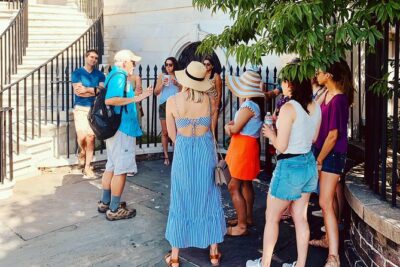 ★ 5.0Historic Charleston Guided Sightseeing Walking TourFrom $306,216 reviews
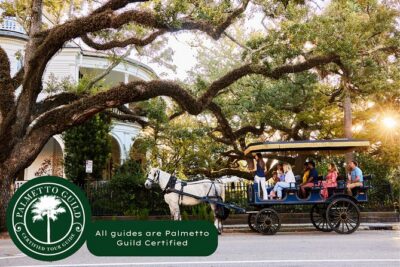 ★ 5.0Charleston Horse-Drawn Carriage Tour: Explore Historic CharlestonFrom $493,561 reviews
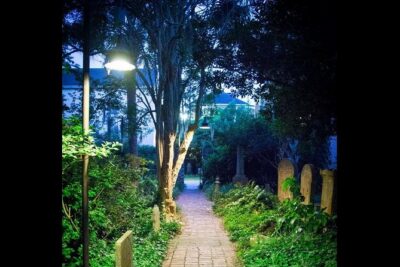 ★ 4.5Ghosts of Charleston Night-Time Walking Tour with Unitarian Church GraveyardFrom $352,835 reviews
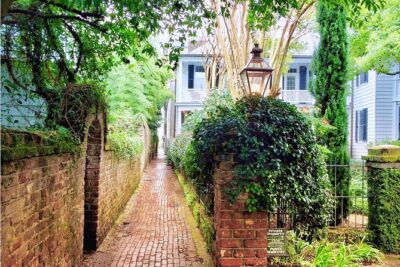 ★ 5.0Hidden Alleyways and Historic Sites Small-Group Walking TourFrom $342,335 reviews
 ★ 5.0Highlights of Charleston Guided Walking Tour2,206 reviews
 ★ 5.0Charleston Haunted Booze and Boos Ghost Walking TourFrom $391,569 reviews
 ★ 5.0Charleston’s Pleasing Terrors Night-Time Walking Ghost TourFrom $291,345 reviews
 ★ 5.0Charleston historical walking tour with a Professor of History at The CitadelFrom $401,284 reviews
Browse the lists this tour appears in