
Reviewed · HISTORIC DISTRICT WALKING TOURS
Frankly Charleston Sunday Walking Tour
Charleston Sunday means one thing: you walk. This Frankly Charleston Black History Tour puts Wraggborough first and shows you Charleston through Black stories you often miss on the usual highlights. I love how the guide, Franklin, keeps the focus on people and community—then ties it to big landmarks like the Citadel and Aiken-Rhett House.
Two things I really liked: you get a small group experience (up to 20 people) and you’re moving through the city with a specific lens, not just sightseeing. You’ll also end up with a more complete picture of Charleston culture by the time you circle back to the start.
One consideration: admission isn’t included for Emanuel AME Church, so you should plan on that cost if you want to go inside. If you’re expecting an easy, all-inclusive stop at every location, this one needs a bit of budgeting.
In This Review
- Key Things to Know Before You Go
- Wraggborough: The Story Lens That Changes Everything
- 375 Meeting St at 11:00: How the Walk Fits Your Day
- The First Stop: Colonial Suburban Plantation House
- Emanuel AME Church Stop: Community, Faith, and What You’ll Miss Otherwise
- Citadel and Aiken-Rhett House: Big Names, Recentered Story
- The Denmark Vesey Connection: A Colonial Military Fort Stop
- What “Black History Through the Lens of Wraggborough” Really Means
- Photography, Dogs, and Questions: Small Rules, Big Comfort
- Who Should Book This Sunday Walking Tour
- Price and Value: Is $57.15 Worth It?
- Should You Book This Frankly Charleston Black History Walking Tour?
- FAQ
- How long is the Frankly Charleston Sunday Walking Tour?
- Where do I meet, and what time does the tour start?
- How big is the group?
- Is the Emanuel AME Church admission included?
- Can I take pictures and ask questions?
- Can I bring a dog?
- What’s the cancellation policy?
Key Things to Know Before You Go
- Wraggborough-first route: you see the city’s major landmarks while the commentary stays anchored in Black Charleston.
- Guide-led context, not a script: Franklin connects sites to lived history, names, and community impact.
- Emanuel AME Church visit: the church is part of the tour, but admission isn’t included.
- Denmark Vesey conspiracy connection: you’ll hear about a colonial military fort built because of that plot.
- Tightly timed walk: plan for about 2 hours of walking and stops.
- Bring your questions (and your dog): pictures are welcome, and dogs are allowed with cleanup.
Wraggborough: The Story Lens That Changes Everything
This tour is built around one idea: Charleston isn’t only the postcard version. By centering Wraggborough, you’re seeing how Black communities shaped the city’s growth, culture, and everyday life. It’s the kind of walk that makes you notice details you would have walked right past.
Franklin’s approach stands out because it’s not just dates and big events. The emphasis is on people—especially the contributions of “unsung ancestors” and how those contributions built Charleston. One review nailed it: this tour pushes back on tired stereotypes and shows Black life in fuller terms, not reduced to what outsiders expect.
If you’re coming for major Charleston sights, you still get them. You’ll be walking toward places like the Citadel and Aiken-Rhett House, but the commentary keeps the focus on Black Charleston so those landmarks land differently.
Trade one set of cobblestones for another with more Charleston walking tours.
- Historic Charleston Guided Sightseeing Walking Tour★ 5.0 · 6,216 reviews
- Charleston Horse-Drawn Carriage Tour: Explore Historic Charleston★ 5.0 · 3,561 reviews
- Ghosts of Charleston Night-Time Walking Tour with Unitarian Church Graveyard★ 4.5 · 2,835 reviews
375 Meeting St at 11:00: How the Walk Fits Your Day
You meet at 375 Meeting St, Charleston, SC 29403, and the tour runs from 11:00 am. It ends back at the meeting point, so you’re not stuck recalculating your afternoon plans.
The duration is about 2 hours, which is an advantage if you like to pack your schedule but still want something meaningful. This isn’t a half-day commitment, so you can pair it with a museum visit or a long lunch afterward.
Group size is capped at 20 travelers, so you can actually hear the guide without fighting for attention. That matters on walking tours. When there are fewer people, questions don’t feel like interruptions—they feel part of the flow.
The First Stop: Colonial Suburban Plantation House
The tour begins with a colonial suburban plantation house stop. Even if you’ve seen plantation architecture in other contexts, the value here is the way the story gets framed. You’re not just looking at buildings; you’re learning how power, labor, and community life connected to what was built and who benefited.
This is a “set your brain” moment. You’ll likely start noticing patterns: what gets preserved, what gets described, and what’s left out when stories are told from only one angle. That helps everything that follows make more sense.
Practical note: for this kind of outdoor-and-close-up stop, wear comfortable walking shoes and be ready to stand and listen. The tour is short, so you’ll want to stay mobile.
Emanuel AME Church Stop: Community, Faith, and What You’ll Miss Otherwise
One of the main stops is Emanuel African Methodist Episcopal Church. It’s listed as a historic African American churches visit, with a 5-minute duration at the site.
Here’s the key practical detail: admission is not included. That doesn’t mean the stop is pointless—it means you should decide in advance whether you’re planning to go inside and budget accordingly. If church visits are a must for you, treat this as the one place where the ticket matters.
What makes this stop valuable is the tour’s framing. Instead of treating the church as a single landmark to photograph, you’ll get context for what it meant to the community. Even short stops work best when you know what to listen for, and that’s where Franklin’s commentary helps.
Citadel and Aiken-Rhett House: Big Names, Recentered Story
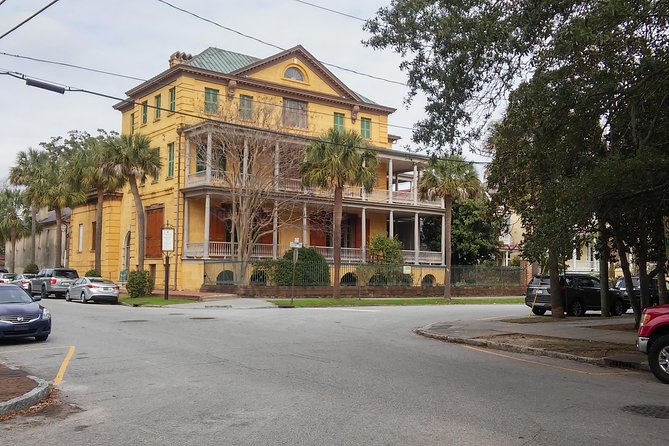
The overview includes walking to top sights such as the Citadel and the Aiken-Rhett House, with the route anchored in Black history. That combination is what makes the tour feel different from generic sightseeing.
The Citadel area is one of those places visitors often treat as purely military or institutional. On this tour, you’re getting the “other Charleston” thread—how larger power structures connect back to the lives of Black Charlestonians. You’ll look at the buildings, yes, but more importantly, you’ll understand why they sit where they do in the broader story.
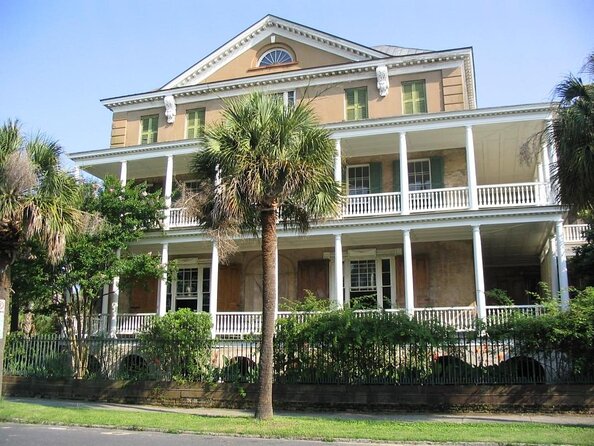
The Aiken-Rhett House can also be easy to reduce to architecture or a famous name. With the tour’s lens, you’re more likely to ask better questions: What’s the human story behind the walls? Who built, who lived, who suffered, and who carried community life forward?


The Denmark Vesey Connection: A Colonial Military Fort Stop
Another stop on the walk centers on a colonial military fort built because of the Denmark Vesey conspiracy. This is the kind of detail that changes how you interpret Charleston’s defensive posture and political priorities.
Even if you already know the broad outline of Vesey’s conspiracy, this stop adds a spatial, place-based angle. You’re hearing how fear, control, and survival shaped what got constructed and why. The fort topic is a reminder that history isn’t just on paper—it’s in the city’s physical form.
Because the tour is only about 2 hours, these moments have to land fast. Still, the benefit is that you leave with a more honest map of the city: not only where things are impressive, but why they were built the way they were.
What “Black History Through the Lens of Wraggborough” Really Means
The best part of this tour isn’t a checklist of stops. It’s the method. By walking with a local guide through an underrepresented neighborhood and tying it to major sights, the tour changes what those sights communicate to you.
I like that the commentary aims for balance. One review highlighted how the tour corrects the idea that the only expected narrative is limited and stereotyped. Instead, you learn about contributions to Charleston’s development and growth—proof that Black Charlestonians shaped the city in many ways, not just through tragedy or marginalization.
That balance is practical. It makes you a better viewer. After the walk, you’re less likely to treat Charleston as a collection of famous buildings and more likely to see it as a place made by real communities with real impact.
Photography, Dogs, and Questions: Small Rules, Big Comfort
This tour is explicitly picture-friendly: you can take pictures and ask questions along the way. That’s helpful because the commentary is where the value is, and questions often turn a good tour into a memorable one.
Dogs are allowed. The rule is straightforward: bring your dog, but you must clean their mistakes. If you travel with a pet, this is a nice change from tours that pretend dogs don’t exist in real life.
No alcohol is listed. That’s not a problem for most people, but it does set expectations: this stays focused and comfortable for listening and walking.
Who Should Book This Sunday Walking Tour
This is a great choice if you want more than a sightseeing loop. Book it if you care about Black Charleston stories and you want your city visit to be connected, not random.
It also fits well if you like smaller groups. With a max of 20 travelers, you’re more likely to get your questions answered and to hear the guide clearly through the walk.
If you’re someone who prefers quiet, take-a-photo-and-go tours, this may feel more interactive than you want. The route is short, but the point is the guided commentary.
Price and Value: Is $57.15 Worth It?
At $57.15 per person for about 2 hours, this sits in the “serious walking tour” tier, not a casual free-stroll price. The value comes from what you’re paying for: a focused, narrative-driven guide and access to several big-name Charleston stops, linked directly to Black history.
The fact that it’s booked around 50 days in advance on average suggests strong demand for this exact angle. In other words, it’s not the kind of tour people pick last-minute just because it’s convenient.
If you want a checklist tour, you’ll probably feel priced for more depth. If you want context—why these places matter, and how Charleston’s story is incomplete without Black neighborhoods—then the cost makes sense.
Should You Book This Frankly Charleston Black History Walking Tour?
I’d book it if you want a more accurate Charleston and you’re willing to treat the tour like a story walk, not a photo hunt. The Wraggborough lens, the strong guide presence (Franklin), and the way the route connects community life to major landmarks make it feel genuinely purposeful.
Skip it only if you need every site admission included, or if you dislike tours that are guided and question-friendly. Also remember that Emanuel AME Church admission isn’t included, so plan for that if you want to go inside.
If you’re building a first visit to Charleston and you want to leave with more than the standard highlights, this is a smart way to do it in just about 2 hours.
FAQ
How long is the Frankly Charleston Sunday Walking Tour?
The tour is approximately 2 hours.
Where do I meet, and what time does the tour start?
You meet at 375 Meeting St, Charleston, SC 29403, and the start time is 11:00 am. It ends back at the meeting point.
How big is the group?
The tour has a maximum of 20 travelers.
Is the Emanuel AME Church admission included?
No. Admission ticket is not included for Emanuel African Methodist Episcopal Church.
Can I take pictures and ask questions?
Yes. The tour allows pictures and questions.
Can I bring a dog?
Yes, you can bring a dog, but you must clean up their mistakes. Service animals are also allowed.
What’s the cancellation policy?
There is free cancellation. You can cancel up to 24 hours in advance for a full refund.
More Tours Across Charleston


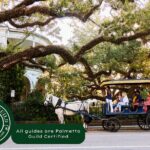

More Charleston Tours Worth Booking
More Historic District Walking Tours in Charleston
Still deciding? Here are the newest Charleston tours and experiences we have reviewed








Historic District Walking Tours, compared.
 ★ 5.0Historic Charleston Guided Sightseeing Walking TourFrom $306,216 reviews
 ★ 5.0Charleston Horse-Drawn Carriage Tour: Explore Historic CharlestonFrom $493,561 reviews
 ★ 4.5Ghosts of Charleston Night-Time Walking Tour with Unitarian Church GraveyardFrom $352,835 reviews
 ★ 5.0Hidden Alleyways and Historic Sites Small-Group Walking TourFrom $342,335 reviews
 ★ 5.0Highlights of Charleston Guided Walking Tour2,206 reviews
 ★ 5.0Charleston Haunted Booze and Boos Ghost Walking TourFrom $391,569 reviews
 ★ 5.0Charleston’s Pleasing Terrors Night-Time Walking Ghost TourFrom $291,345 reviews
 ★ 5.0Charleston historical walking tour with a Professor of History at The CitadelFrom $401,284 reviews
Browse the lists this tour appears in