

Reviewed · HISTORIC DISTRICT WALKING TOURS
Charm of Charleston – Walk Through Time with a Charleston Native
Charleston has a talent for storytelling. This walk turns famous sights into a clear timeline, from the colors of Rainbow Row to what the harbor meant to the Revolution. I especially like how a Charleston native approach keeps the facts grounded in what you can see.
I also like the variety of stops in just 1 hour 45 minutes. You’ll go from Waterfront Park views and the Pineapple Fountain to the City Market area and a string of alleys and landmark buildings, with plenty of chances to ask questions.
One thing to keep in mind: this experience works best with good weather, since it’s a walking tour with outdoor stops.
In This Review
- Key things to know before you go
- A native-led walk that makes landmarks feel connected
- Meeting at 195 E Bay St and finishing by Waterfront Park
- Rainbow Row: the calm start and the color reason
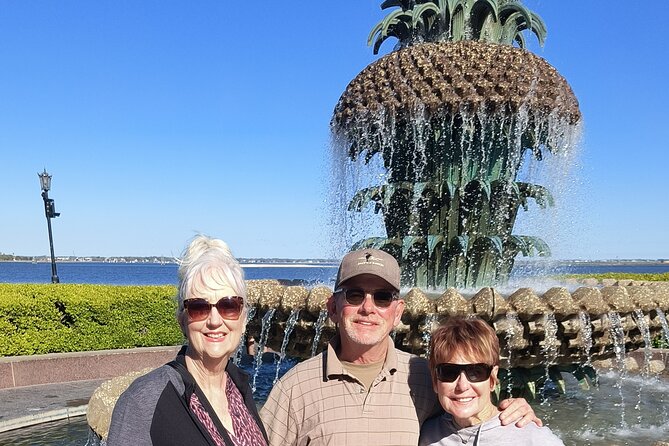
- Waterfront Park and the Pineapple Fountain: hospitality with a view
- City Market: history under your shopping feet
- Philadelphia Alley: a narrow passage with big revolutionary ties
- The Four Corners of Law and Saint Michael’s oldest church
- Charleston’s oldest tavern walls and America’s oldest theater
- Revolutionary-era port sites: dungeon, customs house, and meeting rooms
- Price and time: is $29 worth it?
- Who should book this Charleston walk?
- Should you book Charm of Charleston?
- FAQ
- How long is the tour?
- How much does it cost?
- Where does the tour start and end?
- What’s included in the tour price?
- Is there an admission fee included for any specific stop?
- What language is the tour offered in?
- What’s the group size limit?
- Does the tour run only in certain weather?
Key things to know before you go
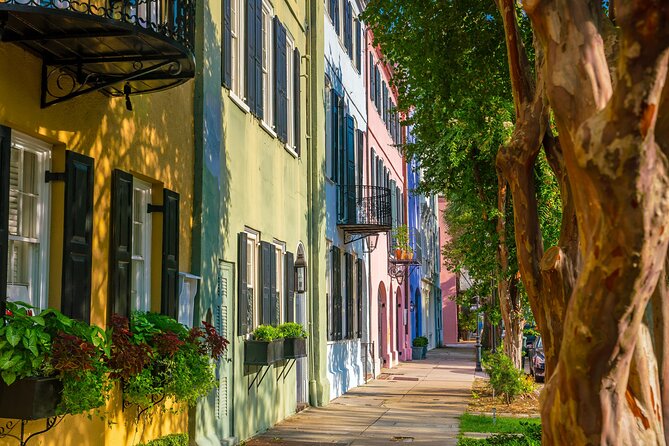
- Rainbow Row’s color story starts right away, so you get the context before the photos.
- Waterfront Park overlooks the harbor and the Ravenel Bridges, making history feel physical.
- City Market includes a surprise history angle, not just a place to shop.
- Philadelphia Alley ties Charleston to another revolutionary city, with secrets hidden in plain sight.
- The Four Corners of Law area gives you a tight look at civic buildings and Charleston’s oldest church.
- The ending clusters major Revolutionary-era port sites, so the timeline stays coherent.
A native-led walk that makes landmarks feel connected
If you want Charleston in one efficient shot, this is a strong choice. The tour is built like a guided route through landmark zones, with the explanation coming right as you look at each location. That matters because Charleston’s history isn’t behind glass here—it’s in the street plan, the buildings, and the way the waterfront sits.
I like that the guide style is rooted in being local, not just reciting dates. You’ll get suggestions for what to do next—dining and events—so the tour doesn’t end when your walking does. (That’s practical value, not fluff.)
At the same time, I’d call it a sightseeing-and-story tour more than a deep archival lecture. If you want every footnote and primary source detail, you might want to pair it with a museum stop on your own.
Trade one set of cobblestones for another with more Charleston walking tours.
- Historic Charleston Guided Sightseeing Walking Tour★ 5.0 · 6,216 reviews
- Charleston Horse-Drawn Carriage Tour: Explore Historic Charleston★ 5.0 · 3,561 reviews
- Ghosts of Charleston Night-Time Walking Tour with Unitarian Church Graveyard★ 4.5 · 2,835 reviews
Meeting at 195 E Bay St and finishing by Waterfront Park
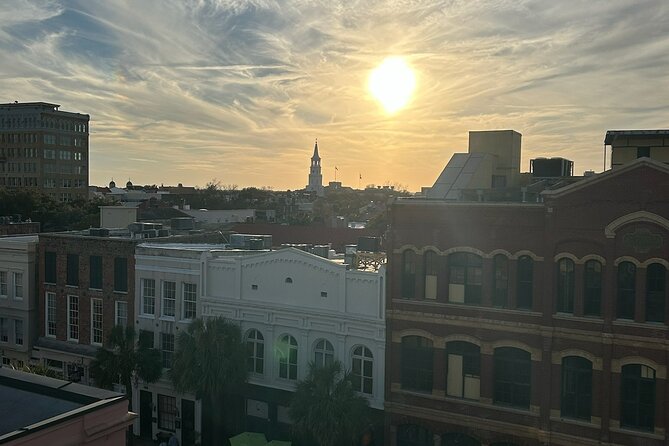
You start at 195 E Bay St, Charleston, SC 29401 and the tour wraps near Waterfront Park Vendue Range. That is a nice setup because it leaves you close to the harbor area right after the last stop, when you’ll likely want a drink, a snack, or a slow walk along the water.
It starts at 10:00 am and runs about 1 hour 45 minutes. With a small maximum group size of 15 travelers, it typically feels more like a guided stroll than a march. Mobile tickets are used, and the tour is offered in English.
One more practical note: the meeting area is near public transportation, so you should be able to reach it without stressing about a car. And if you’re traveling with a service animal, you’re covered.
Rainbow Row: the calm start and the color reason
You kick off with a tranquil walk along Charleston’s most famous landmark: Rainbow Row. The point here isn’t just getting iconic photos. You’re learning how it became Rainbow Row in the first place, and that turns the color into a story you can actually follow.
Why this works well at the start: it gives you a mental framework for everything else. Charleston’s identity is made of small details—street-level cues, neighborhood reputation, and the way the city has kept and adapted its built environment over time. Starting with Rainbow Row makes those patterns easier to spot as you move on.
Also, this is a good moment to slow down and look closely. Pay attention to the street-front scale and the building rhythm. When you understand the why behind the colors, the whole streetscape reads differently.
Waterfront Park and the Pineapple Fountain: hospitality with a view

Next up is Waterfront Park, with sweeping views of Charleston Harbor and the Ravenel Bridges. This stop gives you something you can’t get from a map: the sense of scale. The waterfront area is where Charleston’s big stories made their first impression on the world.
The tour also focuses on why pineapples became a symbol of southern hospitality, then connects it directly to the Pineapple Fountain you see while strolling through the park. That kind of connection is what makes a walking tour worth your time. Instead of seeing a decorative detail, you learn what people used it to mean.
One small tip: with a waterfront view, light and weather matter. If the sun is bright, you’ll get sharper photos by shifting angles slightly as you walk. If it’s overcast, the harbor still looks great, but you’ll want to rely on the guide’s storytelling to keep the energy up.
City Market: history under your shopping feet
From Waterfront Park, you move into City Market, Charleston’s original shopping district. The tour treats it like more than a retail stop. You’re guided through how the area carries a surprising history, which changes the way you think about the space.
What I like about this segment is the pacing. After the open-air harbor views, City Market adds texture. It’s where you can notice movement, building facades, and the fact that people have used this zone for trade and gathering for a long time.
This is also where you’ll likely feel the “Charleston texture” most—handmade goods, street atmosphere, and that sense that the city has always been a meeting point. Keep an eye out for how the layout shapes movement. Even if you don’t stop to shop, the tour’s explanation makes the space easier to read.



Philadelphia Alley: a narrow passage with big revolutionary ties

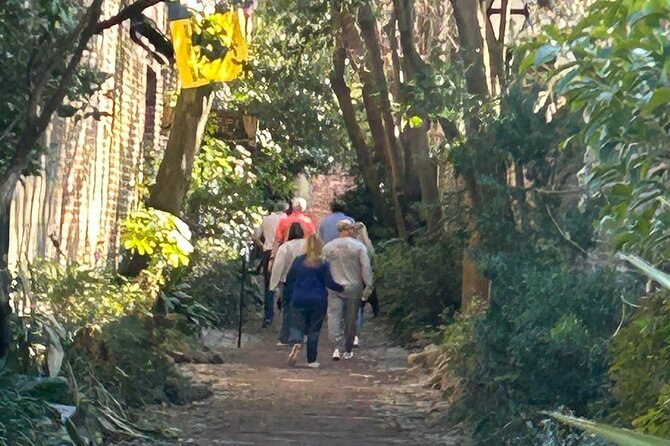
One of the most interesting stops is Philadelphia Alley. It’s a passageway you might miss if you’re rushing, but the tour makes it a highlight by focusing on what it commemorates and the secrets hidden there.
The key idea: Philadelphia Alley reflects the close relationship between two revolutionary cities. That’s a small but meaningful connection, because it reminds you that Charleston’s Revolution story isn’t isolated. Revolutionary-era America was a network of ports, ideas, and people.
Also, alleys change how sound carries and how the city feels. In a narrow lane, you notice architecture and details faster. If you like street-level history—corners, inscriptions, and the way cities mark their connections—this is one of the best uses of your tour time.
The Four Corners of Law and Saint Michael’s oldest church
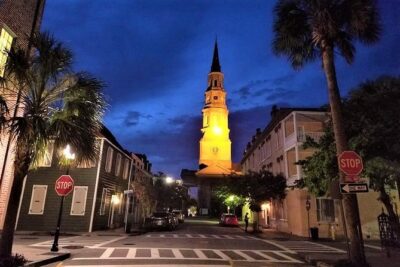
Then you shift to the Four Corners of Law, the original business district. It’s a smart move because this area groups civic power in a way that makes sense visually. You’ll also see Saint Michael’s, described as Charleston’s oldest standing church, plus City Hall, the County Courthouse, and the Federal Courthouse.
Why this stop matters: it explains how law and commerce shaped the city. When you stand in an area where civic and business buildings cluster, the role of government and institutions stops being abstract. It’s right there in the skyline.
Saint Michael’s is especially compelling because it’s both historic and still present as an active landmark. Looking at the church alongside the civic buildings helps you understand how Charleston combined old faith, public authority, and practical daily life in one compact setting.
Charleston’s oldest tavern walls and America’s oldest theater
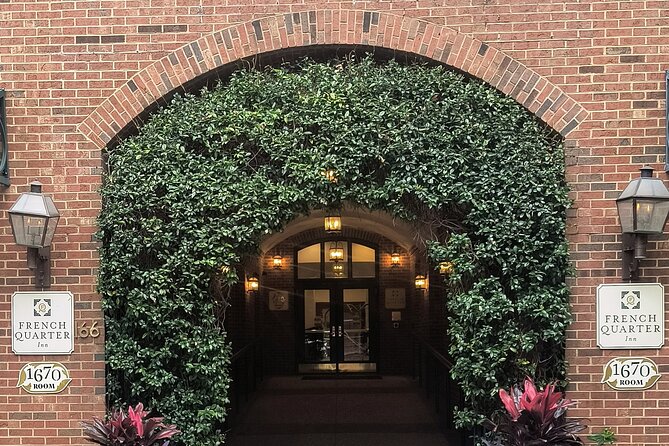
This tour also points out a couple of big character-building sites in the city core. One is the idea that Charleston’s oldest structure was also its most popular tavern for centuries. If you care about stories that live in brick and stone, this kind of detail is a treat: you’re standing where people once gathered, argued, drank, and traded news.
Another highlight is America’s oldest theater. The tour doesn’t just tell you it’s old. It guides you to see the architectural and historical intrigue that comes with a building that has held cultural life for generations.
These are the stops where the tour becomes more than a list of landmarks. You’ll start to notice how Charleston’s culture has a physical home in certain buildings. Even if you don’t go inside anything during the walk, you’ll likely feel the city’s character more strongly by the end.
Revolutionary-era port sites: dungeon, customs house, and meeting rooms
As the tour moves toward its final cluster, it leans into Charleston’s port role during the Revolution. You’ll hear about the port’s first dungeon, customs house, meeting house, and grand ballroom.
Even without a museum-style walkthrough, this is valuable context. Charleston was a hub—goods moved through the port, people moved through the city, and power was enforced in ways that left traces in buildings and layouts. Hearing these specific functions named as you look around helps you connect the city’s geography to actual activity.
The “grand ballroom” detail is especially useful if you’re trying to picture life beyond ships and uniforms. It brings the idea of ceremony, gathering, and status into focus. And the dungeon mention adds a necessary contrast, reminding you that ports weren’t only about opportunity—they were also about control.
Price and time: is $29 worth it?
At $29 per person for about 1 hour 45 minutes, this tour is priced in the sweet spot for a walking experience. You’re paying for three things at once:
- a guided route through iconic landmarks,
- a native style of explanation,
- and direction for what to do next in Charleston.
That combination can cost more if you try to build it yourself. You’d either pay for a museum with limited coverage, hire a private guide for the same time, or spend hours researching how Rainbow Row, hospitality symbols, and Revolutionary port life connect.
Also, the tour keeps group size capped at 15, which usually supports better attention from the guide. In a smaller group, you’re more likely to get your questions answered quickly instead of waiting your turn.
One caution on value: wear shoes for walking. The tour’s duration is short, but the stops are dense. If you struggle with outdoor strolling, you may find it tiring for the length.
Who should book this Charleston walk?
This tour fits best if you want a guided “big picture” route that still feels specific. You’ll enjoy it if you like:
- photo-worthy landmarks with context,
- street-level history you can understand on the spot,
- and a local guide who can point you toward dining and events afterward.
It also works well early in your trip. If you do this soon after you arrive, you’ll have a clearer mental map for everything else—especially the Waterfront area and the downtown historic core.
If you already know Charleston history in detail and you want a specialized focus—like a single neighborhood, a particular era, or architectural study—this may feel broad. In that case, treat it as a helpful orientation and then choose deeper add-ons.
Should you book Charm of Charleston?
Yes, you should book it if you want the fastest way to connect Charleston’s landmarks to the stories behind them. The route hits the places people actually talk about—Rainbow Row, the Pineapple Fountain, City Market, Philadelphia Alley, key civic buildings, and major Revolutionary-era port sites—so you won’t waste time wondering what you’re looking at.
Also, look for the kind of guiding that feels personal to the city. One named example from the strongest feedback is Paige, described as a Charleston native who delivered standout storytelling. That’s the tone you’re aiming for: clear, local, and practical.
If you’re booking for a first visit, do it earlier rather than later. Let the tour give you context, then use what you learn to pick where you eat and where you go when the walk is over.
FAQ
How long is the tour?
It runs for about 1 hour 45 minutes.
How much does it cost?
The price is $29.00 per person.
Where does the tour start and end?
It starts at 195 E Bay St, Charleston, SC 29401 and ends near Waterfront Park Vendue Range, Concord St, Charleston, SC 29401.
What’s included in the tour price?
You get an informative and entertaining tour of iconic Charleston landmarks, plus suggestions for further exploration, dining, and events from a Charleston native.
Is there an admission fee included for any specific stop?
Philadelphia Alley notes admission as free.
What language is the tour offered in?
The tour is offered in English.
What’s the group size limit?
The tour has a maximum of 15 travelers.
Does the tour run only in certain weather?
The experience requires good weather. If canceled due to poor weather, you’ll be offered a different date or a full refund.
More Charleston Tours Worth Booking






More Historic District Walking Tours in Charleston



Still deciding? Here are the newest Charleston tours and experiences we have reviewed












Historic District Walking Tours, compared.
 ★ 5.0Historic Charleston Guided Sightseeing Walking TourFrom $306,216 reviews
 ★ 5.0Charleston Horse-Drawn Carriage Tour: Explore Historic CharlestonFrom $493,561 reviews
 ★ 4.5Ghosts of Charleston Night-Time Walking Tour with Unitarian Church GraveyardFrom $352,835 reviews
 ★ 5.0Hidden Alleyways and Historic Sites Small-Group Walking TourFrom $342,335 reviews
 ★ 5.0Highlights of Charleston Guided Walking Tour2,206 reviews
 ★ 5.0Charleston Haunted Booze and Boos Ghost Walking TourFrom $391,569 reviews
 ★ 5.0Charleston’s Pleasing Terrors Night-Time Walking Ghost TourFrom $291,345 reviews
 ★ 5.0Charleston historical walking tour with a Professor of History at The CitadelFrom $401,284 reviews
Browse the lists this tour appears in