

Reviewed · HISTORICAL TOURS
Charleston History Tour /
Charleston history fits in two hours. You’ll walk a tight route from 80 Broad St through Constitution-era Charleston, then into Gullah culture and the city’s iconic architecture, with short stops designed for quick orientation and real stories. I especially like the small group size (max 10) and the way guide Joyce ties the city’s streets to the bigger picture—architecture, culture, and even military-related facts—so it doesn’t feel like random sightseeing. One consideration: it’s weather-dependent and you’ll be on foot for the full loop, so plan for some heat or sun.
What makes this tour practical is the pacing and the “no surprise costs” setup. You get admission covered for key indoor stops, and the outdoors are where you’ll spend most of your time—so you can keep your day moving and your budget steady.
In This Review
- Key things I’d circle before you book
- Why this Charleston history walk works so well in real life
- Starting at 80 Broad St: how the route sets your bearings
- Constitution-era Charleston: the 1771 ratification home stop
- Learning the Gullahs of Charleston: culture you don’t want to skip
- Dock Street Theater (circa 1810): woodwork, courtyard, and stage energy
- St. Michael’s Church (circa 1764): the oldest religious building in the city
- Rainbow Row: nine connected buildings and a survival story
- The Battery & White Point Gardens: defensive seawall, big harbor views
- French Huguenot Church (1844): Gothic Revival and a rare independence
- Who this Charleston history tour is best for
- My practical tips so you enjoy it more
- The value in what’s included (and what to budget for)
- Should you book this Charleston history tour?
- FAQ
- How long is the Charleston History Tour?
- Is this tour ticketed, and do I need to print anything?
- What is the group size limit?
- Where do I meet for the tour?
- Are admission fees included for the stops?
- What days and times does the tour operate?
- What if the weather is bad?
Key things I’d circle before you book

- Max 10 travelers: small enough to feel personal, even if you don’t get a private tour.
- Constitution thread: a stop at a 1771 house tied to ratification of the U.S. Constitution.
- Gullah learning stop: you’ll specifically pause to understand the Gullahs of Charleston.
- Dock Street Theater admission: an 1810 playhouse with woodwork and a courtyard.
- Rainbow Row details: 9 connected buildings, with most predating the American Revolution.
- Harbor views at The Battery: a defensive seawall and promenade on Charleston Harbor.
Why this Charleston history walk works so well in real life
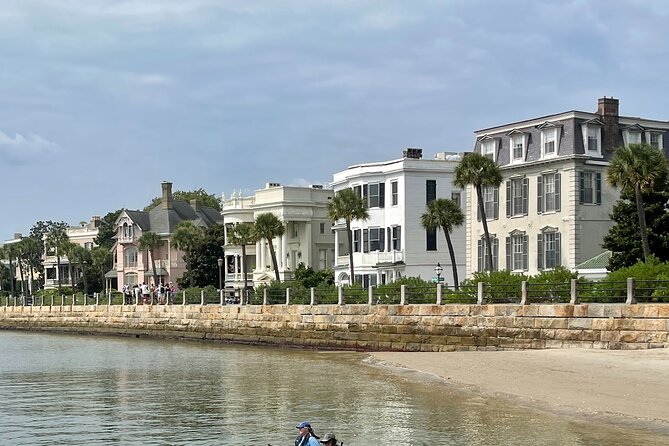
A good city tour should do two things fast: give you context and point you toward what to notice on your own later. This one does that by keeping the stop time short and structured—roughly five minutes at each landmark—so you’re not stuck in long narration while your feet start bargaining with your brain.
I also like that it’s designed for people who want a concentrated overview without hunting tickets and figuring out what’s open when. Multiple admissions are included, and you won’t hit extra “gotchas” at the door for the stops on the route.
Finally, the vibe tends to be friendly and informal. With a cap of 10, it’s easier to ask questions, and the tour can feel more like a guided walk with a local friend than a crowded bus ride with earphones.
Dig deeper into the past with more Charleston history tours.
- Charleston’s Old South Carriage Historic Horse & Carriage Tour★ 5.0 · 10,023 reviews
- Historic Charleston Guided Sightseeing Walking Tour★ 5.0 · 6,216 reviews
- Charleston Horse-Drawn Carriage Tour: Explore Historic Charleston★ 5.0 · 3,561 reviews
Starting at 80 Broad St: how the route sets your bearings
The tour starts at 80 Broad St, Charleston, SC 29401, and ends back at the same meeting point. That matters more than you’d think. When your loop returns you to the center of action, you can plan a meal or museum visit immediately after without needing a second round of transit.
From there, you’re set up to understand Charleston’s “layers” in the order you’ll actually encounter them while walking the historic streets: early national politics, then cultural identity, then landmark architecture, and finally the harbor-focused defensive story at The Battery.
If you’re building a two-day plan, this kind of route is an excellent first hit. It helps you recognize what’s where, and it makes the next streets you explore feel less like maze-solving.
Constitution-era Charleston: the 1771 ratification home stop
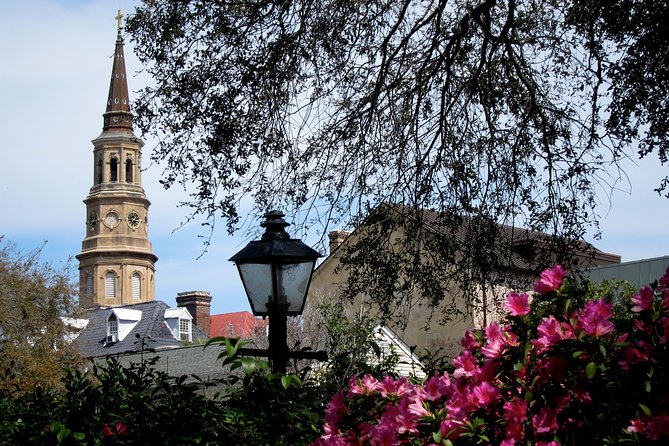
One of the most compelling pauses is the house built in 1771, tied to the ratification of the United States Constitution. Even if you’ve read about early American history before, this kind of stop changes how it feels. You’re not just learning dates—you’re standing in a place associated with a major national moment.
Charleston played its role early, and this stop gives you a clean entry point into that. It also helps you see why later architecture and civic life developed the way they did: the city’s identity was forming alongside the nation’s.
The practical payoff is that it gives your brain an “anchor” for the rest of the walk. After that, other stops—churches, theaters, and streetscapes—feel more connected instead of separate attractions.
Learning the Gullahs of Charleston: culture you don’t want to skip

A dedicated stop is set aside to learn about the Gullahs of Charleston. That’s a smart choice, because it keeps the tour from becoming only about buildings and battles. Charleston’s story isn’t complete without understanding the people and culture that shaped the Lowcountry over generations.
This isn’t the time for a long history lecture; it’s a guided orientation. You’ll get a focused introduction that gives you enough context to recognize what you may want to follow up on later—whether that means reading more, visiting a cultural site on your own, or simply noticing cultural details in everyday life around town.
For me, the value is balance. This is the kind of tour where you leave with more than “pretty stuff.” You leave with a sense that Charleston’s identity comes from communities, not just monuments.
Dock Street Theater (circa 1810): woodwork, courtyard, and stage energy

Next up is Dock Street Theater, an ornate playhouse from around 1810. The standout is the combination of elegant woodwork and a courtyard setting—exactly the kind of details that you’ll miss if you just walk past for photos.
Admission is included here, which is a big deal for value and timing. Indoor stops can break up the walking pace, and having the ticket covered means you don’t waste your mental energy on ticket lines or last-minute decisions.
What I find especially useful is how this stop fits into the tour’s bigger theme: Charleston wasn’t only a trading and political hub; it also supported arts and public life. After learning that connection, the theater doesn’t feel like a random stop—it feels like part of the city’s social rhythm.


St. Michael’s Church (circa 1764): the oldest religious building in the city
At St. Michael’s Church (around 1764), you’re looking at the oldest religious building in the city. That alone makes it worth pausing for, but the tour approach helps you focus on what to notice rather than just admiring the exterior.
Admission is included, so you’re not stuck with a quick glance and a pass. This is the kind of site where a short, guided moment can help you look at structure, setting, and atmosphere with more purpose.
The drawback to keep in mind? Places of worship can sometimes have rules about photography, quiet areas, or how you move through the space. If you’re the type who takes lots of pictures, I’d be ready to adjust quickly and respect the flow inside.
Rainbow Row: nine connected buildings and a survival story
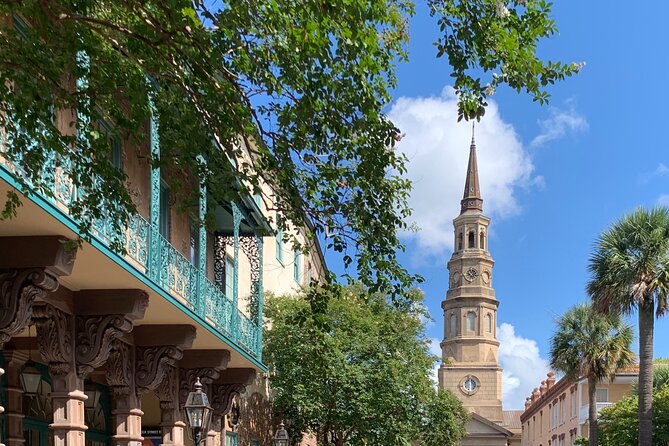
Then comes Rainbow Row, a row of nine attached buildings. The tour highlights a key timeline detail: all but one predate the American Revolution. That turns a famous photo stop into something more meaningful—these aren’t just colorful facades; they’re survivors of major eras.
Five minutes might sound short for a landmark this famous, but the tour structure is built for pattern recognition. You’ll learn what makes the row distinctive, what to notice in the arrangement of the buildings, and how the details tie back to earlier Charleston.
If you’re worried you’ll rush through it, don’t. The stop is quick on purpose so you keep momentum. Later, if you want a longer walk, you’ll now know what to look for when you revisit.
The Battery & White Point Gardens: defensive seawall, big harbor views
At The Battery & White Point Gardens, the focus shifts to the shoreline and defense. The Battery is a defensive seawall and promenade on Charleston Harbor, and that dual purpose changes how the area reads when you’re actually standing there.
It’s hard not to look out over the water from this spot. But the guide’s framing helps you see the harbor as more than scenery. The tour connects the built form to protection and strategy, which gives the promenade context beyond postcard views.
This is also where practical travel sense helps. If the sun is strong, The Battery can feel exposed because you’re walking along the harbor edge. Wear something that handles heat, and give yourself a quick breather if you need it.
French Huguenot Church (1844): Gothic Revival and a rare independence
The final listed landmark is the French Huguenot Church, built in 1844. It’s described as the oldest Gothic Revival church in South Carolina, and also the only independent Huguenot Church in the country. That combination makes it a standout even before you walk up the steps.
Admission is included, so you’ll be able to see more than the outside. A guided stop is especially useful here because church architecture can look “similar” at a glance. The tour approach helps you focus on the elements that make this church specific to its style and community.
One more reason I like ending on this kind of site: it rounds out the tour’s range. You’ve moved from civic-era significance to cultural learning, then to entertainment, faith spaces, residential streetscapes, harbor defense, and finally to a religious site with clear identity markers.
Who this Charleston history tour is best for
This tour fits travelers who want an efficient overview on foot. If you like architecture, city planning vibes, and stories that connect the past to what you can still see today, you’ll get a lot from it.
It’s also a good match if you’re the type who enjoys asking questions mid-walk. With a group size limited to 10, it’s easier to have a back-and-forth conversation rather than just passively listen.
If you have mobility limits that make frequent short walks tough, consider whether you can comfortably handle an outdoor route with brief stops. The tour notes moderate physical fitness as a requirement, so choose wisely if you know you’ll tire quickly.
And if you’re traveling with kids: it can work, but the format is still guided and fast-paced. You’ll want to bring patience and snacks on your own, since food and drinks aren’t included.
My practical tips so you enjoy it more
Bring comfortable walking shoes and dress for the weather. Since the tour runs outdoors for most of the time, you’ll feel heat and wind more than you might on a museum-only day.
Download or access your mobile ticket ahead of time, then keep it easy to find. When you’re hopping between stops, you don’t want phone-searching to eat into your photo moments.
Plan your day so you’re not rushing right after the tour. Even though the route is only about two hours, you’ll likely want a few extra minutes to look around Rainbow Row or the harbor area once you’ve been oriented.
The value in what’s included (and what to budget for)
You won’t be nickel-and-dimed at the stops. Admissions are included for the listed sites, and the tour states that sites on the route will not require additional payments. That’s great value because it protects your schedule—no last-minute detours or ticket decisions.
What you will need to handle on your own is food and drinks. Build in a plan for water and a snack before or after, especially if you’re visiting during warm months.
Also note the tour is confirmed within 48 hours of booking (subject to availability). If you’re tight on timing for a very specific day, that’s worth keeping in mind.
Should you book this Charleston history tour?
I’d book it if you want a focused, walkable way to understand Charleston’s main themes: Constitution-era roots, Gullah culture, iconic landmarks, and the harbor’s defensive story. The guide-led approach—Joyce’s style of connecting street-level details to bigger themes—is a major reason this tour earns such strong marks.
Skip it or think twice if you hate being outdoors in changeable weather, or if you’re seeking a slow, deep-dive style tour with lots of time at each location. This is built for momentum and quick understanding, not hours-long lingering.
If your goal is to get your bearings fast and leave with a mental map of what makes Charleston distinctive, this one is a smart choice.
FAQ
How long is the Charleston History Tour?
It runs for about 2 hours.
Is this tour ticketed, and do I need to print anything?
It uses a mobile ticket, so you shouldn’t need to print.
What is the group size limit?
The tour has a maximum of 10 travelers.
Where do I meet for the tour?
You meet at 80 Broad St, Charleston, SC 29401.
Are admission fees included for the stops?
Yes. The tour indicates that sites on the route won’t require additional payments, and admission tickets are included for the listed indoor stops.
What days and times does the tour operate?
It’s available Monday through Saturday, from 9:00 AM to 5:00 PM, during the provided 2025 and 2026 date ranges.
What if the weather is bad?
The experience requires good weather. If it’s canceled due to poor weather, you’ll be offered a different date or a full refund.
More History Tours in Charleston






More Tours Across Charleston



More Charleston Tours Worth Booking
Still deciding? Here are the newest Charleston tours and experiences we have reviewed
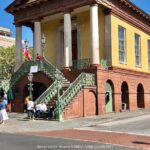










Historical Tours, compared.
 ★ 5.0Charleston’s Old South Carriage Historic Horse & Carriage TourFrom $5010,023 reviews
 ★ 5.0Historic Charleston Guided Sightseeing Walking TourFrom $306,216 reviews
 ★ 5.0Charleston Horse-Drawn Carriage Tour: Explore Historic CharlestonFrom $493,561 reviews
 ★ 4.5Charleston Harbor History Day-Time or Sunset Boat CruiseFrom $442,788 reviews
 ★ 5.0Hidden Alleyways and Historic Sites Small-Group Walking TourFrom $342,335 reviews
 ★ 4.5Daytime or Sunset Historic Harbor CruiseFrom $491,352 reviews
 ★ 5.0Charleston historical walking tour with a Professor of History at The CitadelFrom $401,284 reviews
 ★ 4.8Historical Downtown Tour by Horse-drawn CarriageFrom $501,009 reviews
Browse the lists this tour appears in