Reviewed · HISTORIC DISTRICT WALKING TOURS
Charleston History Tour-Small Groups Only-History & Alleys
Charleston’s alleyways hold surprising chapters of America. This small-group walking tour turns ordinary streets into storylines, with licensed guide Adam Moore keeping the focus on how events shaped the country, not just dates. I like that you walk Old Town streets that date back to the late 1600s, so the setting does real work for the lesson.
I also really value the storytelling style. Adam isn’t doing a slide-deck recap; he tells the kind of human, cause-and-effect stories that make you see how British, Patriot, enslaved, Confederate, Union, and political threads connect in Charleston. One more thing I like: the group stays small (limited to 10), which means you get time to ask questions and hear answers that go beyond a memorized script.
The main drawback to plan around is that this is a fast-moving walk. Some stops are only a few minutes, so if you want long, sit-down exploration at each place, you’ll need a self-guided follow-up after the tour ends. Short stops can still be perfect for getting oriented, though.
In This Review
- Key highlights you’ll care about before you book
- The best part: Adam Moore’s story-led approach (and why it matters)
- Two hours on foot: what the pace and format feel like
- The Old Town route: how the streets and alleys carry the story
- Circular Congregational Church: early Charleston and public life
- Powder Magazine and Philadelphia Alley: power, defense, and everyday movement
- Dock Street Theatre: where culture and public life meet
- Pink House Gallery: quick context before the harder stops
- Old Slave Mart Museum: learning that doesn’t stay abstract
- Old Exchange & Provost Dungeon: power, detention, and political control
- Rainbow Row, 44 Broad St, and Waterfront Park: seeing the city with new eyes
- Price and value check: getting real guidance for $27
- Who should book this tour (and who might want a different plan)
- Should you book Charleston History Tour–History & Alleys with Adam Moore?
- FAQ
- Where does the tour start?
- How long is the Charleston History Tour?
- How much does it cost?
- Is the tour in English?
- Is it a small group?
- Is the tour wheelchair accessible?
- What should I bring or wear?
- What stops are included?
- Will I have time to ask questions?
- What’s the cancellation policy?
Key highlights you’ll care about before you book
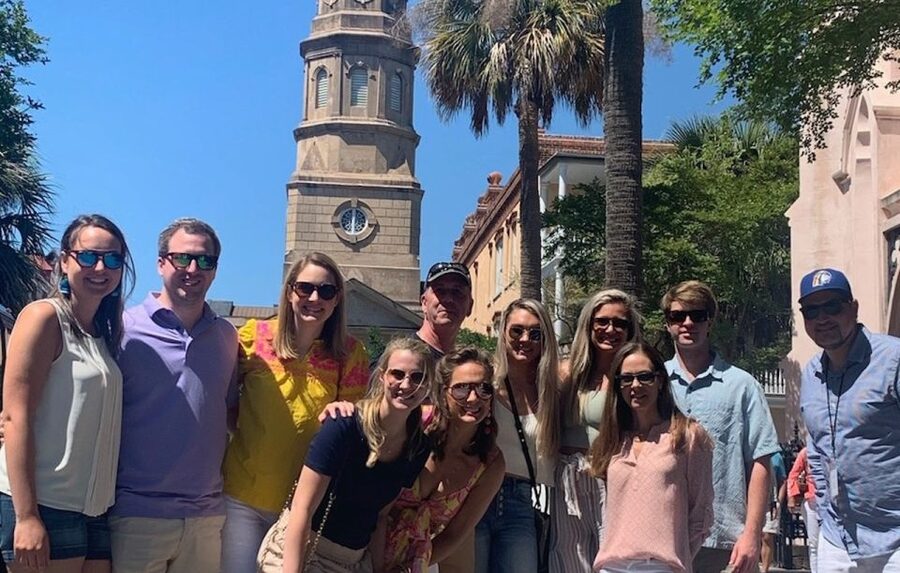
- A licensed guide who does the tour himself: You’re not getting a rotating substitute; Adam Moore leads the experience.
- Small-group size (10 max): Less crowding, more conversation, and fewer people competing for attention.
- Old Town streets going back to 1680: You’re walking the same kind of space where major forces of American history played out.
- A storyline that includes multiple sides: British rule, American Patriots, enslaved people, Confederate soldiers, Union soldiers, and politicians/Presidents like George Washington.
- A tight 2-hour loop: Real history stops plus quick context, without turning it into a whole-day commitment.
The best part: Adam Moore’s story-led approach (and why it matters)
A lot of walking tours do the same thing: stop, facts, photos, move on. This one works differently because it’s built around storytelling and pacing, not a checklist.
Adam Moore brings a background in business and history from the University of South Carolina. That shows in the way he explains why people acted the way they did—money, power, politics, and public life aren’t treated like separate topics. Instead, you’re guided through Charleston in a way that helps you connect the dots between local events and larger national turning points.
You’ll also notice the tone: the tour is engaging and question-friendly. Adam doesn’t just rattle off dates. He answers questions in a way that’s meant to help you understand the “why,” not just the “what.” If you like conversations during tours—when something sparks a follow-up—that’s a big reason people enjoy this format.
And because the group stays small (10 participants max), the experience doesn’t feel like you’re watching someone else’s tour from the back. You get enough room to hear details and ask for clarification without feeling rushed.
Trade one set of cobblestones for another with more Charleston walking tours.
- Historic Charleston Guided Sightseeing Walking Tour★ 5.0 · 6,216 reviews
- Charleston Horse-Drawn Carriage Tour: Explore Historic Charleston★ 5.0 · 3,561 reviews
- Ghosts of Charleston Night-Time Walking Tour with Unitarian Church Graveyard★ 4.5 · 2,835 reviews
Two hours on foot: what the pace and format feel like
This is a 2-hour history walking tour with a guided stop-by-stop rhythm. You’ll meet outside 151 Meeting Street and start with a short introductory setup (then you’re moving).
The tour is structured as a sequence of timed stops, ranging from about 5 minutes to around 20 minutes. That structure is useful. It keeps the tour efficient while still giving enough time for real context at each location. The trade-off is that you won’t linger long at every point—some moments are designed for a quick “now you’ll understand what you’re looking at” rather than deep, inside-the-building exploration.
Here’s how I suggest you think about the pace:
- Bring comfortable walking shoes. You’ll be on city streets and alleyways.
- Plan to stay alert. The stories are part of the experience, and they reference what you’re seeing in front of you.
- If it’s warm or buggy, you’ll want to be practical about it. The tour guidance includes water and bug spray, and that advice is spot-on for Charleston’s conditions.
One nice practical point: it’s listed as wheelchair accessible. If you’re using a wheelchair or mobility device, I’d still bring a little extra patience for cobblestones and tight spots, because Charleston streets can be uneven.
The Old Town route: how the streets and alleys carry the story

Charleston doesn’t teach history in a classroom. It teaches it by being itself. This tour leans into that by walking you through Old Town areas where you can feel the layering of centuries.
The overview theme is broad on purpose. You’ll hear about how Charleston intersected with major American forces: British presence and rule, Patriot resistance, the brutal system that enslaved people, Civil War divisions involving Confederate and Union soldiers, and political leadership tied to national figures such as George Washington.
That big storyline is useful because it prevents the common problem with history tours: learning facts that don’t connect. Instead, you’re building a mental map of how one moment influenced the next.
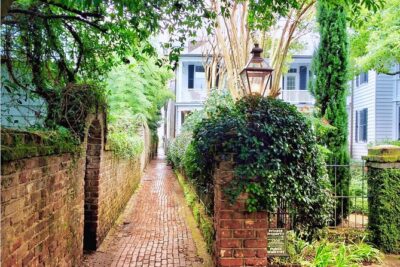
Also, the route includes alleyways. In Charleston, alleys aren’t just shortcuts; they often help explain how people lived, worked, and moved through the city. Walking them (instead of only seeing them from a main street) gives the story more physical meaning.
Circular Congregational Church: early Charleston and public life
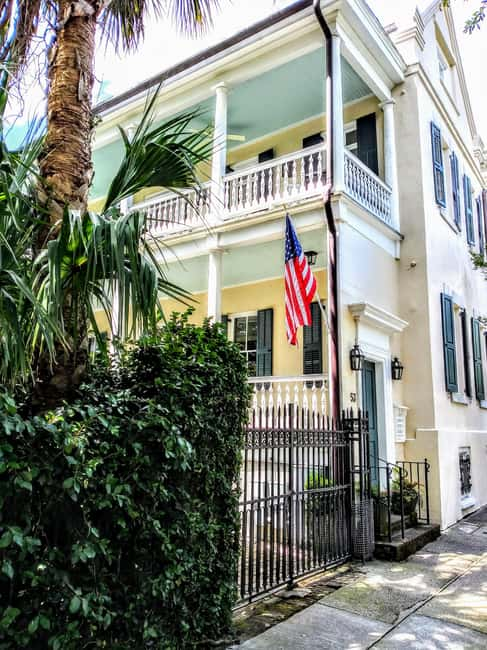
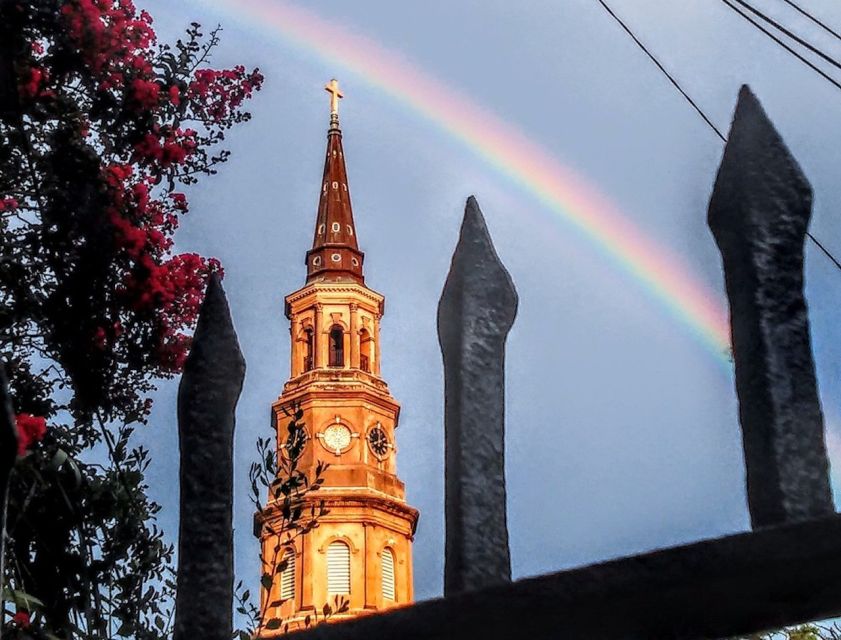
The tour begins at 151 Meeting Street, then heads to Circular Congregational Church for a short stop.
This is one of those moments where a church building becomes more than architecture. It’s part of the public structure of the city—where community identity formed, where local life organized itself, and where early Charleston’s social landscape showed up in real space.
Because the stop is about 10 minutes, you should treat it as orientation. You’re not here to become an expert on the building in one brief stop. You’re here to start understanding the “who” of early Charleston—people organizing communities, and communities shaping the city’s direction.
If you’re the type who likes to photograph exteriors, this is a good place to do it. Just don’t let the camera steal your attention; the story framework starts right here.
Powder Magazine and Philadelphia Alley: power, defense, and everyday movement
Next up is the Powder Magazine for about 15 minutes. The name alone tells you you’re stepping into a military-defense thread of Charleston’s past. On this kind of stop, the goal isn’t only to recognize a landmark. It’s to understand why military storage and security mattered, and how defense decisions connected to larger national events.
Then you’ll move into Philadelphia Alley for roughly 10 minutes. Alley time is where a walking tour earns its keep. Alleys can explain how the city worked at ground level: access, movement, and the difference between what the main streets present versus what daily life reveals in back spaces.
If you’re sensitive to tour “whiplash” (when a guide jumps randomly between topics), this section helps you because it alternates between the city’s organized power (defense) and the city’s lived reality (how people moved and interacted). You get both sides of the same ecosystem.
Dig deeper into the past with more Charleston history tours.


Dock Street Theatre: where culture and public life meet
Dock Street Theatre is a longer stop on this route, around 20 minutes. That extra time usually signals a story with more layers—especially the kind that connects the city’s identity to entertainment, gatherings, and public life.
Even if you don’t think of theatres as “history stops,” this is where a good guide reframes the idea. Cultural spaces often reflect what people valued, what leaders wanted to project, and how communities gathered. In Charleston, that matters because public presentation and political reality were often intertwined.
A practical tip: use this stop to slow down a bit. You’ll likely have walked enough by then that you’ll appreciate a longer pause. Take a breath, let the story land, and then you’ll be ready for the more emotionally heavy sites coming next.
Pink House Gallery: quick context before the harder stops
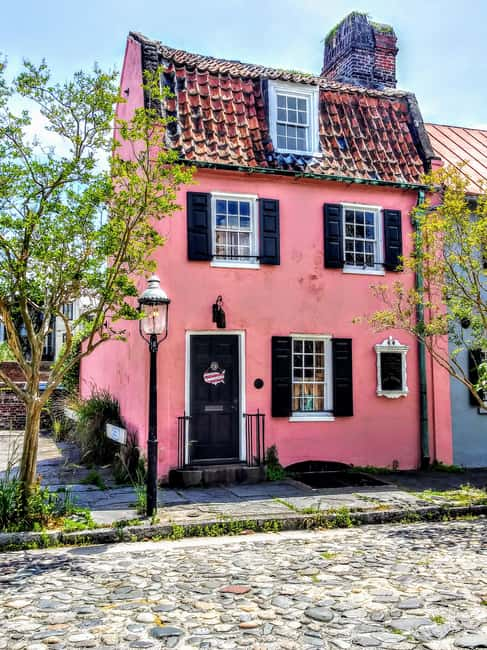
The Pink House Gallery is a short stop at about 5 minutes. With a stop this brief, it’s best to think of it as a “tone shift” checkpoint—one place that helps you keep your bearings in the route.
It also matters that it sits between major story beats. That kind of pacing is intentional: it keeps you from going nonstop through intense material. In a good history tour, the guide controls the emotional tempo, and short pauses help reset your attention.
If you want photos here, grab them quickly, but stay aware of where the group is heading next.
Old Slave Mart Museum: learning that doesn’t stay abstract
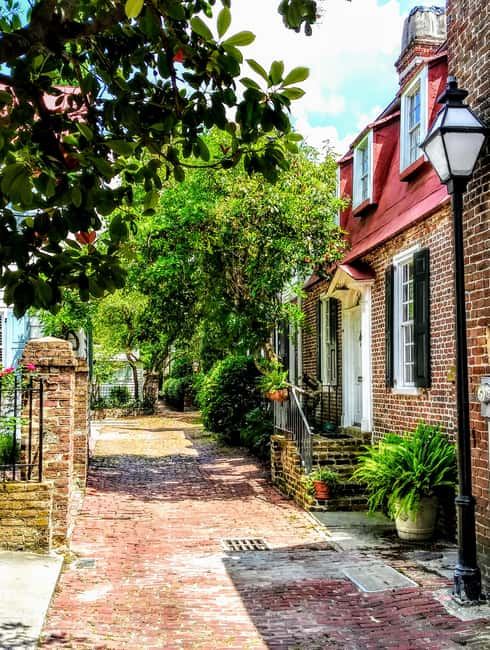
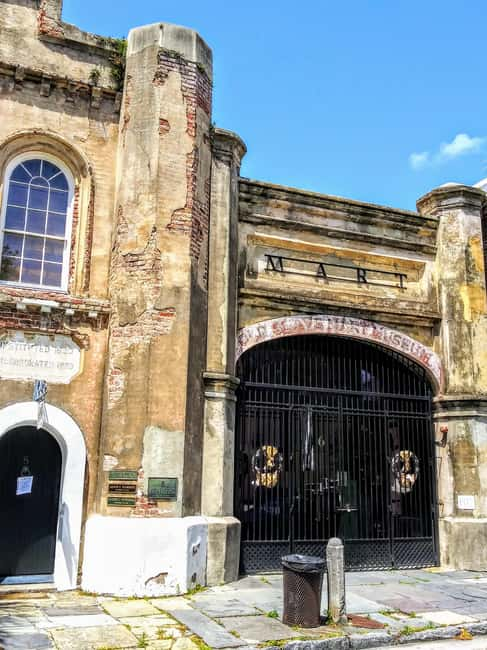
The Old Slave Mart Museum stop is about 10 minutes. This is one of the places where the tour’s theme becomes heavy, direct, and unavoidable—connected to enslaved people and the forced system that shaped American life.
This is also where storytelling style matters most. When a guide explains what happened in plain language and ties it to how people were treated, you’re not just collecting grim facts. You’re learning the human reality behind the city’s landmarks.
The best way to handle this stop is to listen closely, even if it makes you uncomfortable. This isn’t a tour designed to soften history into something neat. It’s designed to connect place with consequence.
I’d also give yourself a moment after the stop. Think about what you learned and how it changes how you interpret what you’ll see later on this route.
Old Exchange & Provost Dungeon: power, detention, and political control
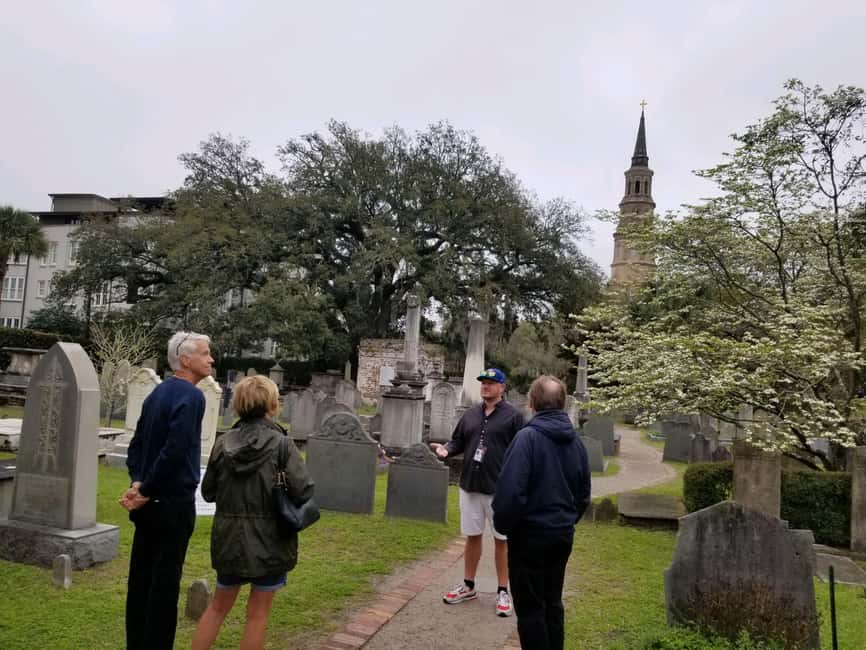
Old Exchange & Provost Dungeon gets about 10 minutes. The name alone points to institutions tied to authority and control. On a walking tour, places like this are powerful because they’re tangible. You’re standing near the city’s machinery of power, not reading about it in the abstract.
This is where the tour’s wider timeline becomes useful. You’ll hear connections that link everyday suffering and coercion with the political and military structures that allowed it to persist.
Because the stop is about 10 minutes, I recommend you keep your attention on the big picture the guide is building. Don’t try to mentally “solve” the entire site in one short visit. Let the story do its job—showing how systems worked and why they mattered in the national arc.
Rainbow Row, 44 Broad St, and Waterfront Park: seeing the city with new eyes
After the heavier stops, the route shifts into places that feel more familiar on postcards and photos, but the tour keeps their meaning grounded in context.
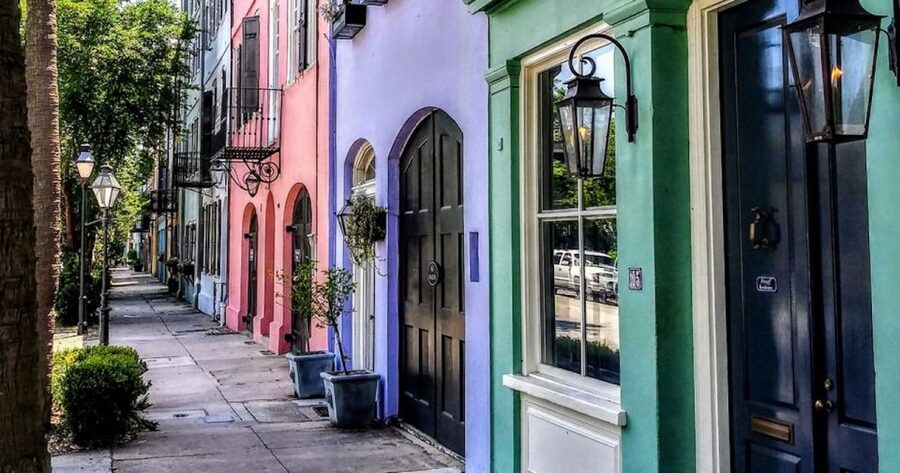
Rainbow Row gets about 10 minutes. This is a classic Charleston photo moment, and it can feel easy on the eye. The value of a story-led tour is that it prevents this stop from turning into only sightseeing. Instead of viewing it as scenery, you’ll look at it as part of the city’s broader record—how wealth, power, and history left visible marks.
Then there’s a short stop at 44 Broad St for about 5 minutes. Brief stops can work well here because they keep the route moving while still adding a final thread about the people and decision-making tied to the city’s status.
Finally, the tour ends with Waterfront Park for about 15 minutes guided. The waterfront setting is great for perspective. It helps you step back and think about the city’s role in trade, movement, and strategic importance. Even without adding extra stops, the longer final segment gives your brain time to organize what you’ve learned.
Price and value check: getting real guidance for $27
At $27 per person for 2 hours, this tour is priced like a practical way to learn. It’s not a premium, all-day excursion. It’s a focused walking experience that includes a licensed guide and structured stops that cover major chapters of Charleston’s past.
Here’s why the value holds up:
- You’re paying for guided storytelling, not just access to locations.
- The group stays small (10 max), which makes the experience more responsive and less crowded.
- You get a route that includes both well-known landmarks and places tied to harder parts of history.
- The pacing is efficient, so two hours doesn’t eat your whole day.
If you enjoy walking tours, this price feels like a sensible way to get orientation fast—especially if you’re trying to understand Charleston beyond the surface-level “pretty buildings” reputation.
Who should book this tour (and who might want a different plan)
This tour is a good match if you:
- want history with narrative, not only dates
- like asking questions and hearing direct answers
- prefer small groups and a calmer pace than big, bus-style tours
- want to connect Charleston’s local story to national themes, including political leadership
It may not be ideal if you:
- hate walking for extended city blocks
- want lots of time inside museums or buildings during the tour itself
- need long stops to process complex topics slowly
For most people, the sweet spot is exactly what the tour offers: a compact route that teaches you how to look at Charleston with better context.
Should you book Charleston History Tour–History & Alleys with Adam Moore?
If you want a Charleston history experience built around a real guide doing storytelling and keeping the group small, I’d book it. Adam Moore’s approach—engaging, personable, and designed to answer questions—fits travelers who like to understand the “why” behind what they see.
Do it if you’re excited by alleys, landmark exteriors, and the kind of history that doesn’t dodge the hard parts. Skip it only if you need lots of free time at each stop or you’re uncomfortable with a steady walking pace.
Pack water, wear your best walking shoes, and bring bug spray. Then show up a few minutes early at 151 Meeting Street, and you’ll get a lot out of two focused hours.
FAQ
Where does the tour start?
The tour starts outside 151 Meeting Street.
How long is the Charleston History Tour?
The tour lasts 2 hours.
How much does it cost?
The price is $27 per person.
Is the tour in English?
Yes, the live tour guide provides the tour in English.
Is it a small group?
Yes. The tour is limited to 10 participants.
Is the tour wheelchair accessible?
Yes, the tour is listed as wheelchair accessible.
What should I bring or wear?
Wear comfortable footwear for walking and bring water and bug spray.
What stops are included?
Key stops include Circular Congregational Church, Powder Magazine, Philadelphia Alley, Dock Street Theatre, Pink House Gallery, Old Slave Mart Museum, Old Exchange & Provost Dungeon, Rainbow Row, 44 Broad St, and Waterfront Park.
Will I have time to ask questions?
Because it’s a small group, the format is designed so you can ask questions and get answers as the tour goes.
What’s the cancellation policy?
Free cancellation is available up to 24 hours in advance for a full refund.
More Tours Across Charleston





More Charleston Tours Worth Booking
More Historic District Walking Tours in Charleston



Still deciding? Here are the newest Charleston tours and experiences we have reviewed









Historic District Walking Tours, compared.
 ★ 5.0Historic Charleston Guided Sightseeing Walking TourFrom $306,216 reviews
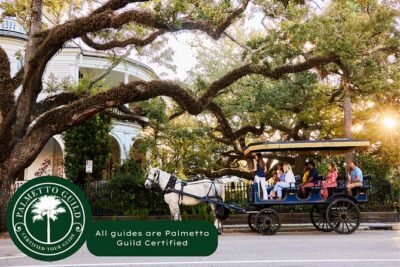 ★ 5.0Charleston Horse-Drawn Carriage Tour: Explore Historic CharlestonFrom $493,561 reviews
 ★ 4.5Ghosts of Charleston Night-Time Walking Tour with Unitarian Church GraveyardFrom $352,835 reviews
 ★ 5.0Hidden Alleyways and Historic Sites Small-Group Walking TourFrom $342,335 reviews
 ★ 5.0Highlights of Charleston Guided Walking Tour2,206 reviews
 ★ 5.0Charleston Haunted Booze and Boos Ghost Walking TourFrom $391,569 reviews
 ★ 5.0Charleston’s Pleasing Terrors Night-Time Walking Ghost TourFrom $291,345 reviews
 ★ 5.0Charleston historical walking tour with a Professor of History at The CitadelFrom $401,284 reviews
Browse the lists this tour appears in