Reviewed · HISTORICAL TOURS
Charleston History and Historic Gossip Tour
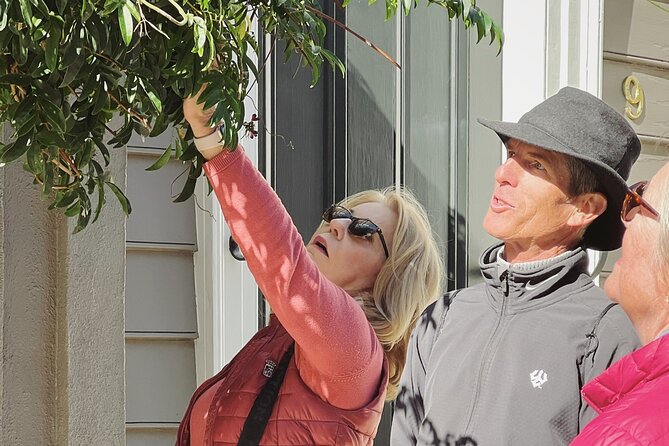
Charleston turns real fast when you walk it. This 2-hour tour threads history and historic gossip through iconic streets, so the buildings make sense, not just look pretty. You’ll move at a comfortable pace, with short stops designed for photos and stories.
I love the small group size (max 20), because you can actually ask questions instead of shouting. I also like how the guide ties architecture to real people and real hardship, not just dates on plaques.
One thing to plan for: it’s an outdoor walking route, and there’s no restroom on board, so you’ll want to use facilities before you start.
In This Review
- Key highlights at a glance
- Getting your bearings on Broad Street with a story-first approach
- Chalmers Street: cobblestones, the oldest house, and tough truths
- The Four Corners of Law at Meeting and Broad: where power met paperwork
- Tradd Street: the most picturesque street south of Broad
- The Battery: harbor views plus the city’s wealth cycles
- Rainbow Row: colorful row houses and a preservation lesson
- Washington Square: history, storytelling, and historic gossip
- Church Street in the French Quarter: churches, theaters, and graveyard stories
- The final stroll through Charleston’s historic streets
- Price and value: what $45 buys you in 2 hours
- Timing, pace, and how to get the most out of the walk
- Who should book this Charleston history and historic gossip tour?
- Should you book it? My take
- FAQ
- How long is the Charleston History and Historic Gossip Tour?
- What does the tour cost?
- Is the tour offered in English?
- Where do I meet, and where does it end?
- How big is the group?
- Do I need a printed ticket?
- Is there a restroom on board?
- Are service animals allowed?
- What happens if the weather is poor, or if I cancel?
Key highlights at a glance
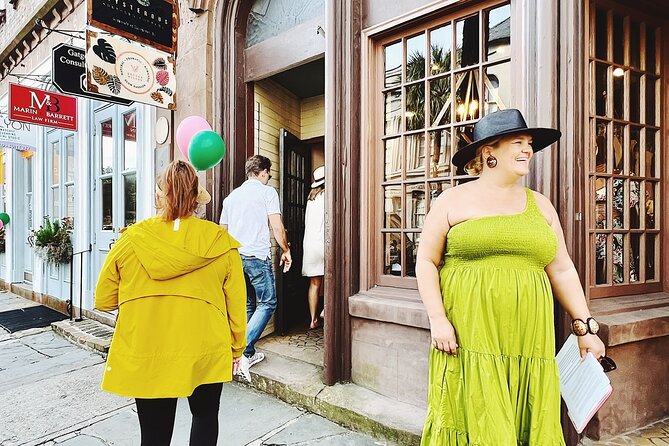
- Small-group feel (max 20) with time for questions
- Every stop keeps the admission ticket free, so you pay for the guide and the walk
- Architecture-first storytelling, from intersections to row houses
- Harbor views and wealth shifts at The Battery
- Ending on Rainbow Row and French Quarter streets for an easy last stretch
Getting your bearings on Broad Street with a story-first approach
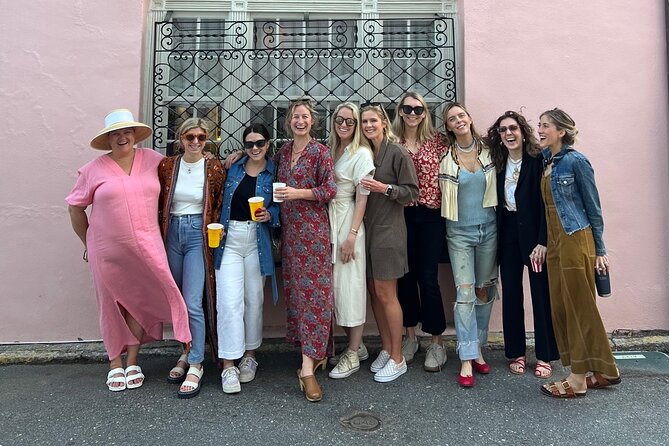
Meet at the Hat Man on Broad St. It’s a solid starting point because Broad Street is one of the city’s big storylines—where you can see how Charleston’s power, money, and politics played out block by block. From there, you’ll walk with a certified guide from Walk and Talk Charleston, and you’ll quickly learn that this tour is not just about scenery. It’s about learning how to read the city.
You’ll cover classic spots like Chalmers Street and Rainbow Row, but the emphasis is on meaning. Why do certain houses still stand? Why do particular streets feel so different from one another? How did prosperity rise and fall, and how does that show up in architecture? That’s what makes this style of tour useful early in your trip.
Also, at $45 for about two hours, you’re paying a pretty fair price for a guided walk that includes tourism taxes and keeps admission costs out of the equation at each stop. You’re not buying a bundle of expensive entries. You’re buying context, direction, and momentum.
Dig deeper into the past with more Charleston history tours.
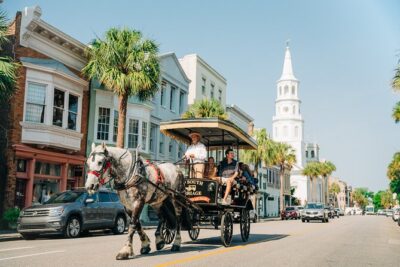
- Charleston’s Old South Carriage Historic Horse & Carriage Tour★ 5.0 · 10,023 reviews
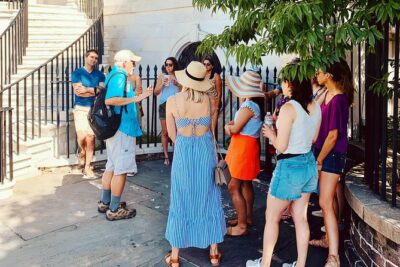
- Historic Charleston Guided Sightseeing Walking Tour★ 5.0 · 6,216 reviews
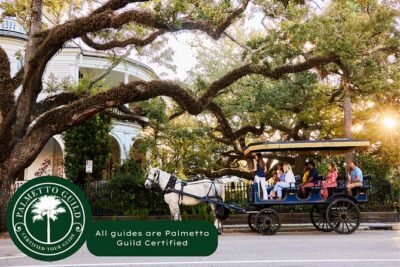
- Charleston Horse-Drawn Carriage Tour: Explore Historic Charleston★ 5.0 · 3,561 reviews
Chalmers Street: cobblestones, the oldest house, and tough truths
Your first stop is Chalmers Street. Expect a pretty cobblestone stretch where the architecture immediately signals age and importance. The highlight here is the oldest house in Charleston and a museum that talks about Charleston’s difficult history.
This is the moment where the tour’s tone becomes clear. You’re not just learning how things look—you’re learning what it cost to build the city as it grew. The museum element adds depth, so you’re not left wondering how the guide could connect one pretty street to the messier parts of the past.
Why it’s worth your time: it gives you a foundation. Once you’ve heard the hard context at the beginning, the rest of the walk feels more grounded.
Possible drawback: this stop includes museum time, so it may feel more serious than the street-photo moments that follow. If you want the lightest tour possible, you’ll feel that contrast early.
The Four Corners of Law at Meeting and Broad: where power met paperwork
Next you’ll stop at the Four Corners of Law, right at the intersection of Meeting and Broad Sts. This one is short, but it’s sharp. You’ll learn about the background behind buildings that matter historically and architecturally—basically, how the city’s layout and structures grew around authority, rules, and civic life.
Intersections are underrated teaching tools. Standing at the corner lets you see how Charleston’s city plan guided movement and influence. And because the guide focuses on buildings, you’ll start noticing details you’d miss on your own: how certain facades relate to the street, how the streetscape supports the city’s identity, and how architecture signals function.
Why you’ll like it: it trains your eye for structure, not just charm. After this, you’ll read other corners with more confidence.
Time reality: it’s around 10 minutes, so come ready to absorb, not to slow-roll every building.
Tradd Street: the most picturesque street south of Broad
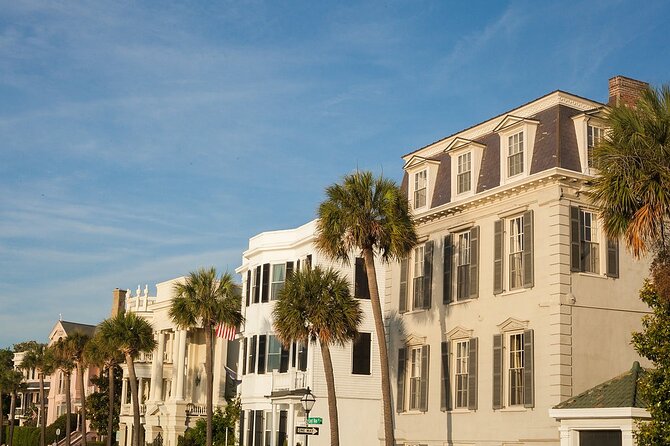
Then you’ll head to Tradd Street, described as the most picturesque street south of Broad. This is where the tour becomes a visual treat. You’ll walk along a street lined with homes built before 1800, and the guide uses that early construction period to explain Charleston’s architectural story—how styles, materials, and street patterns evolved over time.
The street feels like a living timeline. When houses are that old, you’re not just looking at preserved buildings—you’re looking at choices people made centuries ago that still shape what the street feels like today.
Why it’s a favorite stop: it’s one of the best chances for classic photos, but it’s also more than photos. The architecture built before 1800 becomes a reference point you can carry to later stops like Washington Square and Rainbow Row.
Possible consideration: this is also the kind of place where crowds can gather, especially if you come at peak times. If you like quiet photos, show up a little focused and keep your camera ready during the cleanest sightlines.
The Battery: harbor views plus the city’s wealth cycles
At The Battery, you’ll get views of Charleston harbor along with standout architecture. The guide connects this waterfront area to the city’s changing fortunes—how wealth ebbed and flowed and how those shifts left marks you can still see.
This stop works in two ways. First, the views are genuinely worth the walk: harbor air, open sightlines, and that classic Charleston waterfront feeling. Second, the stories make the architecture feel like a record of prosperity. You start to understand which parts of the city gained power, which parts were affected by decline, and why certain areas look the way they do.
Why it matters for value: you’re getting both. Many walking tours deliver either views or explanations. Here you get both, without spending extra money or time elsewhere.
What to watch: you’ll be outside for long stretches of the route, and harbor-area weather can swing quickly. Bring a light layer if conditions feel chilly, and plan around sun exposure when it’s bright.


Rainbow Row: colorful row houses and a preservation lesson
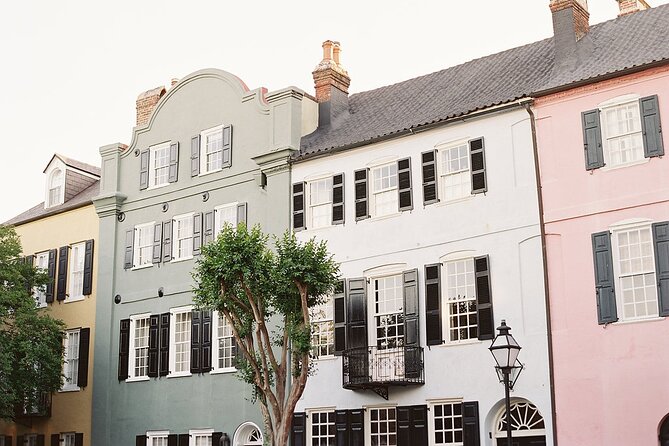
Rainbow Row is the end-point kind of stop—photos first, but the guide still adds meaning. You’ll end your tour portion here with some final insight into Charleston’s preservation legacy.
Rainbow Row’s fame is real, but what I like about this moment on the walk is that it frames why the row houses look the way they do today. Preservation isn’t just nostalgia. It’s a decision about what to save, what to restore, and what you’re willing to protect for the next generation.
Why it’s satisfying: you get a visual reward that feels earned. By the time you reach Rainbow Row, you’ve heard enough architectural context to notice details you might otherwise overlook.
One practical note: because this area is photo-friendly, it can attract attention. Keep your group together and be ready to reposition quickly while the guide tells the story.
Washington Square: history, storytelling, and historic gossip
After Rainbow Row, you move to Washington Square. This stop blends history and storytelling with historic gossip about historical figures and local architecture surrounding the park.
This is where the tour’s title earns its second half. The guide doesn’t just hand you facts. You’ll get character, motive, and local color—how people lived, what mattered to them, and how the city’s built environment connects back to those personalities.
Washington Square also helps you slow down. It’s not just a quick photo stop; it’s a storytelling pause that turns the space into something you can picture, not just walk past.
Why it works: gossip is a learning tool. When someone in the past is framed through a story, you remember details longer. And architecture becomes easier to interpret when you know what role it played in everyday life.
Church Street in the French Quarter: churches, theaters, and graveyard stories
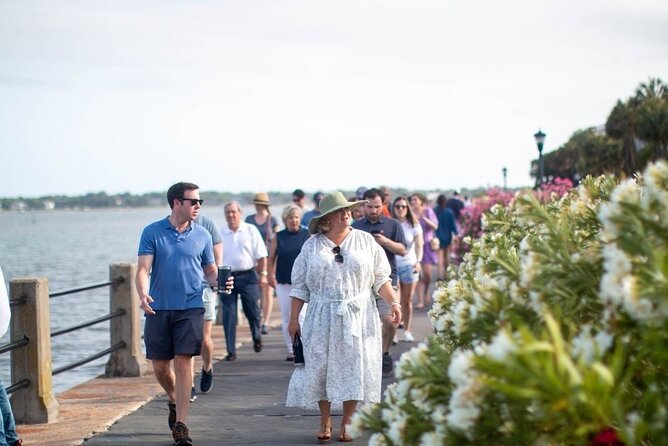
Next you’ll stroll through Charleston’s French Quarter on Church Street. This stop is about architecture and social history tied to churches, theaters, graveyards, and more.
Church Street gives you a “layers of community” feeling. The guide’s focus helps you connect the religious and civic structures in the area to the social life around them. And because graveyards are part of the story of any old city, the guide’s approach makes the space more than somber. It becomes informative: a way to understand who mattered to Charleston, how communities formed, and how the built environment reflected those choices.
Why you’ll appreciate this stop: it’s one of the best parts of Charleston for understanding how the city worked socially. You’ll leave thinking beyond facades and toward the rhythms of daily life.
Small caution: you’ll likely be walking through areas where you’ll want to check signage and street names while listening. If you’re the type who likes reading every plaque, you might feel slightly rushed. The trick is to focus on what the guide points out rather than trying to do it all at once.
The final stroll through Charleston’s historic streets
Your last segment includes a walk through Charleston’s historic streets with your certified guide. This is a useful wrap-up because it lets the earlier information click together.
By now you’ve touched: an oldest-house museum start, an intersection tied to authority, pre-1800 architecture on Tradd, waterfront wealth shifts at The Battery, preservation at Rainbow Row, figure-focused storytelling at Washington Square, and community structures on Church Street. The final stroll acts like glue. You’ll likely start noticing patterns—street geometry, building types, and how different parts of the city signal status and purpose.
Why this ending helps: it’s not a hard cutoff right when you’re still interested. Instead it gives you a final momentum boost so you can keep exploring after the tour without feeling lost.
Price and value: what $45 buys you in 2 hours
At $45 per person for about two hours, this tour is priced like a guide-led walking experience should be: you’re paying for interpretation, not for expensive add-ons. Tourism taxes are included, and the stops list admission tickets as free, which matters.
That combination is a big part of why the tour feels like good value. You’re not trying to squeeze in multiple ticketed attractions during your trip. You’re getting the guide’s framing and a route that hits the city’s most recognizable “how to read Charleston” points.
It also helps that the group is capped at 20. A smaller group tends to keep the conversation natural. If you’re someone who likes asking follow-up questions, you’ll feel that difference.
One more detail that’s easy to miss: on average, this tour is booked about 23 days in advance. That suggests it fills up for practical reasons—good route, good timing, and enough popularity that advance planning saves you from last-minute searching.
Timing, pace, and how to get the most out of the walk
The route is built in short, timed segments—roughly 10 to 20 minutes at each stop—with a total of about 2 hours. That pacing is friendly for most people, especially if you’re traveling to Charleston for the first time and want orientation without committing to a full day.
A couple practical tips to help you enjoy it:
- Wear shoes you can walk in for stretches on uneven ground.
- Bring water, even if the tour doesn’t mention it; Charleston walking can surprise you with how quickly you get thirsty.
- If it’s sunny, protect your face and shoulders. Some stops are more open than others.
Also, it’s offered in English and uses a mobile ticket. So you can keep logistics simple and spend more energy on the walk itself. The meeting point is convenient for public transportation, which helps if you don’t want to fight for parking.
Who should book this Charleston history and historic gossip tour?
This tour is a great fit if you want:
- A first-trip orientation to Charleston that connects streets to stories
- An architecture-focused walk, with context that helps you “see” more than before
- A small-group experience where questions feel normal
- A mix of serious history and lighter historic gossip, balanced by guide-led explanation
It also works well if you’re traveling with a mix of interests. One person might love the harbor views, another might care more about architecture, and the guide’s job is to connect those dots without making anyone feel left out.
If you prefer tours that are purely relaxed sightseeing with minimal talking, this might feel slightly more structured. But if you like learning while you walk, you’ll probably find it satisfying.
Should you book it? My take
I think this is a smart booking for most people visiting Charleston for the first time. The price is reasonable for a guide-led route, the stops keep admission costs out of the mix, and the walk is paced so you don’t feel stuck at any one spot too long.
The biggest reason to book is the way the tour teaches you to read the city. After it, you’re not just looking at pretty streets. You’re understanding why they exist, what they were built for, and how wealth, authority, preservation, and community life shaped what you see today.
If you’re deciding between a generic photo tour and one that explains what’s behind the facades, this one leans toward the explanation without killing the fun. I’d book it early in your trip so the rest of Charleston makes more sense as you explore on your own.
FAQ
How long is the Charleston History and Historic Gossip Tour?
It runs for about 2 hours.
What does the tour cost?
The price is $45.00 per person.
Is the tour offered in English?
Yes, it’s offered in English.
Where do I meet, and where does it end?
You start at The Hat Man, 43 Broad St, Charleston, SC 29401. The activity ends in a different location, with end details provided at booking.
How big is the group?
The tour has a maximum of 20 participants.
Do I need a printed ticket?
No. It uses a mobile ticket.
Is there a restroom on board?
No restroom is included on board.
Are service animals allowed?
Yes, service animals are allowed.
What happens if the weather is poor, or if I cancel?
The tour requires good weather. If it’s canceled due to poor weather, you’ll be offered a different date or a full refund. You can cancel for a full refund up to 24 hours in advance; within 24 hours, the amount paid is not refunded.
More History Tours in Charleston





More Tours Across Charleston



More Charleston Tours Worth Booking
Still deciding? Here are the newest Charleston tours and experiences we have reviewed









Historical Tours, compared.
 ★ 5.0Charleston’s Old South Carriage Historic Horse & Carriage TourFrom $5010,023 reviews
 ★ 5.0Historic Charleston Guided Sightseeing Walking TourFrom $306,216 reviews
 ★ 5.0Charleston Horse-Drawn Carriage Tour: Explore Historic CharlestonFrom $493,561 reviews
 ★ 4.5Charleston Harbor History Day-Time or Sunset Boat CruiseFrom $442,788 reviews
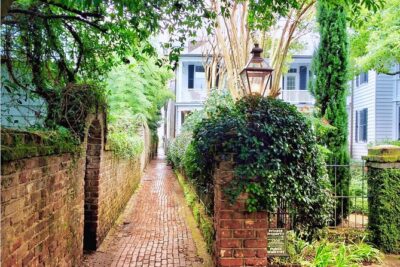 ★ 5.0Hidden Alleyways and Historic Sites Small-Group Walking TourFrom $342,335 reviews
 ★ 4.5Daytime or Sunset Historic Harbor CruiseFrom $491,352 reviews
 ★ 5.0Charleston historical walking tour with a Professor of History at The CitadelFrom $401,284 reviews
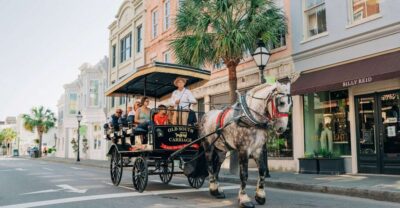 ★ 4.8Historical Downtown Tour by Horse-drawn CarriageFrom $501,009 reviews
Browse the lists this tour appears in