
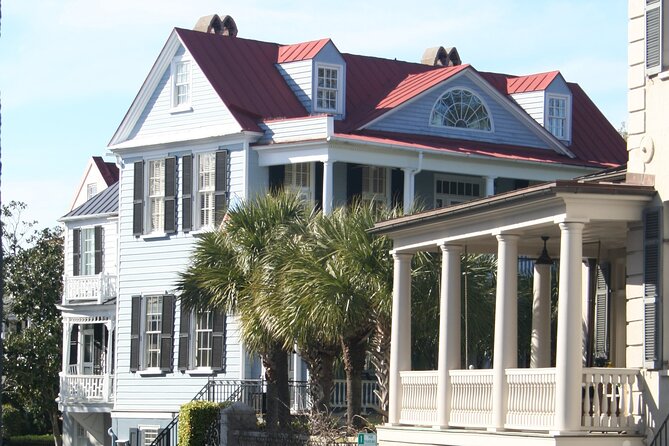
Reviewed · HISTORIC DISTRICT WALKING TOURS
Charleston Footprints Walking Tour
Charleston’s past walks right beside you. This tour earns its keep with Revolutionary-era landmarks like the Old Exchange and Provost, plus picture-friendly stops such as Rainbow Row. I also like how the guides bring 90 years of combined experience, turning churches, theaters, and even gunpowder buildings into stories you can actually picture. The only real watch-out is the pace: it’s a steady downtown walk, so you’ll want comfortable shoes and a flexible mindset on hot, windy, or rainy days.
If you like tours that feel organized instead of chaotic, this one fits the bill. You get a mobile ticket, it’s offered in English, and the group stays small (maximum 20), which makes it easier to ask questions and keep moving at a human pace. It’s also wheelchair and stroller accessible, and service animals are welcome.
One more thing that matters in Charleston: every block has a different mood. This route weaves through historic structures and waterfront viewpoints, and the company notes that no two tours are exactly the same, depending on the day and the guide’s approach.
In This Review
- Key things to know before you go
- Why This Charleston Walking Route Fits Into 2 Hours
- Meet at 108 Meeting St: The Flow and What You’ll Notice
- Old Exchange and Provost to Rainbow Row: Revolutionary Charleston in Sight
- St. Michael’s, St. Philip’s, and Circular Congregational: Churches as Memory Machines
- Dock Street Theater, Pink House Gallery, and the Gibbes: Art, Entertainment, and Street-Level Culture
- Powder Magazine (Again) and the Nathaniel Russell House: Practical History, Not Just Drama
- Battery and White Point Gardens: Fort Stories and Waterfront Palaces
- Price and Value: What $28.50 Really Buys
- Who Should Book This Tour
- Should You Book Charleston Footprints Walking Tour?
- FAQ
- How long is the Charleston Footprints Walking Tour?
- How much does the tour cost?
- Where do I meet, and where does it end?
- Is the tour wheelchair and stroller accessible?
- Is it offered in English?
- How big are the groups?
- Are service animals allowed?
- Is lunch included?
- What happens if the weather is bad?
Key things to know before you go
- Small group size (up to 20) helps the tour feel personal rather than crowded
- Guides with 90 years combined experience bring the stories to the street level
- Mobile ticket in English keeps planning simple
- Wheelchair and stroller accessible makes it easier for mixed groups
- Stop-by-stop Revolutionary details connect sites across different eras
- A route that changes so you’re not stuck on a rigid script
Why This Charleston Walking Route Fits Into 2 Hours
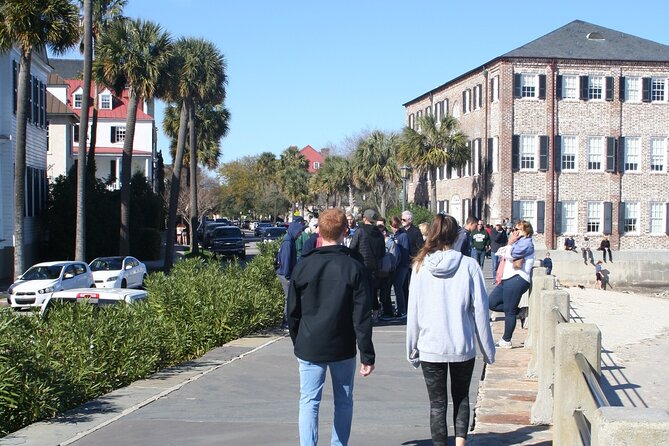
Charleston works best when you can slow down and connect names to places. This tour is built for that. In about 2 to 2 hours 15 minutes, you move through the compact downtown core and hit major landmarks tied to independence, early settlement, and the waterfront economy.
At this pace, you’re not signing up for a marathon. You’re getting a guided line through the city’s big themes: ports and power, worship and memory, entertainment and civic life, and the practical realities of living close to the harbor. You also get frequent stops at points that are easy to photograph and easy to recognize later when you’re back in town exploring on your own.
One practical bonus: many of the sights along the route are listed with free admission in the tour plan. That matters because a lot of “cheap” tours suddenly add costs when you reach the next museum door. Here, the math stays steadier, and your $28.50 per person goes mostly to the guide and the time.
Trade one set of cobblestones for another with more Charleston walking tours.
- Historic Charleston Guided Sightseeing Walking Tour★ 5.0 · 6,216 reviews
- Charleston Horse-Drawn Carriage Tour: Explore Historic Charleston★ 5.0 · 3,561 reviews
- Ghosts of Charleston Night-Time Walking Tour with Unitarian Church Graveyard★ 4.5 · 2,835 reviews
Meet at 108 Meeting St: The Flow and What You’ll Notice
You start at 108 Meeting St in Charleston. From there, the tour keeps you moving along streets where the city’s layers are visible without needing a car or a long transit shuffle. The tour also ends in a different location, so don’t plan on finishing exactly back where you began. After booking, you’ll see the specific end point.
The experience is run as a walking route with short photo and story stops—about 5 to 15 minutes at each location, depending on the site. That structure is one of the reasons this tour works well for a mixed group: you get enough time to understand what you’re looking at, but the pace stays on track.
You’ll also notice that the guides don’t just read facts. The way the tour is set up encourages questions, and the best guide moments happen when you ask the sort of “how did that work?” questions that come up naturally in Charleston. If you’ve ever taken a history walk where you’re too shy to interrupt, this one feels designed to handle curiosity.
Old Exchange and Provost to Rainbow Row: Revolutionary Charleston in Sight
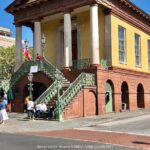
The tour kicks off at 122 E Bay St, the Old Exchange and Provost. This building was made to collect tariffs and fees at the port, which instantly grounds the story in real economics—not just speeches. From there, the site becomes a dramatic hinge point: it’s tied to South Carolina’s declaration of independence in 1776, it was used as a British prison from 1780 to 1782, and it’s connected to the ratification of the Constitution. The story doesn’t stop in the 1700s either—George Washington was entertained there in 1791.
What I like about starting here is that it sets the pattern for the rest of your walk. You see that Charleston’s history isn’t a single era. It’s a chain: trade leads to power, power leads to conflict, and conflict leaves physical marks that still shape the street plan.
Then you move to Rainbow Row, a line of 18th-century buildings in Georgian and Jacobean styles. The tour frames these houses as a first-wave example of Charleston’s early preservation thinking. In the 1930s, the dilapidated structures were restored as residences, helping turn what could have been lost into what you can still enjoy today.
The photos here are obvious. The deeper value is learning why the row mattered then: it looked out toward wharves on the harbor, so it’s not just pretty architecture. It’s part of the working waterfront story.
St. Michael’s, St. Philip’s, and Circular Congregational: Churches as Memory Machines
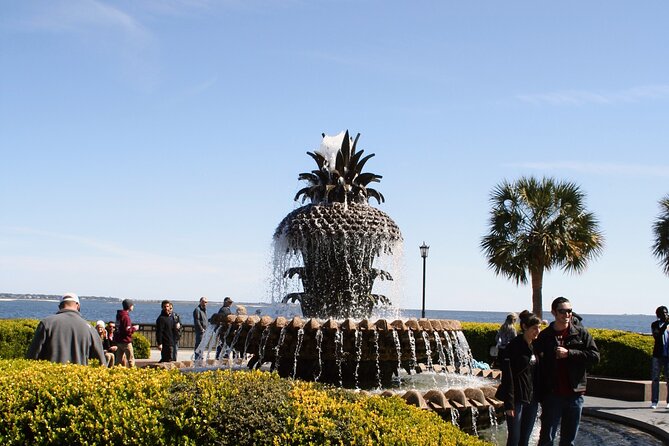
Charleston’s churchyards do something rare: they connect big national names to the everyday geography of a small city. On this tour, St. Michael’s Church (from 1761) is substantially intact to its 18th-century design. The tour notes that some windows include stained glass by Louis Tiffany and Company, and it connects the graveyard to two signers of the Constitution.
One of the most memorable details here is about the bells. The tour shares that the bells have crossed the Atlantic Ocean five times. Whether you love details or just want a strong story hook, that kind of fact helps your brain store the place.
Next comes St. Philip’s Church, founded in 1680. This site ties into both the Declaration and the Constitution through the tour’s mention of national figures laid to rest in the graveyard. The tour also includes the long continuity point: St. Philip’s has worshiped at the same sight since 1723.
Then you visit Circular Congregational Church, a congregation that has worshiped at the same site since 1681. Here, the focus shifts to the older material evidence of lived community—like the tour’s mention of fine slate tombstones from the 18th century.
A balanced note: church exteriors and graveyards are best enjoyed when you’re comfortable with quiet, uneven ground, and the fact that these are living sites, not just set pieces. If you’re someone who needs constant action, this portion may feel slower. If you like atmosphere and context, it’s one of the strongest parts of the walk.
Dock Street Theater, Pink House Gallery, and the Gibbes: Art, Entertainment, and Street-Level Culture
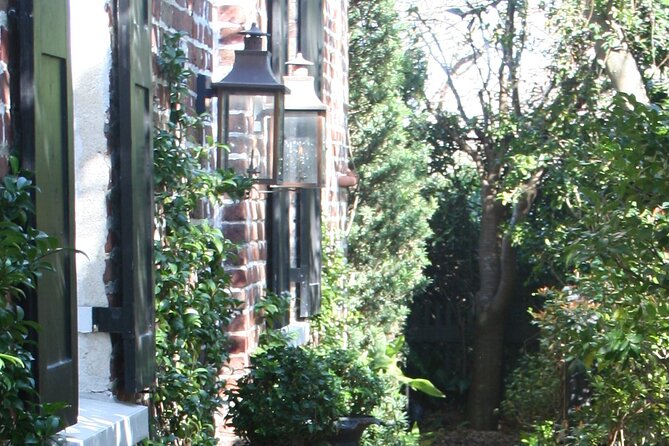
Charleston isn’t only about independence and churches. It also knows how to entertain itself, and this tour shows that side too.
At Dock Street Theater, the tour explains that in 1937 the Work Projects Administration created a playhouse in the style of the 18th century. It also points out something important: research indicates the first dedicated theater space in British North America (also called Dock Street Theater) was built on the same ground back in 1736. This gives you a sense that the city keeps rewriting its stage while reusing the same location.
Then you head to the Pink House Gallery, described as Charleston’s oldest surviving entertainment venue. It started as a tavern, with some sources dating it as early as 1686. The tour also gives the naming story: it’s not called pink because it was painted pink, but because of the boldly pink coral rock it’s built from. That’s the kind of detail that makes you look up at the structure instead of only reading the street.
The route also includes a stop at The Gibbes, tied to Southern art since 1858. The tour points out an exceptional collection of miniature and full-length portraits from the 18th and 19th centuries. If you’re the type who enjoys stepping into a museum for a quick look, this stop gives you art without turning the walk into a whole afternoon detour.


Powder Magazine (Again) and the Nathaniel Russell House: Practical History, Not Just Drama
This is where the tour gets surprisingly technical—in a fun way. The route includes a Powder Magazine built in 1713, described as the oldest public-use structure between St Augustine and Williamsburg. It’s a small stop in time, but it carries big meaning: it reminds you that gunpowder storage wasn’t a metaphor. It was literal infrastructure.
Later, the tour returns to a Powder Magazine building with deeper structure details. Here you learn it was built specifically for gunpowder storage, with 35-inch-thick brick walls. The tour also shares the design idea behind the vaulted ceilings: they’re described as only two bricks thick at the top, intended to blow up rather than out if there’s exposure. That’s a rare chance to see how architecture can be safety engineering, not just style.
Between the powder and the house, you visit Nathaniel Russell House. The tour includes the garden design by landscape architect Loutrell Briggs, and it describes the house as one of the finest examples of Adams/Federal style available to tour in the country. Even if you’re not a design-nerd, the value here is learning how wealth and taste showed up in the way people shaped outdoor space and lived behind ornate facades.
If you prefer tours that stay mostly outdoors, note that house and museum-style content can slow the pacing slightly. On the other hand, these are the stops that help you understand Charleston as a place where politics, economics, and art were all connected.
Battery and White Point Gardens: Fort Stories and Waterfront Palaces

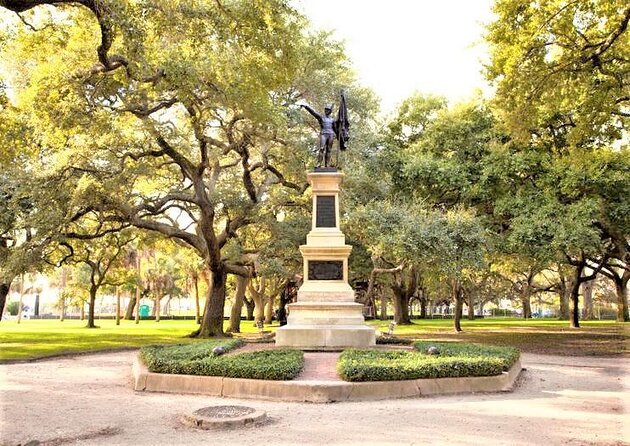
You finish with the waterfront mood at Battery & White Point Gardens. This stop is built for connection: it ties Charleston’s geography to its military history and its social life.
The tour discusses the Battle of Fort Sumter (1861) and the Battle of Fort Sullivan (1776). Those aren’t abstract facts when you’re standing near the historic waterfront. You can feel why these battles mattered: the harbor and its access points shaped who could control movement, trade, and defense.
You also get a look at the grand waterfront homes described as party palaces built for winter season use before the Civil War. The tour uses this to explain how Charleston’s economy and social scene rose alongside its port power.
This is a great final stretch because it connects the earlier “who ruled and who fought” storyline to “how people lived and celebrated.” If you’re hoping to leave with lasting mental images, this section does that job.
Price and Value: What $28.50 Really Buys
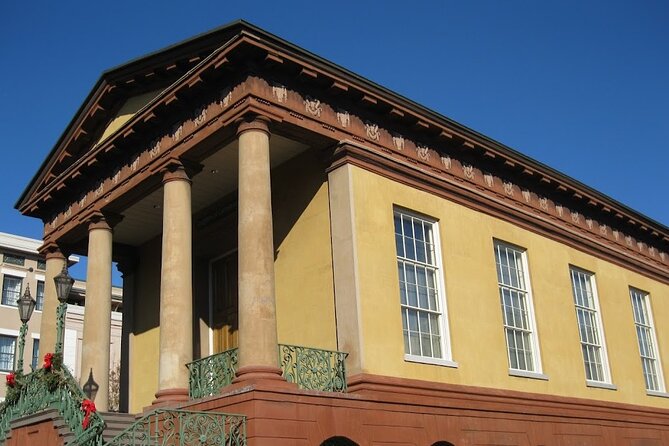
At $28.50 per person, this is a value-forward choice for Charleston. The big reason is that you’re paying for a guided walk that clocks in around two hours, hits multiple major sites, and includes all fees and taxes.
Even better, many of the tour stops are listed with free admission. That doesn’t mean you should treat the walk like a bargain hunt—guides still do the work of connecting dates to place. But it does keep the total experience from swelling later.
Finally, consider the group size. A maximum of 20 travelers isn’t just a comfort perk. It helps the tour stay interactive. When you can ask questions without waiting through a line, you learn more than a quick scan of plaques ever gives you.
Who Should Book This Tour
This is a smart fit if you want:
- A fast way to get oriented in historic Charleston
- A guided route that covers independence-era sites, churches, and waterfront context
- A small-group experience where you can ask questions
- A walking plan that’s wheelchair and stroller accessible
If you’re traveling with very young kids, plan on taking breaks at stops because short stops are still time on foot. If you’re someone who hates walking in the sun, bring water and be ready to shift your pace when needed.
Should You Book Charleston Footprints Walking Tour?
Yes, if your goal is to understand Charleston quickly and correctly, this tour does the job. It’s built around the places that make the city make sense: the Old Exchange and Provost for Revolution-era power, Rainbow Row for preservation and harbor life, churchyards for memory, and the waterfront for Fort stories and social history.
Book it especially if you like history that connects buildings to real-world purpose. And if you’re juggling a short visit, this is one of the easiest ways to pack in meaningful context without turning the day into a checklist.
If your itinerary is unusually tight or weather is iffy, keep an eye on conditions. The tour requires good weather, and if it doesn’t happen due to poor conditions, you’ll be offered a different date or a full refund.
FAQ
How long is the Charleston Footprints Walking Tour?
The tour runs about 2 hours to 2 hours 15 minutes.
How much does the tour cost?
It’s $28.50 per person.
Where do I meet, and where does it end?
You meet at 108 Meeting St, Charleston, SC 29401. The tour ends in a different location, and the exact end point is provided in the activity details after booking.
Is the tour wheelchair and stroller accessible?
Yes. The tour is described as wheelchair and stroller accessible.
Is it offered in English?
Yes, the tour is offered in English.
How big are the groups?
The tour has a maximum of 20 travelers.
Are service animals allowed?
Yes. Service animals are allowed.
Is lunch included?
No. Lunch is not included.
What happens if the weather is bad?
The experience requires good weather. If it’s canceled due to poor weather, you’ll be offered a different date or a full refund.
More Tours Across Charleston






More Charleston Tours Worth Booking
More Historic District Walking Tours in Charleston



Still deciding? Here are the newest Charleston tours and experiences we have reviewed









Historic District Walking Tours, compared.
 ★ 5.0Historic Charleston Guided Sightseeing Walking TourFrom $306,216 reviews
 ★ 5.0Charleston Horse-Drawn Carriage Tour: Explore Historic CharlestonFrom $493,561 reviews
 ★ 4.5Ghosts of Charleston Night-Time Walking Tour with Unitarian Church GraveyardFrom $352,835 reviews
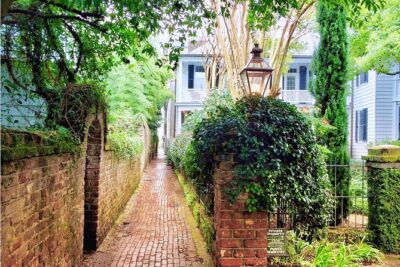 ★ 5.0Hidden Alleyways and Historic Sites Small-Group Walking TourFrom $342,335 reviews
 ★ 5.0Highlights of Charleston Guided Walking Tour2,206 reviews
 ★ 5.0Charleston Haunted Booze and Boos Ghost Walking TourFrom $391,569 reviews
 ★ 5.0Charleston’s Pleasing Terrors Night-Time Walking Ghost TourFrom $291,345 reviews
 ★ 5.0Charleston historical walking tour with a Professor of History at The CitadelFrom $401,284 reviews
Browse the lists this tour appears in