
Reviewed · LOWCOUNTRY FOOD TOURS
Charleston Brunch Food Tour: Biscuits, Shrimps, Grits and More
Biscuits first, then Charleston’s streets. This 3-hour food walk pairs warm, flaky biscuits with shrimp & grits, plus a string of quick stops at landmark buildings. You get to sample a mix of sweet and savory Southern favorites while learning why this part of town looks the way it does.
I like that the tour keeps things moving without trying to turn your morning into a classroom. One thing to consider: it’s a fair amount of walking, and some tastings can take a little time if the group needs to wait its turn.
In This Review
- Key highlights to know before you go
- A 3-hour brunch walk through Charleston’s most food-friendly streets
- What you’ll eat: biscuits, shrimp & grits, pimento cheese, and dessert
- Stop 1: Upper King Design District and the street that anchors it all
- Stop 2 (and later): Aiken-Rhett House for the antebellum story behind the meals
- Stop 3: American Theater and the Art Deco film-era glow
- Stop 4: Charleston Music Hall (Tower Depot) and the railroad past
- Stop 5: Charleston Visitor Center in the Deans Warehouse area
- Wraggborough streets and the Hotel Bennett time-jump
- Stop 7: Marion Square Farmers Market energy (especially Saturdays)
- Stop 8: Charleston Fire Department Station 2/3 and the 1886 earthquake link
- Finishing at Babas on Cannon: how this tour helps you eat the rest of your trip
- Price and logistics: is $108 worth it for you?
- Walking + guides: what makes it feel smooth or not-so-smooth
- Who should book this Charleston brunch food tour
- Should you book? My honest take
- FAQ
- How much does the Charleston brunch tour cost?
- How long is the tour?
- How many people are in a group?
- Where does the tour start and end?
- What’s included in the food and drinks?
- Do I need to bring anything or wear anything specific?
- Can the tour handle dietary requirements?
- Is the tour in English, and what if weather is bad or I need to cancel?
Key highlights to know before you go
- Small group (max 12) so you’re not shouting over a crowd while you chase your next bite
- Multiple stops with free-to-visit landmarks that help connect the flavors to the city
- Big breakfast-style variety: biscuits, banana bread, sweet tea, grits, pimento cheese, and dessert
- A finish at Babas on Cannon so you end in a proper Charleston dining spot
- Guides like Perry, Sydney, Nathan, and Jesse get praised for friendly storytelling and good pacing
A 3-hour brunch walk through Charleston’s most food-friendly streets
Charleston does brunch like a performance. You walk through handsome historic blocks, then you eat like someone planned your calories with care (they did). This tour is built for a morning rhythm: snack at one stop, stroll to the next, repeat until you’re satisfied and still thinking about what you’ll order later.
The tour runs about 3 hours and keeps the group to 12 people or fewer, which matters. In a small group, you spend less time hovering and more time tasting. You’ll also get a mobile ticket, and the meeting point is easy to find in downtown.
If you want to use your first day in town wisely, this is a strong option. You leave with a mental map of where you want to return and what you actually like.
Still hungry? Line up more Charleston food tours and Lowcountry tastings.
- Charleston French Quarter or Brunch Food Tour with 7+ Tastings★ 5.0 · 1,853 reviews
- Undiscovered Charleston: Half Day Food, Wine & History Tour with Cooking Class★ 5.0 · 948 reviews
- Savor the Flavors of Charleston Walking Food Tour★ 4.5 · 881 reviews
What you’ll eat: biscuits, shrimp & grits, pimento cheese, and dessert
The food is the star here, and it’s not just one dish on repeat. Your included tastings cover a classic Charleston mix of comfort food, coastal flavors, and sweet bites.
Here’s what you can expect to be included:
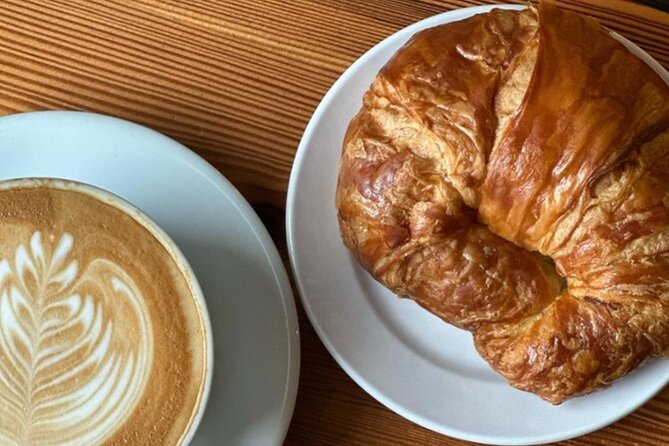
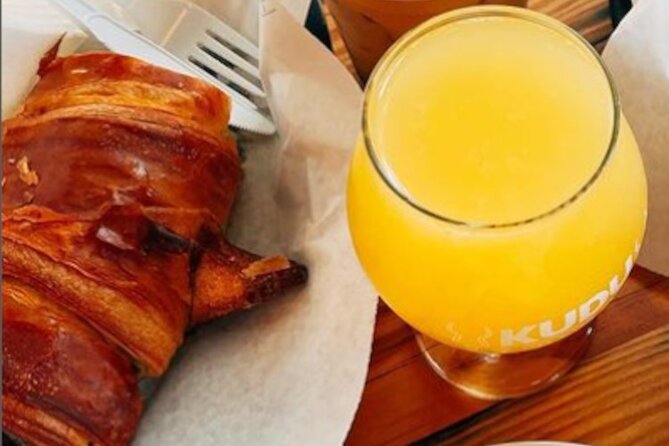
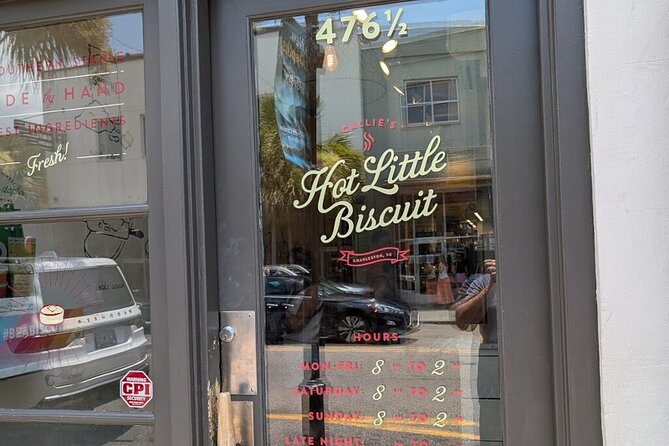
- Banana bread + warm, flaky biscuits
- Passionfruit-mango sweet tea
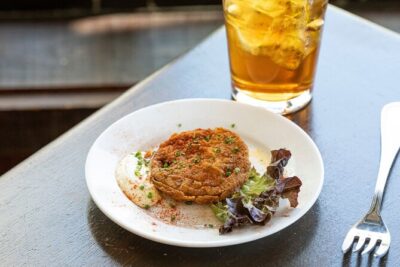
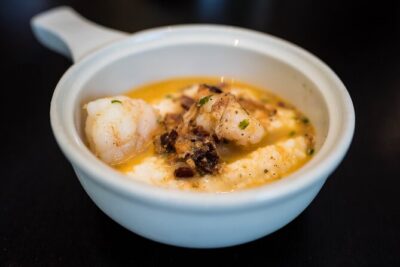
- Crispy fried green tomatoes with creamy shrimp & grits
- Crispy Brussels with Southern-style pimento cheese
- Pecan cluster + Santome Prosecco
- One secret dish (exact details vary by day)
I like that the menu balances textures. You get crunchy-crisp bites (fried green tomatoes, brussels) and then you get the creamy comfort (shrimp & grits, pimento cheese). If you’re the type who likes both “savory first” and “sweet finish,” this tour is built for you.
Also, it’s not just food. You’ll be eating while moving through Charleston’s neighborhoods and landmarks. That matters because it turns the flavors into context. Fried green tomatoes and grits aren’t random menu items when you’re also walking by the buildings and street history that shaped local life.
Stop 1: Upper King Design District and the street that anchors it all
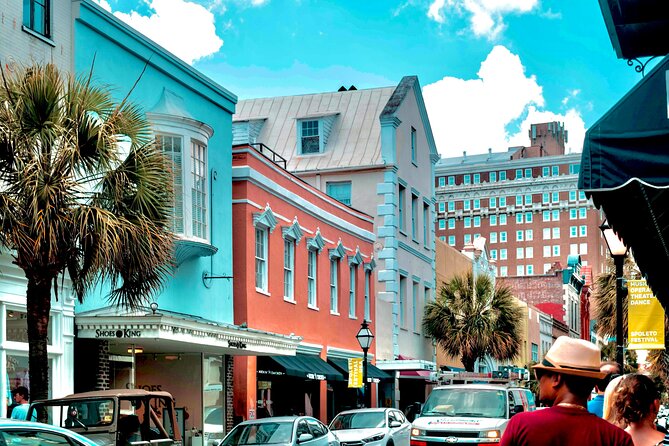
You start at 456 King St and spend the early part of the tour in the Upper King Design District. King Street is described as more than 300 years old, and it’s known as the second most historic street in Charleston. Meeting Street is ahead of it in that ranking, so this is a smart way to orient your brain fast.
This first stretch is useful even if you don’t care about architecture. It gets you oriented to the layout of downtown. You also get your first included bite here—so you’re not wandering hungry while the guide sets the tone.
What I’d pay attention to: the scale and feel of the streets. Charleston’s blocks are walkable, but the details are what make it feel alive—porches, facades, and that old-street “compression” where you keep seeing new angles around every corner.
Possible drawback: If you’re in a hurry or don’t like waiting at any stop, the early pacing can still feel like you’re “on schedule” rather than spontaneous.
Stop 2 (and later): Aiken-Rhett House for the antebellum story behind the meals
The tour includes the Aiken-Rhett House area twice—once for a shorter look and once for a longer pass. That longer stop is likely where the guide slows down and really connects the setting to the people who lived there.
This house complex is considered one of the best preserved examples of antebellum domestic structures in Charleston. It was associated with William Aiken, Jr., a governor of South Carolina, and it also links back to his father, who owned the South Carolina Canal and Railroad Company.
Why it matters for a food tour: this is where Charleston’s “why” shows up. Many Southern food traditions are tied to trade routes, local production, and the labor systems that built wealth. One part of the tour story you may hear about includes the slave trade and how central it was to Charleston’s economy.
What you’ll get out of it: if you enjoy understanding where ingredients and traditions come from, this stop adds weight to the meal. If you’re purely there for tastings, you might want to treat this as a quick scene-setter—because this is also where some people feel the balance tips toward history.
My practical tip: wear shoes you can stand in comfortably. The tour is about walking between places, but the Aiken-Rhett area is one of the segments where you’ll likely spend more time on-site.
Stop 3: American Theater and the Art Deco film-era glow
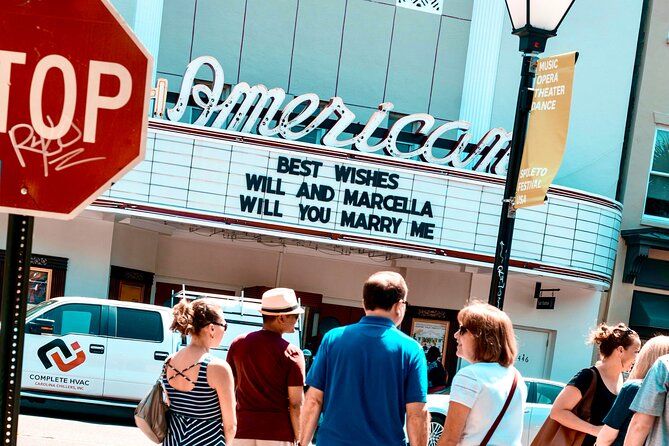
Next up is the American Theater, a movie house that opened in 1942 and is described as Charleston’s premier movie venue at the time. You’ll hear about its Art Deco architecture and classic Hollywood feel—think dazzling marquees and an “event venue” vibe, even if you’re only standing outside or passing through.
This stop is more than a photo break. It’s a reminder that Charleston wasn’t just old and still. It had its own modern cultural moments—where entertainment drew crowds and shaped local identity.
If you love visual details, you’ll enjoy how the guide points out design cues. If you’re hungry and ready to eat again, this is still a fair trade because it’s a relatively compact stop before you move back into food territory.
More Charleston food and drink experiences are ready when you are.
Stop 4: Charleston Music Hall (Tower Depot) and the railroad past
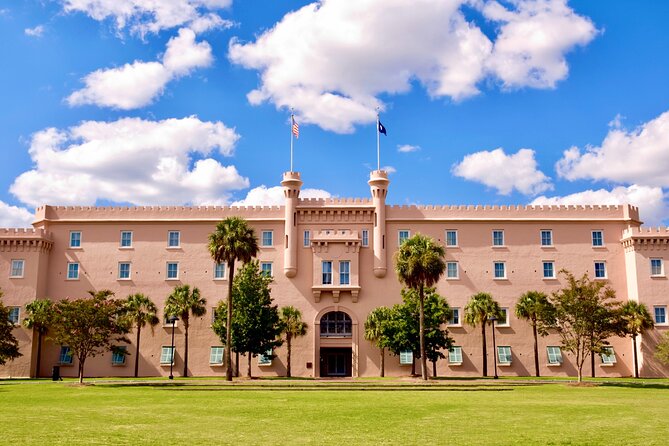
The Charleston Music Hall is historically known as The Tower Depot. It was built in 1849–1850 as a passenger station for the South Carolina Railroad, designed by Charleston architect Edward C. Jones.
Railroads are a big deal in Charleston’s food story, even if the tour doesn’t turn into a food history lecture. When cities get connected, ingredients and styles travel. The buildings you’re seeing are proof of how long Charleston has been linked to movement—goods, people, and culture.
What I like about this stop: it helps you “see” the city’s infrastructure. A lot of Charleston landmarks feel like they’re frozen in time, but the railroad station angle shows why the city kept evolving.
Stop 5: Charleston Visitor Center in the Deans Warehouse area
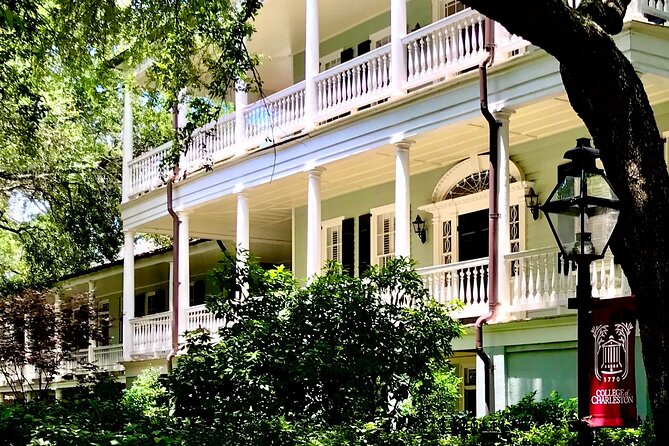
You’ll also stop at the Charleston Visitor Center, located in the old Deans Warehouse between Ann and John Streets. It’s part of a group of railroad buildings connected to the William Aiken House and Associated Railroad Structures, which are listed as a National Historic Landmark District.
This is a good mid-tour pause because it’s practical. A visitor center stop tends to help you re-orient—especially if you’re planning where to go next after the tour. Even if you don’t go inside for long, the setting reinforces the tour’s theme: Charleston’s food culture didn’t appear out of nowhere. It formed alongside transportation, wealth, and changing neighborhoods.
In plain terms: this is where the city’s “systems” become easier to understand while you’re still fresh enough to care.
Wraggborough streets and the Hotel Bennett time-jump
Between the major landmarks, the route also points out how Charleston names parts of the city after William Aiken and his family—like the Wraggborough neighborhood and other streets and parks named for him and descendants.
Then you pass by the Hotel Bennett, which opened on January 27, 2019. The build is described as a 20-year process: ground was broken in March 2015, and the hotel took 47 months to complete. The design is meant to feel like it has origins back in the 18th century, using historic home references as inspiration.
Why include a modern hotel on a food tour? Because Charleston is layered. You walk by something historic, then you see how modern Charleston borrows from the past to keep its identity. If you like cities with personality, this kind of contrast keeps the tour from feeling stale.
Stop 7: Marion Square Farmers Market energy (especially Saturdays)
You’ll spend time at Marion Square, with the tour noting that on Saturdays this is where people shop at the Marion Square Farmers Market. Even outside market days, the square functions like a social center—walkable, easy to browse, and surrounded by places that keep Charleston feeling like a living city rather than an open-air museum.
This stop is short, but it’s strategically placed. It breaks up the longer history blocks and gives your feet a moment to reset before the final push.
If you’re the kind of person who wants to buy snacks for later, this is the part of the tour that can spark it. You’re not promised extra shopping, but you’ll get a strong sense of what local food culture looks like when it’s actually happening.
Stop 8: Charleston Fire Department Station 2/3 and the 1886 earthquake link
The last major historic stop is the Charleston Fire Department, Station 2/3. The tour notes this is tied to post-1886 earthquake rebuilding: it references the fire-station history and how one station replaced another nearby.
It’s an interesting change of pace. Food tours often stay stuck in one kind of story (old houses, old churches, old streets). This one adds civic history—how the city kept itself functioning through major events.
For me, that makes the whole tour feel more grounded. Charleston isn’t only pretty. It had big problems, and it kept adapting.
Finishing at Babas on Cannon: how this tour helps you eat the rest of your trip
Your tour ends at Babas on Cannon, at 11 Cannon St. I like having the finish at an actual restaurant rather than a vague “somewhere downtown” drop-off. It gives you a natural next step: if you still want food after all that tasting, you’re in the right place.
This is also where the tour’s value shows up. By the time you’re done, you’ve already tasted your way through key flavors—biscuits, sweet tea, grits, pimento cheese, fried items, and dessert. That makes it easier to order with confidence later, because you know what you personally liked.
Practical move: after the tour, go back and order one thing you can’t stop thinking about from the tasting menu. You’re not just feeding yourself. You’re turning your tour into real travel knowledge you’ll use.
Price and logistics: is $108 worth it for you?
The price is $108 per person for about 3 hours, and the tour notes it’s capped at 12 travelers. That group size is a big part of why food tours can feel worth it. You’re not treated like a number, and you get enough time at stops to actually taste instead of rushing.
Now, value is also about expectations. If you want a heavy, sit-down brunch meal, this is a tasting format. Included items are generous for a walking tour, but you’re still moving, and your time at each stop can affect how full you feel.
Also note a couple of practical considerations that show up in real-world experiences:
- Some people feel the tour leans more on history than food.
- Others mention waiting at stops for food to arrive.
I wouldn’t let that scare you off. Instead, I’d plan for it. Arrive hungry, and don’t schedule anything too tight right after the tour. You’re buying flavor plus city context, not just food calories.
And yes—this tour includes Santome Prosecco, which can make the value feel even better if you enjoy a toast with your dessert.
Walking + guides: what makes it feel smooth or not-so-smooth
Secret Food Tours keeps the structure simple: walk, stop, taste, repeat. The itinerary notes comfortable shoes because there’s enough walking to matter. You’ll feel it the next day if you show up in stiff sandals or shoes with zero support.
What helps most is the guide. In the feedback, guides named Perry, Sydney, Nathan, and Jesse are praised for being friendly, sharing lots of details, and keeping the vibe fun. If your guide is strong at pacing, the history feels like part of the experience instead of a detour.
If your top priority is maximum food in minimum time, you might prefer a more strictly food-first experience. But if you like knowing the why behind what you eat, this tour has the right mix.
Who should book this Charleston brunch food tour
Book this if:
- You want a brunch-style tasting menu (sweet + savory) rather than one big restaurant meal
- You like pairing food with short, meaningful historic stops
- You’ll enjoy walking through downtown while learning what makes Charleston distinctive
- You want a plan for your first morning so you can pick better restaurants later
Skip or rethink it if:
- You need a very low-walking morning
- You strongly prefer tasting without much story
- You’re very time-sensitive and can’t handle occasional waits between stops
Should you book? My honest take
If you’re a first-time Charleston visitor and you want an efficient way to learn the city while eating well, I’d book it. The included variety hits several Charleston benchmarks—biscuits, shrimp and grits, pimento cheese—and the route through iconic streets and landmark buildings makes the morning feel purposeful.
Just go in with the right mindset: this is a walking tasting tour with history woven through. If that sounds like fun, you’ll have a great time. If you only want a big sit-down brunch, look for a restaurant-focused option instead.
FAQ
How much does the Charleston brunch tour cost?
It costs $108.00 per person.
How long is the tour?
The tour lasts about 3 hours.
How many people are in a group?
The tour has a maximum of 12 travelers.
Where does the tour start and end?
It starts at 456 King St, Charleston, SC 29403 and ends at Babas on Cannon, 11 Cannon St, Charleston, SC 29403.
What’s included in the food and drinks?
Included items are banana bread and warm, flaky biscuits, passionfruit-mango sweet tea, fried green tomatoes with creamy shrimp & grits, crispy Brussels with Southern-style pimento cheese, pecan cluster with Santome Prosecco, plus one secret dish.
Do I need to bring anything or wear anything specific?
Bring comfortable shoes. The tour involves a fair amount of walking.
Can the tour handle dietary requirements?
You should contact the tour in advance about dietary requirements so they can cater as best as possible.
Is the tour in English, and what if weather is bad or I need to cancel?
The tour is offered in English. It requires good weather; if it’s canceled due to poor weather, you’ll be offered a different date or a full refund. You can cancel for a full refund up to 24 hours before the experience starts.
More Tours Across Charleston


More Charleston Tours Worth Booking
More Lowcountry Food Tours in Charleston


Still deciding? Here are the newest Charleston tours and experiences we have reviewed




Lowcountry Food Tours, compared.
 ★ 5.0Charleston French Quarter or Brunch Food Tour with 7+ TastingsFrom $1081,853 reviews
 ★ 4.5Downtown Charleston Food TourFrom $1101,376 reviews
 ★ 5.0Undiscovered Charleston: Half Day Food, Wine & History Tour with Cooking Class948 reviews
 ★ 4.5Savor the Flavors of Charleston Walking Food TourFrom $110881 reviews
 ★ 4.5Charleston’s Historic Downtown Food TourFrom $110349 reviews
 ★ 5.0Private Charleston Walking Food Tour at the French QuarterFrom $370201 reviews
 ★ 4.5Charleston Upper King Street Food TourFrom $110200 reviews
 ★ 5.0Behind the Scenes of Shem Creek Shrimp Walking TourFrom $29171 reviews
Browse the lists this tour appears in