Reviewed · HISTORIC DISTRICT WALKING TOURS
Bruce Knows Charleston Walking Tour
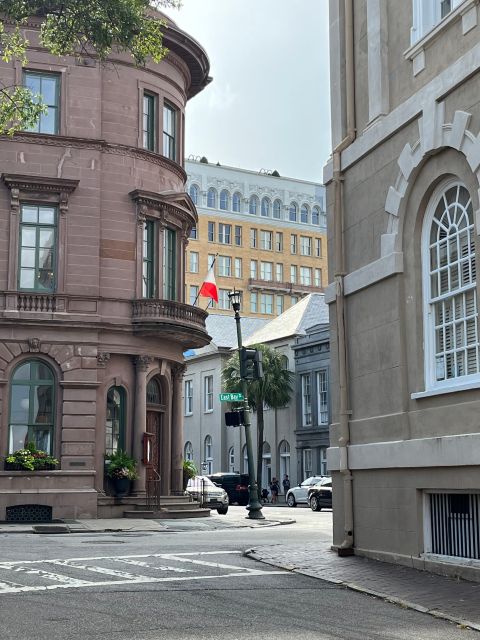
Charleston clicks into place when Bruce walks. Led by Bruce Burris, a licensed guide and 7th-generation Charlestonian, this 2-hour tour turns landmark streets into a clear timeline from colonial days to the Civil War. I love the way he connects people and customs to the buildings you’re seeing, and I love that Rainbow Row becomes part of a bigger story, not just a photo stop.
I also like the tight, efficient routing. You get guided time at places like Dock Street Theatre and the Old Slave Mart Museum, plus shorter stops like the Pink House Gallery and Heyward-Washington House that keep you moving while still feeling informed. And when you reach The Battery, the pace shifts so you can take in the beautiful waterfront sights along the way.
The main thing to plan for is comfort. This is a walking tour, bathrooms are sparse, water is not included, and it isn’t suitable for pregnant women, babies under 1 year, or people over 95 years. Wear comfortable shoes and bring your own water so you’re not guessing halfway through.
In This Review
- Key highlights you’ll feel right away
- Bruce Burris: licensed guide, 7th-generation Charlestonian style
- Start at an odd meeting point, then get your bearings fast
- Rainbow Row twice: why the second look hits harder
- Dock Street Theatre and Old Slave Mart Museum: guided stops that give context
- Pink House Gallery and short residential stops: efficient, not rushed
- Heyward-Washington House ticket reality: plan it early
- The Battery: the guided waterfront stretch that balances the day
- Price and value: what $30 buys in real terms
- What to bring, what to expect, and who should skip it
- Should you book Bruce Knows Charleston Walking Tour?
- FAQ
- How long is the Bruce Knows Charleston Walking Tour?
- How much does it cost?
- Where does the tour start and end?
- What’s included in the tour price?
- Is water included?
- Do I need a ticket for the Heyward-Washington House?
- Is the tour suitable for everyone?
Key highlights you’ll feel right away

- Rainbow Row gets a second pass later in the tour, so the area lands with more meaning
- Dock Street Theatre and Old Slave Mart Museum each get focused guided time, not a drive-by look
- Private-home style stops fit the tour’s approach, including visits around historic residences
- The Battery is timed for views with a guided chunk of time just for that stretch
- Heyward-Washington House requires a ticket (plan for it so you don’t get stuck)
- Two hours is the sweet spot: enough time for story + sights, but not a full-day commitment
Bruce Burris: licensed guide, 7th-generation Charlestonian style
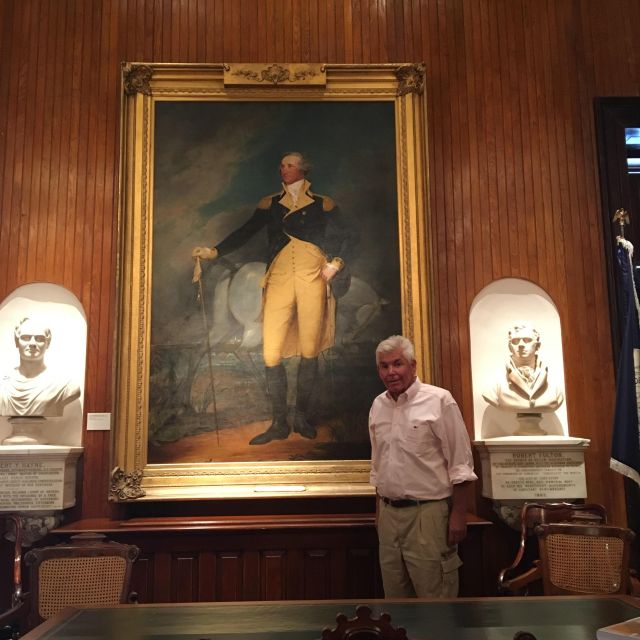
What makes this tour work is the guide. Bruce Burris isn’t just running a route; he’s sharing a Charleston family story that reaches back through colonial-era lineage. He’s described as a local in the truest sense, with the kind of context that makes you feel like you’re hearing how the city thinks, not just memorizing dates.
The tone matters too. Several bookings praised his delivery as charming and tidy—classic, southern-gentleman energy, but with a firm handle on history. You’ll feel that during the stories that connect the city’s growth and change across eras. The goal isn’t to overwhelm you. It’s to help you read Charleston like a living place.
At the same time, it’s still practical. The tour is two hours, and it’s structured as a walk with guided stops that last long enough to matter—then short enough to keep you from dragging yourself from one curb to the next.
If you like history that has human scale—customs, people, and why buildings ended up where they are—this is the kind of guide-led tour that makes you nod and say, now I get it.
Trade one set of cobblestones for another with more Charleston walking tours.
- Historic Charleston Guided Sightseeing Walking Tour★ 5.0 · 6,216 reviews
- Charleston Horse-Drawn Carriage Tour: Explore Historic Charleston★ 5.0 · 3,561 reviews
- Ghosts of Charleston Night-Time Walking Tour with Unitarian Church Graveyard★ 4.5 · 2,835 reviews
Start at an odd meeting point, then get your bearings fast
Your tour starts and ends at a section of a pillar from The Giant’s Causeway, NI. That’s not what you’d expect for Charleston, so I’d treat it like your anchor point: arrive with a little extra time and plan to start the walk feeling oriented rather than rushed.
From there, the route builds in a logical flow: you begin with Rainbow Row, move through key downtown stops, then work your way toward the waterfront area known as The Battery, before circling back to Rainbow Row again.
Why this sequence is smart: it prevents the common problem where you spend the whole tour “collecting” photos, then finish without understanding what connects the places. By starting with Rainbow Row and returning later, you get a second chance to see it with a clearer lens.
Also, the tour is live, English, so there’s no audio app pacing you like a robot. You can hear the story as you walk, which makes the city feel smaller and more readable.
Rainbow Row twice: why the second look hits harder
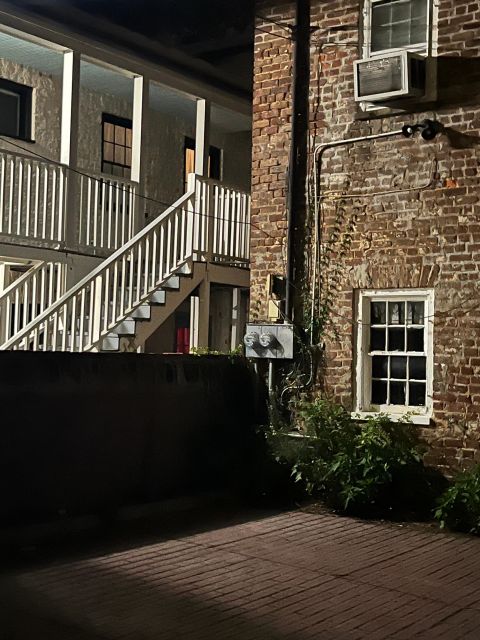
Rainbow Row is the headline. But what I like about this tour is that it doesn’t treat it like a one-hit photo moment. You see Rainbow Row during the first guided segment, and you return to it again later.
On the first pass, it works as orientation. You’re introduced to the place, you get the basic framing, and your eyes start learning what to notice—details you might otherwise miss when you’re just snapping pictures.
Then you move on to other stops where the story gets broader—performing arts, historic museums, galleries, and historic residences. By the time you come back, the area feels different. You’re not just looking at a row of iconic buildings. You’re reading them as part of the city’s long arc.
That second guided segment also helps with timing. Charleston light changes, and your first visit might be “look and learn.” The second one can be “look and connect.” If you care about getting more than a static photo, this structure is a win.
Dock Street Theatre and Old Slave Mart Museum: guided stops that give context
Two of the longer guided blocks are in the downtown core: Dock Street Theatre and the Old Slave Mart Museum. Dock Street Theatre gets about 20 minutes of guided time, and the Old Slave Mart Museum gets about 15 minutes.
This matters because these aren’t just quick photo stops. You’re given time to process what you’re seeing while the guide ties it to the larger timeline he’s building—Charleston from colonial days to the Civil War.
I like that the tour doesn’t skip around randomly. It keeps a thread: buildings aren’t presented as isolated landmarks. They’re presented as pieces of Charleston’s story. In a two-hour window, that approach helps you remember what you learned instead of feeling like you sprinted from one spot to the next.
A practical tip: museum-and-theatre-style stops can involve standing and walking a bit on uneven pavement. If you’re prone to foot fatigue, this is where comfortable shoes pay off. (More than once, I’ve watched people realize too late that “supportive sneakers” is not the same thing as “looks cute.”)
Pink House Gallery and short residential stops: efficient, not rushed
Between the bigger anchors, you get a short guided stop at the Pink House Gallery (about 10 minutes). It’s quick, but that’s part of the tour design. In a two-hour format, shorter stops can be more satisfying than dragging out every location.
You also get a residential historic stop at the Heyward-Washington House. It’s listed as a visit plus guided time of about 15 minutes. One key detail: the ticket for the Heyward-Washington House is not included, so you’ll want to plan for that cost ahead of time.
Why I think these shorter stops are a smart move: they keep you from zoning out. When a tour only features long exhibits, people get tired and stop absorbing. Here, you’re repeatedly reset by a new location and a fresh explanation.
That rhythm helps, especially if you’re traveling with limited time and want to feel like you saw a lot—without turning the day into an endurance event.


Heyward-Washington House ticket reality: plan it early

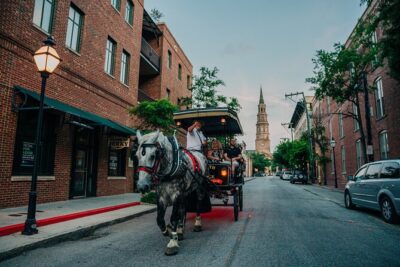
The Heyward-Washington House is one of the specific “inside” experiences on this walking route. Since the ticket isn’t included, you’ll want to treat it as the one part of the tour where you can’t rely on luck or timing.
I also like that it’s given 15 minutes of guided time, rather than a vague wander. That keeps the stop purposeful: you’re there to see and hear something, not to squeeze it in between photo attempts.
If you want the best value, plan for the ticket cost as part of what you’re paying for, rather than viewing it as an extra surprise. This tour is built around guided interpretation, and the Heyward-Washington House is one of the places where that interpretation becomes tangible.
The Battery: the guided waterfront stretch that balances the day
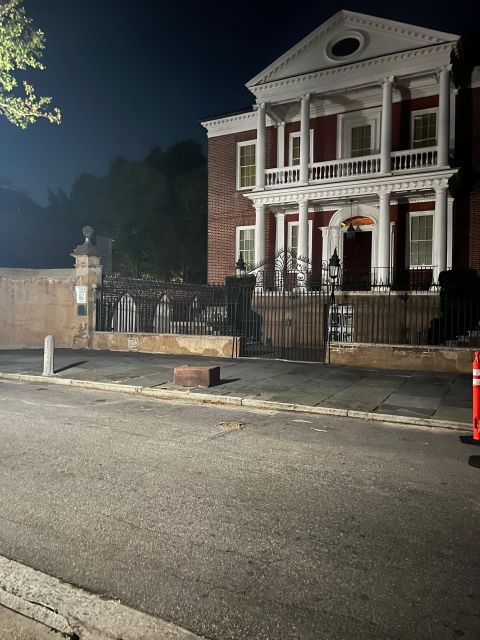
After the downtown stops, you head to The Battery with about 20 minutes of guided time. This is one of the highlights for a reason: it’s where Charleston shifts from streets and buildings to a waterfront mood.
Even if you don’t know Charleston geography well, you’ll feel the change. The guide’s pacing here is meant to let you take in the beautiful sights of the area, not just speed through another stop.
This section is valuable because it gives your brain a reset. Earlier you’ve been learning stories tied to buildings, museums, and historic sites. Here, the views help you connect the physical city to the human activity that shaped it.
If you’re the kind of traveler who likes to balance history with a little scenery time, The Battery is the payoff window. It’s also where your photos will look better, because you’re not rushing people along the street—you’re pausing.
Price and value: what $30 buys in real terms
At $30 per person for 2 hours, the price is reasonable if what you want is context. This isn’t a self-guided walk where you read a plaque and guess. You’re paying for a live guide with deep local ties—someone who can explain how Charleston’s colonial-era roots connect to later chapters.
The “value” here is the guided storytelling across multiple stops: Rainbow Row, Dock Street Theatre, Old Slave Mart Museum, Pink House Gallery, Heyward-Washington House, and The Battery. Even the stop lengths add up to a structured experience rather than a loose itinerary.
What’s not included matters too:
- Water isn’t included, so bring it.
- The Heyward-Washington House ticket is on you.
When you factor those in, you’re still paying for a tightly planned route with a licensed, English-speaking guide and an emphasis on how the city developed over time. If your goal is to understand Charleston without spending the whole day, this is a smart use of time.
What to bring, what to expect, and who should skip it
Bring:
- Comfortable shoes
- Water
Expect:
- A true walking tour around the city
- Sparse bathrooms, so plan around that
- Lots of guided time in different spots, meaning you’ll be standing and moving more than you might if you were just sightseeing by car
Skip it if:
- You’re pregnant
- You’re traveling with a baby under 1 year
- You’re over 95 years
That list isn’t meant to be harsh; it’s about keeping the experience safe and comfortable. A tour that’s built for walking and multiple guided stops simply doesn’t translate well to those situations.
If you’re generally steady on your feet and you like guided history, you’re a great match.
Should you book Bruce Knows Charleston Walking Tour?
If you want Charleston in two hours with a real local voice, I’d book this. It’s built around guided stops, a guide who knows how to connect eras, and a route that balances iconic sights like Rainbow Row with history-focused stops like Dock Street Theatre and the Old Slave Mart Museum.
Book it especially if:
- You like learning through stories, not just dates
- You care about understanding how different parts of Charleston connect
- You want a structured walk rather than wandering alone
- You’re comfortable planning for the Heyward-Washington House ticket and bringing your own water
Skip it if you hate walking, need frequent bathroom access, or fall into the listed age/pregnancy limits.
For the right traveler, this is one of those tours that makes the city feel smaller, clearer, and more personal.
FAQ
How long is the Bruce Knows Charleston Walking Tour?
It’s a 2-hour walking tour.
How much does it cost?
The price is $30 per person.
Where does the tour start and end?
It starts and ends at a section of a pillar from The Giant’s Causeway, NI.
What’s included in the tour price?
The tour includes personal tours with a live guide.
Is water included?
No. Water is not included, so bring your own.
Do I need a ticket for the Heyward-Washington House?
Yes. A ticket for the Heyward-Washington House is not included.
Is the tour suitable for everyone?
No. It is not suitable for pregnant women, babies under 1 year, or people over 95 years. Bathrooms are also sparse during the walk.
More Tours Across Charleston






More Charleston Tours Worth Booking
More Historic District Walking Tours in Charleston

Still deciding? Here are the newest Charleston tours and experiences we have reviewed










Historic District Walking Tours, compared.
 ★ 5.0Historic Charleston Guided Sightseeing Walking TourFrom $306,216 reviews
 ★ 5.0Charleston Horse-Drawn Carriage Tour: Explore Historic CharlestonFrom $493,561 reviews
 ★ 4.5Ghosts of Charleston Night-Time Walking Tour with Unitarian Church GraveyardFrom $352,835 reviews
 ★ 5.0Hidden Alleyways and Historic Sites Small-Group Walking TourFrom $342,335 reviews
 ★ 5.0Highlights of Charleston Guided Walking Tour2,206 reviews
 ★ 5.0Charleston Haunted Booze and Boos Ghost Walking TourFrom $391,569 reviews
 ★ 5.0Charleston’s Pleasing Terrors Night-Time Walking Ghost TourFrom $291,345 reviews
 ★ 5.0Charleston historical walking tour with a Professor of History at The CitadelFrom $401,284 reviews
Browse the lists this tour appears in