
Reviewed · CHARLESTON GHOST & GRAVEYARD WALKS
Charleston: Haunted Carriage Evening Tour
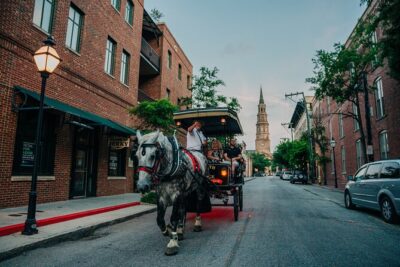
Haunted tales roll through old Charleston at night. This 40-minute carriage tour threads spooky Charleston stories through cobblestones and alleys, ending at major landmarks like Old Exchange & Provost Dungeon—without a long, exhausting walk. I love the guided storytelling that turns real sites into vivid scenes, and I also love the calm change of pace from foot travel, since you’re seated the whole time. One thing to consider: it’s short, so you’ll see a tight historic slice of town rather than every haunted stop you’ll hear about.
I also like how the tour leans on training, not random ghost lore—guides are members of the Palmetto Guild, which means they’ve passed a history exam. If you’re lucky, you’ll get a guide with a real performer’s rhythm (I saw examples like Holly, Noelle, Shannon, Paul, and Jeff among recent guides), plus a gentle, well-cared-for draft horse up front (names like Curtis, Moose, Wayne, Henry, and Ace show up in recent rides). Dress for the weather and know that if storms or extended rain are forecasted, the local partner can close for the day.
In This Review
- Key things I’d prioritize before you go
- Entering Old South Carriage Company and meeting your horse
- The 15-block historic core route: how the tour moves through Charleston
- Old Exchange & Provost Dungeon: when the guide turns a building into a plot
- Circular Congregational Church and Graveyard: legends with a real sense of place
- Charleston City Market and St. Michael’s Episcopal Church: the everyday world behind the hauntings
- How long is long enough? The pacing of a 40-minute haunted carriage tour
- Price and value: is $50 a fair trade for 40 minutes?
- Who should book this haunted carriage tour (and who might skip it)?
- Practical tips for getting the most from your night ride
- Should you book the Charleston Haunted Carriage Evening Tour?
Key things I’d prioritize before you go
- Palmetto Guild guides: history first, spooky stories second.
- A tight 15-block route: you get the core sights fast in just 40 minutes.
- Old Exchange & Provost Dungeon: one stop hits hardest when the guide turns it into a story.
- Circular Congregational Church and Graveyard: the atmosphere does a lot of work here.
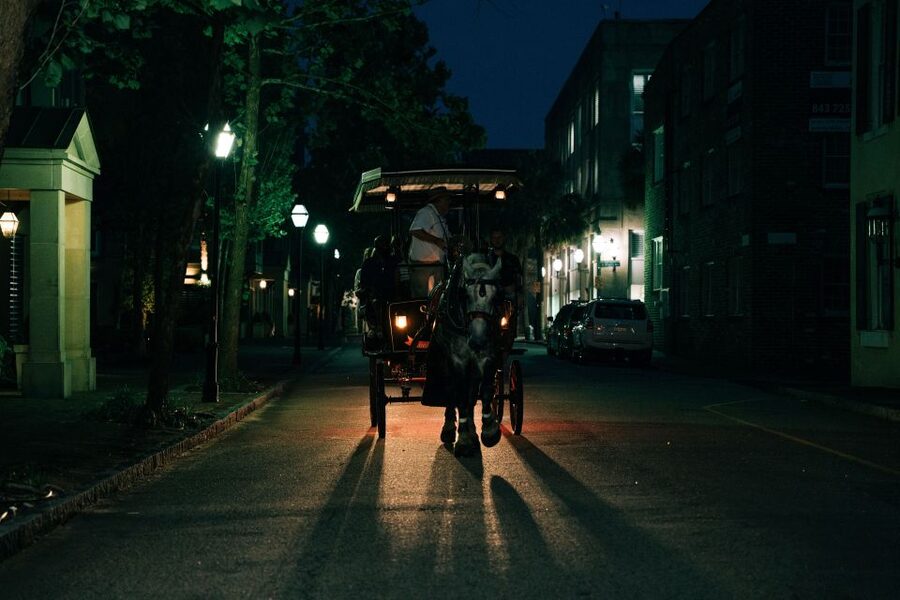
- Horse-led pace: the drive feels relaxed, and riders note the horses walk at a comfortable speed.
- On-carriage QR code: you can scan along the way for related images tied to stops.
Entering Old South Carriage Company and meeting your horse
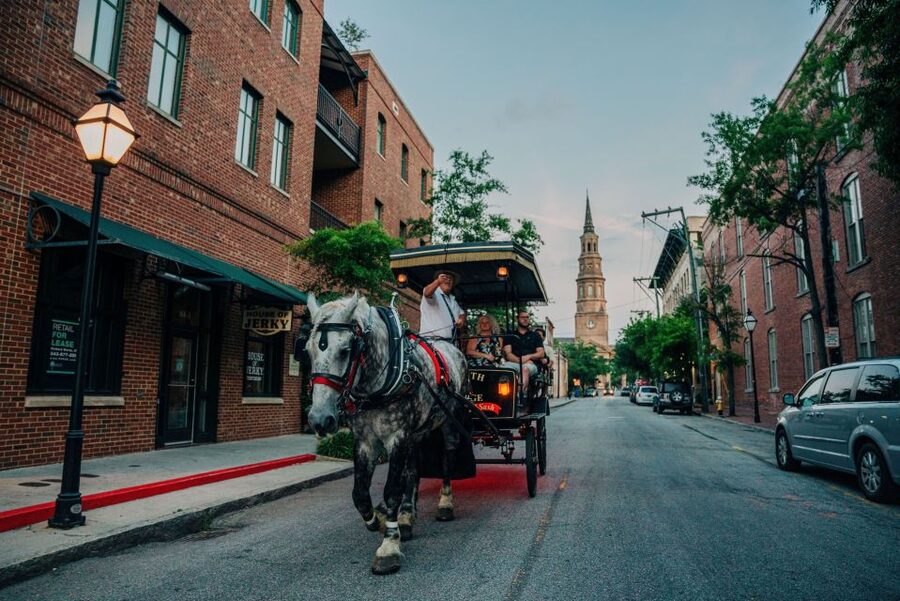
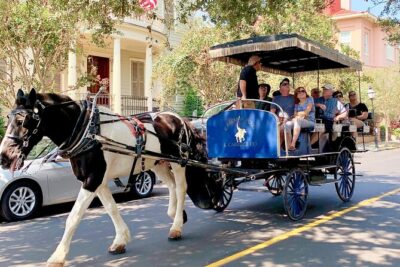
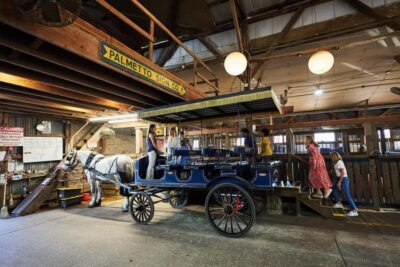
You start at Old South Carriage Company’s stables, where the whole experience clicks into place fast. The first reward is simple: you’re not scrambling for your bearings across a big city. You meet, step into the loading area, and board from the platforms in the barn—helpful if you’re traveling with kids or you need a smoother on/off than curb boarding.
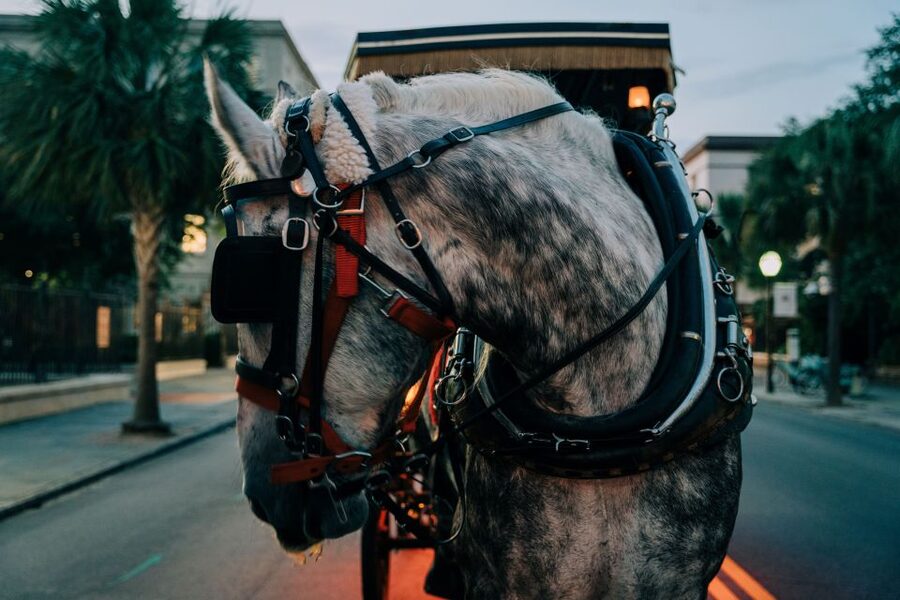
Then comes the part you’ll remember after the stories: the horse. Riders repeatedly mention the horses by name, calling out how sweet, gentle, and well cared for they seem. You’ll hear guides talk like they know both Charleston and the pace of the route, and the horse becomes part of the timing. Reviews describe horses like Curtis (a Belgian draft horse), Moose (a gentle giant), Wayne, Henry, and Ace as companions, not props—so the mood is less haunted carnival and more historic evening outing with real animals up close.
One practical tip: charge your phone before you go. A recent rider notes the carriage has a QR code you can scan to pull up relevant photos connected to the stops. It’s an easy way to connect the spoken story to visuals while you’re moving slowly through the historic core.
If the dark stories pulled you in, more Charleston ghost and graveyard walks wait after sundown.
- Haunted Evening Horse and Carriage Tour of Charleston★ 4.5 · 3,678 reviews
- Ghosts of Charleston Night-Time Walking Tour with Unitarian Church Graveyard★ 4.5 · 2,835 reviews
- Charleston Haunted Booze and Boos Ghost Walking Tour★ 5.0 · 1,569 reviews
The 15-block historic core route: how the tour moves through Charleston
The route is built around the heart of Historic Charleston. The tour explores a 15-block core, using Charleston’s signature texture—cobblestone streets, tight lanes, and the kind of corners where your brain starts filling in the gaps.
That’s the value of doing this by carriage instead of on foot. On foot, you’re always negotiating distance, crowds, and the logistics of getting from one “haunted” address to the next. In the carriage, the guide sets the pace, and you stay oriented: you’re always moving through the story the guide is telling.
The guide’s job is to connect characters—prisoners, rogues, pirates—to specific places. That’s why the tour feels less like a list of haunted addresses and more like a guided walk through how Charleston worked over centuries. One rider described the ride as a good mix of history and local legends/hauntings, and that’s exactly the sweet spot here: you get context, then the “spooky” layer lands on top.
Stops also matter because they’re placed to help you understand the city’s layout. Even when the ride turns quickly, you’re still in the historic center, so the stories make geographic sense. It’s a fast way to get your mental map of Charleston—without the pressure of trying to “research” everything yourself after the fact.
Old Exchange & Provost Dungeon: when the guide turns a building into a plot
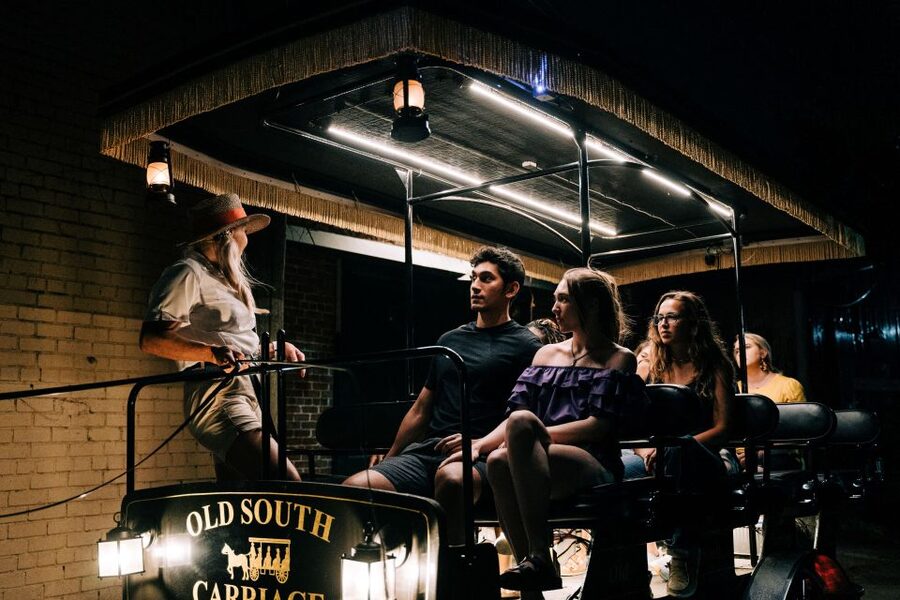
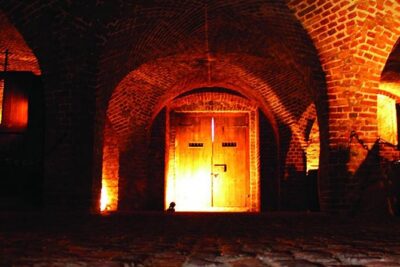
If you want one stop that carries the most weight, it’s Old Exchange & Provost Dungeon. The name alone signals confinement—this is where the guide can connect Charleston’s darker side to real place names you’ll later recognize on your own walks.
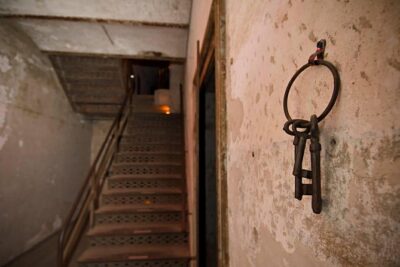
What makes it compelling on this tour is how quickly the setting becomes story. Your guide narrates spine-tingling tales around the dungeon and associated figures—prisoners and the people tied to their fate—so the building stops being just a photo opportunity. You start imagining the motion of the era: who moved through the space, why people ended up there, and how the city’s power system left marks that lasted.
A dungeon stop also changes the tone of your ride. Early on, you’re in “listen and look” mode: streets, alleys, and atmosphere. At the dungeon stop, you shift into “listen hard” mode, because the guide is stacking details into a mini drama. That’s also why the 40 minutes can feel just right for some people. You get a meaningful anchor point without the evening dragging on.
Practical note: if you’re the type who loves photos, this is a good time to be ready. One rider even reported capturing a blue orb in a church photo later on, so cameras are definitely part of the fun. Just remember: the real win is still the story, not the tech trick.
Circular Congregational Church and Graveyard: legends with a real sense of place
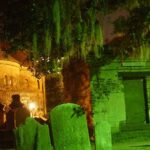
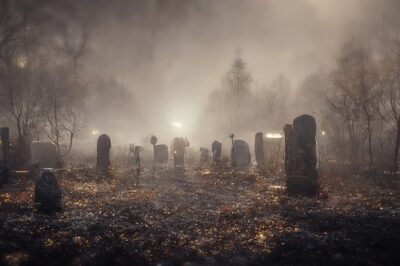
Next up is Circular Congregational Church and Graveyard. Graveyards are tricky on tours, because they can become either too scary for comfort or too historical to feel “haunted.” Here, the guide’s approach seems to land in the middle: you get enough location context to understand why legends stick around, and then you get spooky tales tied directly to what you’re seeing.
This is also where the mood becomes physical. Charleston’s old streets already feel tight and atmospheric at night, but graveyard stories add a different kind of gravity. The guide’s narration makes you pay attention to what’s around you—where the space is, how it would have felt long before streetlights and signage.
It helps that you’re not rushing. The pace stays carriage-paced, which gives you time to hear the story and then look up and around right when the guide references a detail. If you like walking tours, you’ll appreciate that this still has “stop-and-start” moments without the constant step-count pressure.
And if you’re traveling with someone who needs variety—history lover plus skeptic—this stop usually helps. It’s not just “boo.” It’s a place people used, a community with memory, and legends that grow when the past is close enough to touch.
Charleston City Market and St. Michael’s Episcopal Church: the everyday world behind the hauntings
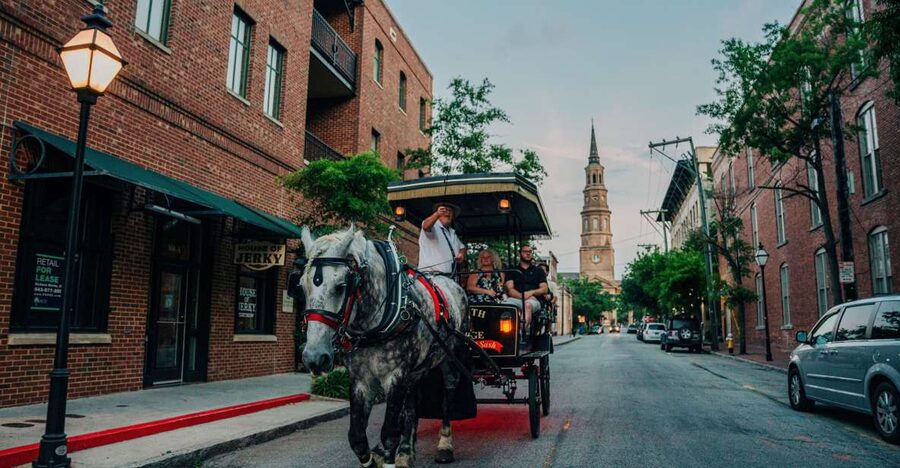
Two of the tour highlights that keep it grounded are Charleston City Market and St. Michael’s Episcopal Church. These stops matter because they show you the city wasn’t only prisons and punishment. Charleston was also trade, faith, and everyday community life.
That balance is part of what makes the stories feel believable. Pirates and rogues don’t live in a vacuum. A market tells you where goods moved, where people gathered, and how news traveled. A church tells you where community rituals happened—again, not just for ghosts, but for the living.
You’ll hear the guide connect the haunting layer to the broader story of Charleston, so when you’re standing near the market or the church, you’re not just thinking about fear. You’re seeing how long-ago routines shaped the city’s corners and reputations.
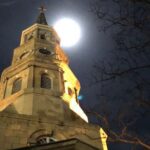
At St. Michael’s Episcopal Church, the vibe can feel extra cinematic. One recent rider mentioned getting a photo with a blue orb, which tells you something: people are looking, expecting, and leaning into the night mood here. Even if you don’t catch anything unusual on camera, the church stop gives you a satisfying emotional “turn” after the heavier dungeon and graveyard narration.
Let the horses set the pace on more Charleston carriage rides.
How long is long enough? The pacing of a 40-minute haunted carriage tour
The tour runs about 40 minutes, and that timing is a big part of its value. In a city like Charleston, it’s easy to over-plan evenings. You want something that fits into your night without swallowing it whole.
This carriage tour gives you a fast mental map and a story you can carry afterward. You’ll likely leave feeling like you now understand how the historic core is laid out: where major landmarks sit relative to the streets you’ll walk later. It also works as a gentle entry point on day one—some riders describe it as a great way to start the stay because it sets the stage for everything else.
Pace is also tied to the horse. Reviews mention comfortable walking speed, and that’s important. If you’ve ever been on a ghost walk that’s too fast, you know how quickly the “spooky” becomes stressful. Here, the ride stays relaxed enough that you can focus on listening.
Who has the best experience with this kind of timing? People who want short and memorable. Families who don’t want a long standing tour. Couples who want a change of pace from daily walking. Even solo travelers often like it because you’re not constantly trying to navigate the route alone.
Who should reconsider? If you’re craving a deep, hour-and-a-half research session on Charleston’s darker eras, this may feel too brief. The tradeoff is clear: you’ll get highlights and atmosphere, not an exhaustive history.
Price and value: is $50 a fair trade for 40 minutes?
At $50 per person, you’re paying for two things: trained narration and the carriage/horse experience. You’re not just buying a story—you’re buying a live guide who keeps the tour moving and makes the historic core feel coherent in a short time.
Here’s how I think about the value. You’re getting:
- a seated evening activity (less fatigue than walking),
- multiple major landmarks packed into a tight route,
- and a guide who’s been tested through the Palmetto Guild system.
If you compare it to paying for multiple paid attractions or spending hours trying to piece together the same stops on your own, the price starts to look more reasonable. And the horse aspect isn’t cheap—draft horses, stables, and trained drivers are time and labor, not just ambiance.
The biggest “value” question for you is your preferred pace. If you’re the type who likes short, well-guided highlights, $50 for 40 minutes can feel fair. If you’d rather linger and wander, you might feel the time squeeze. In that case, treat this as the story spark, then plan a free follow-up walk the next day.
Who should book this haunted carriage tour (and who might skip it)?
This is ideal if you want a spooky evening that’s still grounded. I’d recommend it especially for:
- couples who want a fun, low-effort night,
- families with kids who can handle stories but don’t want a long hike,
- anyone who wants major landmarks without planning logistics,
- and first-timers who want to learn the city’s layout quickly.
It can also be a great “rest day” activity. If you’ve been walking all day, you get a comfortable break while still feeling like you did something memorable.
You might skip it if you’re only interested in heavy, academic history or you dislike any haunted framing. This tour leans into tales, legends, and prison-and-rogues energy. It’s not trying to be a straight museum lecture.
One more clue from the ride experience itself: riders consistently mention how guides tell the stories with personality and humor, and many call out their specific guide by name—like Noelle and Liam, Shannon and Moose, Paul and Noah, and Jeff and Eli. That pattern suggests the experience is built to entertain, not just inform.
Practical tips for getting the most from your night ride
A few details can make the tour feel smoother:
- Bring a charged phone if you want to use the carriage QR code for stop-related visuals.
- Dress for damp or cool evenings. You’re sitting outside, and Charleston nights can feel different than daytime.
- Plan around weather. If extended rain or storms are forecasted, the local partner closes for the day.
- Be ready for cobblestones. Even though you’re seated, the carriage ride still rolls over uneven ground, so keep your posture comfortable.
- Take cues from the guide, not the rumor. The stories are tied to specific places; follow their references so you know what you’re looking at when you hear the next chapter.
If you’re the kind of traveler who likes collecting memories, consider doing this early enough that you can later walk some of the same streets in daylight. The tour gives you “where” and “why,” and daylight turns the setting into something you can navigate on your own.
Should you book the Charleston Haunted Carriage Evening Tour?
Yes, I think you should book it if you want a short, story-forward night activity that covers key Charleston landmarks—especially Old Exchange & Provost Dungeon plus the church and graveyard stop—without a long, tiring walk.
I’d be more cautious if you’re looking for a long, detailed history lesson. This is 40 minutes by design, so the goal is to hit the highlights, set your mental map, and leave you with stories you can connect while exploring on your own later.
If you’re on the fence, here’s my simple decision rule: if you’ll enjoy live storytelling with a horse-and-carriage setting, this tour is a strong value. If you only want quiet, daytime sightseeing, you might be happier saving your energy for Charleston’s self-guided streets instead.
More Charleston Tours Worth Booking




More Horse & Carriage Rides in Charleston
More Ghost & Graveyard Walks in Charleston


Still deciding? Here are the newest Charleston tours and experiences we have reviewed










Charleston Ghost & Graveyard Walks, compared.
 ★ 4.5Haunted Evening Horse and Carriage Tour of CharlestonFrom $503,678 reviews
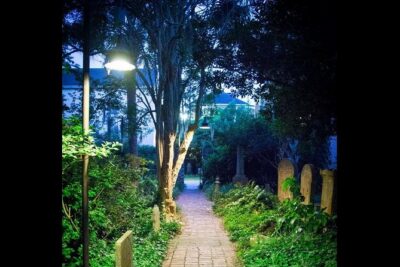 ★ 4.5Ghosts of Charleston Night-Time Walking Tour with Unitarian Church GraveyardFrom $352,835 reviews
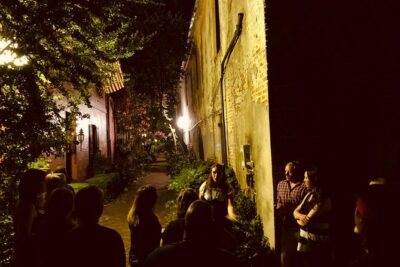 ★ 5.0Charleston Haunted Booze and Boos Ghost Walking TourFrom $391,569 reviews
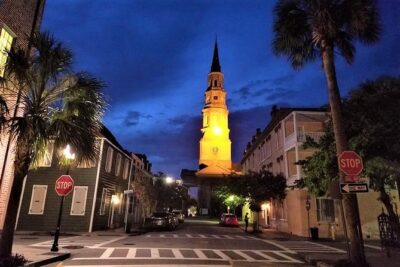 ★ 5.0Charleston’s Pleasing Terrors Night-Time Walking Ghost TourFrom $291,345 reviews
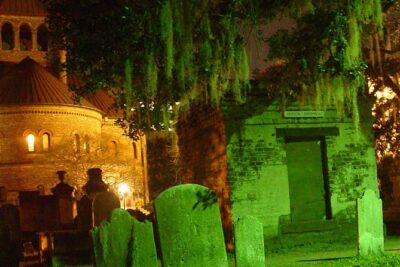 ★ 4.5Charleston Ghost & Graveyard Night-Time Guided Walking TourFrom $401,100 reviews
 ★ 5.0Real Hauntings of Charleston! (Small Group Ghost Tour)From $35724 reviews
 ★ 4.5Charleston Haunted Jail Night-Time Walking Tour with Admission to Old City JailFrom $40570 reviews
 ★ 4.0Charleston Ghost & Dungeon Night-Time Walking Tour with Entry to Provost DungeonFrom $40479 reviews
Browse the lists this tour appears in